Time
Company
Documents about Time

Games You Might Not Have Tried - ep 14 - Mechs, Monsters and More! - Extra Credits
This analysis examines a curated selection of video games chosen for their unique design contributions, innovative mechanics, or unconventional approaches to established genres.
- Designers can successfully innovate by prioritizing specific core mechanics—such as moral decision-making in Frostpunk or time-loop puzzles in Minit—over broad market appeal.
- Games like Hunt: Showdown demonstrate that integrating high-stakes permadeath and PvE elements can create unique tension within the established battle royale genre.
- Complex, legacy-style mechanical depth remains viable in modern gaming, as evidenced by the success of the tactical combat in Tower of Time and the systems in BattleTech.

10.000% Game Speed! - (Crazy Game Dev Experiment...)
Game developers often fall into the trap of finalizing a game’s pace too early in the prototyping phase, leading to suboptimal player experiences.
- Developers should test game speeds ranging from 10% to 1,000% of the intended rate to identify design flaws, such as tedious end-game states or unintended difficulty spikes.
- Manipulating the global time scale variable, such as Unity’s Time.timeScale, acts as a critical diagnostic tool to evaluate how core mechanics like movement, combat, and resource management perform under varying temporal conditions.
- Extreme speed increases often require secondary balancing adjustments, such as modifying enemy health pools, to ensure the game remains fair and challenging.
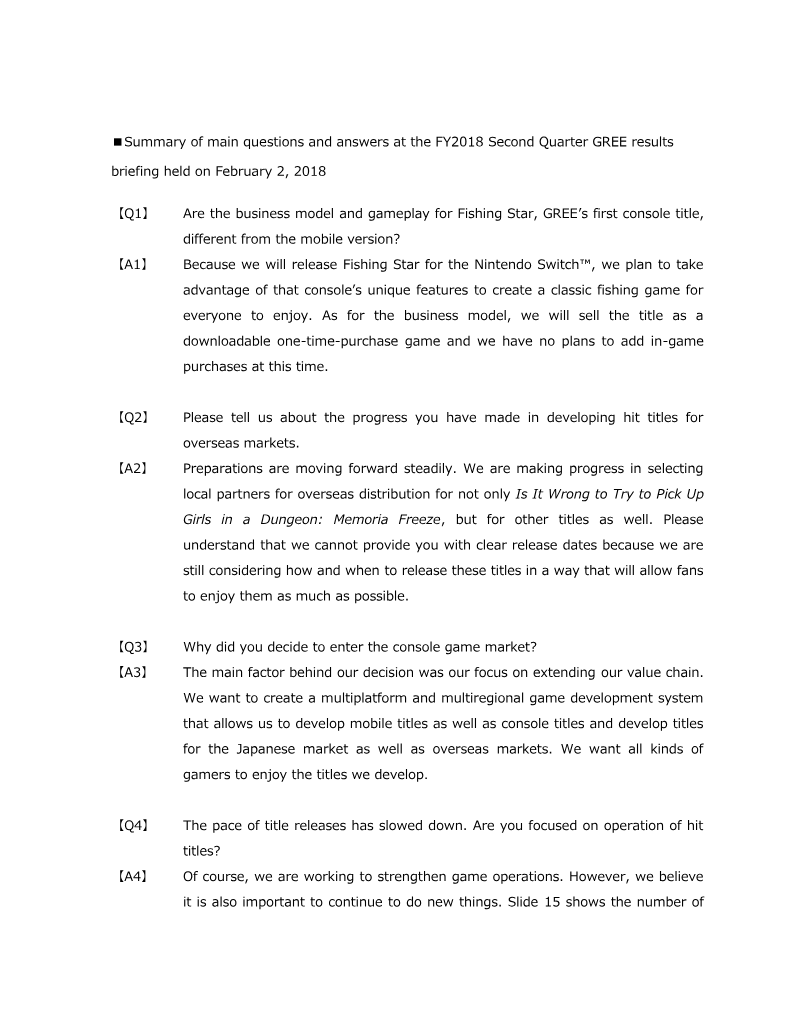
Summary of Main Questions and Answers at the FY2018 Second Quarter GREE Results Briefing
The fiscal year 2018 second quarter briefing highlights a strategic pivot toward multiplatform and multiregional development as a means of extending the corporate value chain.
- GREE is pivoting toward multiplatform development by entering the console market, starting with the release of Fishing Star for the Nintendo Switch.
- The company is testing a new revenue model for console gaming by releasing Fishing Star as a one-time purchase without in-game transactions.
- To maintain profitability during its console market entry, GREE is avoiding high-budget, major titles in favor of strict cost controls.
Super Time Force: Solving the Time Travel Paradox
The development of the 2D run-and-gun shooter Super Time Force required solving complex game design paradoxes inherent in time-manipulation mechanics.
- Super Time Force manages time-travel paradoxes by implementing a 'Level Entropy' system that enforces a rule where entropy must always increase, ensuring that past modifications never leave players worse off or enemies better off than in the original timeline.
- The game utilizes a 'Quantum Entanglement' mechanic to resolve causality violations, allowing the game to forcibly reinsert outcomes from past timelines into the current one even if the original cause of an event was altered.
- To solve the 'Quantum Measurement Problem' and maintain control over level flow, the game uses an 'Observer System' that ensures entities only interact with the world when they are deemed observable by the player, preventing unintentional interactions in unvisited areas.
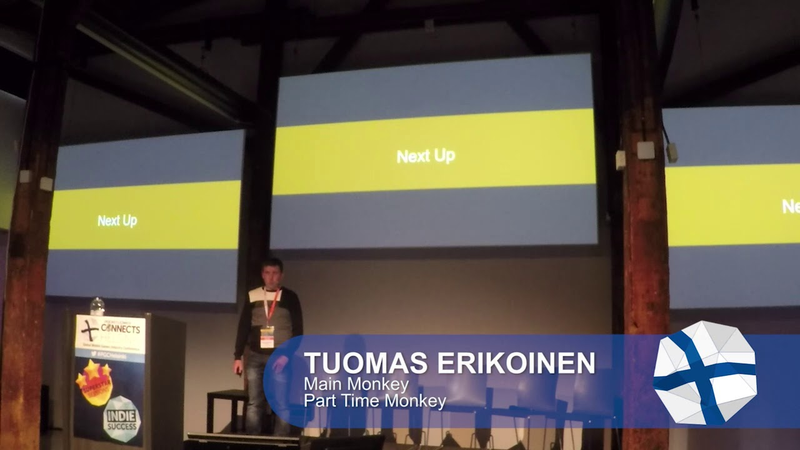
One game developer discusses the road to 10 million downloads
The journey of independent mobile developer Tuomas Erikoinen, operating under the studio name Part-Time Monkey, illustrates a high-velocity, iterative approach to game development that resulted in 15 million total downloads.
- Independent developer Tuomas Erikoinen achieved 15 million total downloads by prioritizing rapid prototyping and platform featuring over paid user acquisition.
- The studio's most successful title, Space Frontier, reached 10 million downloads through a collaboration with publisher Ketchapp, while Breakout Ninja secured over 2 million downloads.
- Development cycles are kept short, ranging from two weeks to three months, utilizing proprietary Unity tools to automate UI, level design, and in-app purchase management.
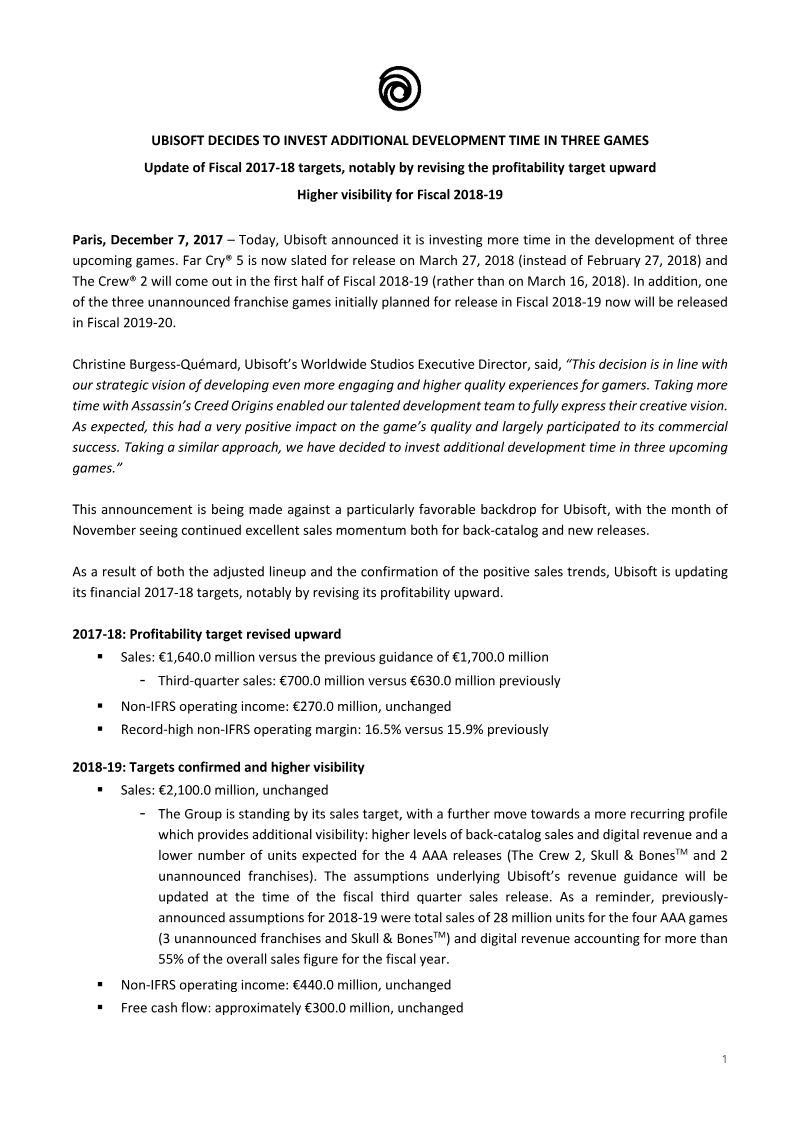
Ubisoft Decides to Invest Additional Development Time in Three Games
Ubisoft is extending development timelines for three upcoming titles to prioritize product quality and long-term engagement.
- Ubisoft has raised its fiscal 2017-18 non-IFRS operating margin guidance to a record 16.5%, up from the previous 15.9% projection.
- Development timelines for three titles are being extended to prioritize quality, including a one-month delay for Far Cry 5 to March 2018 and shifting The Crew 2 to the first half of fiscal 2018-19.
- One of three planned unannounced franchise games has been delayed to fiscal 2019-20, following the successful strategy of extending development time for Assassin’s Creed Origins.
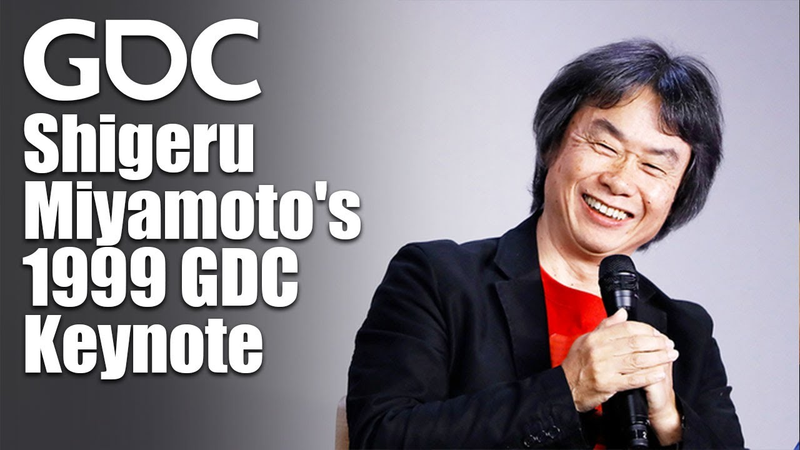
Shigeru Miyamoto's 1999 GDC Keynote
The evolution of interactive entertainment necessitates a fundamental shift in how developers approach game design, moving away from purely technical engineering toward a discipline that balances artistic vision with hardware constraints.
- Game developers must balance artistic vision with a granular understanding of hardware constraints, such as memory maps and processing limitations, to ensure concepts are realistically implementable.
- Prioritizing functional, engaging gameplay over graphical fidelity or narrative complexity is essential to avoid common development pitfalls.
- The development of The Legend of Zelda: Ocarina of Time utilized a modular team structure to conduct targeted experiments in 3D movement, camera systems, and real-time processing.
The Design of Time: Understanding Human Attention and Economies of Engagement
Human attention serves as the primary currency in the modern digital landscape, necessitating a fundamental shift in how developers approach game design.
- Game designers must shift from aggressive engagement tactics to models prioritizing player autonomy and long-term psychological well-being to avoid the diminishing returns caused by player normalization of repetitive stimuli.
- Sustainable engagement is achieved by engineering social ecosystems that foster community interaction and collective investment rather than relying on superficial retention metrics.
- Designers should implement varied temporal rhythms, such as daily rituals and multi-year objectives, to cultivate anticipation and habituation that feels rewarding rather than coercive.

Limited Time Events in Japanese Mobile Games: From Sakura to Matsuris
Japanese mobile game developers utilize a sophisticated calendar of limited-time events to drive engagement and monetization throughout the second and third quarters of the year.
- Japanese mobile game developers leverage cultural milestones and seasonal shifts in Q2 and Q3 to drive engagement through themed UI designs, limited-time items, and specialized gacha character variants.
- Golden Week (April 29th to May 5th) serves as a primary monetization window, where developers capitalize on increased player free time during the national holiday by launching aggressive limited-time IAP offers and campaigns.
- The start of the Japanese school year in April is a major recurring event theme, featuring school-related levels and character skins that resonate with the cultural significance of the academic calendar.
Games You Might Not Have Tried - ep 11 - Find New Games - Extra Credits
This analysis highlights a curated selection of underappreciated video games, focusing on titles that offer unique design philosophies, experimental mechanics, or distinct atmospheric qualities.
- Game design innovation often requires prioritizing unique mechanics or atmospheric risks over mainstream polish, even when this leads to unconventional or flawed final products.
- Platform selection significantly impacts user experience, as demonstrated by The Guild of Dungeoneering, which improved its accessibility and flow by transitioning from PC to tablet.
- Niche titles can successfully streamline complex genres by removing secondary elements; for example, Reverse Crawl focuses exclusively on tactical combat by stripping away the exploration typical of the Heroes of Might and Magic formula.
Pokémon GO Hit 50 Million Downloads in Record Time, Now at More Than 75 Million Worldwide
Pokémon GO achieved unprecedented growth in the mobile gaming sector during July 2016, setting a new record for the fastest title to reach 50 million worldwide downloads.
- Pokémon GO reached 50 million worldwide downloads in just 19 days, setting a record as the fastest mobile game to hit that milestone on both iOS and Android.
- As of July 2016, the game has surpassed 75 million total global installs across Apple and Google platforms.
- The game achieved this growth while being available in only 32 of the more than 100 available App Store and Google Play markets.
Mobile Users Are Spending More Time in Pokémon GO Than Facebook
The rapid adoption of Pokémon GO in July 2016 demonstrated significant shifts in mobile user engagement patterns. By analyzing proprietary usage data from the U.S.
- As of July 11, 2016, the average iPhone user spent 33 minutes per day in Pokémon GO, surpassing the daily engagement time of Facebook (22 minutes) and Snapchat (18 minutes).
- Pokémon GO reached 15 million total installs across the App Store and Google Play shortly after its U.S. launch.
- While Pokémon GO outperformed major social media platforms in daily engagement, it trailed other mobile gaming titles, such as Game of War (nearly 2 hours) and Candy Crush Saga (43 minutes).