RedLynx
CompanyFinland
11 documents in the library are about RedLynx, from writers such as PocketGamer.biz, Ubisoft and Game File. Each has a summary and key insights with the page they come from.
Connections
The documents about RedLynx on the inner ring, the other games and companies they name on the outer one. Select a cover to see it up close and open it in a new tab; drag to move, pinch or Ctrl + scroll to zoom.
Key figures from the reports
To achieve a target run-rate fixed cost base of €1.25 billion by 2028, Ubisoft is closing studios in Halifax and Stockholm and restructuring operations in Abu Dhabi, RedLynx, and Massive.
Ubisoft, 2026 · Major Organizational, Operational and Portfolio Reset to Reclaim Creative Leadership and Restore Sustainable Growth, p. 7
RedLynx leveraged over 14 years of experience and a history of 30 million previous mobile downloads to inform the design and market positioning of Trials Frontier.
PocketGamer.biz, 2014 · RedLynx on taking Trials from console to mobile, p. 1
On Steam
Steam estimates as of 9 Oct 2026. Revenue is premium revenue on Steam only: game sales, without DLC.
- Revenue as publisher
- $698K
- 1 games
- Revenue as developer
- $4.0M
- 5 games
- Units sold
- 355K
- as publisher or developer
- Headquarters
- Finland
RedLynx’s best-selling games on Steam
| Game | Released | Share of the best seller | Revenue | Units |
|---|---|---|---|---|
| Trials Evolution Gold EditionDeveloper | 2013 | $1.9M | 151K | |
| Trials RisingDeveloper | 2019 | $1.3M | 88K | |
| Trials 2: Second EditionDeveloper and Publisher | 2008 | $698K | 103K | |
| Trials of the Blood DragonDeveloper | 2016 | $91K | 8,878 | |
| Monster Trucks NitroDeveloper | 2009 | $45K | 3,213 |
Documents about RedLynx

🚨📢BREAKING NEWS: New Adnetwork AdSURGE is here, Supercell Kills Squad Busters, Ubisoft Quits Mobile
The mobile gaming industry is currently experiencing a significant shift characterized by the emergence of new ad-tech infrastructure and a wave of high-profile project cancellations.
- Miniclip, in partnership with Tencent and Easybrain, has launched AdSurge, a new ad network leveraging first-party data to compete in the mediation and ad-tech space currently dominated by AppLovin and Unity.
- Supercell is shutting down Squad Busters, with the game being pulled from stores on December 1 and servers closing on December 14, marking a rare global launch failure for the studio.
- Ubisoft is exiting mobile game development in Europe, highlighted by the closure of its Helsinki-based studio RedLynx and the cancellation of Rainbow Six Mobile.

What’s going on at Rovio, Miniclip’s new ad network, Squad Busters’ last rites, RedLynx closes, more
The mobile games industry is currently undergoing a period of significant restructuring, characterized by studio closures, project cancellations, and a strategic pivot toward established intellectual property.
- Mobile game spending declined by 7% in Q3, with only three of the top 20 grossing titles being less than two years old, highlighting a significant barrier to entry for new games.
- Major publishers are aggressively pruning portfolios, resulting in the cancellation of Supercell’s Squad Busters, Ubisoft’s Rainbow Six Mobile, and Fingersoft’s Lego Hill Climb Adventures.
- Ubisoft is closing its Helsinki-based studio RedLynx as part of a broader industry trend of studio closures and project cancellations.
Ubisoft Plans Cuts at German Studios: Workforce Reductions in the Gaming Industry
The video game industry continues to experience significant workforce contraction, highlighted by Ubisoft’s recent move to reduce its headcount in Germany.
- Ubisoft is planning to reduce its German workforce by approximately 100 employees, with more than half of these cuts expected at the Dusseldorf studio.
- To manage the headcount reduction, Ubisoft is negotiating a voluntary departure program with the Works Council, potentially offering a payout formula based on 1.5 times the monthly salary multiplied by years of service.
- Ubisoft’s total headcount has decreased from 20,729 in September 2022 to 16,590 by March 2026 as part of a broader cost-cutting initiative that aims to save an additional €180 million by 2028.

Les incompétents
Ubisoft is currently facing a severe corporate crisis characterized by declining market confidence, operational instability, and a failure to adapt to shifting industry trends.
- Ubisoft's share price dropped 40% following an announcement of a major restructuring that includes the cancellation of six games and the delay of seven others.
- The restructuring involves closing studios in Stockholm and Halifax, implementing a global return-to-office mandate, and laying off staff at Massive, RedLynx, and its Abu Dhabi studio.
- Ubisoft's stock value has declined by over 90% since its 2018 peak, with recent investor dissatisfaction stemming from the sale of franchise rights to Tencent.

Major Organizational, Operational and Portfolio Reset to Reclaim Creative Leadership and Restore Sustainable Growth
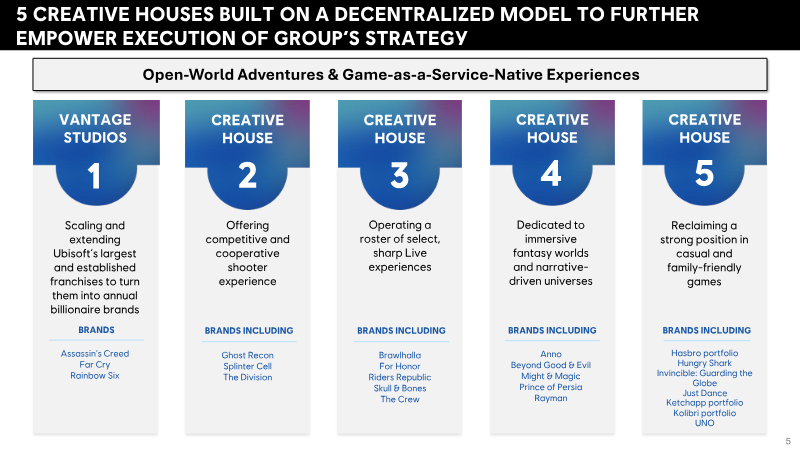
Ubisoft has initiated a major organizational and operational reset designed to reclaim creative leadership and restore sustainable growth in an increasingly selective AAA market.
- Ubisoft is targeting a €500 million reduction in fixed costs by March 2028 compared to FY23 levels to restore sustainable growth.
- The company is restructuring into five specialized Creative Houses to focus on core franchises like Assassin’s Creed, Far Cry, and Rainbow Six while improving operational agility.
- Ubisoft has canceled six projects, including the Prince of Persia: The Sands of Time remake and four unannounced titles, while extending development timelines for seven others to prioritize quality.
Building Bridges Instead of Silos - Celine Pasula, Ubisoft RedLynx
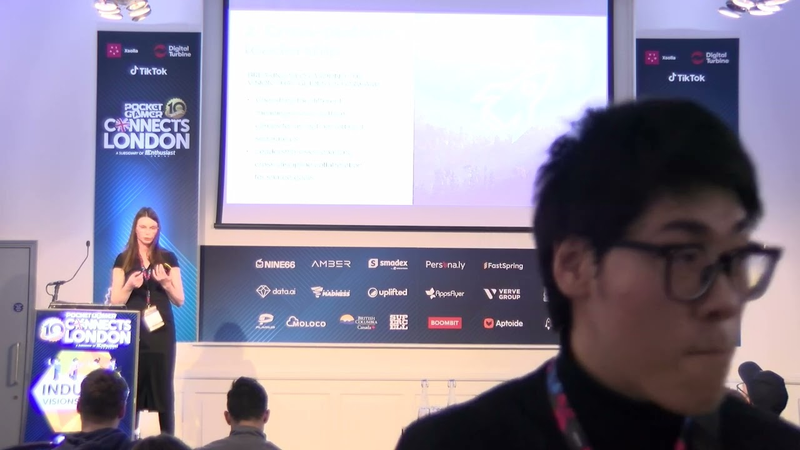
Celine Pasula, Managing Director at Ubisoft RedLynx, argues that the future of the gaming industry lies in breaking down traditional silos between mobile, PC, and console development.
- Cross-platform development is not merely a technical challenge of porting games between devices, but a strategic imperative to embrace diverse player preferences and reach audiences across mobile, PC, and console simultaneously.
- Industry data indicates that an increasing number of players are actively mixing platforms, creating a solid foundation for developers to prioritize cross-play and unified progression.
- Leaders must foster 'psychological work safety' to enable teams to innovate, speak up, and take risks, which is essential for navigating the complexities of cross-platform development.
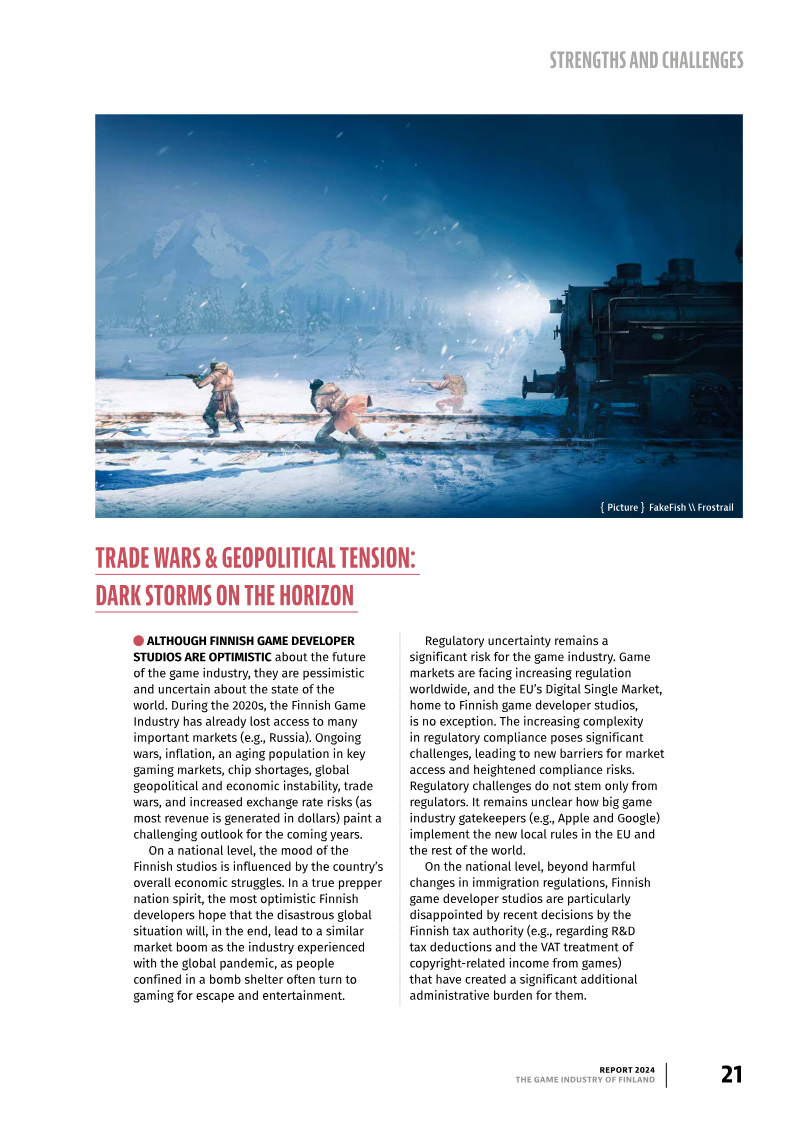
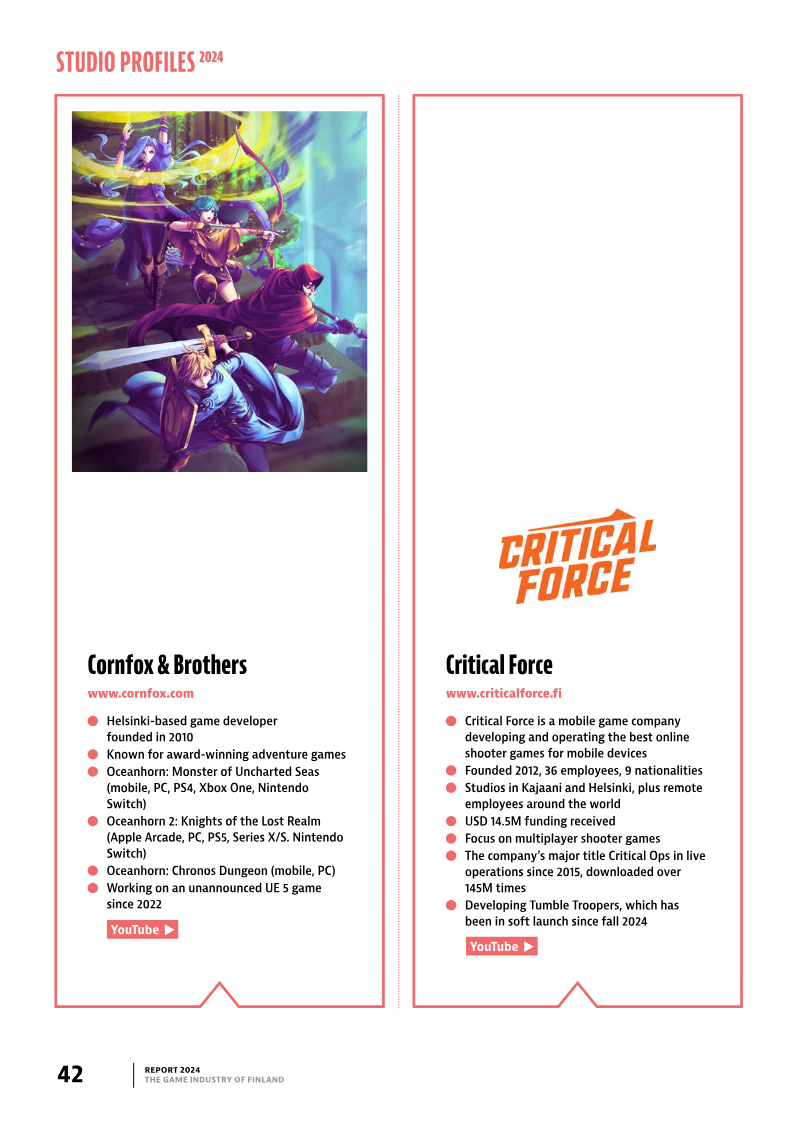
The Game Industry of Finland Report 2024
The 2024 overview of Finland’s game sector presents a comprehensive assessment of an industry that remains a global technology leader while confronting a tightening financing environment.
- Finland’s game industry currently employs approximately 4,300 individuals, representing about 3,800 full-time positions.
- A significant decline in private risk capital and publisher funding has forced studios to pivot toward B2B subcontracting, co-development agreements, and increased reliance on EU and national public R&D programs.
- The ecosystem remains anchored by major players like Supercell, which employs over 800 staff and has produced seven global hit titles, alongside diverse ventures like the mental-health game developer Soihtu DTx, which recently secured a $4.2 million seed round.

RedLynx on taking Trials from console to mobile
RedLynx, a developer with over 14 years of experience and a portfolio of more than 100 titles, successfully transitioned its established Trials motorbike franchise from console to mobile with the release of Trials Frontier.
- RedLynx successfully adapted the Trials franchise for mobile by shortening track lengths to approximately 30 seconds, enabling the one-to-five-minute play sessions preferred by mobile users.
- Trials Frontier achieved 12 million downloads within two months of its launch by transitioning from a premium console model to a free-to-play mobile environment.
- The development strategy prioritized a robust metagame—focused on bike upgrades and character progression—to satisfy mobile players who prioritize meta-progression over the pure mechanical mastery favored by console audiences.

How Finland change the direction of the mobile games industry
The Finnish mobile gaming industry owes its foundational success to the strategic influence and patronage of Nokia.
- Nokia served as the foundational corporate patron for the Finnish mobile gaming industry, providing the essential investment, technical infrastructure, and distribution channels that enabled studios like Rovio, RedLynx, and Bugbear to scale.
- The Finnish 'demo scene'—a culture of programmers dedicated to maximizing hardware performance—provided the core talent pool that Nokia leveraged to pioneer early mobile gaming concepts.
- Nokia’s N-Gage hardware, despite its commercial failure, acted as a critical bridge to the modern era by introducing early mobile connectivity standards and concepts that prefigured modern ecosystems like Game Center and mobile MMOs.
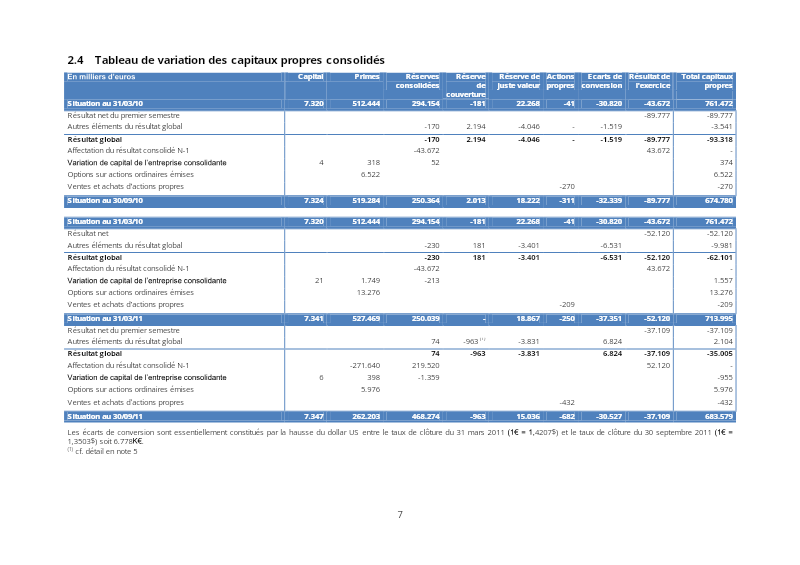
Ubisoft Financial Half-Year Report: 2011-12
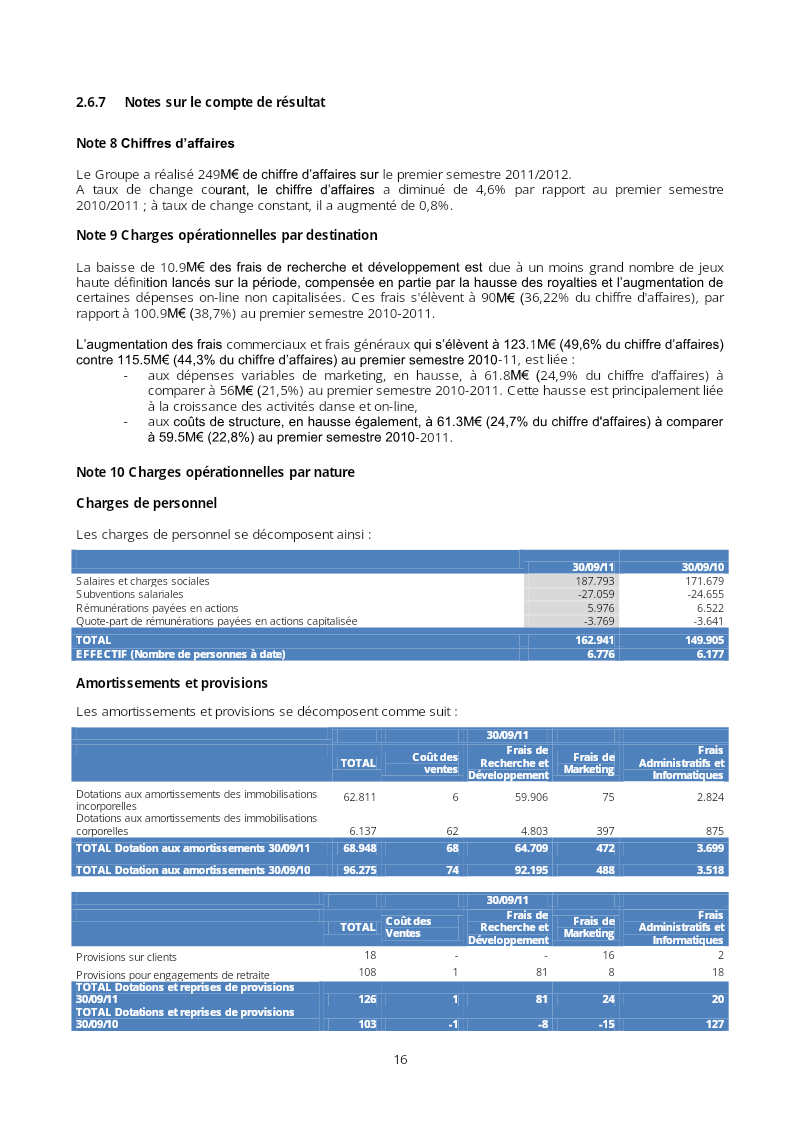
Ubisoft’s financial performance for the first half of the 2011-12 fiscal year reflects a period of strategic transition characterized by disciplined cost management and targeted investment in digital growth.
- Ubisoft reduced its net loss to €37.1 million for the first half of fiscal year 2011-12, a significant improvement from the €89.8 million loss recorded in the same period the previous year.
- Revenue reached €249 million, representing a 4.6% decline at current exchange rates but a 0.8% increase when measured at constant rates.
- The company maintained a robust gross margin of 63.7%, supported by strong performance in online and back-catalogue sales.
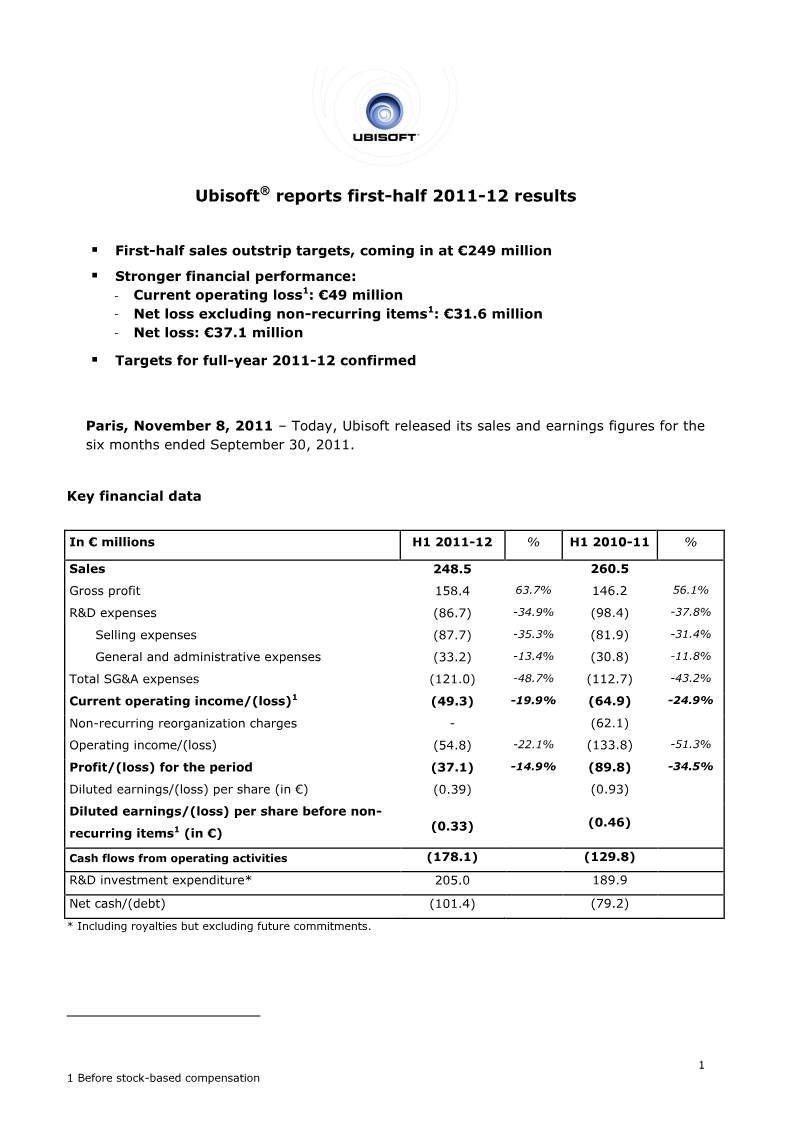
Ubisoft First-Half 2011-12 Results
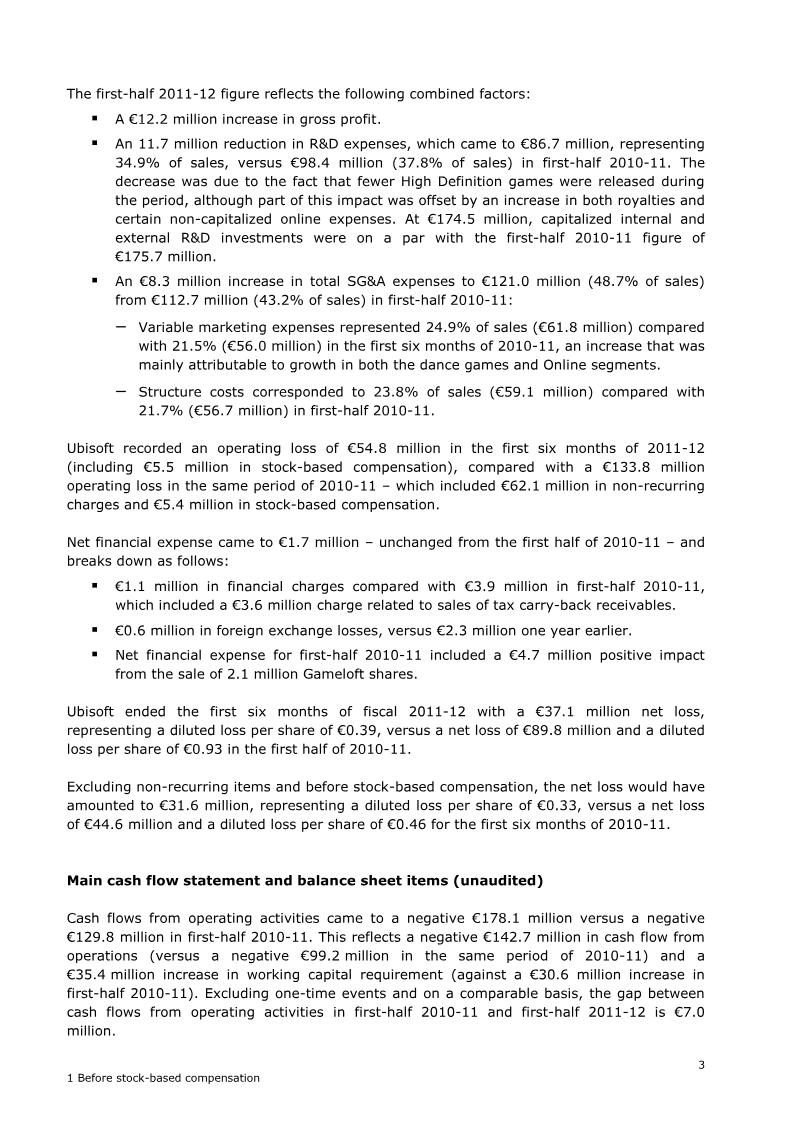
Ubisoft’s first-half results for the 2011-12 fiscal year demonstrate a period of financial recovery and strategic growth, characterized by sales figures that significantly outperformed initial internal targets.
- Ubisoft narrowed its current operating loss to €49 million for the first half of fiscal year 2011-12, an improvement from the €65 million loss recorded in the same period the previous year.
- Sales for the six-month period ending September 30, 2011, reached €249 million, outperforming internal targets and maintaining stability at constant exchange rates.
- Online segment sales surged 132% in the second quarter, doubling their contribution to total revenue to 12% compared to the prior year.