Quest
Company
Documents about Quest

What Are the Most-Hyped Q1 2025 PC Game Releases?
This analysis provides a broad overview of the video game industry landscape as of early 2025, focusing on market trends, platform performance, and emerging consumer behaviors.
- Market saturation on Steam has reached a critical point, with 79% of new titles failing to meet basic engagement thresholds in 2024, up from 33% in 2018.
- AAA development costs have escalated significantly, with production budgets for major franchises like Call of Duty reaching as high as $700 million.
- The United Kingdom's physical retail sector saw a 35% decline in sales during 2024, reflecting a definitive industry-wide shift toward digital-first consumption.

Games 2025: The Industry Quest for Growth
The global games market reached a record $199.4 billion in 2024, cementing its status as the preeminent force in the entertainment sector.
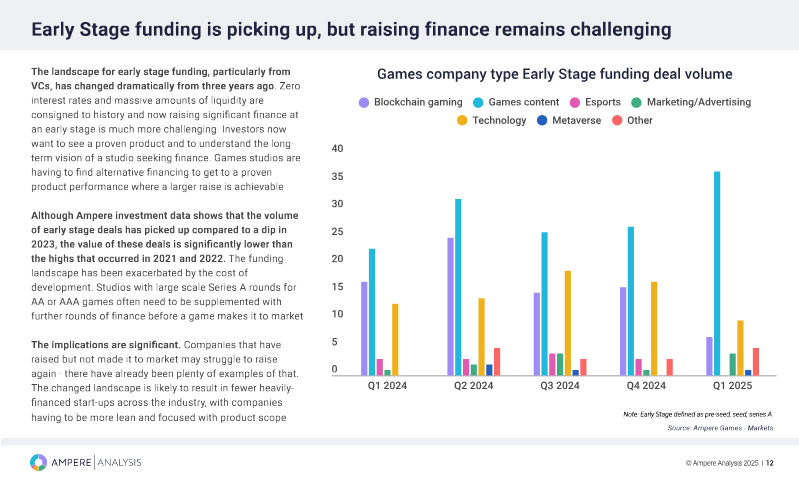
- The global games market reached $199.4 billion in 2024, but growth is projected to decelerate to approximately 1% in 2025 due to release delays and reduced early-stage funding.
- Publishers are prioritizing operational efficiency and asset optimization, focusing on remakes, remasters, and multi-platform porting to mitigate the rising costs of AAA development.
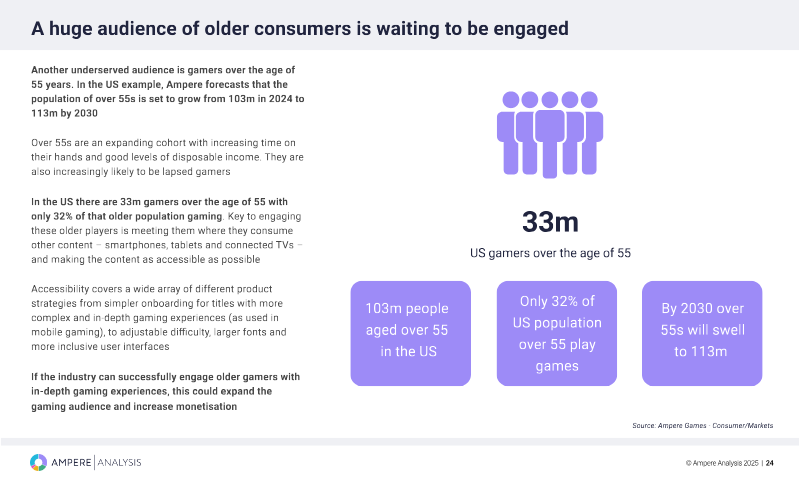
- Strategic growth is shifting toward geographic expansion in the Middle East and Southeast Asia, alongside targeting underserved demographics like older gamers and young adult females.



Videojuegos en el Aula: ¿Qué se está haciendo en España? Manual para docentes 2025
Video games have become a central cultural and educational tool in Spain, where more than 22 million people—over half of them women—play an average of 8.2 hours each week.
- Spain’s gaming ecosystem is supported by over 22 million players, with women accounting for more than half of the user base and an average weekly playtime of 8.2 hours.
- Educational integration is facilitated by a standardized infrastructure of platforms including Dok Student, Cokitos, Mundo Primaria, Eutopía, and Escapeweb.
- Publicly funded titles like ABC Dinos, BookyPets, and Quijote: Quest for Glory utilize RPG and tower-defense mechanics to improve early literacy, while games like Dîrok and El Enigma de Toledo support STEM and history curricula.


UGC Impact Study 2025
The 2025 UGC Impact Study, conducted by GameDiscoverCo and commissioned by mod.io, analyzes the commercial and engagement benefits of integrating official user-generated content (UGC) support into video games.
- Games with official UGC support see a 31% revenue advantage over non-UGC titles after five years, growing from an 8% advantage in the first year.
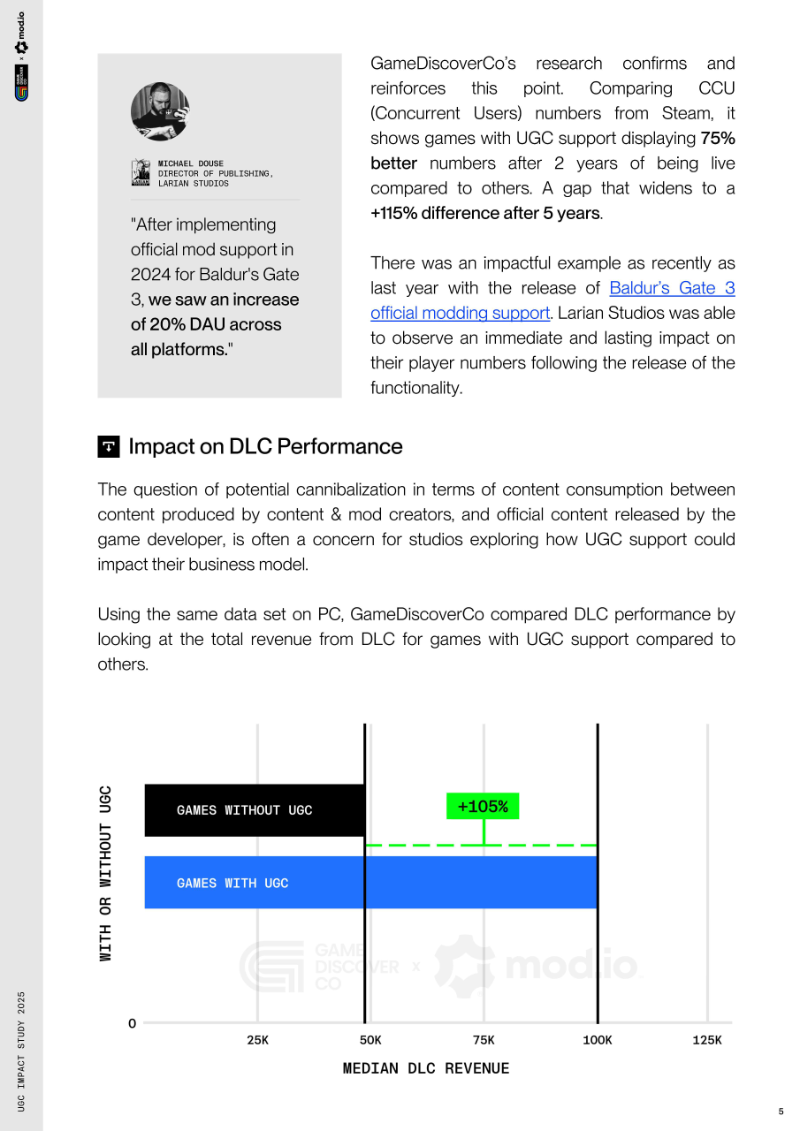
- UGC support drives long-term player retention, resulting in 75% higher concurrent user counts after two years and 115% higher after five years on PC.
- Official UGC does not cannibalize sales; games with modding support see 105% higher median revenue per DLC, with SnowRunner players using mods being 2.4 times more likely to purchase official DLC.

The Man Who Made Ultima: Lord British | Extra Credits Gaming
Richard Garriott, widely known by his persona Lord British, stands as a foundational figure in the evolution of computer role-playing games (CRPGs) and massively multiplayer online games (MMOs).
- Richard Garriott, known as 'Lord British,' pioneered the RPG genre with the Ultima series, which introduced the concept of the 'avatar' and shifted industry standards toward complex morality systems with 1985's Ultima IV: Quest of the Avatar.
- Garriott founded Origin Systems, which was acquired by Electronic Arts in 1992 for $30 million in stock and later produced the groundbreaking 1997 title Ultima Online, one of the first successful graphical MMOs to utilize a recurring subscription model.
- The commercial success of Ultima Online led to internal conflict at EA, where the company's mandate to pivot toward multiple simultaneous MMO projects resulted in the cancellation of other titles and the eventual stagnation of Origin Systems.

Square Enix II: The JRPG Masters
Square Enix currently occupies a precarious position within the global gaming industry, characterized by a sharp divergence between its highly lucrative massively multiplayer online segment and its underperforming high-definition console and PC business.
- Square Enix's HD console and PC division generates $500–$600 million in annual revenue but remains unprofitable due to bloated production costs and internal cannibalization.
- The company is shifting its corporate strategy toward multiplatform releases and a more disciplined development pipeline to address operational inefficiencies.
- Long-term stability depends on leveraging core evergreen franchises—Final Fantasy, Dragon Quest, and Kingdom Hearts—rather than diversifying into non-JRPG genres.


Financial Results 9M24
PCF Group S.A. presents its financial and operational results for the first nine months of 2024, focusing on the performance of its global development studios and its VR-specialized subsidiary, Incuvo.
- PCF Group reported a net loss of PLN 33.3 million for 9M 2024, widening from a PLN 13.4 million loss in the same period last year.
- Total revenue grew to PLN 131.9 million from PLN 111.3 million, driven by the release of Bulletstorm VR and increased Work-for-Hire activity.
- Adjusted EBITDA dropped to negative PLN 1.7 million, down from a positive PLN 8.5 million in 9M 2023.

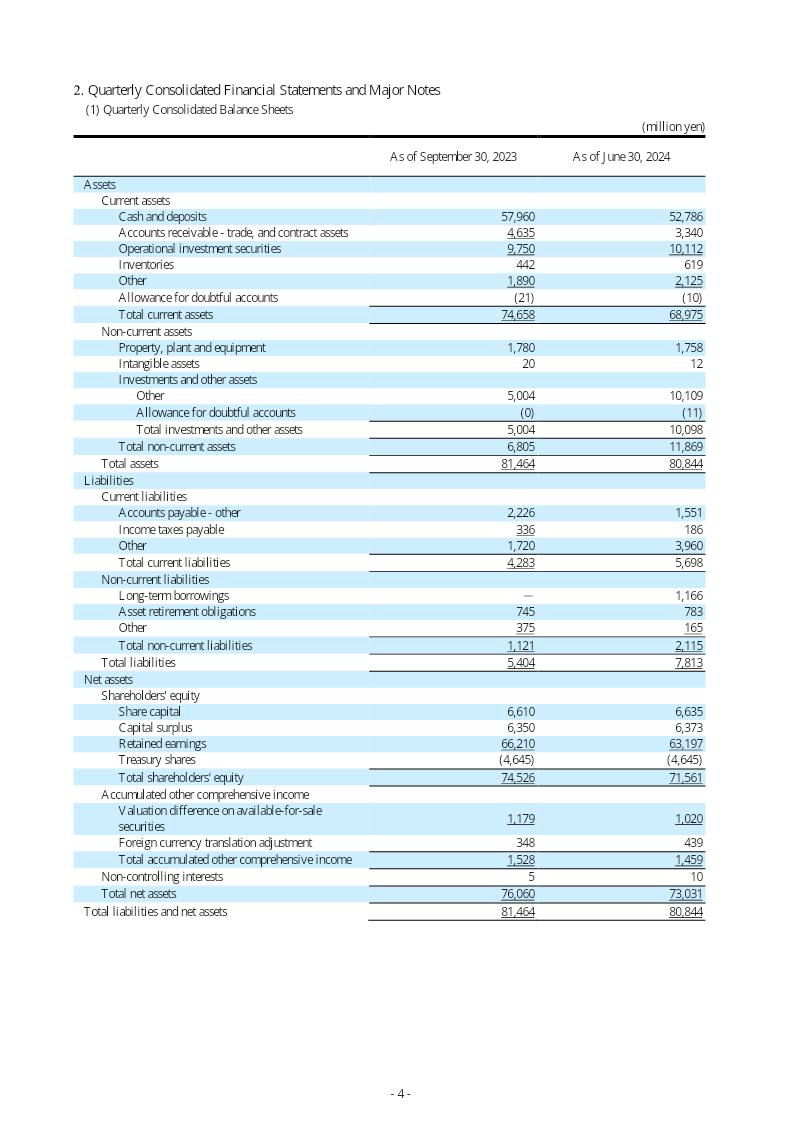

COLOPL Notice of Partial Correction to Consolidated Financial Results for the Nine Months Ended June 30, 2024
COLOPL, Inc. issued a formal notice on November 20, 2024, to announce partial corrections to its previously disclosed consolidated financial results for the nine-month period ending June 30, 2024.
- COLOPL reported a consolidated net loss attributable to owners of 435 million yen for the nine months ended June 30, 2024, a sharp decline from the 1,244 million yen profit recorded in the same period last year.
- Consolidated net sales fell 18.6% year-over-year to 18,307 million yen, resulting in an operating loss of 695 million yen compared to a 1,980 million yen operating profit in the prior year.
- The Entertainment Business segment, which includes smartphone game operations, generated 17,892 million yen in sales but recorded an operating loss of 528 million yen due to declining revenue from existing titles and upfront costs for the new blockchain game, Brilliantcrypto.



Aiming Q3 2024 Financial Results
Aiming’s financial results for the third quarter of 2024 reflect a challenging period characterized by declining revenues and increased operating losses within the competitive Japanese smartphone online game market.

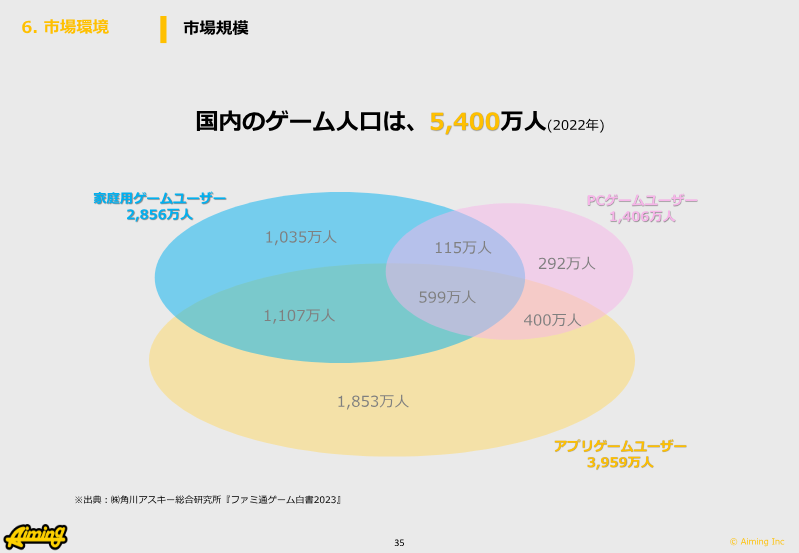

Aiming Q3 2024 Financial Results: Business Plan and Growth Potential
Aiming’s financial performance in the third quarter of 2024 reflects a transitional period characterized by modest revenue growth alongside operational challenges.

Dragon Quest and HD-2D RPGs on Live Streaming
The analysis examines the live-streaming potential for the upcoming Dragon Quest III HD-2D Remake by evaluating historical viewership trends of the Dragon Quest franchise and the broader HD-2D RPG genre.
- Dragon Quest viewership is trending upward, with the 2023 spin-off Dragon Quest Monsters: The Dark Prince generating 6.8 million hours watched in its debut week.
- The Dragon Quest series relies heavily on a core Japanese fanbase, evidenced by the top 20 streamers for The Dark Prince being exclusively Japanese and two channels alone accounting for 3.7 million hours watched.
- HD-2D RPGs demonstrate strong streaming potential, with Sea of Stars leading the genre at 1.9 million hours watched in its first week, outperforming Octopath Traveler’s 1.4 million.

Neuroarchitecture and Video Game Design
The intersection of neuroarchitecture and video game design offers significant potential for cross-disciplinary innovation, particularly in understanding human spatial navigation and behavior.
- Researchers are bridging digital game design and physical architecture by using facilities like the PEARL lab at University College London to track human spatial navigation in controlled, life-sized environments.
- Data from the game Sea Hero Quest is being integrated with physical movement patterns to validate spatial navigation theories against large-scale, real-world datasets.
- Experiments show that human navigation strategies, such as mental mapping, are fundamentally similar to the problem-solving skills developed through video gameplay.