Quest
Company
Documents about Quest

The History of Roguelike Deckbuilders - From Playing Cards to CCGs and Beyond - Extra Credits
The evolution of card-based gaming traces a path from traditional playing cards to the modern roguelike deckbuilder genre.
- Slay the Spire served as the critical inflection point for the roguelike deckbuilder genre, refining procedural dungeon exploration and strategic card progression into a commercially successful and highly accessible format.
- The 2014 title Dream Quest was the first to successfully integrate roguelike procedural generation with deck-building mechanics.
- The 2008 release of Dominion revolutionized card gaming by shifting deck-building from a pre-game meta activity into a core, real-time gameplay loop.

Sticking to Your Guns - How the Doom and Dragon Quest Franchises Modernized - Extra Credits
Successful franchise modernization relies on a disciplined commitment to core mechanics rather than the indiscriminate adoption of industry trends.
- Successful franchise modernization requires a disciplined commitment to core mechanics rather than the indiscriminate adoption of industry trends.
- The 2016 Doom reboot and 2017 Dragon Quest XI succeeded by refining their original identities—visceral combat and accessible turn-based narratives—for contemporary audiences.
- Developers should avoid forcing popular features like cover-based systems or action-heavy combat into established franchises, as these additions often dilute the unique value proposition of the series.

The Mechanics of Character Design - Analyzing the Design of Marvel Puzzle Quest - Extra Credits
Effective character design centers on the concept of ludonarrative resonance, where game mechanics are intentionally aligned with a character’s identity and narrative fantasy.
- Effective character design relies on ludonarrative resonance, where game mechanics are intentionally aligned with a character’s canonical identity and narrative fantasy.
- Designers can create distinct character experiences within repetitive core systems, such as match-three mechanics, by mapping specific character traits to unique mechanical behaviors.
- Mechanical design should reward players for adopting a character’s specific motivations, such as using board disruption for manipulative characters or investigative mini-games for detectives.
Pokémon Quest Catches 10 Million Downloads, $9.5 Million in Player Spending
The mobile game Pokémon Quest achieved a significant performance milestone within its first seven months of global availability, reaching 10 million total installs and generating approximately $9.5 million in player spending across the Apple App Store and Google Play.
- Pokémon Quest reached 10 million global downloads and $9.5 million in gross revenue within approximately seven months of its June 24, 2018, launch.
- The title ranks as the fourth highest-grossing Pokémon mobile game, trailing Pokémon GO ($2.27 billion), Pokémon Shuffle Mobile ($21.8 million), and Pokémon Duel ($21.6 million).
- Japan leads in player spending with $3 million (32% of total revenue), while the United States accounts for the highest volume of downloads at 2.2 million.
Pokémon Quest Revenue on Mobile Reaches $8 Million After One Month
Pokémon Quest achieved significant commercial traction during its initial month of availability, generating over $8 million in worldwide mobile revenue.
- Pokémon Quest generated over $8 million in global mobile revenue within its first month of release.
- Japan is the leading market for the game, accounting for 34% of total revenue, followed by the United States at 24% and South Korea at 12%.
- iOS users drove the majority of spending, contributing 66% of total revenue compared to 44% from Google Play users.
2018 CESA Games White Paper
The 2018 CESA Games White Paper serves as a comprehensive annual analysis of the computer entertainment industry, providing critical data on market performance, consumer trends, and industry developments.
- The Japanese domestic home console market (hardware and packaged software) reached a total value of 386.7 billion yen in 2017, up from 314.7 billion yen in 2016.
- The global home console market (hardware and software) was valued at 2.7881 trillion yen in 2017, showing growth from 2.5794 trillion yen in the previous year.
- The Japanese domestic market for smart device game apps reached 1.3192 trillion yen in 2017, with China ranking first globally, followed by the United States and Japan.
Family Guy: Another Freakin' Mobile Game Revenue Surpasses $30 Million
Family Guy: Another Freakin' Mobile Game has achieved significant commercial success, surpassing $30 million in worldwide gross revenue since its launch in April 2017.
- Jam City's match-3 title 'Family Guy Another Freakin Mobile Game' has generated over $30 million in worldwide gross revenue since its launch in April 2017.
- The United States is the primary market for the game, accounting for approximately 76% of total revenue, followed by Great Britain at 9%.
- Player spending is relatively balanced across mobile platforms, with 55% of revenue originating from iOS users and 45% from Google Play.
First Week Pokémon Quest Revenue Reaches $3 Million on Mobile, Downloads Hit 3.5 Million
Pokémon Quest demonstrated strong initial market performance following its mobile launch in late June 2018.
- Pokémon Quest generated $3 million in global player spending across the App Store and Google Play during its first seven days of mobile availability.
- The title achieved 3.5 million total mobile downloads within its first week of release.
- Apple's App Store accounted for 56% of total revenue, while Google Play contributed the remaining 44%.
Financial Results Briefing: Fiscal Year Ended March 31, 2018
Square Enix Holdings reported its financial results for the fiscal year ended March 31, 2018, highlighting a period of strategic transition toward digital-first revenue streams.
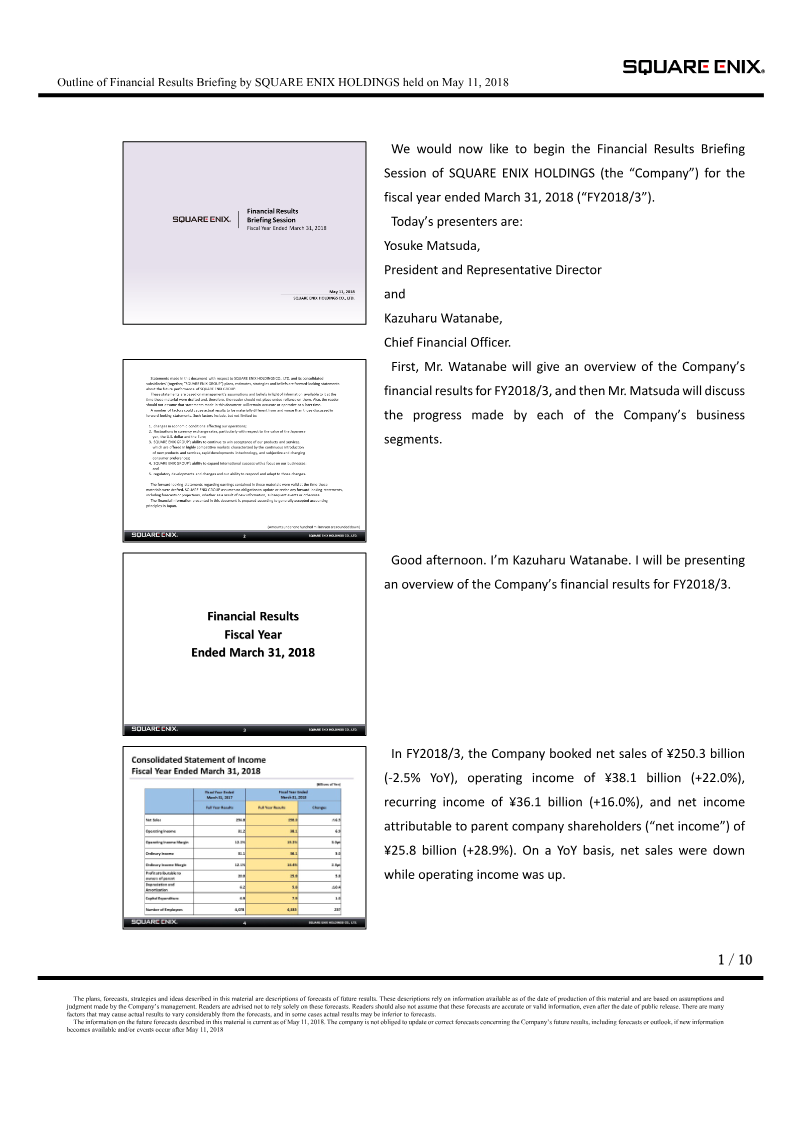
- Square Enix reported FY2018 net sales of ¥250.3 billion, a 2.5% decrease, while operating income grew 22.0% to ¥38.1 billion and net income rose 28.9% to ¥25.8 billion.
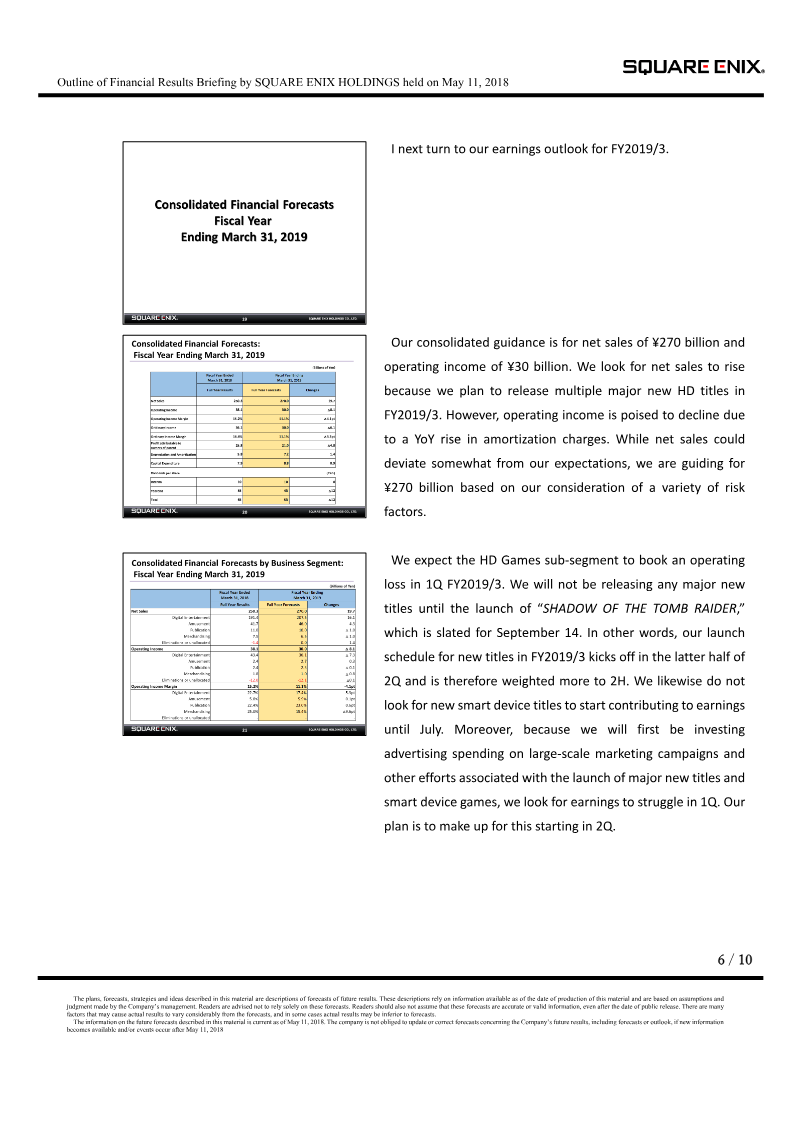
- The company set medium-term targets for the fiscal year ending March 31, 2020, aiming for ¥300–400 billion in net sales and ¥40–50 billion in operating income.
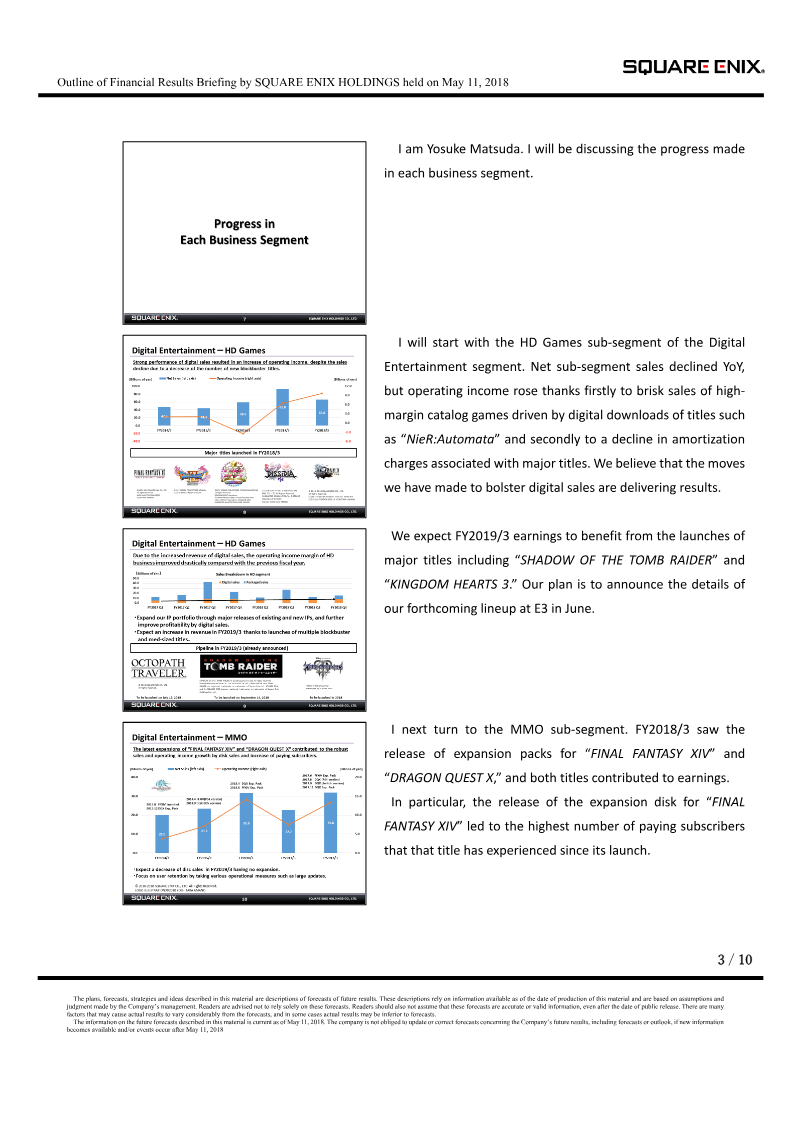
- Growth was driven by high-margin digital catalog sales, specifically NieR:Automata, and expansion packs for MMO titles Final Fantasy XIV and Dragon Quest X.


Capital Markets Day 2018
THQ Nordic’s 2018 growth strategy centers on a dual-track approach of aggressive mergers and acquisitions paired with a disciplined asset care model.
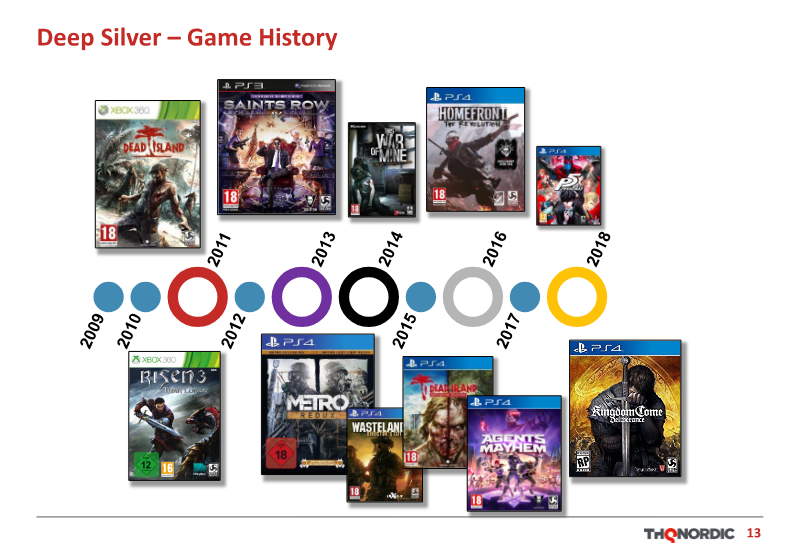
- THQ Nordic is executing a dual-track growth strategy centered on aggressive M&A and the revitalization of existing AAA intellectual properties like Darksiders and Titan Quest.
- The acquisition of Koch Media provides the company with a critical infrastructure for distribution, marketing, and logistics across the European market.
- The company is managing a robust development pipeline of 54 projects, supported by data-driven UX research and integrated studio operations.

Top In-App Advertisers of Q1 2018: Android Game Category
This analysis identifies the top in-app advertisers within the Android gaming category for the first quarter of 2018.
- Toon Blast by Peak Games was the leading in-app advertiser on Android for the entirety of Q1 2018, consistently maintaining the top position across January, February, and March.
- The most active in-app advertising categories throughout the quarter were Puzzle and Role Playing games.
- Lords Mobile by IGG.com secured the second position in February and March 2018, while Job Hunt Heroes: Idle RPG by 4 S Games held the third position during the same two-month period.
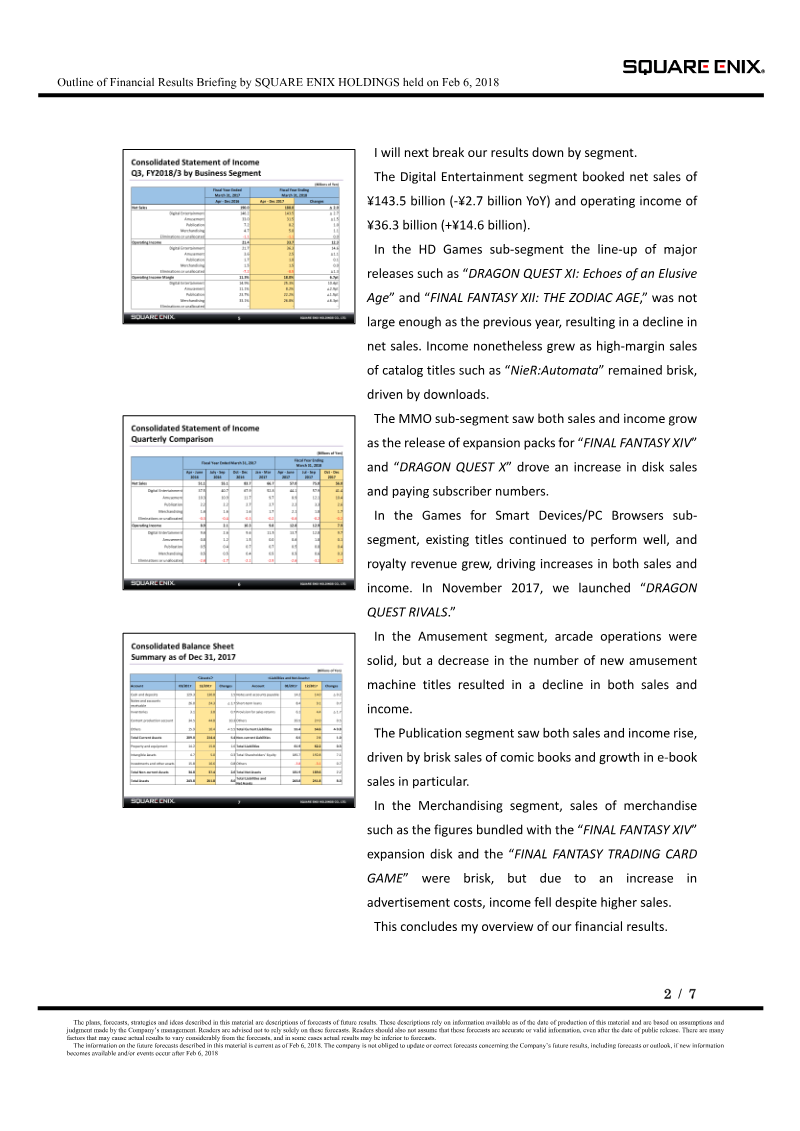
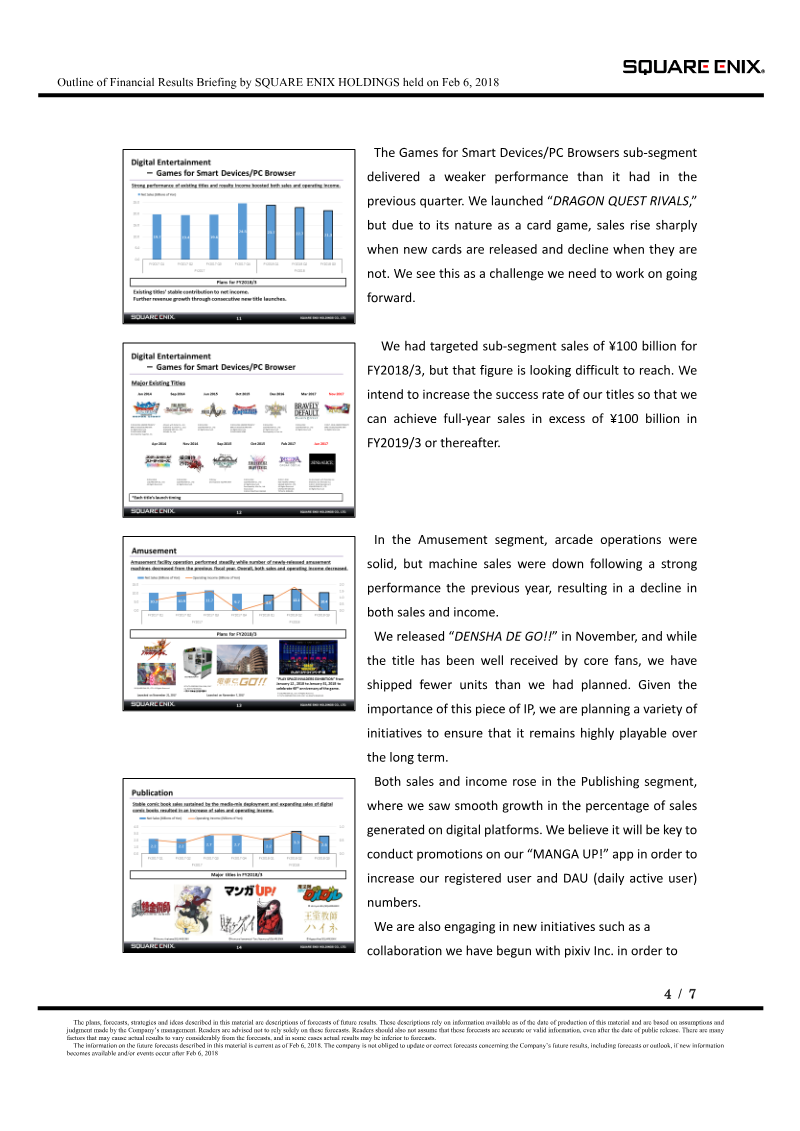
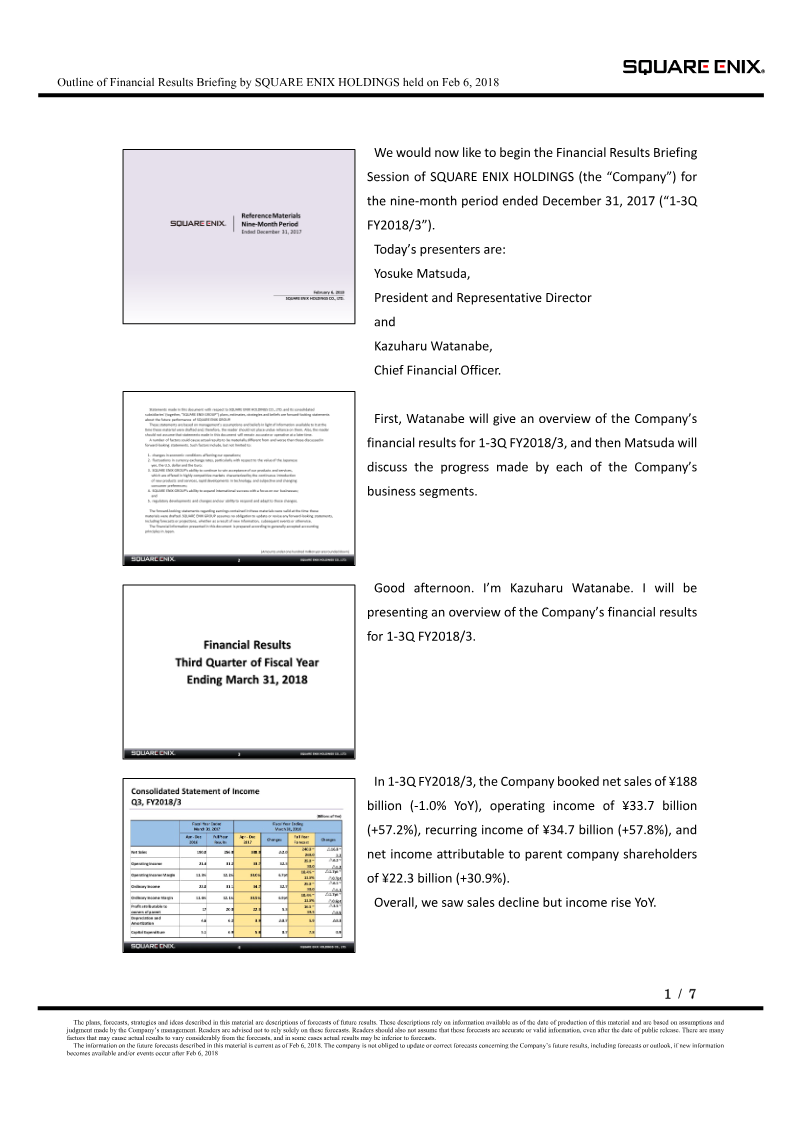
Square Enix Holdings Financial Results Briefing: Nine-Month Period Ended December 31, 2017
Square Enix Holdings reported its financial results for the nine-month period ending December 31, 2017, demonstrating a trend of declining net sales alongside significant growth in operating and recurring income.
- Square Enix reported a 57.2% increase in operating income to ¥33.7 billion and a 30.9% rise in net income to ¥22.3 billion for the nine-month period ending December 31, 2017, despite a 1.0% decline in net sales to ¥188 billion.
- The Digital Entertainment segment generated ¥143.5 billion in net sales, driven by strong digital catalog sales of titles like NieR:Automata and growth in MMO subscribers following Final Fantasy XIV and Dragon Quest X expansions.
- Profitability improved due to a strategic shift toward high-margin digital sales and catalog monetization, which successfully offset a lighter release schedule for new HD games compared to the previous year.