1 free read left. Create a free account for unlimited reading + AI research.
Create free account
The Mechanics of Character Design - Analyzing the Design of Marvel Puzzle Quest - Extra Credits
Key insights
6 takeaways- 01Effective character design relies on ludonarrative resonance, where game mechanics are intentionally aligned with a character’s canonical identity and narrative fantasy.
- 02Designers can create distinct character experiences within repetitive core systems, such as match-three mechanics, by mapping specific character traits to unique mechanical behaviors.
- 03Team synergies can be used to mirror established narrative partnerships, while volatile character traits can be simulated by introducing unpredictable mechanics like self-inflicted damage.
- 04Developers should utilize a consistent mechanical vocabulary, such as color-coded energy types, to communicate complex character archetypes without requiring new systems for every addition.
- 05Mechanical design should reward players for adopting a character’s specific motivations, such as using board disruption for manipulative characters or investigative mini-games for detectives.
- 06Treating mechanics as a primary vehicle for narrative expression ensures that every player action reinforces the connection to a character’s unique identity.
Ask AI about this video
Transcript
In the past, we've talked about designing to reinforce the fantasy of your game. One key pointer was that it's super effective to align the mechanics of a game with your intended theme. For instance, Spider-Man is great at giving players the experience of swinging through New York City, but it might not work quite as well if the city exploration relied on, say, bartering mechanics. A bad mismatch between theme and mechanics can pull you out of the fantasy. But what happens when a game has one core set of mechanics, but many different stories to tell? Well, you probably shouldn't change your game's mechanics to align with each new piece of content. So, how can you sell the fantasy of web-slinging in a game where you can't actually sling webs? In this episode, we'll explore how you can use a limited set of mechanics to design a variety of diverse character experiences. To help us tackle today's topic, we've invited Paige from Demiurge Studios, the team that makes Marvel Puzzle Quest, to help talk about using mechanics to
reinforce your character design. Because, honestly, they do an amazing amount with just match-three mechanics. Thanks, Paige. The strongest character designs are the ones that succeed on multiple levels. For instance, a well-designed character might fill a clear role in their game and introduce a new gameplay strategy and have an authentic look and feel that reinforces their identity. And character design goals can be as unique and varied as the games those characters live in, but all compelling characters usually have one thing in common. They successfully capture the fantasy of being that character. So, since Marvel Puzzle Quest is what Paige knows inside and out, we're going to use it as an example. If you're not familiar with Marvel Puzzle Quest, it's a match-three RPG where players build teams of Marvel characters to battle against other teams of Marvel characters. And because these are Marvel characters, they all have rich histories, personality, and lore that inform how the players expect them to feel in game. So, if I want to play as Ant-Man, I'm kind of hoping to plan and execute awesome heists. But, if I choose
to play as the Hulk, I'm pretty sure my fantasy is going to be getting very, very angry and going on an arcade-like rampage. Even though the game's core mechanics are really just matching tiles and firing character powers, each of the 200 or so characters have to be designed to capture the unique feel of their namesakes. Now, there are a few approaches for leveraging game mechanics to achieve this. One is to shoot for loot or narrative resonance. That's a fancy term for aligning what the character should do narratively and what the player does do mechanically. As an example of this, one iconic Captain America skill is his ability to throw his shield at an enemy and catch it on the rebound. In Marvel Puzzle Quest, Cap has a shield throw power that stuns a targeted enemy and puts a tile on the board to represent said shield. If you can protect this tile from being matched away for a certain number of turns, the shield rebounds, returning some of the energy used to fire the power. Now, Cap was a pretty straightforward example, but we can use the same idea to tell much more complex stories as well.
Consider one of my personal favorites, Jessica Jones. Canonically, she solves problems relying on two things: her detective skills and her strength. In Marvel Puzzle Quest, Jessica is most effective when she can chain those two talents together. So, her design gives players a clue-finding mini-game to play within the game's match-three mechanics. Okay, it works like this. One of her powers passively creates hidden tiles. Now, the enemy team can see them, but you can't. If you can locate and match these tiles, Jessica will deal damage to the enemy and you'll charge Jessica's two other physical powers. Sure, you might get lucky and stumble upon these tiles randomly, but what you really want to do is hunt them down. And since Marvel Puzzle Quest represents the concept of knowledge with the color blue, more on that in a minute, saving enough blue energy will briefly reveal the location of these tiles at the start of every turn, giving you a lead. So, playing with Jessica Jones lets you live out a match-three sized detective fantasy. You'll follow the clues, find the evidence, beat up the baddies, and
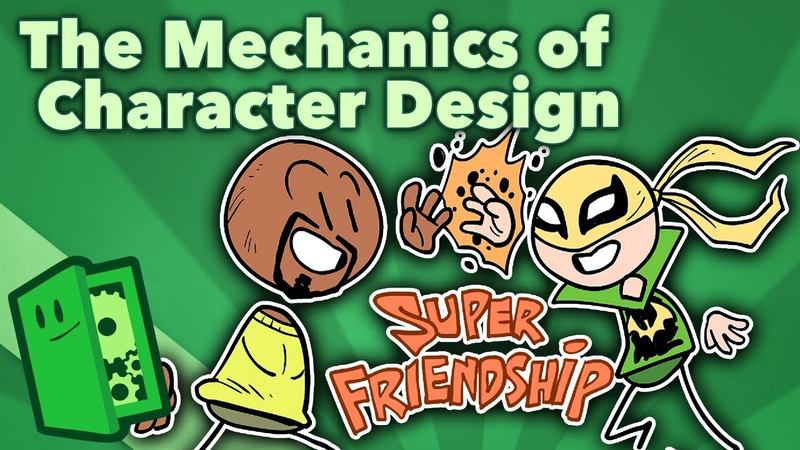
win. In general, this approach means rewarding players for playing the game as if they were the character. If I'm playing as Kingpin, I should cut off my opponent's resources to keep them from becoming a threat. If I'm Loki, my best strategy is to create distractions and manipulate my opponent from the shadows. This character design strategy is all about aligning the character motivations with mechanical decisions. Another approach is to design characters with an eye for how they'll interact with each other. Just like relationships between people, relationships between game mechanics themselves can be collaborative, competitive, or even antagonistic. Since Jessica Jones tends to work alone and only rely on herself, her powers self-synergize well. However, the classic duo of Luke Cage and Iron Fist work better when used together. Most of this synergy comes from powers that feed into each other, but one of Luke's powers is explicitly stronger when Iron Fist is on his team. Behold the power of friendship. But Hulk, on
the other hand, definitely isn't what I'd call a team player. When he's enraged, he barely knows what he's doing, and his powers create wanton destruction, making unpredictable changes to the game board and destroying random tiles, even ones you might want to keep. What's more, his strongest powers also have a chance of hurting his allies. So, if you want to unleash raw Hulk power, you're going to have to accept the consequences in game of not being entirely in control. Finally, let's talk about one more tool, establishing a design language. Have you ever seen those masks used in Italian commedia dell'arte and Japanese Noh? Those classical masked theater traditions relied on limited, fixed sets of masks, but because the audience was already totally familiar with the masks and what they represented, actors could use subtle changes like body posture or lighting to tell intricate nuanced stories. Ideally, we should employ the same principles in character design. We don't need to invent new sets of mechanics whenever we want to tell new stories with our characters, so long as
we've established a strong enough mechanical vocabulary to tell interesting stories by varying how we use those mechanics. Fortunately, games at large already share a deep library of design affordances and conventions. For instance, if you're choosing a starting character in an RPG you're beginning, I'm betting the character in white clothes is a support character, and the character in red clothes is a damage dealer. As character designers, we can lean on conventions like this to make character use more intuitive. Those shared conventions give designers a nice foundation to start building narrative on. But game-specific design language is often helpful, too. Adding mechanical constraints can fuel creativity and create more opportunities to tell unique stories. Like remember when we mentioned that Marvel Puzzle Quest uses blue to represent knowledge? That mapping helps tell the story of a huge variety of characters whose powers come from intelligence or technical know-how. It represents Iron Man using novel technology, Professor X laying out a strategy, Jessica Jones hunting for clues. So as long as game content
continues to respect and showcase the game's design language, players can come to internalize it at their own pace. There are many, many different approaches to using mechanics to reinforce character design, and this is just a small slice of them. But they all ultimately serve the same goal. The mechanic is the message. So let's let that message shine.
Summary
Effective character design centers on the concept of ludonarrative resonance, where game mechanics are intentionally aligned with a character’s identity and narrative fantasy. Even within games constrained by a singular, repetitive core mechanic—such as the match-three system found in Marvel Puzzle Quest—designers can create distinct, immersive experiences by mapping character traits to specific mechanical behaviors. This approach ensures that players feel they are embodying the character rather than simply interacting with a generic set of rules.
Key strategies for achieving this resonance include rewarding players for adopting the character’s canonical motivations. For instance, a detective character might utilize a mini-game involving hidden tiles to simulate investigative work, while a manipulative character might focus on board disruption or resource denial. Furthermore, character design can be enhanced by establishing mechanical relationships between team members, such as creating synergies that mirror established partnerships or introducing chaotic, unpredictable elements that reflect a character’s volatile nature, such as the Hulk’s tendency to damage allies.
Designers can also leverage a consistent mechanical vocabulary to communicate complex ideas without needing to invent new systems for every character. By utilizing established design conventions—such as color-coding specific energy types to represent concepts like knowledge or technology—developers provide players with an intuitive framework. This shared language allows for nuanced storytelling, as players quickly learn to associate specific mechanical interactions with character archetypes. Ultimately, the success of character design relies on the ability to treat mechanics as a primary vehicle for narrative expression, ensuring that every gameplay action reinforces the player’s connection to the character’s unique identity.