Line
Company
Documents about Line

Tokenomics #5 Line Goes Up - What Is The Problem With NFTs Anyways?
The crypto-gaming sector is currently navigating a period of rapid institutional growth and intense public scrutiny.
- The crypto-gaming sector is scaling infrastructure through low-fee blockchain layers to support micro-transactions, evidenced by a $200 million funding round for Immutable.
- The industry is shifting toward a model where tokens act as programmable, internet-native assets that replace traditional centralized marketing with direct community rewards.
- Public and institutional scrutiny is increasing due to speculative excess, scams, and the inconsistent performance of high-profile pre-sales like Champions Ascension.

Press Y to Cry: Generating Emotions in Videogame Narrative
The historical divide between emergent gameplay and authored narrative remains a primary obstacle to achieving deep emotional resonance in interactive media.
- To effectively generate emotion, designers must choose between simulation (matching player and game emotion), representation (indirect emotional triggers requiring interpretation), or abstraction (using symbolic elements to evoke feelings).
- Ludo-narrative dissonance occurs when the game's emotional content conflicts with the player's experience, often because developers fail to provide the necessary context for the player's actions.
- Designers should structure narrative around 'emotional boxes,' where each segment contains a specific emotion, a thematic question, and the necessary context for the player to interpret the situation.

Line Goes Down
The gaming industry’s early attempts to integrate non-fungible tokens (NFTs) into player economies have faced significant consumer resistance, characterized by a disconnect between corporate strategy and player sentiment.
- Ubisoft executive Nicolas Pouard defended the company's NFT strategy by claiming player backlash stems from a lack of understanding regarding the benefits of digital secondary markets.
- Critics of NFT integration in gaming have become increasingly informed and vocal, rejecting the industry's narrative that resistance is merely due to a lack of technical comprehension.
- Ubisoft discontinued its battle royale title Hyper Scape, highlighting the risks of publishers adopting industry trends without aligning with audience expectations.

Triage on the Front Line: Improving Mafia III AI in a Live Product
The post-launch improvement of artificial intelligence in the open-world crime drama Mafia III serves as a case study for managing live product updates under strict resource and time constraints.
- Hangar 13 utilized a cross-functional 'strike team' consisting of engineers, animators, designers, and QA to execute a three-month post-launch AI improvement patch for Mafia III.
- Prioritization of AI fixes was determined by a three-factor framework: impact (player experience), complexity (potential for unintended knock-on effects), and cost (time and resource allocation).
- The team addressed AI responsiveness by refining event-based reaction systems, such as increasing the detection range for gunshots beyond the original 40-meter limit to ensure enemies properly escalated to combat.

Three Reasons Why Playco is Worth $1 Billion
Playco achieved a $1 billion valuation following a $100 million Series A funding round in September 2020.
- Playco achieved a $1 billion valuation at the Series A stage by focusing on 'instant games' that run across platforms without requiring traditional app store downloads.
- The company’s strategy relies on a proprietary HTML5 game engine acquired from Game Closure, which enables a 'write-once-run-anywhere' development process for messaging apps and browsers.
- Playco has secured strategic partnerships with major global platforms including Facebook, Snapchat, Line, Rakuten, and Viber to distribute its instant gaming content.
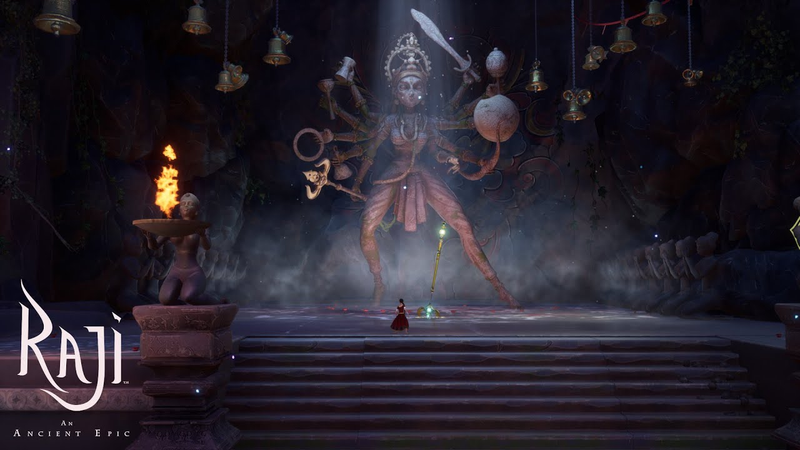
Developing Raji: An Ancient Epic & Crossing the Finish Line | Game Dev Unchained Episode 233
The development of Raji: An Ancient Epic serves as a case study for the burgeoning Indian game industry, highlighting the successful effort to integrate rich cultural narratives into the global gaming market.
- The development of Raji: An Ancient Epic demonstrates the viability of integrating underrepresented cultural narratives, such as Hindu and Balinese mythology, into the global gaming market.
- The project serves as a case study for the maturation of the Indian game industry, driven by increased accessibility to development tools and the rise of local studios.
- The COVID-19 pandemic forced a transition to remote workflows, proving that distributed teams can maintain development momentum without traditional in-office collaboration.

Eastern Games in the West. Reasons why Eastern Games Succeed in Europe & USA PG Connects Digital #2
The mobile gaming industry has experienced a significant shift in global market share, with mobile devices now accounting for approximately 45% of total industry revenue.
- Mobile gaming now accounts for approximately 45% of total industry revenue, with the Asia-Pacific region (China, Japan, South Korea, and Taiwan) generating nearly 50% of that global total.
- Successful expansion into Western markets requires deep culturalization rather than simple translation, as failure to adapt leads to high user acquisition costs and poor retention rates.
- Western players prioritize streamlined user interfaces, immediate gameplay access, and straightforward progression, which contrasts with the complex, tutorial-heavy, and multi-step structures common in Eastern markets.
Steam Survey: Do Wishlists and Sales Line Up Meaningfully?
This analysis examines the correlation between Steam wishlists and initial sales performance for premium PC games.
- The median first-week unit sales for premium PC games typically equal 20% of total launch wishlists, though actual performance varies wildly from 1.5% to over 100%.
- Organic daily wishlist additions—those occurring without marketing or events—are a more reliable predictor of success than total wishlist counts.
- No game with fewer than 10 organic daily wishlists sold more than 3,000 units in its opening week, while maintaining over 50 organic daily wishlists correlates with more consistent, higher-tier sales.


2019/20 Annual Sales Up 14.4% To 129.4 M€ In Line With Targets
Nacon reported annual sales of 129.4 million euros for the 2019/20 fiscal year, representing a 14.4% increase over the previous year.
- Nacon reported 129.4 million euros in annual sales for the 2019/20 fiscal year, a 14.4% increase over the previous year.
- Software segment performance was the primary growth driver, with game sales rising 40.6% to 70.7 million euros.
- Digital distribution became the dominant revenue stream, growing to 69% of total game revenue compared to 41% in the prior year, with Q4 digital sales multiplying 2.7 times year-over-year.
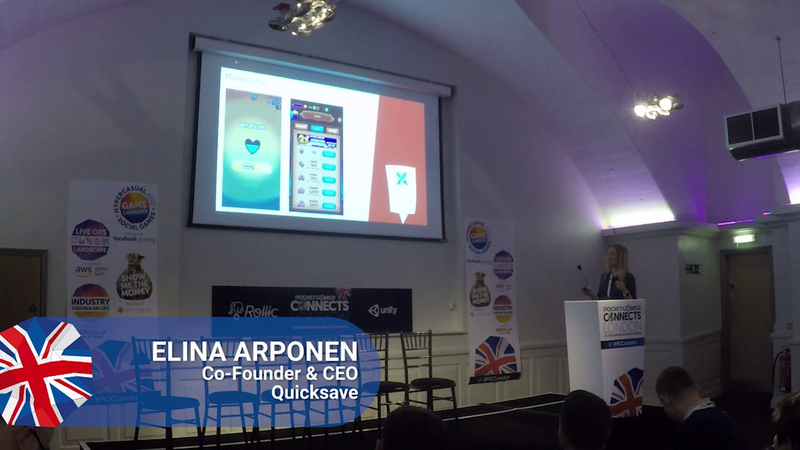
Instant Games - The Good, the Bad and the Future
The instant games sector, defined by HTML5-based titles integrated directly into messaging and social platforms, represents a maturing market that has evolved beyond simple text-based experiences to support high-quality, 3D, and complex meta-gameplay.
- Instant games offer lower user acquisition costs compared to traditional app stores by leveraging native social APIs for referrals, bot notifications, and viral sharing.
- Success in the instant games sector requires building platform-native experiences that prioritize voluntary social interaction and dynamic multiplayer mechanics rather than porting existing mobile titles.
- The sector is currently dominated by hyper-casual titles due to load time constraints, but 5G technology is expected to eliminate these barriers and support more robust, asset-heavy, 3D content.

Line Wobbler & Beasts of Balance: Two Routes to Custom Hardware Goodness
The creation of custom hardware games represents a burgeoning intersection of digital design and physical engineering, offering developers a unique path to differentiate their work in a crowded market.
- Custom hardware games differentiate products in crowded markets by bridging digital design with physical engineering through microcontrollers and 3D printing.
- Transitioning from prototypes to commercial products requires shifting from improvised testing to professional-grade manufacturing standards to ensure durability and scalability.
- Commercial success depends on navigating complex supply chains, where minor manufacturing details like material coatings can significantly alter profit margins.
Tales From Discoverability Land: Vol. 1
This analysis explores the mechanics of game discoverability and sales estimation, focusing on how players interact with digital storefronts and how developers can interpret performance metrics.
- Steam discoverability is primarily driven by genre familiarity, as players actively seek titles that mirror established, popular gameplay rather than relying on store-wide charts.
- Using Steam review counts to estimate total sales is unreliable due to high variance, with observed ratios ranging from 33 to 62 sales per review.
- Organic reach for independent developers on mobile platforms has significantly diminished, making paid user acquisition a prohibitive necessity for smaller studios.