Line
Company
Documents about Line

The 10 Games I've Played Most On Steam
This analysis examines the personal gaming habits of a prominent industry commentator, focusing on the ten most-played titles on their Steam account.
- Larian Studios' titles Baldur's Gate 3 and Divinity: Original Sin II are highlighted for their high-quality, non-filler combat systems and their ability to 'say yes to the player' through deep, interlocking mechanics.
- CrossCode, a Zelda-like RPG, is noted for its brilliant concept of an MMO-within-a-game, earning 155.1 hours of playtime across multiple playthroughs.
- Hundred Line Last Defense Academy is described as an extreme example of a slow-burn narrative, where the initial 30-hour playthrough functions primarily as a prologue to the actual game.
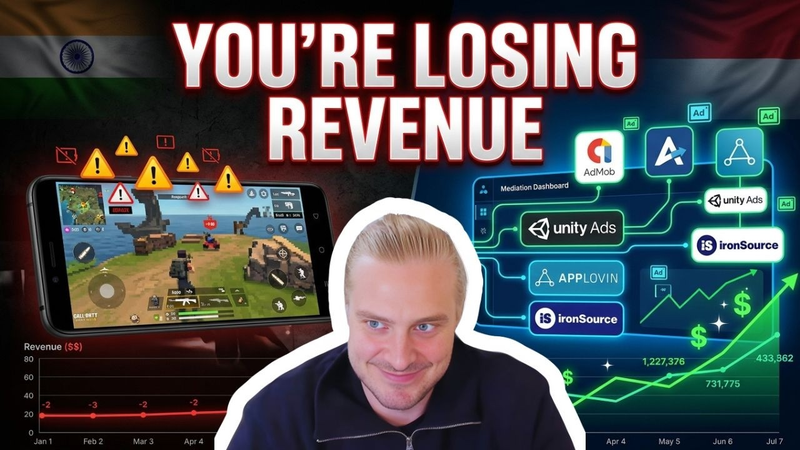
How to maximize ad revenue in Tier 4 geos (+Japan bonus) by Felix Braberg
Maximizing ad revenue in Tier 4 markets, specifically India and Indonesia, requires a specialized approach to mediation stacks that differs significantly from Tier 1 strategies.
- Prioritize technical stability in Tier 4 markets by delaying ad loading until after SDK initialization and restricting ad requests to devices with at least 2GB of RAM to prevent ANR errors and crashes.
- In India, integrate InMobi as both a bidder and waterfall source, and utilize multiple Google Ad Manager (GAM) MCM resell partners to maximize exposure to AdX demand.
- Boost eCPMs in India by segmenting users based on device language and applying higher bid floors to English-language users.
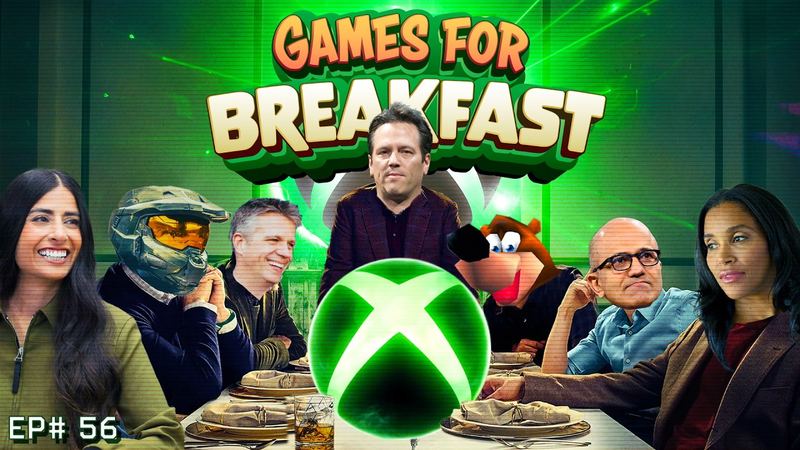
Xbox’s Line of Succession, Sony Shutters Bluepoint, and Discord Doesn’t Learn | Games For Breakfast
The gaming industry is currently undergoing a period of significant structural and leadership volatility, marked most notably by the departure of Phil Spencer as CEO of Microsoft Gaming.
- Microsoft Gaming has replaced CEO Phil Spencer with former AI product lead Asha Sharma, signaling a strategic pivot toward AI integration, monetization, and corporate efficiency over traditional hardware-centric models.
- Xbox is signaling a departure from exclusive console titles in favor of cloud-based, cross-platform expansion and hybrid hardware solutions, following the exit of Sarah Bond.
- Bluepoint Games has been shuttered after the studio was forced to cancel a mandated live-service project, highlighting the industry-wide risks of forcing established developers into unsustainable live-service models.

"If You Aren't Curious, Your Bottom Line Will Show It": A CMO's Warning for Game Marketers in 2025
In the evolving landscape of 2025, game marketing success is increasingly defined by a commitment to deep curiosity and data-driven decision-making.
- Financial performance in 2025 is directly tied to a marketer's ability to rigorously analyze player behavior and treat marketing as a calculated, iterative risk rather than a static process.
- The industry has moved past post-IDFA uncertainty by adopting probabilistic attribution and sophisticated modeling, which have restored stability to user acquisition efforts.
- Small, agile studios are achieving significant profitability by targeting niche audiences and maintaining high-quality performance metrics, proving that scale is not the sole determinant of success.

Branding for Top Line Growth: MY.GAMES Journey by CEO Elena Grigorian
The gaming industry faces a persistent challenge where the cost of acquiring paying users (CPPU) steadily rises while the revenue per paying user (RPPU) struggles to keep pace, creating an inevitable intersection that threatens long-term profitability.
- MY.GAMES is shifting from performance-based marketing to branding campaigns to counter the industry-wide trend of rising costs per paying user (CPPU) outpacing revenue per paying user (RPPU).
- A branding campaign targeting a broad audience increased downloads and marketing efficiency but failed to generate significant revenue because the casual audience could not navigate the game's complex onboarding and monetization.
- A second, more targeted branding campaign focused on demographics with a higher propensity for spending resulted in improved retention rates and higher revenue compared to the initial broad-reach attempt.
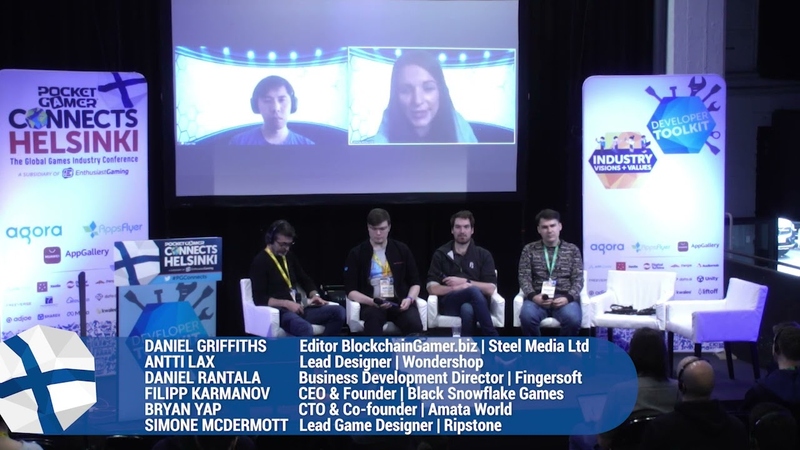
Panel: Failing Fast: Stories From the Front Line of Prototyping
Prototyping serves as a fundamental proof-of-concept mechanism essential for validating core gameplay mechanics and ensuring that development resources are directed toward viable, engaging ideas.
- Prototyping is a universal necessity across all game genres, serving as a critical proof-of-concept mechanism to validate core mechanics and mitigate the risk of investing in unviable projects.
- Development teams should utilize time-boxing to maintain iterative flexibility and prevent stagnation during the prototyping phase.
- Physical, non-digital methods like paper and board-based testing are highly effective for validating player behavior and mechanics before committing to expensive digital implementation.

Drawing the Ethical Line for Misleading UA Ads - The Metacast by Naavik
The gaming industry currently faces a critical juncture regarding the balance between aggressive commercial tactics and consumer protection.
- The gaming industry is prioritizing self-regulation regarding loot boxes and in-game spending—including transparent odds disclosure and parental controls—to preempt restrictive government legislation.
- Developers are facing a critical tension between using misleading user acquisition ads to lower acquisition costs and the resulting erosion of long-term player trust.
- Industry consensus favors platform-enforced standards for ad accuracy as a preferred alternative to broad, government-mandated advertising regulations.

Tokenomics #5 Line Goes Up - What Is The Problem With NFTs Anyways?
The crypto-gaming sector is currently navigating a period of rapid institutional growth and intense public scrutiny.
- The crypto-gaming sector is scaling infrastructure through low-fee blockchain layers to support micro-transactions, evidenced by a $200 million funding round for Immutable.
- The industry is shifting toward a model where tokens act as programmable, internet-native assets that replace traditional centralized marketing with direct community rewards.
- Public and institutional scrutiny is increasing due to speculative excess, scams, and the inconsistent performance of high-profile pre-sales like Champions Ascension.
Press Y to Cry: Generating Emotions in Videogame Narrative
The historical divide between emergent gameplay and authored narrative remains a primary obstacle to achieving deep emotional resonance in interactive media.
- To effectively generate emotion, designers must choose between simulation (matching player and game emotion), representation (indirect emotional triggers requiring interpretation), or abstraction (using symbolic elements to evoke feelings).
- Ludo-narrative dissonance occurs when the game's emotional content conflicts with the player's experience, often because developers fail to provide the necessary context for the player's actions.
- Designers should structure narrative around 'emotional boxes,' where each segment contains a specific emotion, a thematic question, and the necessary context for the player to interpret the situation.

Triage on the Front Line: Improving Mafia III AI in a Live Product
The post-launch improvement of artificial intelligence in the open-world crime drama Mafia III serves as a case study for managing live product updates under strict resource and time constraints.
- Hangar 13 utilized a cross-functional 'strike team' consisting of engineers, animators, designers, and QA to execute a three-month post-launch AI improvement patch for Mafia III.
- Prioritization of AI fixes was determined by a three-factor framework: impact (player experience), complexity (potential for unintended knock-on effects), and cost (time and resource allocation).
- The team addressed AI responsiveness by refining event-based reaction systems, such as increasing the detection range for gunshots beyond the original 40-meter limit to ensure enemies properly escalated to combat.
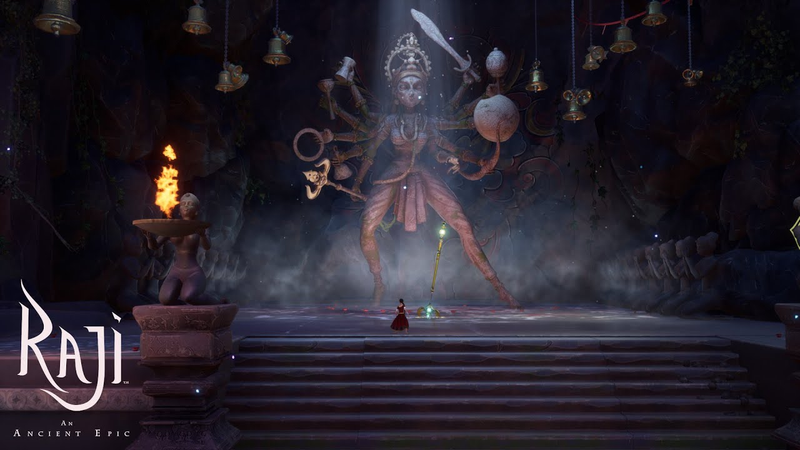
Developing Raji: An Ancient Epic & Crossing the Finish Line | Game Dev Unchained Episode 233
The development of Raji: An Ancient Epic serves as a case study for the burgeoning Indian game industry, highlighting the successful effort to integrate rich cultural narratives into the global gaming market.
- The development of Raji: An Ancient Epic demonstrates the viability of integrating underrepresented cultural narratives, such as Hindu and Balinese mythology, into the global gaming market.
- The project serves as a case study for the maturation of the Indian game industry, driven by increased accessibility to development tools and the rise of local studios.
- The COVID-19 pandemic forced a transition to remote workflows, proving that distributed teams can maintain development momentum without traditional in-office collaboration.

Eastern Games in the West. Reasons why Eastern Games Succeed in Europe & USA PG Connects Digital #2
The mobile gaming industry has experienced a significant shift in global market share, with mobile devices now accounting for approximately 45% of total industry revenue.
- Mobile gaming now accounts for approximately 45% of total industry revenue, with the Asia-Pacific region (China, Japan, South Korea, and Taiwan) generating nearly 50% of that global total.
- Successful expansion into Western markets requires deep culturalization rather than simple translation, as failure to adapt leads to high user acquisition costs and poor retention rates.
- Western players prioritize streamlined user interfaces, immediate gameplay access, and straightforward progression, which contrasts with the complex, tutorial-heavy, and multi-step structures common in Eastern markets.