VideoDeconstructor of Fun
Branding for Top Line Growth: MY.GAMES Journey by CEO Elena Grigorian
15 Mar 202422 min video
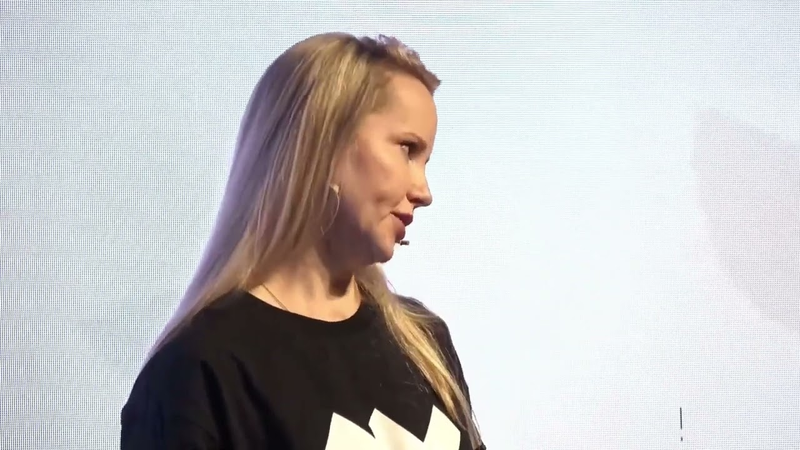
[Applause] [Applause] I'm trying to open the next slide for you it's not so easy it seems okay um first of all I'm so glad to see so many faces in this room some of you are my friends colleagues and partners for ages already but still there are a lot of new people this is great so I prefer to start with a short introduction my name is yena Gregorian and I'm a CE of my games I have been working for the gaming industry for more than 24 years already and I was a part
of Disney company for many years being a head of their gaming division landed the global business to the local reality and later on I joined my games team as a chief marketing officer and after nine years and various roles I was promoted to the leader of the company and now I'm running my games as a chief executive officer so um today I'm here to talk with you about our experience and our approaches to The Branding experiments for mobile games we will talk about the rational behind this decision for us to go about the challenges we overcame on this path and about the current status and our current understanding of this situation and my personal strong Bel and hope that this information and our experience will help other gaming companies
to avoid our mistakes and to have more chances to compete with other non gaming apps for so desirable user base and their time spent so let's start some words about my games it would be important for better Clarity of our experience and it would be important for me to give you more rational about my topic today so my games we are the gaming compy compy founded 17 years ago uh and later we were rebranded to mind games in 2019 we have 10 intern deel development students who develop such games like rash rale uh hustle CLE V robots and many others as total we have more than 50 games in our operational portfolio at the moment for different platforms we have mobile we have PC and consoles in terms of the business models we develop and publish our own games we licensed
third party games to publish them on different platforms and different territories and we invest into independent Studios through our investment arm known as mgbc my games Venture Capital um so we will talk about branding let's start with the product first because rash roale is one of our key product now it's the base for our experiments in terms of The Branding so some words about product rashal was launched at the very end of 2020 at at the moment it's number one game in the tower defense strategy genre with about 1 million daily active users you have already knew that we have Decades of experience multipl product and crossplatform portfolio and we know for sure what exactly the standard Dynamic of the key fundamental metrics that determine the
future game success having so wide range of product we have opportunity to look back to have the retra analy um what exactly is a significant reference point that impact the future success or to change the trajectory of the product life and uh at the end of the day to make the story short for ourself we believe that there are two so crucial metrics that should be evaluated first of them is the cost of paying user and the revenue you earn from that paying User it's no matter what exactly monetization you have in terms of the source it can be in app or at Revenue no matter uh of course there are a lot of you know dozens of metric that impact these two one but in the end of the day they can be calculated inside these two the most significant one of course course there are the third one which is
maybe the most important is the size of this paying user base the size of the the audience that you have already collected inside of your game and you have ability to collect but I prefer to skip this third magic for our discussion today and to concentrate uh my speech on the first two it's the CP ccpu cost for paying user and revenue for paying user and the bad news for all of us this these two matrics tend to get closer to each other over the time and this trend it's almost impossible to change and impossible to reverse um so your uh cost of paying users is constantly growing due to growth penetration of your game and constant uh repletion of the relevant core audience of your product so uh if you require if
you increase your marketing campaigns you acquire wider traffic the share of the relevant audience inside of each new cord is smaller than the share of your relevant audience in the previous cord if you look at the long distance it means that every new cord is less relevant for you than the previous one in terms of the retention in terms of the monetization and so on and even if your life hops team and development team are working hard to increase your LTV from time to time and increase the rpu constantly we we have the negative effect at the same time because every year next K verse and verse and a big deal and really difficult task to increase the LTV for every new C having this negative effect at the same time on the table so this graph is the real statistic of rashal over the last some
years and you see that our life operations team is really great guys succeeded to increase our LTV for every new C but at the same time you see that the speed of this is of this increase is still less than the speed of growth of cost of paying users and taking into account that we saw it so many times we know that change this trend it's absolutely impossible without any extra extraordinary steps so our everyday working life now is mainly connected with the efforts slightly delay the moment of the intersection these two lines so our marketers trying to hold cppu as long as possible at the same level and our liveops team and development team trying to increase our LTV of course all of us know many opportunities
affect the uh cost per paying user and it's not necessary to describe you all of that because all of this is already the mandatory minimum for all of us but again you saw from the previous slide that it's not enough it's not enough to reverse the trend because you have to spread your marketing campaign to acquire more and more non-prepared nonrelevant or less relevant audience to your game and what we should do we have only two options one option we can slightly mimic our game to the other game more relevant to the wider audience we can do it with help of our CRS with with help of our store Page landing page and so on and we know a lot of examples of this path on the market when we slightly mimic our game to the other genre other setting or other product and Le for the first um
first uh Impressions what we can do next what is the second option second option we can slightly prepare our audience before we propose them to push the install button we should prepare them we should grow the awareness of our product beforehand before we propose them to push the button but uh how we can do that uh what exactly should be done to increase our awareness and to build this Readiness this preparedness the audience for our game beforehand and in reality it's no need to invent or reinvent the wheel it's already created by our colleagues from fmcg Industries and it's well known as the classic product funnel awareness drives consideration that drives consumption and we as a mobile games Market mainly work with the consumption
with the last stage because we capture already existing demand and uh only some of us really think about consideration about building the consideration and rarely cases talking about the building the awareness so um what else in reality what is the challenges thinking about the awareness why it's not so easy for all of us for any gaming companies it's not so easy in reality we have been lucky enough for many years already to know for sure the efficiency of every our campaign almost for every dollars our marketers are armed with dozens of tools predicting models and so on became closer to analytics than the classic marketers and of course we started to think think about that we understand that the most
challenging thing for us is to start adapt our strategies for efficiency that we used to have because we are very highly oriented performance company it's so difficult for us to change our approaches to work with not so well predicted business models not so well predicted marketing companes and who could do that because in reality our marketers now it's not ready to work with The Branding campaigns because their competences is not enough to go there so then we started to think about that the our life started to fill up with additional set of metrics competences and colleagues and there are some of them that need to be evaluated and need to be worked with so we decided to start our first branding campaign I would like to discuss with you today we of course started from the
forming the hypothesis what exactly we would like to change to to check uh then we CH we chose the target market for this campaign we decided to use United States is our key territory for growth um we agreed the target audience for this branding campaign and we decided to concentrate our efforts on the audience looks like our current active audience in terms of the social demographics and um and interests then YouTube is a key channel for us in terms of the brand forat campaign and we know from our own insiders from our own colleagues and from Google colleagues that to have the significant impact on your awareness you should reach at least 80% of your target audience with at least three Impressions per unique so we put it as a kind of conditions of our campaign and we decided to involve this celebrity to
attract wider audience than the usual cture and of course then we choose the celebrity we think about our target audience that's why with help of our colleagues from Google so thank you very much for them uh and in uh with help of the Google Insider tool we combine the short list of the celebrities which is pretty closer to our current active audience and later on we chose our leader Jake Paul is the as influencer and professional Booker then we executed the campaign um maybe it's not big deal to discuss with you about what exactly was done because we tried to achieve all the targets we had in terms of the reach in terms of the frequency and so on and we succeeded to do that which is much more important for us today to talk about the real result we got on the product after that campaign
so um the first slide with the with the results we determined four different periods we would like to compare the first period before the campaign then two periods inside of the campaign and the last period the campaign was ended so at this slide you could see that we had significant impact on IPM and CPI during the campaign but the effect was lost as soon as campaign was ended now some graphs about the downloads and revenue in terms of the downloads the left side of the slide you could see that we succeeded to get the significant impact on all downloads due to the campaign both in organic and in P traffic talking about pet I talk not only about brand formance compaign itself but we succeeded to increase our regular performance CA campaigns as well
because we succeeded to buy more traffic cheaper traffic because you saw the previous slide inside of our product but which is much much more important for us that all this growth in terms of the downloads didn't translate into our inap Revenue because at the right side of the slide you could see the inap revenue of course it's a big deal for us and we started to analyze what happens why the situation was that way so interesting fact that the audience be involved with this branding campaigns had much poor engagement uh in terms of the retention and in terms of the monetization so it's significantly different audience compar with our usual one when it started to analyze why it's so we understand that even if we thought that it was different story but in real in reality our game is much more oriented for the users who already know what is the genre is about
how to play this game what exactly monetization is and our onboarding process is much more oriented for already prepared users and it's not so easy for absolutely new audience wide audience much more casual audience than we used to have inside of our products and after that we decided to reduce significantly our economic system into into the product and on board boing of our new users into the product and this work is still in process but nevertheless one more conclusion that we have on the left side you could see the split of our Impressions during the campaign for different uh ages and you will see that even if we tried to have three plus Impressions P Unique the main part of our Impressions came to the younger audience it was okay for us
because we thought that it will be enough for us just to focus our efforts on the current audience or looks like current inside of the current audience we have all these ages in our active users in the game already but when we look at the monetization of these ages you will see that the younger audience is below some others in terms of the monetization maybe that was one more reason why our anap Matrix wasn't affected by the campaign so much as we expected so what we decided to do next while our development team intill in process of the redu the boarding of the game we decided to do the second campaign and to check additional hypothesis um the next one was if it's possible somehow effect the monetization of our game in case we will focus our efforts not not on the usual active
audience but mainly connected with the player players I'm sorry so the focus for this campaign was strong focus on payers in terms of the social demographics in terms of of their interest in terms of the celebrity we chose so it was slightly smaller campaign in terms of the size it was self career it was um the same reach and even more Impressions it was one more conclusion we did and we involved the celebrity as well but celebrity was much more oriented for The Elder audience which is potentially can be our high uh payers so the campaign was started only three weeks ago so I can't give you all the final results yet but in any case I would like to show you the first numbers in reality you will be the first to see these graphs because I'm not sure that
even Google colleagues had opportunity to go through all the graphs yet because it's just in the process still but some interesting information so in terms of the organic installs again the growth is significant but it was pretty the same for the previous compan as well so it's it's normal already we expected this effect but what it's much more INRI for us in terms of the retention you saw absolutely different story for the first campaign but this campaign and this retention is even higher than the retention of our user usual users so it's um very interesting fact and we'll definitely examine the is why it happen so but this is this is it in terms of the monetization this is the new level of monetization that we have during the campaign of course it's just the first figures of course we will compare the size of this uplift compared with the invest that we did for that campaign but
nevertheless we have opportunity to have significant impact on our Revenue with help of The Branding campaign that was important for us and some take takeaways at the moment that we have the first one be careful choosing your target audience for your branding campaign and be ready to on board on your product slightly different audience that you used to have you should think about that beforehand then to be prepared to analy of the result much more comprehensive way than we usually do so it's obvious as well one more uh takeaway be be careful as usual do not do any uh drastic changes in your usual UA campaign I believe that you all know it's a kind of usual practice for all of us even if you have opportunity to
increase your UA you should be very careful to do it not so drastically we had this mistake for the first campaign we tried to use all the potential and slightly do slightly spoiled our campaign after that so be careful and of course a kind of usual takeaway for any new topics for me just to be open for any experimentation adapt your approaches for new reality and for Branding reality as well and to add new expertise into your team because it's so important for us to enrich our teams with absolutely new expertise of branding that we all definitely need that's all thank you
Auto-generated captions from YouTube — names and numbers may be misheard.
The gaming industry faces a persistent challenge where the cost of acquiring paying users (CPPU) steadily rises while the revenue per paying user (RPPU) struggles to keep pace, creating an inevitable intersection that threatens long-term profitability. To combat this, MY.GAMES has shifted its strategy from purely performance-based marketing to incorporating branding campaigns designed to build audience awareness and consideration before the point of conversion. This approach aims to expand the user base beyond the core, highly relevant audience that traditional performance marketing typically captures.
The company tested this hypothesis through two branding campaigns in the United States, utilizing YouTube as the primary channel and leveraging celebrity influencers to reach specific demographics. The first campaign, which targeted a broad audience similar to the existing player base, successfully increased downloads and improved performance marketing efficiency. However, it failed to translate into significant in-app revenue because the new, more casual audience struggled with the game’s complex onboarding and monetization mechanics. This highlighted a critical disconnect between the brand messaging and the product’s actual user experience.
A subsequent, more targeted campaign focused specifically on demographics with a higher propensity for spending. Preliminary results from this second initiative indicate a more positive outcome, showing higher retention rates and a notable uplift in revenue compared to the first attempt. These findings suggest that branding success is contingent upon aligning the target audience with the product’s specific monetization profile and ensuring that onboarding processes are adapted to accommodate less experienced players.
Ultimately, the transition toward branding requires gaming companies to move beyond traditional performance metrics and adopt a more comprehensive analytical framework. Success necessitates a willingness to experiment, the integration of new branding expertise into marketing teams, and a cautious, iterative approach to scaling user acquisition to avoid diluting the quality of the player base.

Deconstructor of Fun · 2026

Deconstructor of Fun · 2026

Deconstructor of Fun · 2026

Deconstructor of Fun · 2026

Deconstructor of Fun · 2026

Deconstructor of Fun · 2026

Deconstructor of Fun · 2026

Deconstructor of Fun · 2026

Deconstructor of Fun · 2026

Deconstructor of Fun · 2026

Deconstructor of Fun · 2026

Deconstructor of Fun · 2026

Deconstructor of Fun · 2026

Deconstructor of Fun · 2026
Deconstructor of Fun · 2025
Deconstructor of Fun · 2025
Deconstructor of Fun · 2025
Deconstructor of Fun · 2024
Deconstructor of Fun · 2023
GREE

Koei Tecmo
GameVault System

Deconstructor of Fun · 2026

CD Projekt · 2026
Comments