Infinity
Company
Documents about Infinity
Member Survey & Report 2021
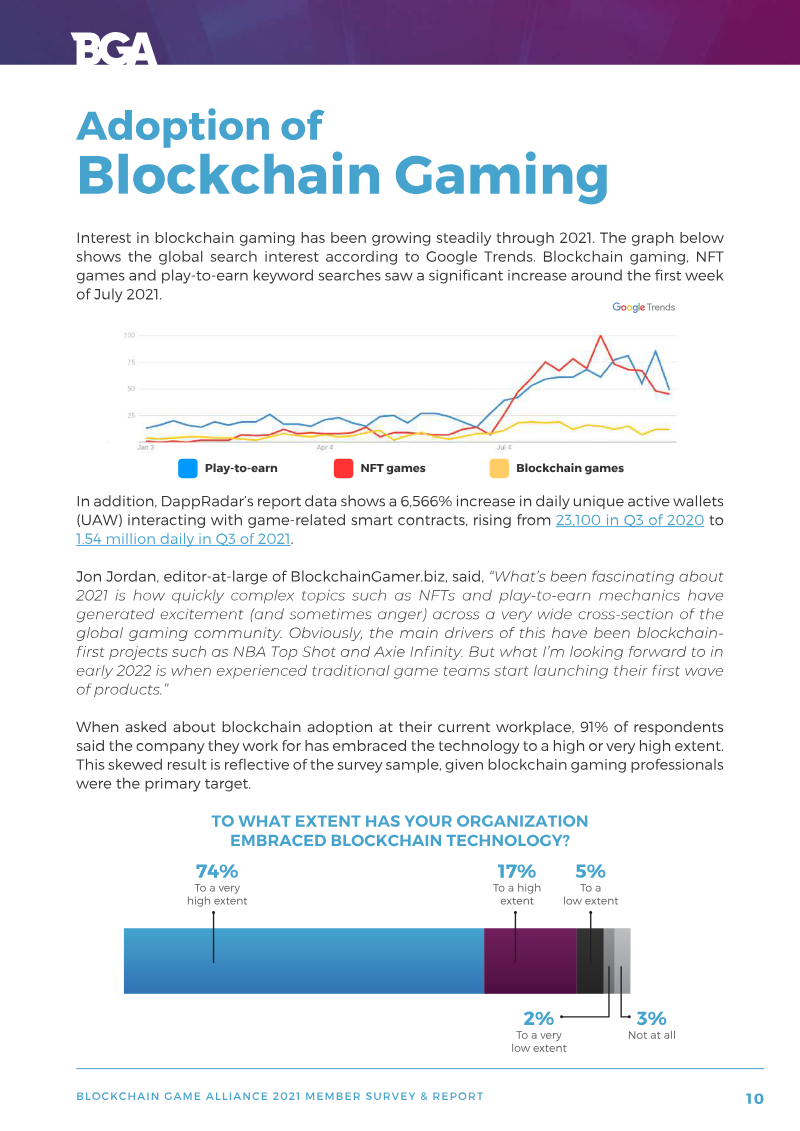
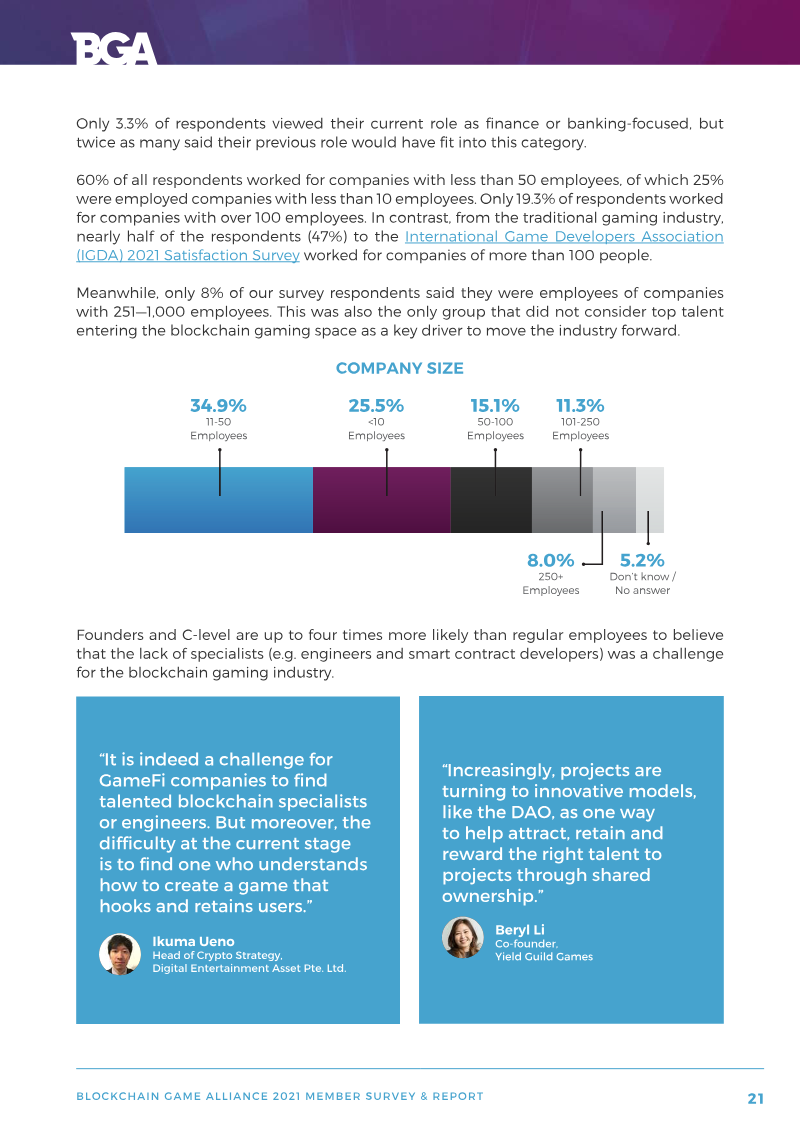
The Blockchain Game Alliance's 2021 member report assesses the state of blockchain gaming through a September 2021 survey of 212 professionals across 118 companies, supplemented by market data from DappRadar and an overview of the alliance's own growth.
- The blockchain gaming sector saw $4 billion in capital inflows from venture firms and DAOs in 2021, signaling strong institutional confidence in the industry's long-term viability.
- Industry professionals expect traditional gaming entities to integrate blockchain technology within the next two years, driven by the adoption of play-to-earn mechanics and true digital asset ownership.
- Regulatory uncertainty is the primary concern for over 50% of organizations in the space, followed by challenges regarding public education, user-friendliness, and a shortage of specialized engineering talent.
Axie Infinity: Infinite Opportunity or Infinite Peril?
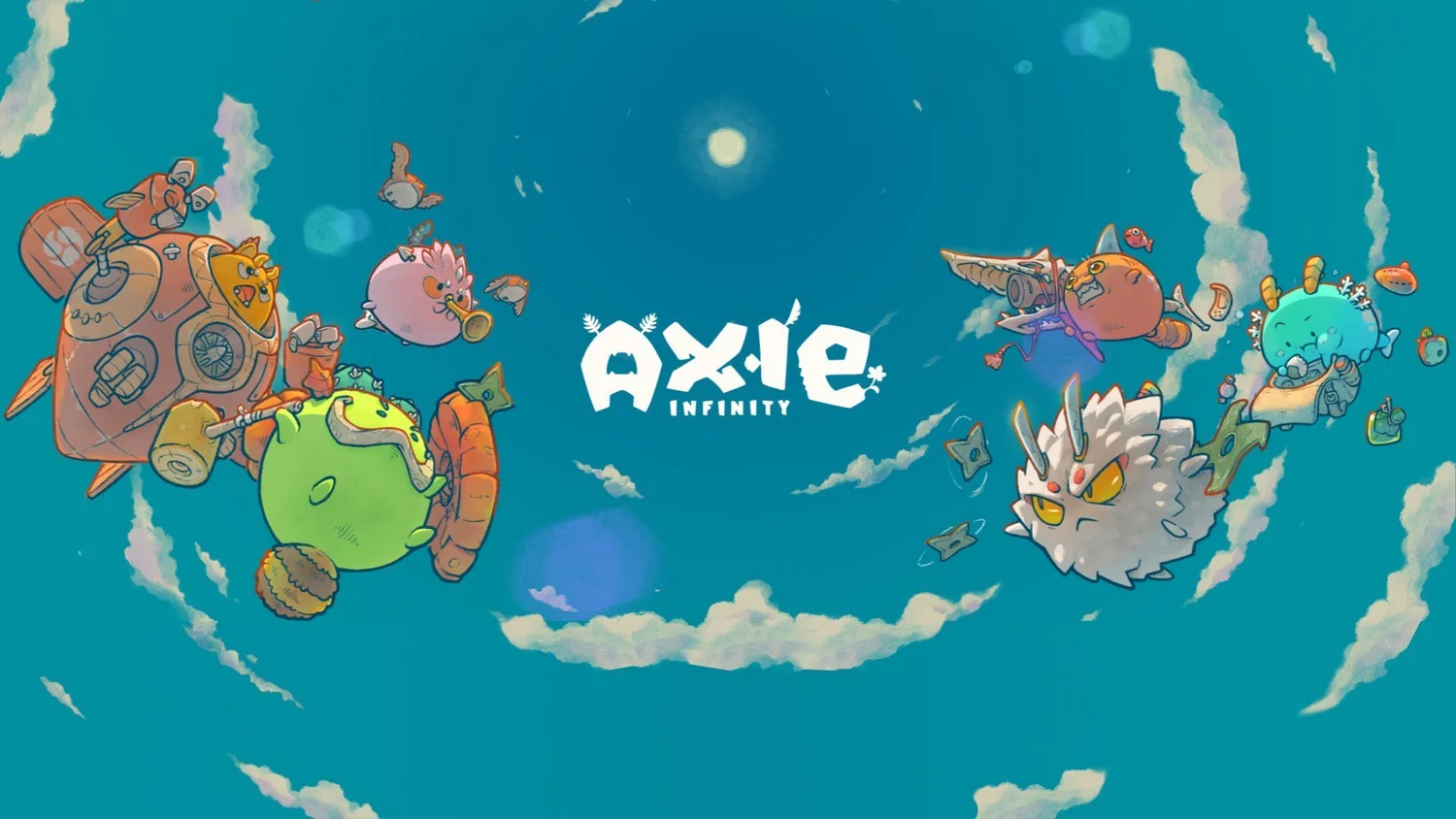
Axie Infinity, built by Sky Mavis, has achieved remarkable growth while resting on an economy that appears structurally unsustainable.
- Axie Infinity's economic stability is severely compromised by a 2.5 mint-to-burn ratio for the Smooth Love Potion (SLP) token, leading to persistent inflationary pressure.
- The platform's valuation has deteriorated significantly, with the price-to-sales ratio surging from 0.64 to 8.32 over a three-month period.
- The ecosystem suffers from a structural oversupply of Axies, which has diminished the demand for breeding and undermined the primary mechanism intended to sink tokens and generate treasury revenue.
Designing For An Interoperable Future
Matt Dion examines whether blockchain games can deliver true interoperability, in which verifiable NFT ownership lets players carry digital assets and identity across titles.
- Interoperability in gaming, defined as the ability to move digital assets like NFTs between different games or applications, faces significant technical hurdles including the lack of standardized graphical rendering, file formats, and cross-game balancing of item utility.
- The most immediate path for interoperability is the 'Microverse' model, where publishers like Sky Mavis (Axie Infinity) enable assets to function across multiple titles within their own controlled ecosystem.
- A 'Composable Ecosystem' approach, exemplified by the Loot project, decentralizes development by allowing third-party creators to build independent tools, currencies, and games around a shared set of NFT assets.
To Axie Infinity & Beyond: Infinite Optimism for Sustainability
This December 2021 GameMakers newsletter post, written by Joseph Kim, introduces a podcast and video discussion on the long-term sustainability and economics of Axie Infinity and its developer, Sky Mavis.
- As of December 2021, Axie Infinity established itself as the market leader in blockchain gaming, ranking first in total sales volume and second in unique active wallets.
- The rapid growth of Axie Infinity has served as a primary catalyst for the surge in venture capital investment directed toward crypto-based gaming opportunities.
- Sky Mavis, the developer behind Axie Infinity, has publicly acknowledged that long-term economic sustainability is a critical challenge for the platform.
How To Fix Axie Infinity | Sustainability & Future of Sky Mavis
Axie Infinity serves as a critical case study for the challenges inherent in early play-to-earn blockchain gaming models.
- Axie Infinity’s initial economic model failed due to a reliance on continuous user growth to fund token payouts, which created unsustainable inflation and a lack of sufficient asset sinks.
- Sky Mavis is pivoting from a single-game economy to a platform-based ecosystem by leveraging the Ronin sidechain and Mavis Hub to capture transaction fees and foster network effects.
- The developer is transitioning from a 'play-to-earn' model to a 'play-and-earn' framework that prioritizes gameplay quality and user-generated content over speculative financial incentives.
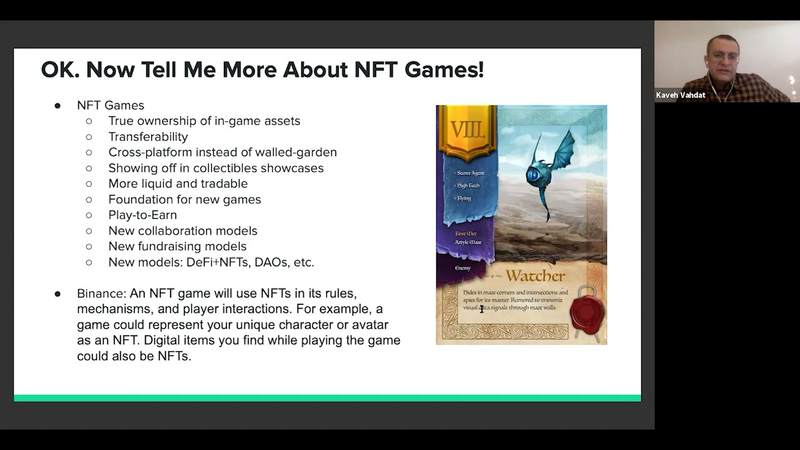
What is an NFT Games Metaverse?
The NFT games metaverse represents a fundamental shift in digital entertainment, characterized by interconnected virtual environments where blockchain technology facilitates true ownership of in-game assets.
- NFT gaming metaverses utilize blockchain technology to shift digital entertainment from walled-garden models to systems where players maintain true ownership and cross-platform utility of in-game assets.
- The industry is transitioning toward play-to-earn economic structures that enable a verifiable and portable digital economy for virtual items.
- Current development efforts are focused on overcoming technical barriers and user-interface friction to move blockchain gaming from niche experiments to mainstream accessibility.
Crypto Games Culture War
This November 2021 games industry newsletter argues that the industry's backlash against blockchain gaming is largely misplaced, even as crypto game makers overestimate their own disruptive power.
- Blockchain technology in gaming is currently in a nascent, experimental phase that may follow the historical integration path of previous disruptions like digital distribution and free-to-play models.
- While critics label blockchain games like Axie Infinity as Ponzi schemes due to high entry costs of approximately $1,000, traditional mobile gaming already utilizes similar 'whale-hunting' economic models.
- Environmental criticisms of crypto-gaming are contextualized by data showing that the U.S. gaming industry already consumes energy equivalent to 85 million refrigerators annually.
PC Game Discovery: 5 Big Trends in 2022
GameDiscoverCo founder Simon Carless uses this newsletter to step back from his usual granular data posts and outline five broad trends shaping PC premium game discovery in 2021.
- Steam remains the dominant platform for non-AAA titles, frequently generating over 90% of their total revenue.
- Games designed specifically for PC with complex UIs and deep simulation mechanics are currently outperforming titles built for multi-platform parity.
- The market is increasingly saturated, with Steam averaging more than 250 new releases per week, making high quality alone insufficient for commercial success.

Token Gestures
Valve's decision to ban NFT and blockchain games from Steam, published in October 2021, is framed as a highly significant turning point for crypto gaming rather than a trivial loss.
- Valve has banned games featuring NFTs or blockchain technology from the Steam platform, marking a significant shift for a major digital storefront.
- The ban is driven by concerns over legal liability, potential scams, and regulatory risks, such as those highlighted by the Evolved Apes project where a creator absconded with $2.7 million in NFT sales.
- While Epic Games has stated it remains open to blockchain games, its policy requires strict adherence to laws and age-rating standards, creating significant legal hurdles that may effectively prevent such titles from appearing on its store.
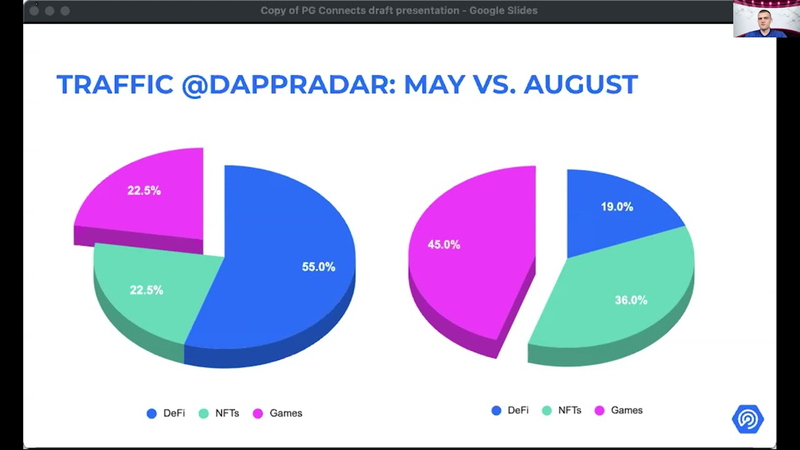
Superstar Session: The State of Play: Blockchain Gaming in 2021
The blockchain gaming sector underwent a transformative expansion throughout 2021, characterized by a 4,300% year-on-year increase in daily active wallets interacting with gaming smart contracts by August.
- Blockchain gaming experienced massive growth in 2021, marked by a 4,300% year-on-year increase in daily active wallets interacting with gaming smart contracts by August.
- The play-to-earn model, driven largely by the economic impact of Axie Infinity in emerging markets, propelled blockchain games to surpass decentralized finance applications in total traffic.
- The industry is currently transitioning toward a decentralized virtual layer, utilizing in-game NFTs, virtual land, and brand partnerships to establish gaming as a pillar of the decentralized economy.
NFTs, Ultima Online, and Player-run Game Economies
Ultima Online, the 1997 MMORPG from Origin Systems, offers a practical framework for integrating NFTs into games in ways that support genuinely player-run economies rather than speculative collectibles.
- Successful NFT integration in gaming requires that tokenized assets possess intrinsic utility within the game, rather than functioning solely as speculative collectibles.
- Ultima Online, launched in 1997, provides a foundational model for player-run economies where scarcity of land and the utility of player-owned housing drove a secondary market that historically relied on external platforms like eBay.
- To prevent speculative bubbles, NFT-based game economies must ensure that tokenized assets are derived from freely accessible in-game resources, avoiding hard caps that decouple asset value from gameplay.

5 Reasons Why I Became Bullish on Blockchain Gaming
Ethan Levy, a veteran free-to-play designer at N3TWORK, recounts his shift from blockchain skeptic to advocate and argues that digital asset ownership could fundamentally improve how live-operated games make players feel.
- Blockchain gaming shifts the player-developer relationship by replacing traditional free-to-play sunk costs with digital asset ownership and potential liquidity.
- True scarcity in blockchain models allows developers to maintain long-term asset value, providing an alternative to the traditional industry reliance on power creep.
- The ability to trade and cash out digital assets mitigates buyer's remorse and reduces the repetitive fatigue often associated with live-service games.