Web3 reports and market data
282 game industry reports, presentations and talks about web3 from writers such as Naavik, PocketGamer.biz and Deconstructor of Fun, newest from 2026. Every document has a summary and key insights with the page they come from, and 952 charts and tables are extracted as data.
Key figures
Venture capital investment in web3 gaming and metaverse projects reached $7.6 billion in 2022, with nearly 90% of industry professionals intending to remain in the space.
Blockchain Game Alliance, 2025 · 2022 Member Survey Report, p. 26
Saudi Arabia captured 51% of all MENA Web3 venture capital funding in Q1 2024, totaling $429 million across 163 deals.
Adaverse, 2024 · State of Web3 in Saudi Arabia, p. 14
The Web3 gaming sector is maturing, evidenced by a 36% decrease in new game announcements alongside an 84% reduction in project discontinuations.
Game7 Research, 2024 · The State of Web3 Gaming 2024, p. 12
Polygon’s TVL grew by 17% in July, bolstered by network upgrades, the migration of former Terra projects, and a new web3 smartphone partnership.
DappRadar, 2022 · Blockchain Industry Report, p. 7
Documents

The Solo Developer Making Seven Figures From Free Browser Games
Abe Train has established a highly profitable independent game studio by focusing on daily, browser-based educational titles that cater to a niche, highly engaged audience.
- Abe Train, founder of Trainwreck Labs, transitioned from a business intelligence role at HelloFresh to a successful solo developer by launching daily browser games like Globle, which peaked at over one million daily players.
- The developer prioritizes building a small, obsessive core audience over a large, casual one, noting that highly engaged players provide valuable feedback that improves game accessibility and longevity.
- Monetization through ads resulted in negligible player backlash, as users generally expect ads on the web; the developer now complements this with a subscription model that removes ads and adds multiplayer functionality.

AI Makes Game Creation More Accessible
The integration of AI-native game engines and decentralized infrastructure is fundamentally reshaping the landscape of user-generated content by lowering technical barriers to entry.
- Sandbox Studio aims to move beyond 'vibe coding' by providing a structured, editable game codebase that allows creators to inspect, debug, and modify their projects rather than relying on unpredictable LLM-generated black boxes.
- The platform leverages institutional knowledge from seven years of Sandbox development, using existing voxel asset libraries and historical workflow data to guide creators through the development process.
- Sandbox Studio is shifting its strategy to function as a multi-platform engine, enabling creators to publish standalone games to external platforms like Steam while offering incentives for those who choose to integrate with the Sandbox ecosystem.

Panel: The 2026 D2C Playbook: Unlocking One Of The Biggest Revenue Drivers In Games.
Direct-to-consumer (D2C) strategies have emerged as a critical imperative for game publishers aiming to reclaim revenue and cultivate deeper, more resilient relationships with their player bases.
- Direct-to-consumer (D2C) strategies are essential for publishers to reduce reliance on platform-controlled ecosystems, thereby mitigating risks from sudden policy shifts and high platform fees.
- The gold standard for monetization is a hybrid approach that combines immediate direct-payment links for quick conversion with robust, dedicated web shops for long-term player habituation.
- Studios should avoid the resource-intensive process of building D2C infrastructure in-house, opting instead for specialized third-party providers to facilitate rapid iteration and optimization.
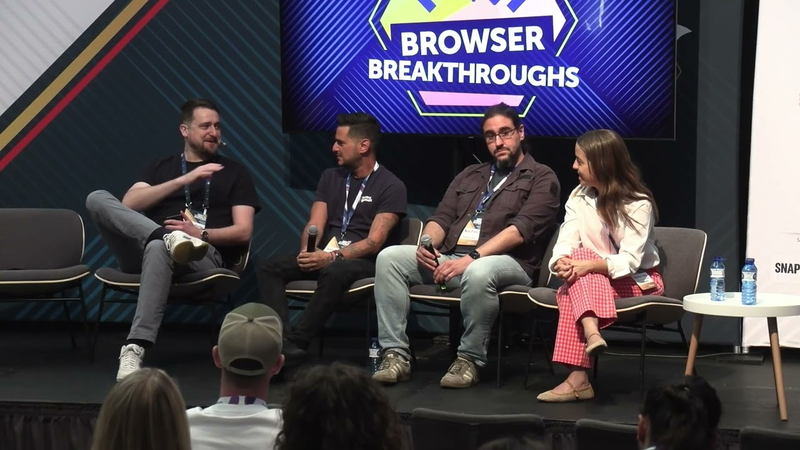
Panel: Browser Renaissance: Can Web Games Be The Driver For Growth?
The browser gaming sector is undergoing a significant renaissance, driven by the strategic necessity for mobile publishers to diversify distribution channels and circumvent the restrictive policies of mobile app store ecosystems.
- Web gaming is evolving into a critical distribution channel for mobile publishers to reach new audiences, particularly younger demographics, without the friction of app store installs.
- Third-party platforms like Crazy Games allow mobile developers to validate game performance and audience interest on the web before investing in proprietary web-based infrastructure or marketing.
- Modern web gaming infrastructure has matured significantly, with reliable payment providers like Xsolla enabling secure in-app purchases that build user trust comparable to mobile environments.

The Mobile vs Web User Acquisition: What Nobody's Talking About
The gaming industry is undergoing a fundamental shift toward a unified marketing infrastructure that bridges the historical divide between mobile, web, and console platforms.
- The gaming industry is shifting toward a unified marketing infrastructure that standardizes attribution metrics across mobile, web, and console platforms to eliminate fragmented, platform-specific tools.
- Developers are increasingly applying mobile-centric performance optimization strategies to web-based direct-to-consumer shops to diversify acquisition channels beyond mobile-only environments.
- AI-driven automation is transitioning from simple rule-based campaign management to handling complex, large-scale data synthesis and repetitive tasks like reporting and creative production.
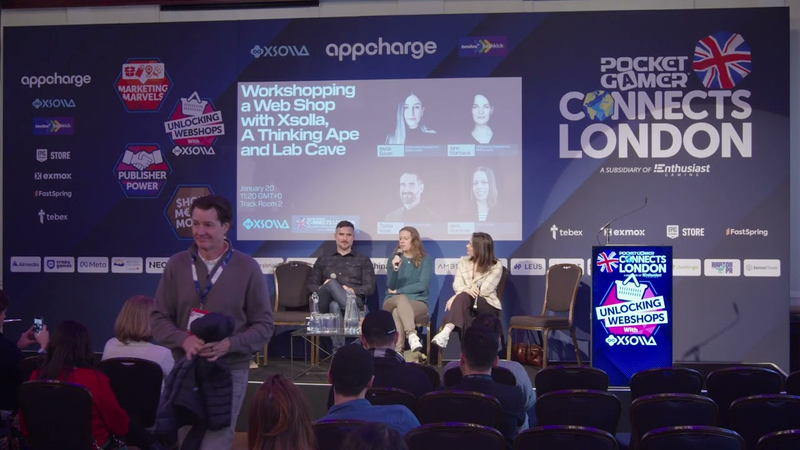
Panel/Workshop: Workshopping A Web Shop With Xsolla, A Thinking Ape & Lab Cave.
Web shops have emerged as a critical strategic asset for mobile game developers seeking to bypass platform limitations and establish direct-to-consumer relationships.
- Web shops allow mobile developers to bypass app store constraints, enabling greater flexibility in pricing, rapid SKU testing, and the creation of exclusive bundles for high-spending players.
- External storefronts drive incremental revenue growth by capturing spending from previously unmonetized segments rather than cannibalizing existing in-game sales.
- Modern integration tools allow studios to scale web shop operations without increasing headcount by utilizing automated event calendars and existing quality assurance workflows.
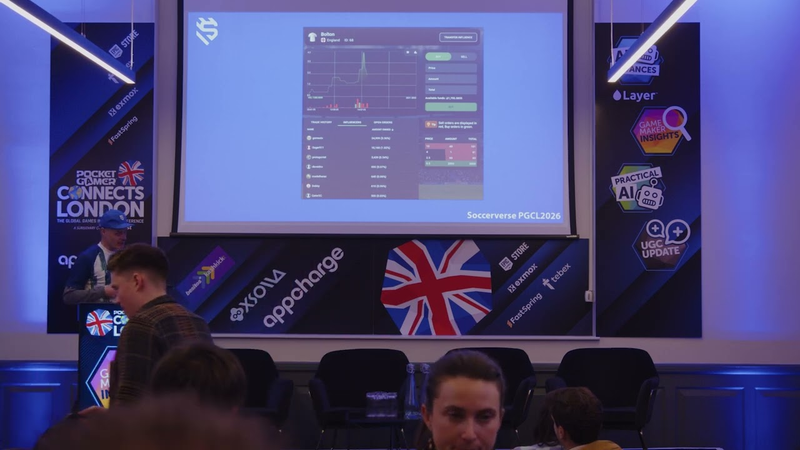
Session: Real Players, Real Value: Building Onchain Football Management Game Soccerverse.
Soccerverse is a fully on-chain football management game designed to create a persistent, multiplayer simulation where users manage clubs and trade assets within a decentralized economy.
- Soccerverse is a persistent, multiplayer football management game built on the Polygon blockchain where every club and player is tokenized into 'influence' shares that users can trade.
- The game operates on a six-month seasonal cycle with matches occurring twice weekly, requiring users to submit team tactics as on-chain transactions.
- The game economy is designed to avoid 'play-to-earn' mechanics by capping time-based rewards and ensuring the SVC token functions strictly as a utility asset for club management and transfers rather than a speculative investment.
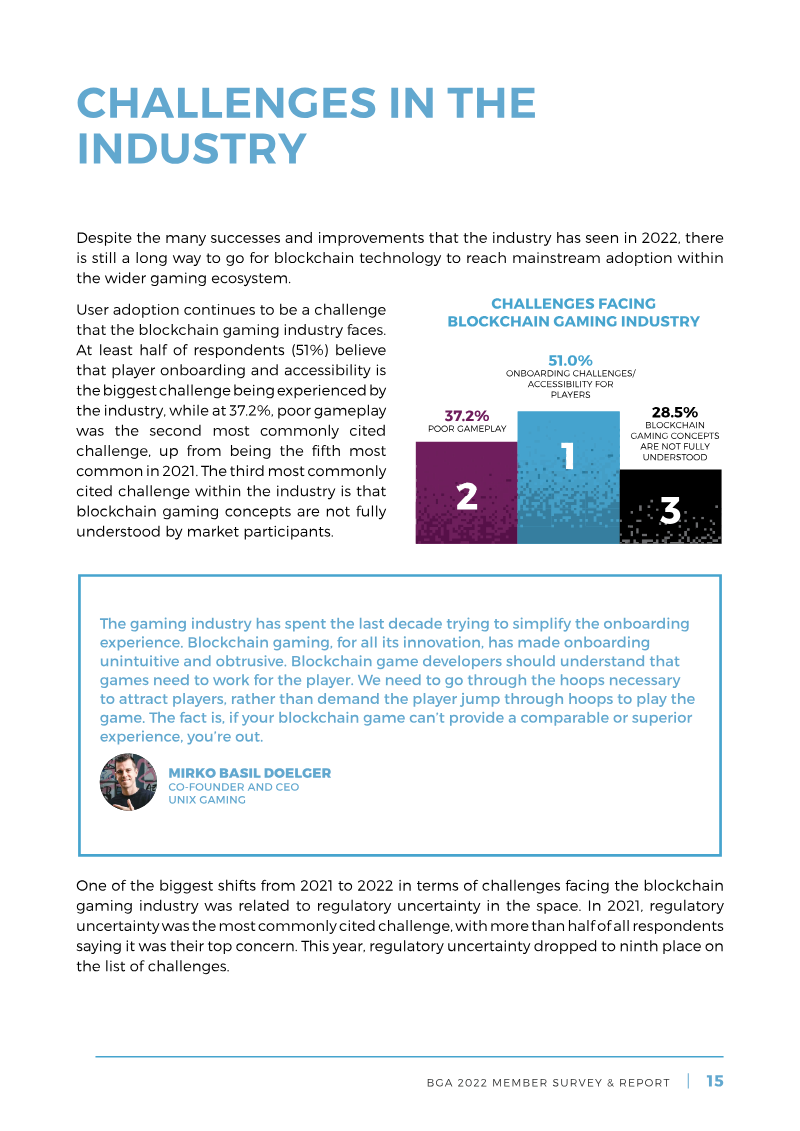
2022 Member Survey Report
The blockchain gaming industry experienced a period of significant structural evolution and resilience throughout 2022.
- Despite a broader market downturn in 2022, the blockchain gaming sector saw an 85% increase in daily active wallets and a 37% rise in on-chain transactions.
- Venture capital investment in web3 gaming and metaverse projects reached $7.6 billion in 2022, with nearly 90% of industry professionals intending to remain in the space.
- Developers are shifting strategy away from play-to-earn models toward gameplay quality and long-term sustainability, utilizing hybrid monetization that blends traditional mechanics with digital asset ownership.
2023 State of the Industry Report
The blockchain gaming industry is currently undergoing a period of disciplined maturation, shifting its focus from speculative play-to-earn mechanics toward sustainable development and high-quality gameplay.
- The blockchain gaming industry is shifting away from speculative play-to-earn mechanics toward sustainable development and high-quality gameplay to ensure long-term viability.
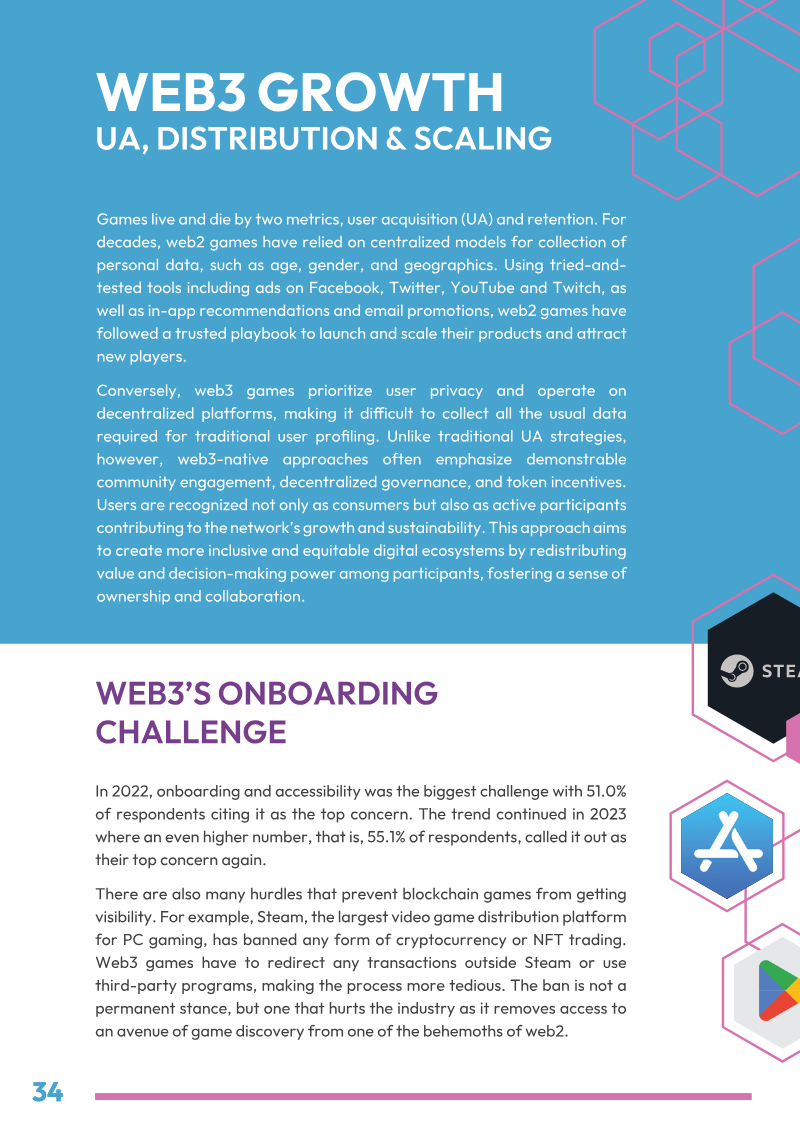
- Mainstream adoption is being driven by traditional Web2 studios integrating blockchain technology behind the scenes to improve user experience while minimizing onboarding friction.
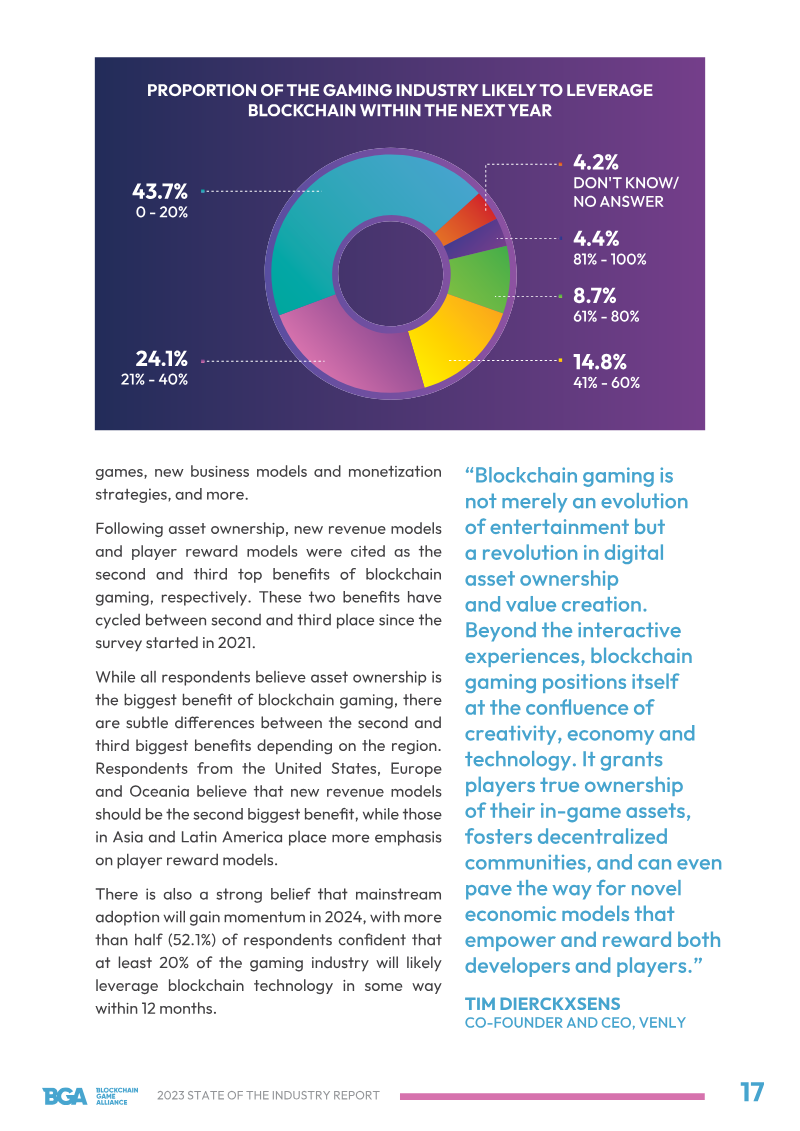
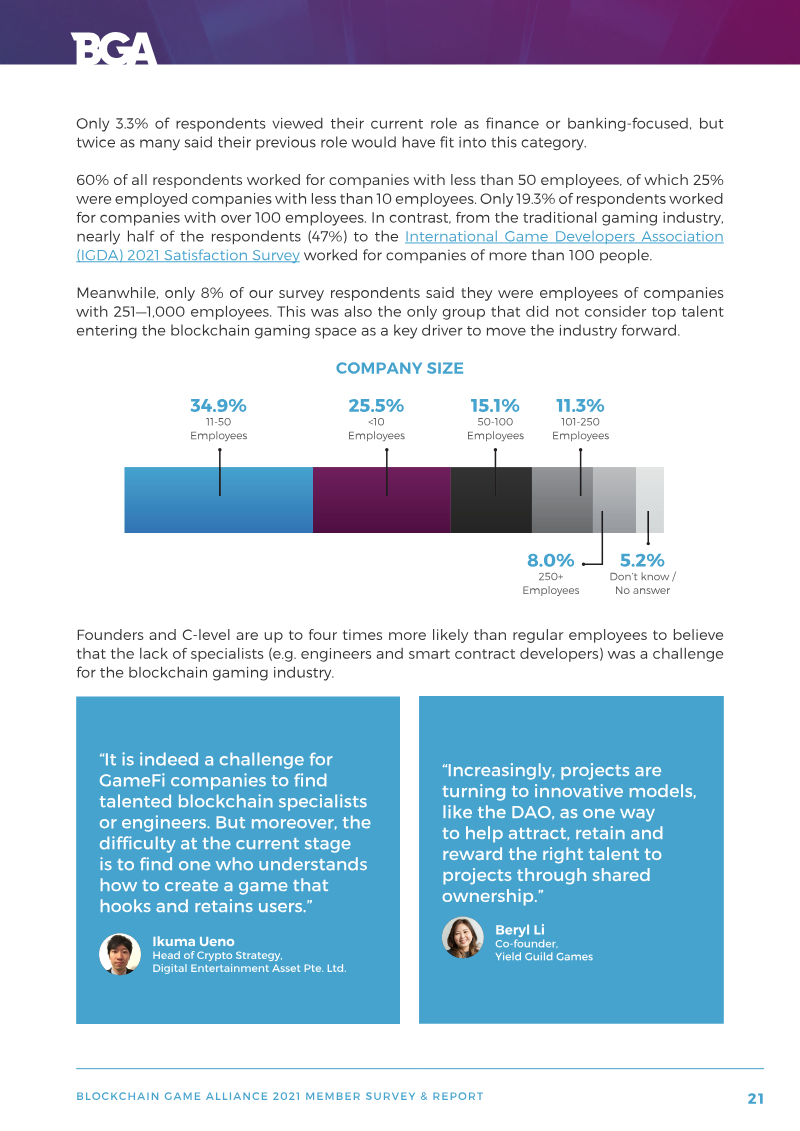
- Professional participation in the sector grew by 51.6% in 2023, supported by a network of over 500 organizations focused on industry advocacy.
2021 State of the Industry Report
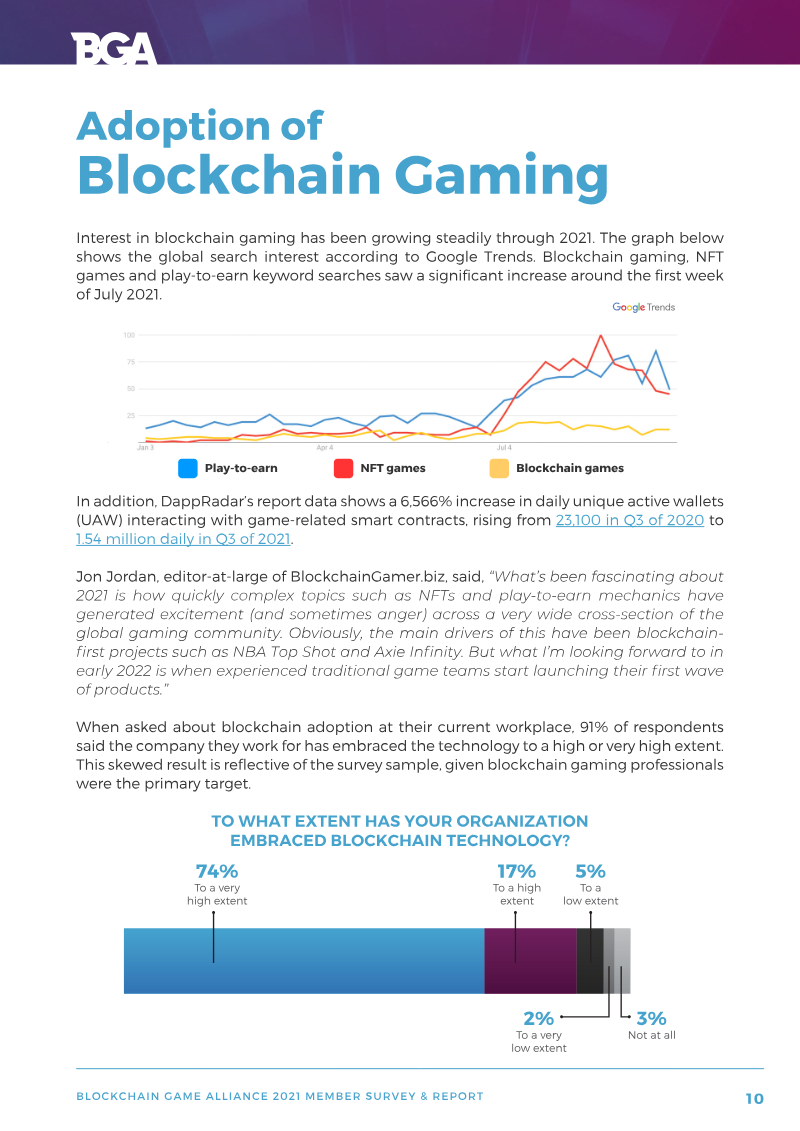
The blockchain gaming sector experienced a transformative period of expansion throughout 2021, characterized by a 186% increase in membership within the Blockchain Game Alliance and a staggering 6,566% surge in daily unique active wallets.
- Blockchain gaming experienced explosive growth in 2021, marked by a 6,566% surge in daily unique active wallets and $4 billion in venture capital investment.
- Play-to-earn mechanics and digital ownership drove significant adoption, accounting for 50% of all blockchain decentralized application usage.
- 83% of industry stakeholders identify user experience and gameplay quality as the most critical factors for long-term viability, signaling a shift away from purely financial incentives.

State of the Industry Report: 2025
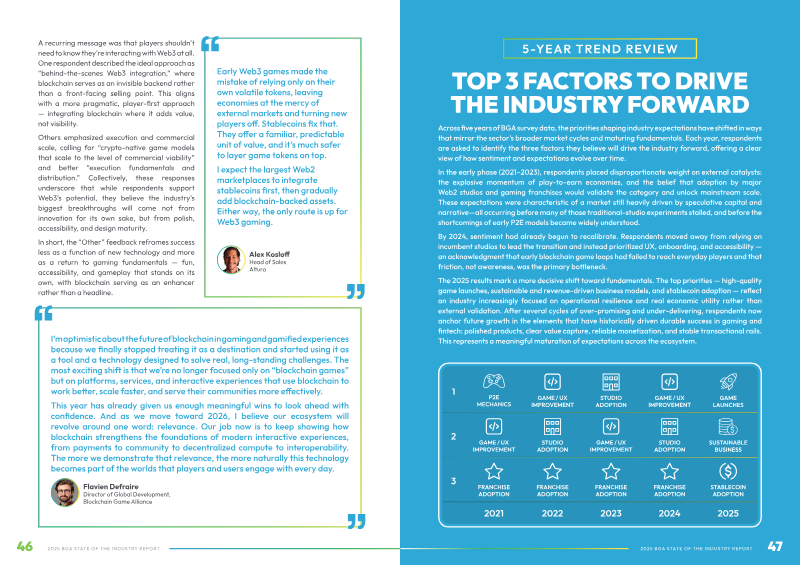
The blockchain gaming industry is undergoing a fundamental transition from speculative, token-driven models toward a disciplined, product-led future.
- Blockchain gaming funding has contracted significantly, falling from over $10 billion in 2022 to approximately $293 million in 2025.
- The industry is shifting from speculative, token-driven models toward a product-led approach that prioritizes high-quality gameplay and invisible blockchain infrastructure.
- Stablecoins have become a critical settlement layer, reducing transaction friction and volatility to improve player adoption.

Surviving "extinction events" in the games industry with Tyranno Studios' Michael Rubinelli
The games industry is defined by recurring extinction events, such as the transitions from 2D to 3D, console to online multiplayer, and premium to free-to-play models.
- The mobile games market is dominated by long-standing titles, with top-performing strategy games like Clash of Clans maintaining market leadership 13 years after their initial launch.
- Transitioning to new business models like free-to-play requires a shift from relying on personal creative intuition to a data-driven mindset where product decisions are validated by user behavior, churn rates, and testing.
- AI should be utilized to compress production schedules and accelerate the testing of ideas rather than as a replacement for human oversight; it makes good ideas testable faster but cannot turn bad ideas into good ones.