Infinity
Company
Documents about Infinity

FTUE: Dawnbringer
The mobile action game Dawnbringer, published by Kiloo, serves as a case study for the critical importance of effective onboarding and first-time user experience (FTUE) design.
- The first ten minutes of gameplay are critical for player retention, as a poor initial experience creates an immediate barrier that discourages long-term engagement.
- Kiloo’s Dawnbringer demonstrates that even experienced publishers can fail if complex mechanics, such as Infinity Blade-inspired combat, are not introduced with sufficient clarity.
- Unintuitive control schemes, specifically those requiring complex camera manipulation and movement, must be explicitly and clearly communicated to the player during the onboarding phase.
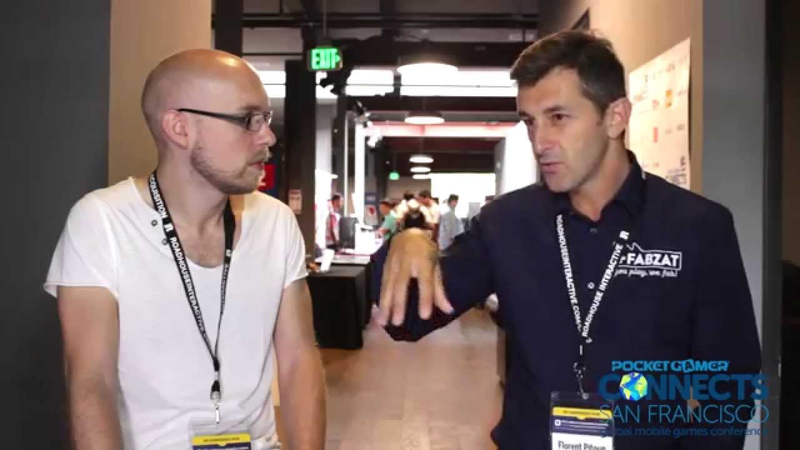
Fabzat's Florent Pitoun on the opportunity for phygital toys
The phygital toy market represents a significant evolution in the gaming industry, characterized by the convergence of virtual in-game assets and physical merchandise.
- The phygital toy market is projected to reach a $10 billion valuation, representing approximately 10% of the total global games industry.
- Bespoke 3D printing technology eliminates the need for traditional high-volume manufacturing runs of 100,000+ units, allowing developers to achieve profitability on the first unit sold.
- By removing high barriers to entry like expensive mold creation, 3D printing enables smaller, independent developers to monetize their player bases effectively.
Remembering Repton: An Alternative History of Co-creativity in 1980s Britain
Alison Gazzard's article, published in the Kinephanos Cultural History of Video Games Special Issue (June 2015), examines early level editors in 1980s British games, using media archaeology (Huhtamo 2011) to trace alternative histories of co-creativity.
- Lode Runner, released in 1983, is cited as one of the first games to include a level editor, and the article notes its menu offered a 'Game Generator' option.
- Repton 3 was the first Repton game to include a level editor, and, citing 'The Making of Repton', Superior Software then used the same tools to produce further titles over the next 18 months.
- Citing 'The Making of Repton', the article reports that Repton 3 was the best-selling game for the BBC from its November 1986 launch until mid-February 1987.

Monetizer: Batman: Arkham Origins
Batman: Arkham Origins, a free-to-play mobile brawler developed by Warner Bros., serves as a case study for integrating console-style production values with established mobile monetization mechanics.
- Batman: Arkham Origins employs a dual-currency model featuring upgrade points for character progression and WayneTech points for premium boosts, stamina, and cosmetics.
- The game utilizes tiered pricing bands in its store to incentivize larger real-money transactions by offering increased value at higher spending levels.
- The economic model creates a psychological distinction between currencies by presenting upgrade points as abundant, low-value assets and WayneTech points as scarce, premium resources.
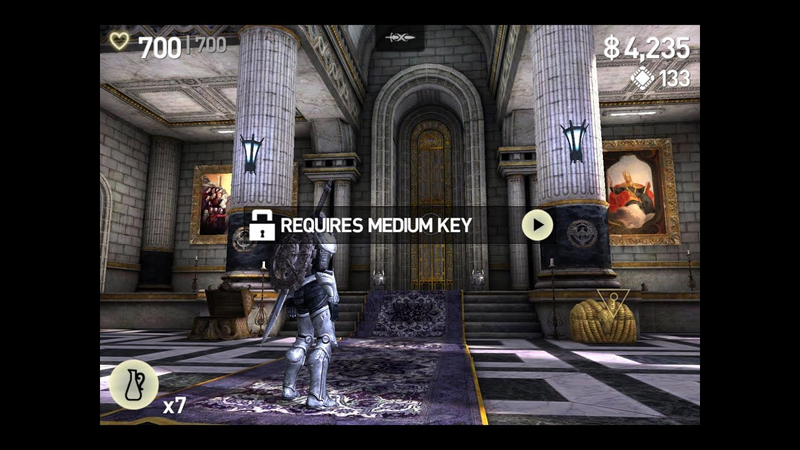
Monetizer: Infinity Blade III
Infinity Blade III serves as a notable case study in the integration of sophisticated free-to-play (F2P) monetization mechanics within a premium, paid-entry mobile game.
- Infinity Blade III utilizes a hybrid monetization model that combines a $7 upfront premium entry fee with an aggressive in-app purchase (IAP) ecosystem typical of free-to-play titles.
- The game employs a dual-hard-currency system using gold and chips, which are non-interchangeable and serve distinct functions like equipment acquisition and time-based crafting acceleration.
- Monetization is driven by a layered architecture featuring inventory stores, consumable items, time-based crafting mechanics, and randomized rewards through prize wheels and key-based chest unlocking.

News roundup: Opinions on GTA V and the rise of iOS 7
This industry analysis examines the shifting landscape of mobile monetization and platform adoption as of September 2013, contrasting the traditional console model with the prevailing free-to-play (F2P) paradigm.
- Top-grossing mobile titles like Candy Crush Saga achieve an average revenue per paying user of approximately $40 annually, matching the upfront retail cost of many premium console games.
- Mobile developers such as GungHo Online and Supercell are demonstrating that high-frequency monetization strategies often outperform the traditional one-time purchase model used by console releases like Grand Theft Auto V.
- Mobile gaming is increasingly adopting complex monetization mechanics, including dual hard currencies, randomized item drops, and time-gated progression, even within premium-priced titles like Infinity Blade III.

Mobile games industry news (w/e 19 July 2013)
The mobile gaming industry in mid-2013 is characterized by rapid growth in user acquisition and significant consolidation, particularly within Asian markets.
- Baidu’s $1.9 billion bid for 91 Wireless highlights intense competition among Chinese tech giants like Tencent and 360 to control Android distribution channels.
- The Korean messaging platform Kakao generated over $300 million in revenue during the first half of 2013 through its integrated games platform.
- Kabam reached a $700 million valuation following a private share placement, signaling strong investor confidence in the scalability of free-to-play business models.

Psychology & Perception: How Games Are Like Wine
Joseph Kim argues in this 2013 GameMakers essay that player enjoyment of a game is shaped not only by its actual qualities but by how the player perceives it, drawing an analogy to wine.
- A 2008 Cal Tech and Stanford Business School study demonstrated that higher price points can physically increase a consumer's enjoyment of a product by altering their perception of its quality.
- Game developers can influence player enjoyment by manipulating external perceptions through branding, high production values, and polished UI.
- Social proof, such as leveraging social recommendations and competitive rivalries, is a critical but often overlooked driver of player perception.
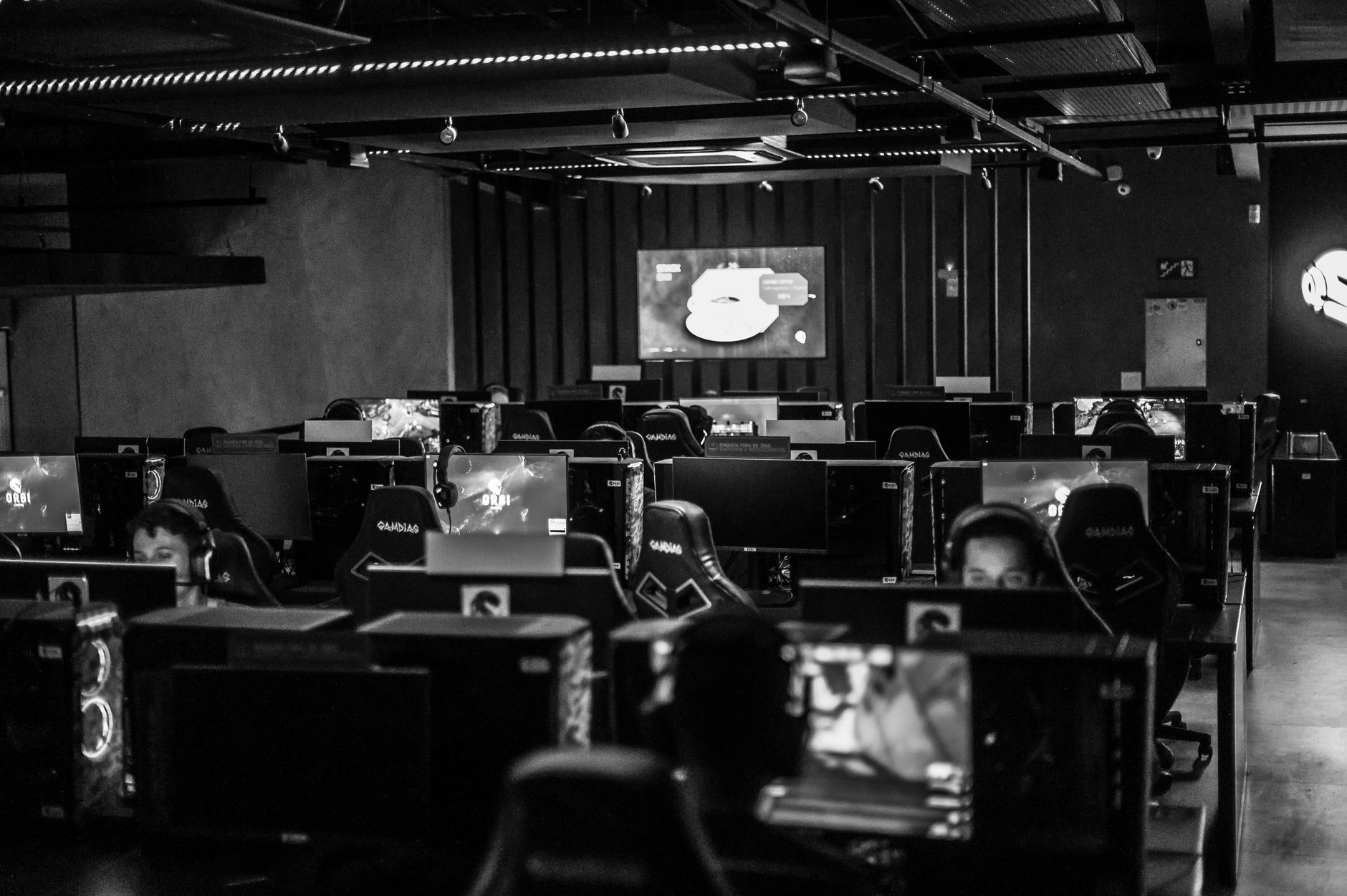
Philippines Gaming Market 2026
The Philippines gaming market in 2026 is portrayed as a mass-scale, mobile-first market in which gaming functions less as entertainment alone and more as a form of identity, income, and labour.
- The Philippines gaming market is projected to reach $500 million in consumer spending by 2025 (Niko Partners), characterized by a large, engaged audience but lower average revenue per user (ARPU) compared to other markets.
- The Philippines is a global superpower in Mobile Legends: Bang Bang esports, with Filipino teams winning four consecutive MLBB World Championships (M2-M5) and the M5 final in Manila peaking at 5.07 million concurrent viewers.
- The Philippines was the epicenter of the play-to-earn phenomenon with Axie Infinity; at its 2021 peak, over 40% of its 2.5 million daily active users were Filipino, utilizing a 'scholarship' model to earn income, until the SLP token collapsed and the Ronin bridge hack (draining $620 million) ended the boom in 2022.

Capcom Annual Report 2007: The Key to Growth
Capcom’s 2007 fiscal year performance centers on a strategic pivot toward global expansion and operational efficiency, aiming for a 10% annual revenue growth rate and a 15% operating profit margin.
- Capcom achieved a 45.9% surge in operating income to ¥9,602 million, despite a 15.7% decline in net income caused by tax normalization.
- Consolidated net sales grew by 6.1% to ¥74,542 million, supported by the strategic 'Single Content Multiple Usage' model that leverages IPs across consoles, mobile, arcades, and film.
- The introduction of the 'MT Framework' development tool enabled standardized multi-platform production, which reduced R&D costs and facilitated the success of titles like Dead Rising and Lost Planet.