Infinity
Company
Documents about Infinity

TWIG #407: Roblox’s Steal Economy, Tim Sweeney Goes All In on AI and Xbox Loses Its COO
Roblox's "steal" games dominate much of the current discussion around the platform's revenue and stock outlook.
- Phil Black claims Roblox's 'steal' games such as Grow a Garden and Steal a Brainrot generated roughly half of Roblox's 2025 revenue, a figure the hosts push back on due to limited revenue visibility, and several top games have seen daily users fall by more than 90%, so these hits are seen as volatile compared with Roblox's evergreen titles.
- Steam's AI disclosure data shows the share of releases disclosing AI use rising from about 10% in 2024 to roughly 34% year to date in 2026, with art as the most common application at around 80% of disclosures.
- The hosts argue AI is advancing faster in engineering than in art, and that AI-assisted creation is already inevitable, with Tim Sweeney taking a clearly pro-AI position.

Roblox's car crash interview and Ubisoft's curious Tencent deal | Week in Mobile Games podcast
Ubisoft has finalized a €1.16 billion agreement with Tencent, establishing a new subsidiary, Vantage Studios, to manage core intellectual properties such as Assassin’s Creed and Far Cry.
- Ubisoft has finalized a 1.16 billion euro investment deal with Tencent, resulting in the creation of a new subsidiary, Vantage Studios, in which Tencent holds a 26.32% economic stake.
- Roblox CEO David Baszucki faced significant criticism for a combative and dismissive interview regarding child safety, where he appeared unprepared to address concerns raised by Hindenburg Research and other investigators.
- Dream Games' title Royal Kingdom generated over $300 million in its first year, matching the performance of its predecessor, Royal Match, while maintaining an upward revenue trend that reached $43.6 million in October 2024.
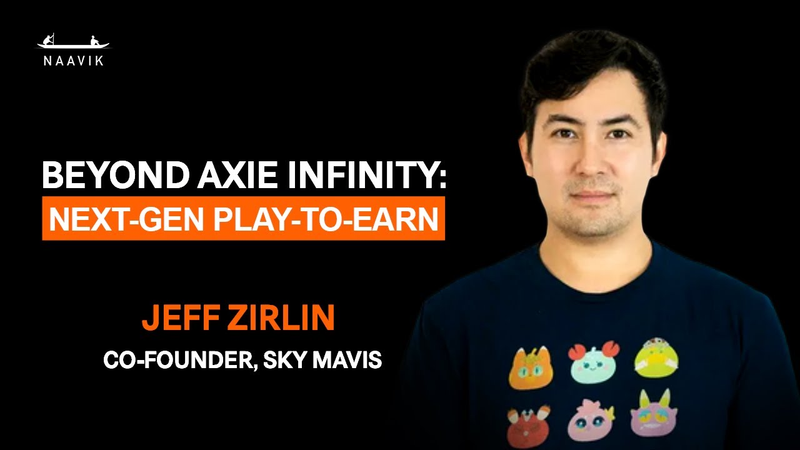
Web3 Gaming: Insights from the Ronin Ecosystem
The Ronin blockchain serves as a specialized infrastructure designed to overcome the scaling and transaction cost limitations inherent in the Ethereum network.
- The Ronin blockchain is transitioning from a curated, permissioned model to a permissionless ecosystem, allowing any developer to build on the network while maintaining Sky Mavis's role in providing strategic publishing support and grants.
- The 'Ronin effect'—the ability to drive significant user acquisition and liquidity for new projects—was validated by the game Pixels, which grew from 5,000 to millions of users in a few months and reached a multi-billion dollar market valuation.
- Sky Mavis has launched the Ronin Developer Console, a suite of tools designed to lower barriers to entry by providing features such as sponsored transactions, marketplace integration, and access to core network APIs.

TWIG #312 THE GREATEST WEEK IN F2P. EVER? EVER!
The gaming industry is currently navigating a period of intense volatility defined by a surge in high-profile free-to-play releases alongside a contraction in studio stability.
- Steam reached a record 39.2 million concurrent users, a milestone driven primarily by growth in the Chinese market.
- Developers are increasingly adopting a dual-skew strategy, launching high-fidelity titles like Marvel Rivals, Delta Force, and Infinity Nikki simultaneously across mobile, PC, and console.
- Traditional pre-launch metrics such as wishlists are becoming unreliable indicators of success, as many new releases experience rapid post-launch retention decay.

Week in Mobile Games E39 - Mobile's hot new releases and the loot box investigation unpacked
The mobile gaming industry is currently undergoing a structural transformation defined by the rise of high-fidelity, cross-platform titles that bridge the gap between mobile and console experiences.
- Nexon’s 'Dungeon and Fighter Mobile' generated over $1 billion in iOS revenue in China within six months, highlighting the massive financial potential of successful mobile titles.
- The mobile industry is shifting toward high-fidelity, cross-platform experiences like 'Infinity Nikki' and 'Delta Force' that emphasize cross-progression to bridge the gap between mobile and console.
- Investors are increasingly prioritizing daily active user counts over traditional retention metrics, seeking shorter return on investment windows of two to three years.
two & a half gamers session #12 - Metacore 65M loss, Niantic 1 hit wonder, Industry conference guide
The mobile gaming industry currently faces significant challenges regarding user acquisition strategies, the sustainability of metaverse platforms, and the evolving utility of professional conferences.
- High-budget celebrity-led television advertising, such as Metacore’s $20 million campaign, is failing to deliver measurable returns compared to traditional digital user acquisition channels, leading to significant financial losses.
- The mobile gaming industry is struggling to replicate the success of foundational hits like Pokémon GO without the leverage of established intellectual property, highlighting the risks of relying on single-hit titles.
- Professional industry conferences like GDC and Gamescom have shifted in value from formal, lecture-based education to informal, face-to-face networking, which senior practitioners now view as the primary benefit of attendance.
two & a half gamers session #7 - Is Axie infinity dead? LTV in crypto gaming & web3 UA/marketing
The gaming industry is undergoing a fundamental transition from speculative play-to-earn models toward sustainable play-and-own frameworks.
- The 'Play-to-Earn' model is proving unsustainable due to economic inflation, leading the industry to pivot toward 'Play-and-Earn' or 'Play-to-Own' frameworks that prioritize fun and engagement over financial returns.
- Axie Infinity's economy has faced significant depreciation, forcing a shift in narrative from a platform for earning a living to a traditional gaming experience where earning is a secondary feature.
- Blockchain gaming introduces a native economic value transfer layer that allows for the enforcement of scarcity and value exchange, which was previously difficult to manage in digital environments.
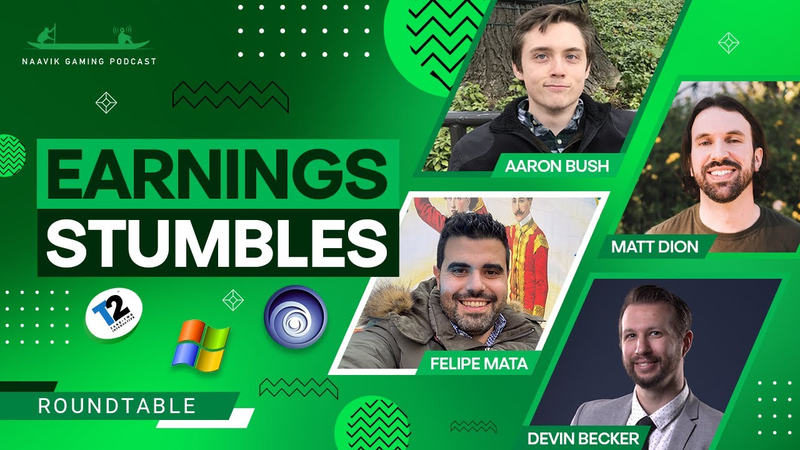
Embracer’s Deal Collapse / Take-Two & Ubisoft Earnings / Mortal Kombat 1
The global gaming industry is currently navigating a period of significant structural realignment, characterized by the failure of aggressive acquisition-led growth strategies and a pivot toward rigorous capital discipline.
- Embracer Group’s failed $2 billion partnership deal and debt-fueled strategy have triggered a 45% decline in its stock price and a 30% reduction in earnings guidance.
- Major publishers are pivoting from aggressive acquisition-led growth to capital discipline, with Take-Two Interactive pruning its development pipeline to prioritize high-impact releases like the next Grand Theft Auto title in fiscal 2025.
- The fighting game genre, led by Mortal Kombat 1, Street Fighter 6, and Tekken 8, is shifting toward live-service monetization models that utilize $70 price points, recurring DLC, and cross-IP collaborations.
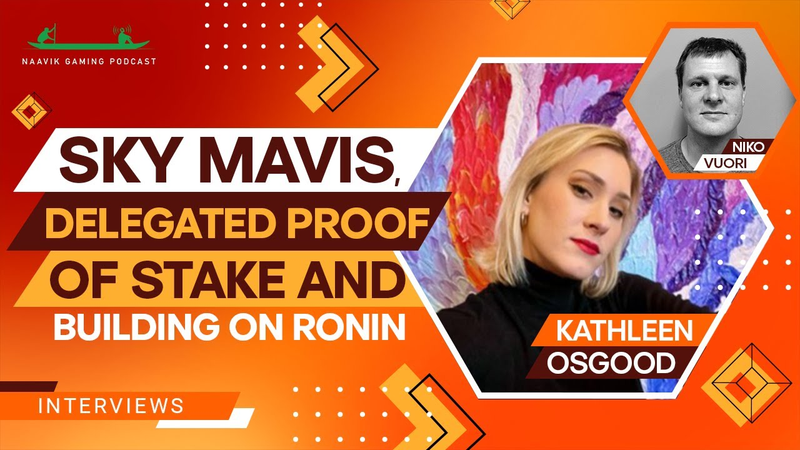
Sky Mavis, Delegated Proof of Stake and Building on Ronin
Sky Mavis is undergoing a strategic evolution, transitioning from a singular developer of Axie Infinity into a comprehensive B2B publisher and infrastructure provider for the broader web3 gaming sector.
- Sky Mavis is transitioning from a single-game developer to a B2B publisher and infrastructure provider for the web3 gaming sector.
- The Ronin blockchain has migrated to a Delegated Proof of Stake (DPoS) model to improve decentralization and security following the 2022 bridge hack.
- The DPoS architecture allows RON token holders to participate in validator selection, creating a more resilient network for third-party titles.
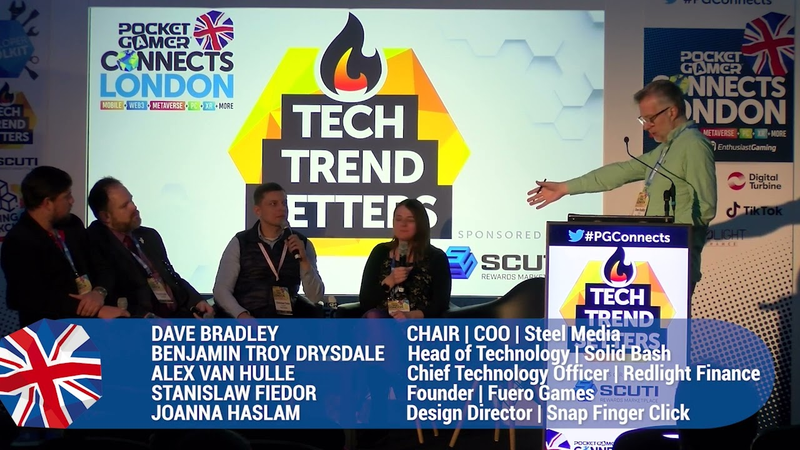
Panel: To Infinity & Beyond: Where Will Technology Take us Next?
The gaming industry stands at a critical technological inflection point, driven by the convergence of cloud gaming, generative artificial intelligence, virtual reality, and Web3.
- Cloud gaming is shifting the industry toward subscription-based distribution models, effectively dismantling traditional hardware barriers to democratize player access.
- Generative AI is functioning as a creative force multiplier that automates repetitive tasks, allowing developers to prioritize high-level architectural design and complex storytelling.
- Current generative AI tools are best utilized for inspiration rather than final output, as they currently lack the conceptual depth and accuracy required to replace human creativity.

Is Diablo Immortal Fun for Mortal Wallets? - The Metacast by Naavik
The gaming industry is currently navigating a critical transition as major franchises attempt to adapt their core experiences for mobile platforms and broader ecosystem expansion.
- Aggressive monetization in mobile titles like Diablo Immortal, where character upgrades can cost hundreds of thousands of dollars, risks alienating core fanbases and inviting increased global regulatory scrutiny.
- Successful mobile adaptation of major franchises requires bespoke development rather than simple ports, as evidenced by the performance of Apex Legends Mobile.
- Long-term mobile viability is increasingly dependent on sophisticated live-ops, personalized player segmentation, and strategic partnerships with experienced developers like Tencent.
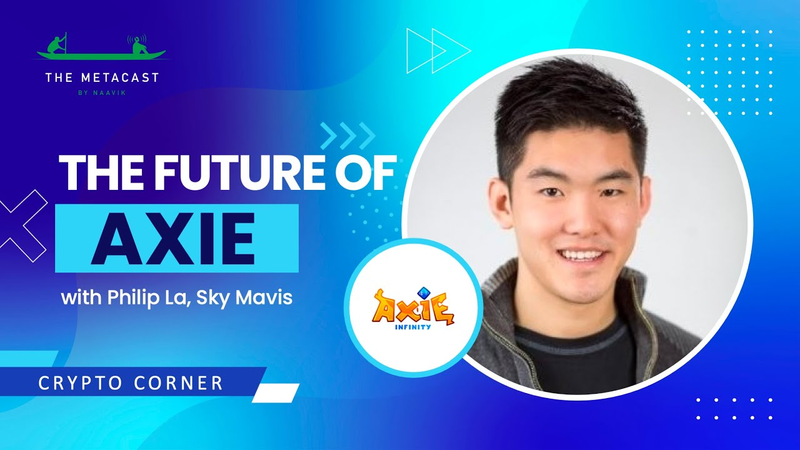
The Future of Axie Infinity with Philip La, Game Lead at Sky Mavis - The Metacast by Naavik
The future of Axie Infinity centers on a strategic pivot from speculative, earnings-driven mechanics toward a sustainable, fun-first gaming experience.
- Axie Infinity is pivoting from speculative, earnings-driven mechanics to a fun-first model that prioritizes high-quality gameplay, improved graphics, and intuitive progression.
- The platform has adopted a freemium model to lower barriers to entry, allowing players to access the 3v3 battle loop and PvE content without an initial financial investment.
- Economic stability is being managed through a balanced system of token sinks and sources designed to discourage pure extraction and promote long-term sustainability.