Loading the document
1 free read left. Create a free account for unlimited reading + AI research.
Create free accountArticle Naavik
1 free read left. Create a free account for unlimited reading + AI research.
Create free accountArticleNaavik
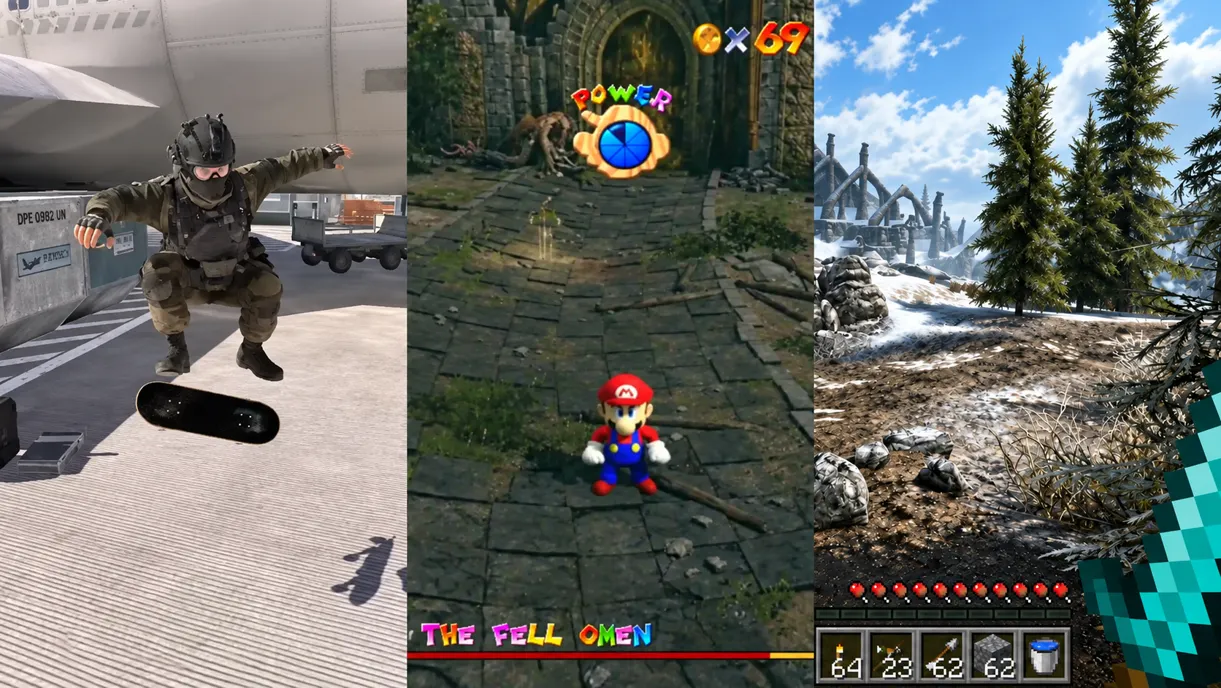
These challenges include the lack of standardized graphical rendering, file formats, and cross-game balancing of item utility. Industry-wide coordination on open standards is a 'Herculean task'.
It's like trying to use a charger from one brand of phone with another brand's phone; the connectors just don't fit.
Matt Dion examines whether blockchain games can deliver true interoperability, in which verifiable NFT ownership lets players carry digital assets and identity across titles. He argues the idea is compelling but faces unclear developer incentives, particularly among large IP holders such as Nintendo, or Riot, whose Jinx skin is locked within Fortnite, which have little reason to open their ecosystems. Technical and organizational hurdles compound the problem: coordinating stakeholders around open standards, reconciling different rendering pipelines and file formats, balancing item utility across games, and bridging incompatible blockchains and token standards such as ERC-721, ERC-998, and ERC-1155.
Dion treats interoperability as a spectrum rather than a binary state, pointing to partial examples like Cryptomotors. He identifies two likely paths forward. The first is publisher-specific "microverses," where one company's games share assets, as with Axie Infinity's minigames. Unified control eases technical barriers, though the model risks offering a solution without a clear problem when compared with existing shared accounts like Battle.net. The second is "composable ecosystems" such as Loot, which use NFTs as building blocks by separating underlying data from visual rendering. This enables bottom-up, emergent development but must overcome the difficulty of decentralized decision-making in game creation.
For developers, Dion proposes a question-based framework. The first question is whether interoperating makes sense at all. Others cover how foreign NFTs affect the value of scarce native assets, what players actually value (cosmetic economies being ideal testing grounds), and whether to reproduce foreign NFTs faithfully or use their data to generate new outputs, including evolving AI-based NFTs.
He concludes that no blockchain game has yet properly achieved interoperability, and he frames the challenge as a classic Innovator's Dilemma: incumbents avoid disruptive change because of cost, weak short-term returns, and small perceived markets, while new entrants gain footholds, a dynamic reflected in recent funding surges for blockchain gaming and Web 3.0 startups. Progress will likely be incremental, the industry may never fully interoperate, and players' digital asset collections should gain value as interoperability spreads.
Each row is a game or company this document names, each column a document, oldest first. A mark means that document names it. Select a row to see those documents.

Naavik · 2026
Naavik · 2022
PocketGamer.biz · 2022
Naavik · 2022
PocketGamer.biz · 2026
Naavik · 2025
BITKRAFT Ventures · 2025
Serious Games Society · 2025
Naavik · 2025
University of Science · 2025
Naavik · 2024
Naavik · 2024
Naavik · 2024