Infinity
Company
Documents about Infinity
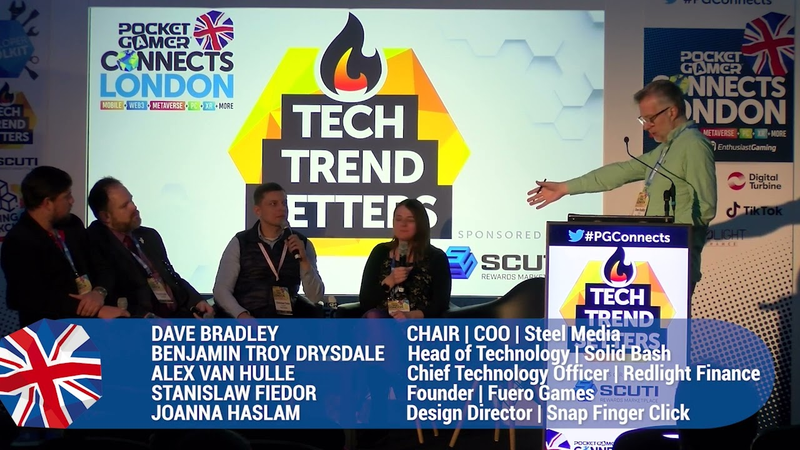
Panel: To Infinity & Beyond: Where Will Technology Take us Next?
The gaming industry stands at a critical technological inflection point, driven by the convergence of cloud gaming, generative artificial intelligence, virtual reality, and Web3.
- Cloud gaming is shifting the industry toward subscription-based distribution models, effectively dismantling traditional hardware barriers to democratize player access.
- Generative AI is functioning as a creative force multiplier that automates repetitive tasks, allowing developers to prioritize high-level architectural design and complex storytelling.
- Current generative AI tools are best utilized for inspiration rather than final output, as they currently lack the conceptual depth and accuracy required to replace human creativity.
The Great Reset: Your 2023 Guide to Web3 Games
The web3 gaming industry is undergoing a significant transformation, dubbed "The Great Reset," shifting its focus from unsustainable "play-to-earn" (P2E) models to developing fun, sustainable, and scalable games.
- The play-to-earn (P2E) model has collapsed, evidenced by a 99% decline in unique trades and a 77% drop in trading volume for virtual land NFTs since early 2022.
- Despite the market downturn, web3 gaming investment remained resilient in 2022, with approximately $3.7 billion raised, slightly surpassing the $3.6 billion total from 2021.
- The majority of the estimated 24,000 web3 guilds are likely to fail due to decimated treasuries and unsustainable business models, forcing survivors to pivot away from traditional guild structures.
The Smoke Test: Are These Game Economies Sustainable?
"The Smoke Test: Are These Game Economies Sustainable?" evaluates the long-term economic viability of four blockchain games—Illuvium, Splinterlands, Crypto Unicorns, and Star Atlas—using a "Ponzinomic Smoke Test" methodology.
- The sustainability of a game economy can be tested by assuming a constant player count; if the economy collapses without continuous growth, it functions as a Ponzi scheme rather than a sustainable model.
- Axie Infinity's collapse serves as a primary case study, where a steady user count failed to generate demand for new Axies, causing the value of the SLP token to plummet and triggering an exodus of play-to-earn participants.
- Splinterlands has maintained relative stability by shifting play-to-earn rewards from the DEC token to the governance-focused SPS token, helping to mitigate oversupply and support the value of its in-game currency.

The Unofficial Deconstructor of Fun 2022 Gaming Awards
The "Unofficial Deconstructor of Fun 2022 Gaming Awards" provides a retrospective analysis of the significant events, trends, and performances within the gaming industry during 2022.
- The gaming industry shifted from 2021 growth to 2022 austerity, driven by macroeconomic pressures like inflation and interest rates alongside the disruptive impact of Apple’s privacy policy changes on mobile marketing.
- Mobile gaming, previously a reliable growth engine, experienced a 5% to 10% decline in Western markets during 2022.
- Speculative investment in Web3, NFTs, and the metaverse collapsed, highlighted by Meta’s $15 billion loss on metaverse initiatives and the failure of FTX.
Losing the Game: How Blockchain and NFT Technology Turns Games Into Work
The integration of blockchain technology and non-fungible tokens (NFTs) into the gaming industry represents a regressive shift that transforms play into precarious labor.
- Play-to-earn (P2E) models, exemplified by Axie Infinity, function as a form of 'click-work colonialism' where middle-class investors from industrial nations profit from the labor of workers in low-income countries.
- Blockchain gaming represents a qualitative shift beyond traditional free-to-play monetization by exploiting players' fears of social decline and their desire for economic advancement in an era of polycrisis.
- The P2E model relies on a capitalist-worker dichotomy that strips games of their ludic value, effectively turning leisure into menial, precarious labor.
Mobile Game Market Review: October 2022
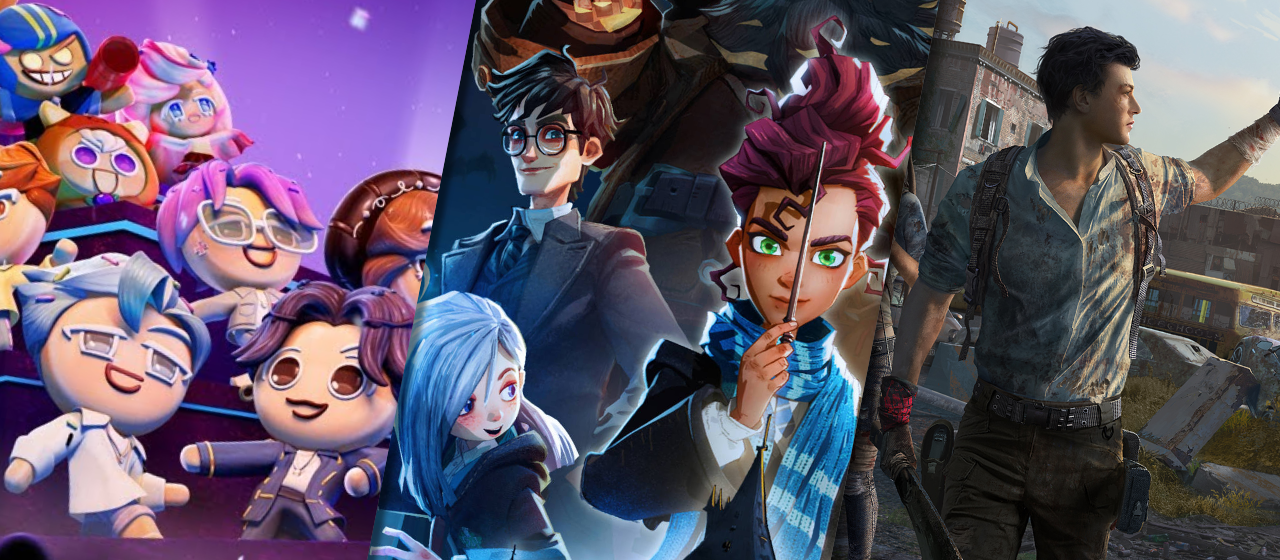
This analyst bulletin provides a review of the mobile game market for October 2022, focusing on significant updates, events, and new entrants in the US, China, and Japan markets.
- Major mobile titles are shifting away from traditional gacha mechanics; Mario Kart Tour replaced randomized warp pipes with a Daily Spotlight Shop, and Brawl Stars removed gacha requirements for unlocking high-level passive Gears.
- Clash of Clans experienced a 500% surge in daily iOS revenue following the release of its latest Town Hall update in October 2022.
- Garena Free Fire is monetizing virtual fashion by launching a 'Trend+' collectibles album, effectively treating in-game cosmetic outfits as proprietary fashion brands.


2022 Blockchain Gaming Report: New Frontiers And The Path Forward
Blockchain gaming in Q3 2022 remains far from mass adoption, and the central thesis of this Naavik and CoinMarketCap analysis is that the sector is leaving a failed first era of play-to-earn for a fun-first, Free-to-Own model.
- The blockchain gaming sector shifted from speculative 'Play-to-Earn' models toward 'Free-to-Own' and 'Play-and-Own' frameworks that prioritize gameplay over yield-focused mechanics.
- Market valuations for major projects dropped by over 90% in 2022, while NFT transaction volumes fell 30% to $500 million despite unique active wallets stabilizing at approximately one million.
- Investment activity transitioned toward seed-stage game studios and user-friendly wallets, resulting in a 2.6x increase in the number of funding deals even as total deal value declined 19% year-over-year to $875 million in Q3.

REVV Racing: The Last Lap?
REVV Racing, a web-based arcade-simulation racing game developed by Animoca Brands, faces significant challenges in player engagement and economic sustainability, suggesting a precarious future.
- REVV Racing’s native token, REVV, has struggled significantly, trading down 97% from its peak with a market cap of approximately $4.7 million as of September 2022.
- The game utilizes an overly complex token economy featuring four distinct tokens (one NFT and three fungible), which creates unnecessary friction and fails to provide long-term economic sustainability.
- The core game loop is economically harsh, requiring players to purchase car NFTs via OpenSea and often participate in specific, restrictive events that favor high-spending, skilled players, creating a pay-to-win dynamic.
Bad Romance: The AppLovin/Unity Merger
AppLovin's roughly $18 billion unsolicited bid for Unity, made in August 2022 shortly after Unity agreed to merge with ad rival IronSource, is unlikely to succeed. Four reasons are given.
- The $18 billion AppLovin bid for Unity is unlikely to succeed due to a $150 million termination fee tied to Unity's existing IronSource merger and a strategic mismatch with Unity's pivot toward non-gaming sectors.
- Hardware manufacturers including Corsair and Turtle Beach have reported year-over-year revenue declines of 40% or more, reflecting a significant post-pandemic market cooling.
- AppLovin’s merger attempt is characterized as a defensive move driven by the company's high debt-to-capital ratio and slowing growth within the consolidating mobile advertising landscape.
June 2022: Monthly Market Update
Blockchain gaming in June 2022 was sharply bifurcated: unsustainable, play-to-earn-driven games continued to deteriorate during the crypto bear market, while teams building the next generation of fun-first, better-designed games had not yet launched.
- Blockchain gaming is experiencing a significant market downturn, characterized by declining unique active wallets (UAW), volatile NFT transaction volumes, and a slowdown in fundraising as unsustainable play-to-earn models deteriorate.
- Top blockchain games, including Alien Worlds and Splinterlands, saw substantial player churn in June, with Splinterlands experiencing a sharp decline in active wallets following major reward structure changes.
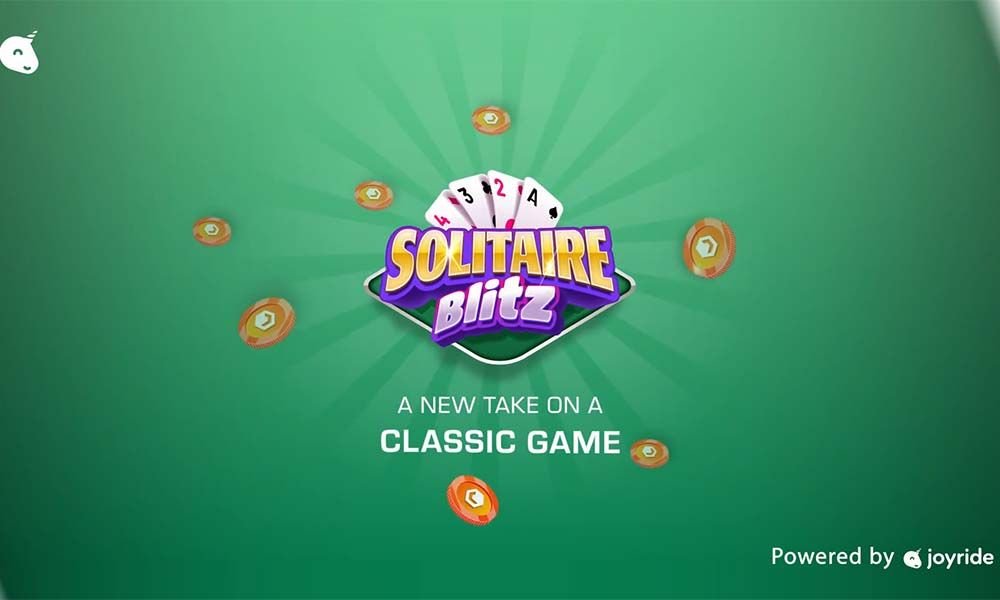
- Casual and puzzle games are emerging as a resilient sub-sector, with Solitaire Blitz debuting in the top five and other titles like Arc8 and Gameta maintaining steady engagement despite broader market weakness.

How Can the Next Wave of Web3 Games Become Sustainable?
Web3 gaming's mid-2022 slowdown, argues analyst Javier Barnes in this opinion piece, is an opportunity to rethink the fundamentals of how blockchain games can last. Two structural obstacles are identified.
- Web3 gaming currently suffers from a sustainability crisis driven by speculative financial models that prioritize short-term growth over long-term player engagement.
- The reliance on positive-sum financial incentives creates fragile economic bubbles, as evidenced by the significant decline in active users for major titles like Axie Infinity when speculative appeal wanes.
- Game economies are highly vulnerable to external market shocks due to their dependence on volatile Layer 1 cryptocurrencies, which causes player retention to collapse during market downturns.
An Introduction to Blockchain Gaming Infrastructure: How You Can Use It Today
This Naavik deep dive, produced in partnership with Forte and written by Maxime Eyraud, is the second essay in a series on building blockchain games.
- The article reports that over $500M in ETH and USDC was stolen from Sky Mavis's Ronin Bridge by a single individual, which it presents as a reminder that centralization allows for potentially disastrous attacks.
- Ramp's initial analysis found it reduced Axie Infinity's on-ramp to 19 steps and 12 minutes, compared with the previous flow of nearly 60 steps and an average onboarding time of 2 hours.
- According to Ramp's own analysis, its integration made onboarding on Sorare 40% faster and more streamlined.