Indie Games
Company
Documents about Indie Games
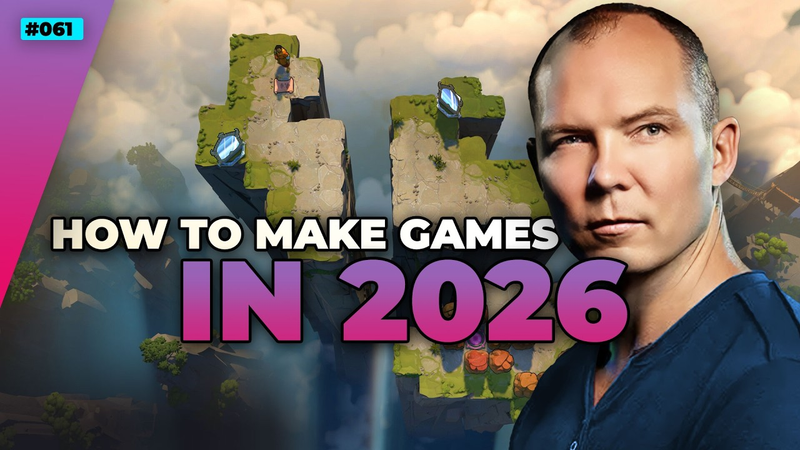
How To Make Indie Games In 2026 w/ Jonathan Blow — Full Time Game Dev Podcast Ep. 061
The modern indie game landscape is defined by intense competition and a precarious pricing environment, necessitating a strategic shift toward long-term discoverability.
- Jonathan Blow’s upcoming game, Order of the Sinking Star, represents a 10-year development cycle that involved building a custom game engine and a custom programming language from scratch.
- Steam remains the most accessible platform for indie developers to reach a large audience, though developers must still navigate the difficulty of standing out in a crowded marketplace.
- Large Language Models (LLMs) are effective for debugging specific issues by scanning multiple controllers and systems, but they struggle to maintain complex, multi-system constraints in larger codebases.
The Cycle of a Hit Genre
The document analyzes the lifecycle of hit game genres, particularly on the Steam marketplace, to identify opportunities for indie developers.
- Hit genres follow a predictable four-phase lifecycle: a proto-game launch, a genre-defining breakout hit, a 'second wave' of rapid-iteration variants by small teams, and a final 'Phase 4' consolidation where large studios dominate with high-polish, licensed, or premium-priced titles.
- The 'second wave' phase offers the highest opportunity for indie developers, as players remain highly curious and willing to switch between games, often pushing the original genre-defining hit below 25% market share.
- Market saturation occurs when a few dominant titles form an oligopoly; for example, by May 2025, three games (Vampire Survivors, Brotato, and Deep Rock Galactic: Survivor) controlled over 75% of the Vampire Survivor-like market.
The Optimistic View That Indie Games Are in a Golden Age Right Now
The Blog post "The optimistic view that indie games are in a golden age right now" by zukalous on How To Market A Game, published November 4, 2025, argues that small indie teams are in a favorable period for quick-to-make games.
- The author describes four to six genres experiencing a Great Conjunction at once, which he says makes quick-to-make games popular on Steam.
- Lethal Company's launch at the end of 2023 is described as the start of a generational shift in co-op friend-slop games, which the author divides into before and after Lethal Company.
- Among the top 23 friend-slop games sampled, the author says almost half are horror games.
Marketing Indie Games as a Developer vs. Publisher
The primary driver of commercial success in the indie game sector is the inherent quality and conceptual appeal of a title, rather than marketing efforts alone.
- Stray Fawn Studio successfully validated their early game concepts by running crowdfunding campaigns, notably raising 75k for their first title, which provided the initial capital to pay developers a modest wage.
- Long Early Access periods can lead to market fatigue; for one title, a 2.5-year Early Access phase resulted in a 1.0 release that failed to generate significant renewed interest, even after an influencer campaign targeting 18,000 contacts.
- Marketing efficiency is significantly higher when a game has mass appeal, as it reduces the need for manual, labor-intensive efforts to 'dig for attention' in niche communities.
Best Code Architectures For Indie Games
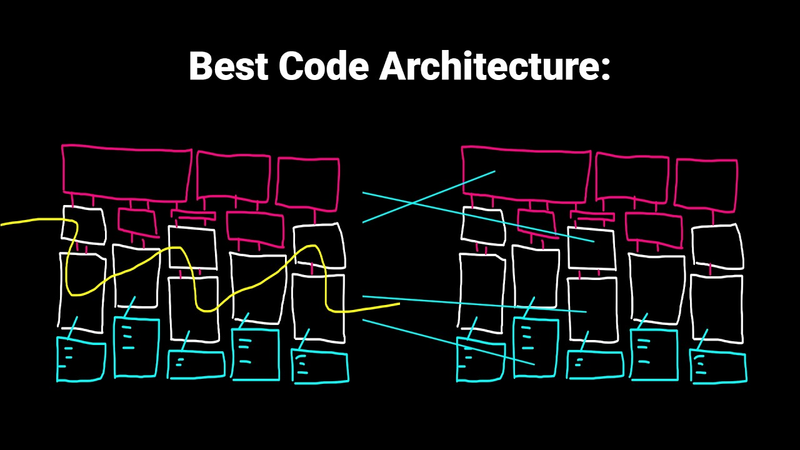
Effective game development architecture relies on balancing the inherent chaos of "spaghetti code" with structured, modular design.
- Design game systems as independent, reusable modules—such as movement or health—to function like 'Lego bricks' that can be deployed across different projects.
- Decouple systems by avoiding direct cross-references, instead utilizing event systems, glue code, or in-engine connections to manage interactions.
- Separate gameplay data from code by storing parameters and translations in centralized databases or scriptable objects to enable rapid adjustments without modifying source files.
Indie Games Old and New: Steam Market Update
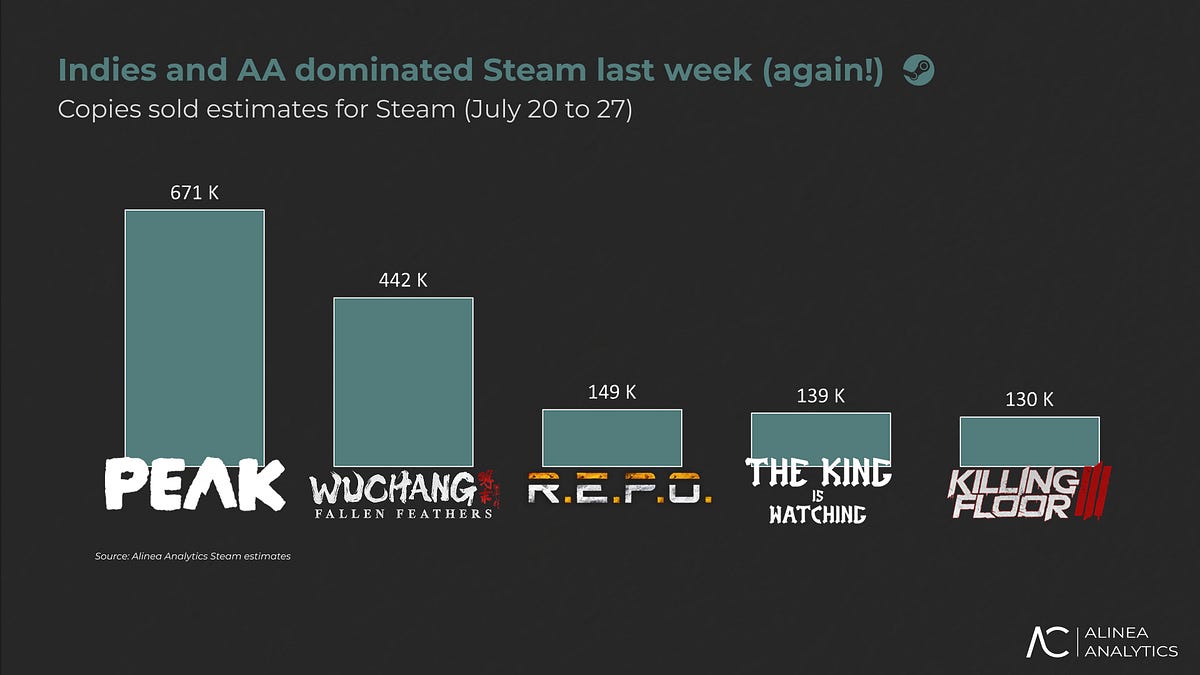
This report provides an analysis of Steam game sales and trends for Week 30 (July 20-27, 2025), focusing on the performance of both established and newly launched indie and AA titles.
- The indie title 'PEAK' led Steam sales for the week of July 20–27, 2025, selling 671,000 copies and generating $4.3 million in revenue.
- The horror co-op game 'R.E.P.O' continues to perform strongly with 149,000 copies sold last week, reaching a lifetime total of 16.3 million units sold and $127.7 million in revenue.
- The new lo-fi PvP game 'Mage Arena' sold 235,000 copies in its first few days of early access, driven by viral TikTok clips and streamer exposure.
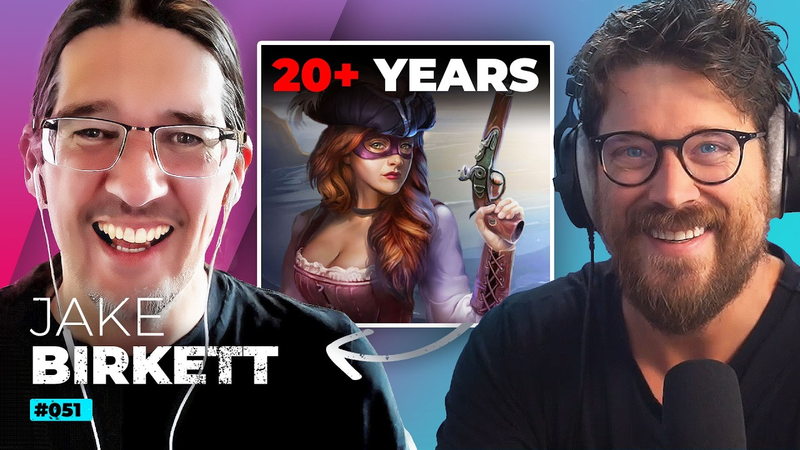
Jake Birkett: How To Make Indie Games Full Time, Unity vs Custom Engine, Indie Survival | Ep. #051
Achieving long-term financial sustainability in the independent game industry requires a shift away from chasing viral trends toward building a diverse catalog of smaller, profitable titles.
- Indie developers should prioritize building a sustainable, long-term business model over chasing viral hits, as 95% of games fail to achieve significant commercial success.
- Consistent income can be generated by building a portfolio of games and leveraging a loyal fan base that purchases bundles and subsequent titles in a series.
- Game feel and player feedback—such as sound, visual effects, and intuitive mechanics—are more critical to long-term success than academic gray-box design or complex meta-systems.
YouTubers Can't Save All the Indie Games
This document examines the increasing challenge of discoverability for indie games, arguing that the sheer volume of new releases is overwhelming traditional and new media channels, including prominent YouTubers.
- The indie game market is suffering from systemic oversupply, where the volume of new releases on platforms like Steam significantly outpaces consumer demand.
- While the total number of games released on Steam continues to rise, the number of successful titles—defined as those reaching over 1,000 reviews—has remained stagnant.
- YouTube’s role as a discovery engine is failing because content creators, who receive over 100 pitch emails daily, are forced to prioritize games with existing market traction over unknown titles.
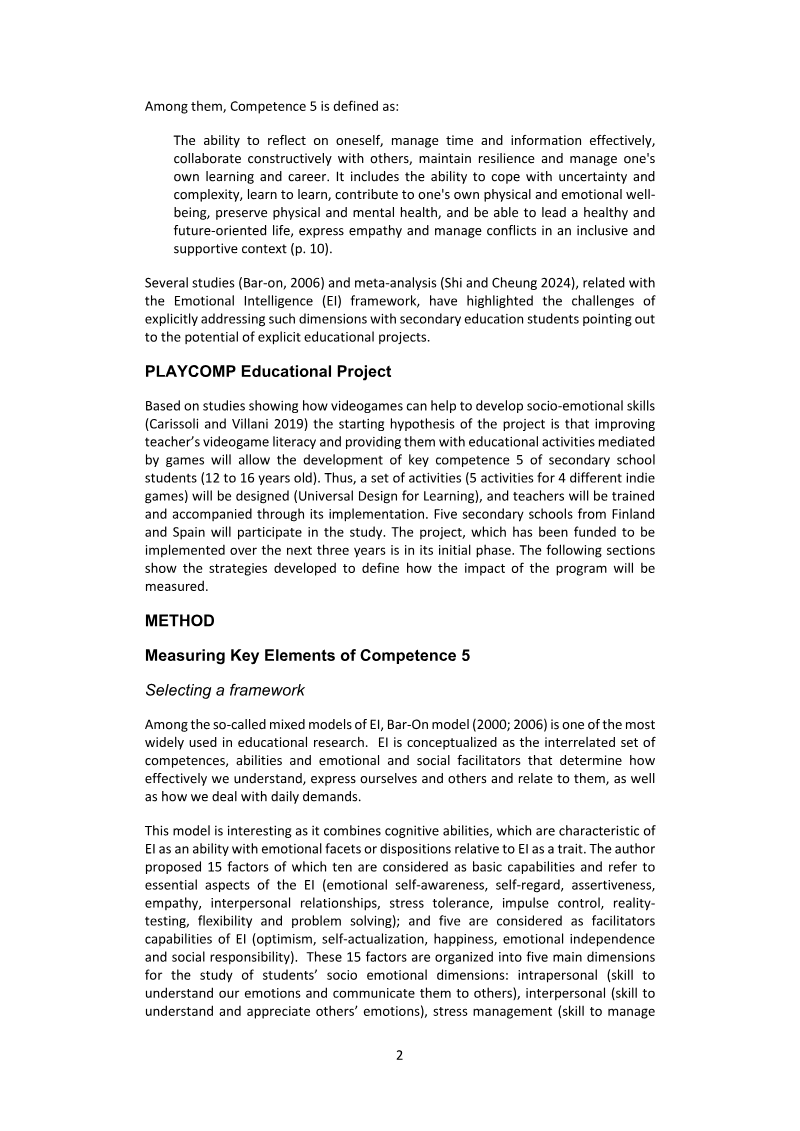
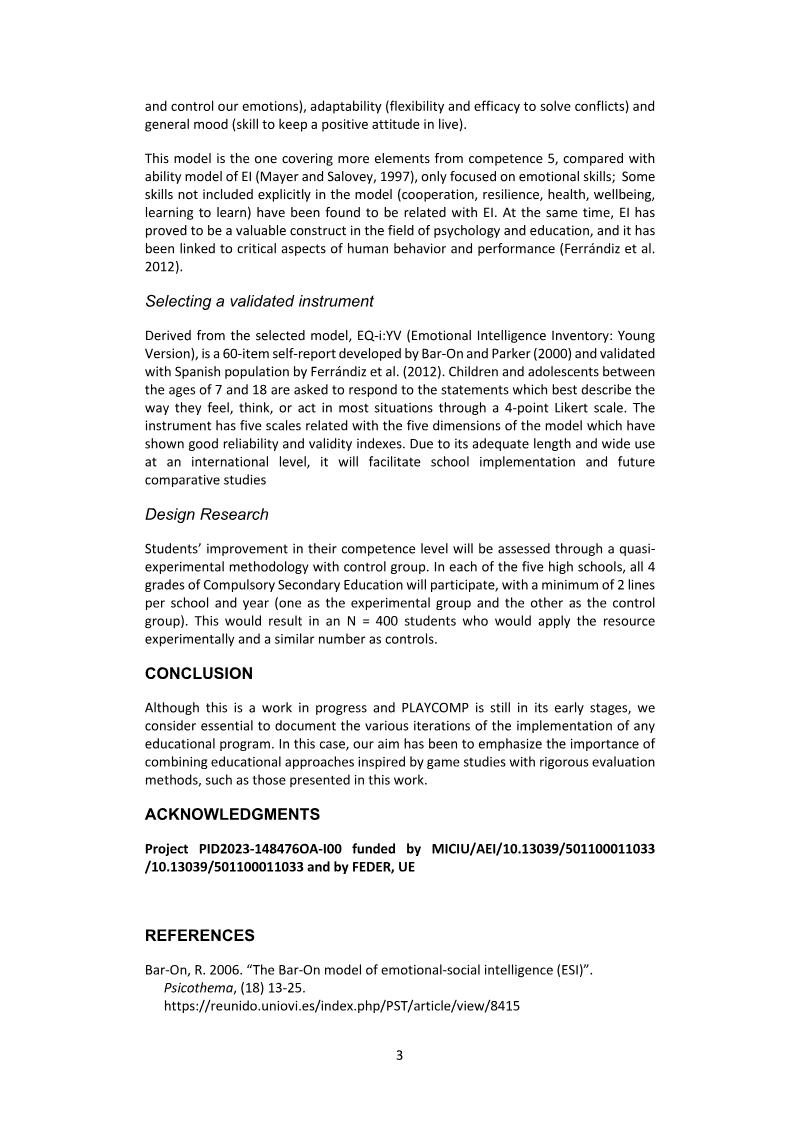
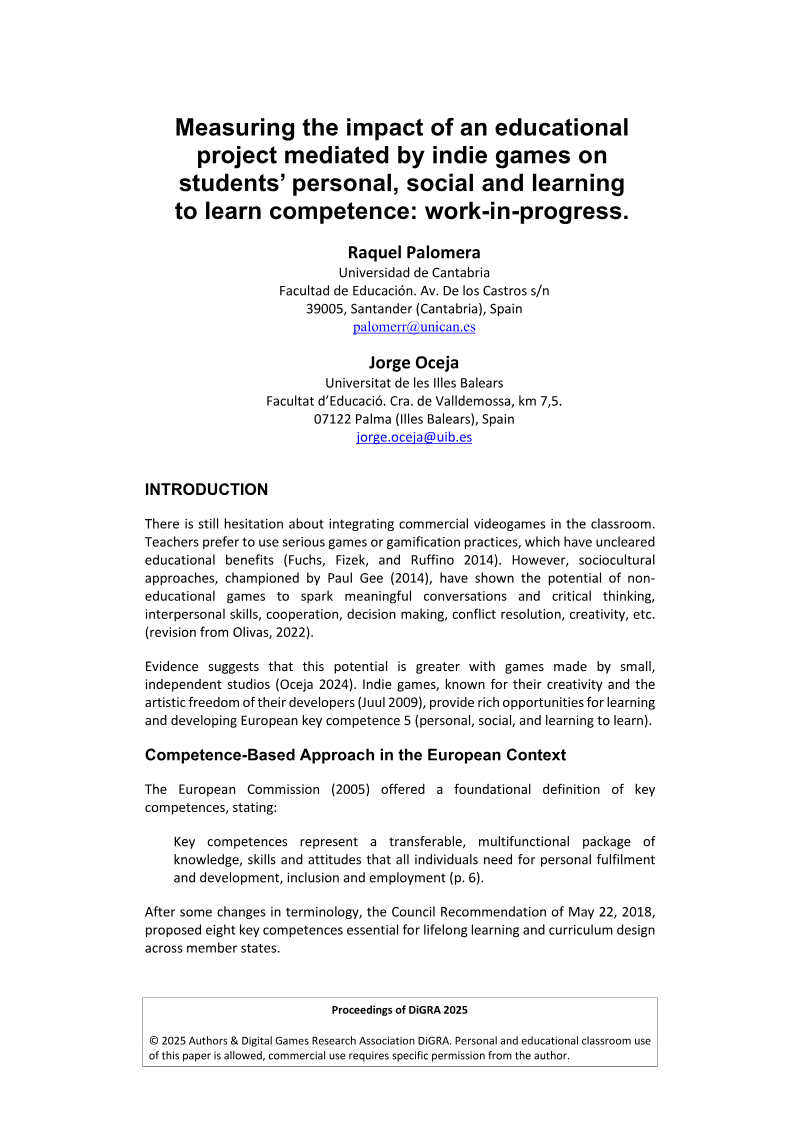
Measuring the Impact of an Educational Project Mediated by Indie Games on Students' Personal, Social and Learning to Learn Competence: Work-in-Progress
This work-in-progress document outlines the methodology for the PLAYCOMP educational project, which aims to measure the impact of indie games on secondary school students' personal, social, and learning-to-learn competence (European Key Competence 5).
- PLAYCOMP is a three-year funded project using four independent video games and five activities to develop European key competence 5 (personal, social, and learning-to-learn abilities) in secondary students aged 12 to 16 across five schools in Finland and Spain.
- The authors' core hypothesis is that improving teachers' videogame literacy and providing game-mediated activities will strengthen students' competence development, based on sociocultural arguments that non-educational indie games can foster critical thinking, cooperation, empathy, and conflict resolution.
- The paper is a work-in-progress describing design and planned evaluation only; no outcome data are reported yet.
Preserving Japanese Indie Games at BitSummit Drift 2024
This extended abstract, authored by Michael Pennington and James Newman of Bath Spa University, argues that Japan's contributions to videogame history are at serious risk of being lost, both because digital games are becoming unplayable and because English-language histories tend to privilege American and Eurocentric…
- Japan's videogame heritage is at serious risk of being lost, both because digital games are becoming unplayable and because English-language histories tend to privilege American and Eurocentric perspectives.
- A central finding is that many Japanese indie developers worry their games will become unplayable due to hardware breakage or financial constraints that prevent ongoing maintenance.
- The authors conclude that audiovisual documentation of gameplay and spectatorship is itself a meaningful form of preservation.

Pride Month 2025: Tips and Events
Gamecity Hamburg's June 16, 2025 Pride Month post compiles events, bundles, and resources for LGBTQIA+ game developers, employers, and allies, with particular attention to Hamburg and the wider German games industry.
- The 2025 Pride initiatives for the games industry focus on active advocacy and systemic change, specifically targeting the reduction of sexism and the improvement of workplace inclusivity.
- Key industry events for 2025 include the three-day digital Rainbow Tech Fest hack-a-thon and the Gayming Awards 2025.
- Commercial support for LGBTQIA+ developers is highlighted through the itch.io Queer Games Bundle, which contains over 600 entries, and the Humble Bundle Power Up Pride collection.

The Secret Weapon Of Sound Design For Indie Games
Effective sound design serves as a critical tool for indie game developers to establish atmosphere, build immersion, and guide player perception.
- Use subtle, layered ambient sounds like reverb and pitch shifting to create depth and immersion, rather than relying on constant noise.
- Incorporate intermittent, low-frequency effects spaced minutes apart to build suspense and prevent players from identifying repetitive audio loops.
- Leverage audio to suggest complex environments and world-building, effectively compensating for visual limitations in resource-constrained indie projects.