Indie Games
Company
Documents about Indie Games
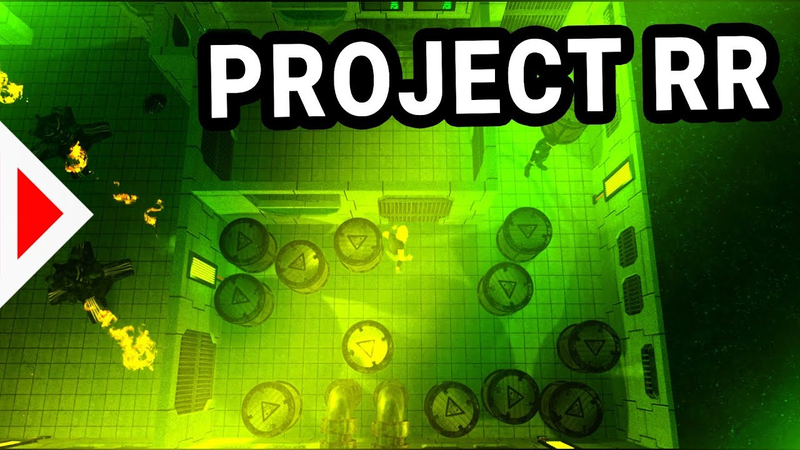
Get Feedback For Your Indie Games!... #010
The primary objective of this analysis is to evaluate the design philosophy of the indie stealth game Project RR, emphasizing the importance of establishing a clear game identity to guide development decisions.
- Developers should prioritize a cohesive game identity over conventional design rules, even if that requires incorporating elements traditionally viewed as frustrating or unfair.
- In Project RR, retaining map progress across restarts transforms the gameplay from a single-run challenge into a puzzle-solving experience based on repeated exploration.
- The developer must balance trial-and-error loops with predictable execution, ensuring that once a player masters a level, success is determined by skill rather than inconsistent AI behavior.
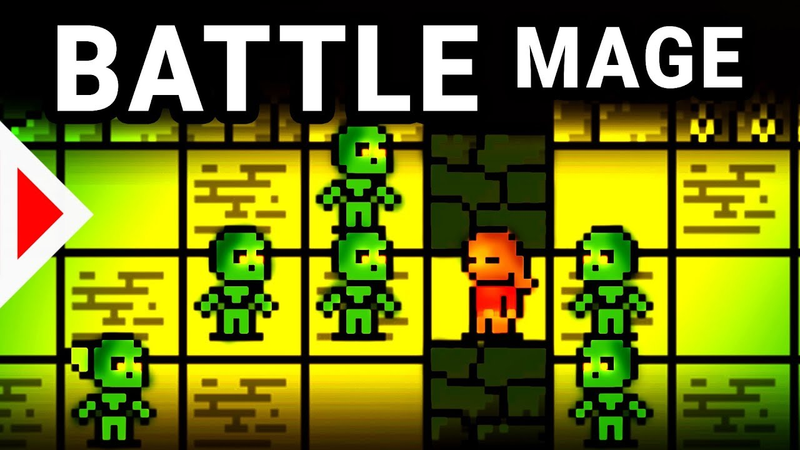
I Still Play Your Indie Games!... #009
The provided analysis examines the indie game Aldarix the Battlemage, focusing on game design principles, balancing, and player experience.
- Improve player onboarding by replacing the initial overwhelming spell selection with a gradual unlocking system to foster better progression and engagement.
- Enhance combat clarity by implementing more impactful damage animations and integrating mana costs directly into the user interface.
- Leverage a limited enemy pool to keep the game easy to learn, shifting the focus of complexity onto the player’s diverse spell kit rather than enemy behavior.
Kodeks Dobrych Praktyk w Sprawie Stosowania Ratingu Gier Wideo: Polska
The "Kodeks Dobrych Praktyk w Sprawie Stosowania Ratingu Gier Wideo: Polska" (Code of Good Practices for Video Game Rating in Poland), published on November 10, 2016, by the Polish Games Association (Stowarzyszenie Polskie Gry) and the Indie Games Poland Foundation (Fundacja Indie Games Polska), establishes a self-regulatory…
- The Kodeks Dobrych Praktyk, established in November 2016 by Stowarzyszenie Polskie Gry and Indie Games Polska, serves as the self-regulatory framework for age-appropriate game labeling in Poland.
- The framework utilizes five age-based categories—3+, 7+, 12+, 16+, and 18+—which are aligned with the Pan European Game Information (PEGI) system to standardize content warnings for violence, language, sexual content, and fear.
- Producers and publishers hold the primary responsibility for accurate labeling and are required to assess the effectiveness of their rating practices at least every two years.
The 5 Pillars & Pitfalls of Indie Games PR
Success in the modern indie game market requires a shift from product-focused development to a strategy centered on professional public relations and strategic positioning.
- Prioritize a 60-to-90-second trailer that showcases the game's unique selling point within the first 15 seconds to maximize visibility.
- Shift from generic press releases to a 'pull PR' strategy by meticulously tailoring pitches to individual journalists.
- Distill the game’s core identity into a concise narrative using clear comparisons or sub-headlines to ensure immediate audience understanding in a saturated market.
Post-Digital Games: The Influence of Nostalgia in Indie Games' Graphic Regimes
The supplied text is headed with the title 'Post-Digital Games: The Influence of Nostalgia in Indie Games' Graphic Regimes', but its body is an article by Frank G. Bosman, 'The poor carpenter': Reinterpreting Christian Mythology in the Assassin's Creed Game Series, in Issue 04 (2016).
- The article argues that Ubisoft reinterprets traditional Christian mythology in a rationalistic-reductionist manner, with Old and New Testament miracle stories reimagined as produced by hyper-advanced objects.
- The author identifies the series' Shroud of Eden with the real-life Shroud of Turin, which many Christians believe to be Jesus's burial shroud.
- The meta-narrative is described as a variation on the pseudoscientific Ancient Astronauts Hypothesis, with an unknown race said to have ruled the earth some 100,000 years ago.
Post-Digital Games: The Influence of Nostalgia in Indie Games' Graphic Regimes
Mattia Thibault's paper, published in Issue 04 (2016), examines the growing use of analogue-looking and non-photorealistic graphics in indie games.
- Thibault argues that non-photorealistic rendering can be more believable than poor photorealism, because it tolerates visual deviations without breaking immersion. He cites Masuch and Röber to make the point.
- The author describes Cuphead as entirely drawn in the style of 1930s cartoons, with each animation drawn by hand and all backgrounds hand-painted.
- Lumino City was built by State of Play as a completely hand-crafted game, with the team building a 3-metre-high miniature city that was photographed and turned into a video game world.
Untangling Twine: A Platform Study
This platform study analyzes Twine, an interactive story creation tool, to understand how its design facilitates the development of highly personal and experimental games, particularly those exploring themes of marginalization, queerness, and discrimination.
- Twine, a free tool for branching interactive stories first released in 2009, has become the main venue for personal and non-mainstream games dealing with marginalization, queerness, mental health, and discrimination, with the study covering its development through the surge of activity in 2012 and early 2013.
- The study argues that Twine's design, rather than its technical power, makes it especially suited to personal works: its documentation asks why someone would make a game and encourages individual experience as subject matter instead of focusing on coding.
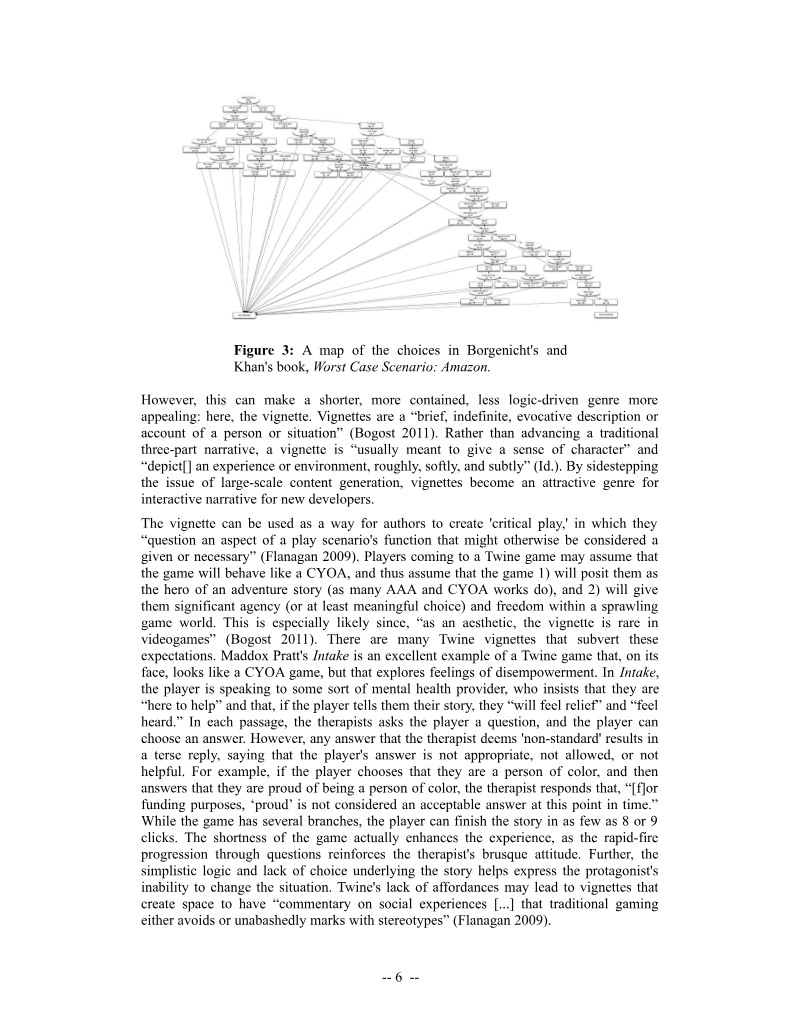
- Twine's passage-based interface resembles the corkboard and notecard planning used by writers, with links managed automatically so authors can arrange story nodes spatially without disturbing the underlying logic.
Innovation - How AAA and Indie Games Can Learn From Each Other - Extra Credits
The video game industry currently faces a structural divide between independent developers and AAA studios, which hinders the medium's creative potential.
- AAA studios and indie developers operate in a structural divide where AAA prioritizes risk-averse, iterative formulas, while indie teams are constrained by limited funding and marketing despite their capacity for innovation.
- Publishers should establish dedicated indie-publishing divisions to provide smaller teams with essential distribution, funding, and technical infrastructure.
- This symbiotic model allows publishers to test innovative concepts in a low-risk environment, identifying successful prototypes that can be scaled into larger, mainstream projects.
Beyond the Player: Pathways of Women Founders Shaping Indie Games in the Arab World
This is a session description from the Game Developers Conference 2026 (GDC Vault), titled "Beyond the Player: Pathways of Women Founders Shaping Indie Games in the Arab World."
- The session features seven speakers, with affiliations including Alfaisal University and Starvania Studio.
- The overview states that far less is known about the women creating the games than about Arab women gamers.
- The session describes women-led studios as navigating cultural norms, under-resourced ecosystems and gendered barriers.