Indie Games
Company
Documents about Indie Games
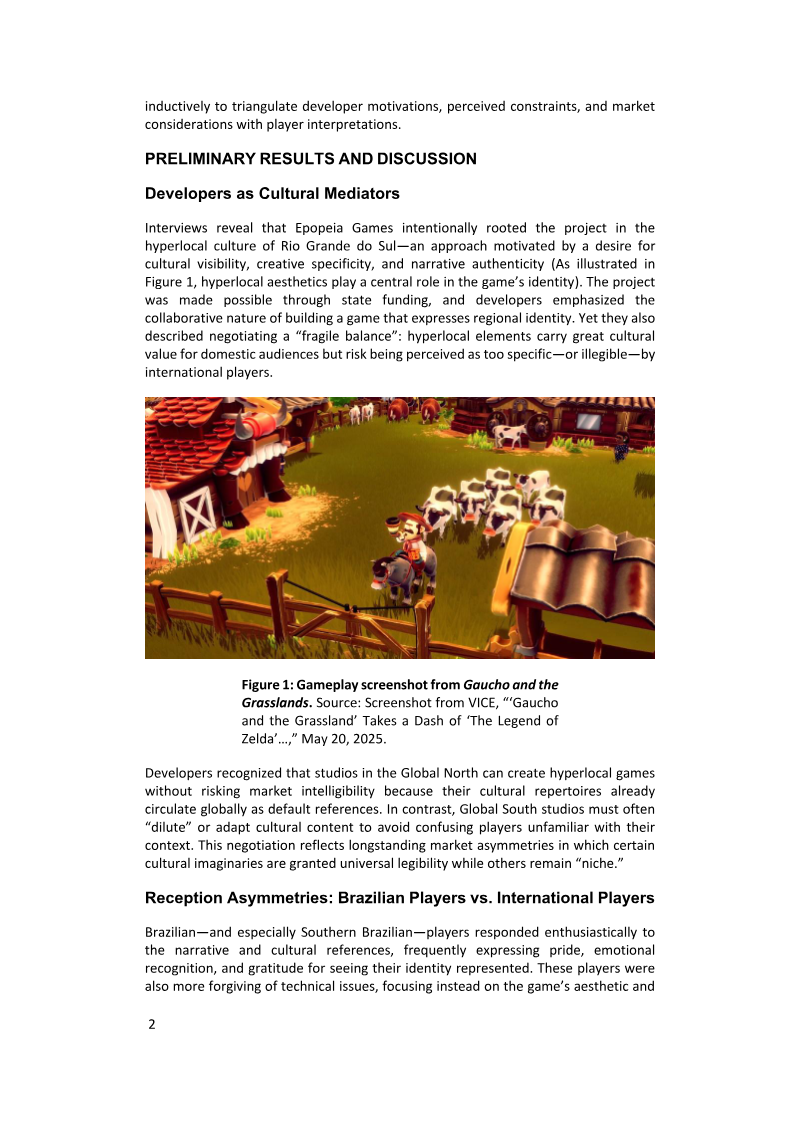
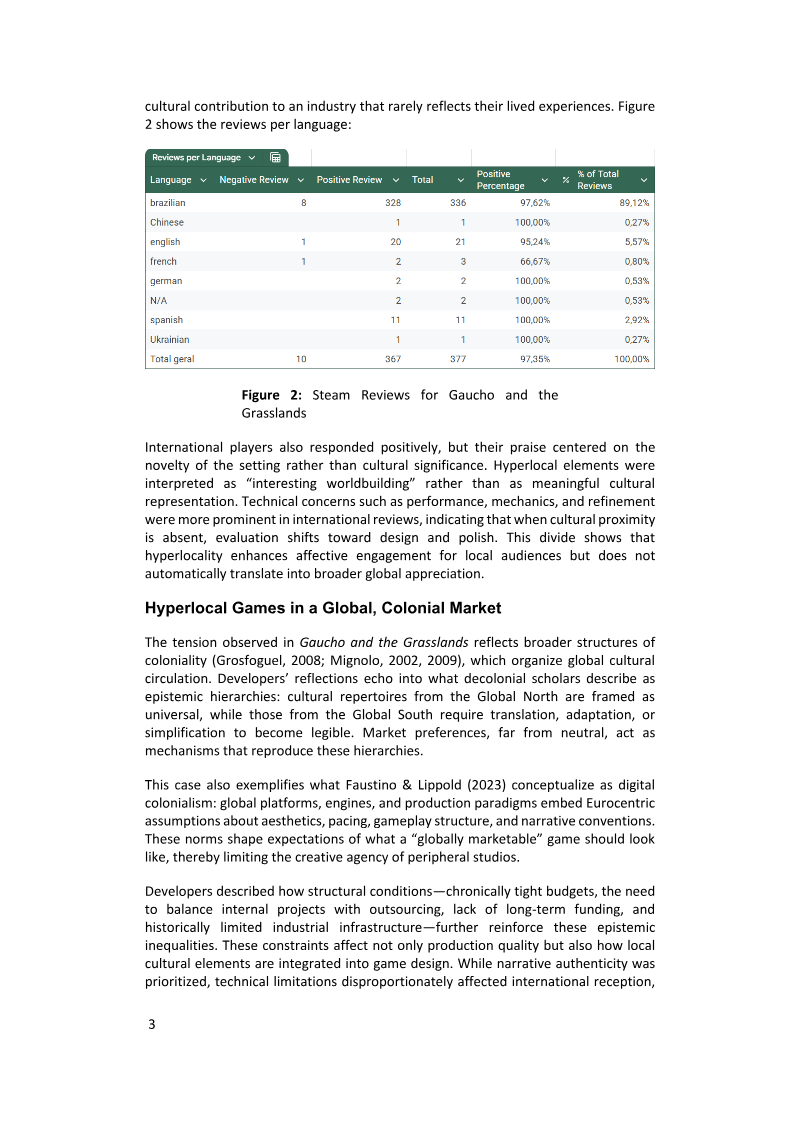
Brazilian Indie Games and Hyperlocal Identity: Analyzing Culture, Design Choices, and Steam Reception in Gaucho and the Grasslands
This study examines Gaucho and the Grasslands, a farming simulator and adventure game developed in Porto Alegre, Brazil, to understand how hyperlocal cultural content from Rio Grande do Sul is negotiated in production and received on the global Steam platform.
- The study analyzes Gaucho and the Grasslands, a farming simulator and adventure game developed in Porto Alegre, Brazil, to examine how hyperlocal cultural content from Rio Grande do Sul is produced and received on Steam.
- Hyperlocal cultural specificity generates strong emotional resonance with domestic players, while the same specificity creates market and legibility barriers for Global South studios seeking international audiences.
- Developers described a "fragile balance" between keeping cultural authenticity and diluting content to make it more internationally legible, a dilemma they contrast with Global North studios that can rely on globally circulating cultural defaults.
Measuring the Impact of an Educational Project Mediated by Indie Games on Students' Personal, Social and Learning to Learn Competence: Work-in-Progress
This work-in-progress document outlines the methodology for the PLAYCOMP educational project, which aims to measure the impact of indie games on secondary school students' personal, social, and learning-to-learn competence (European Key Competence 5).
- PLAYCOMP is a three-year funded project using four independent video games and five activities to develop European key competence 5 (personal, social, and learning-to-learn abilities) in secondary students aged 12 to 16 across five schools in Finland and Spain.
- The authors' core hypothesis is that improving teachers' videogame literacy and providing game-mediated activities will strengthen students' competence development, based on sociocultural arguments that non-educational indie games can foster critical thinking, cooperation, empathy, and conflict resolution.
- The paper is a work-in-progress describing design and planned evaluation only; no outcome data are reported yet.
Preserving Japanese Indie Games at BitSummit Drift 2024
This extended abstract, authored by Michael Pennington and James Newman of Bath Spa University, argues that Japan's contributions to videogame history are at serious risk of being lost, both because digital games are becoming unplayable and because English-language histories tend to privilege American and Eurocentric…
- Japan's videogame heritage is at serious risk of being lost, both because digital games are becoming unplayable and because English-language histories tend to privilege American and Eurocentric perspectives.
- A central finding is that many Japanese indie developers worry their games will become unplayable due to hardware breakage or financial constraints that prevent ongoing maintenance.
- The authors conclude that audiovisual documentation of gameplay and spectatorship is itself a meaningful form of preservation.
Indie Games for Ethical and Socioemotional Development in Secondary Education
This document outlines a three-year research project focused on integrating indie video games into secondary education to foster ethical and socioemotional development, aligning with European key competencies 5 (personal, social, and learning to learn) and 6 (citizenship).
- The study proposes a three-year project integrating independent video games into Spanish secondary education to strengthen teachers' video game literacy and students' ethical and socioemotional development, targeting European key competences 5 (personal, social, and learning-to-learn) and 6 (citizenship).
- The authors argue that indie games, made by small studios with greater creative autonomy, offer richer possibilities for dialogical, sociocultural learning than commercial titles used in conventional game-based learning or gamification.
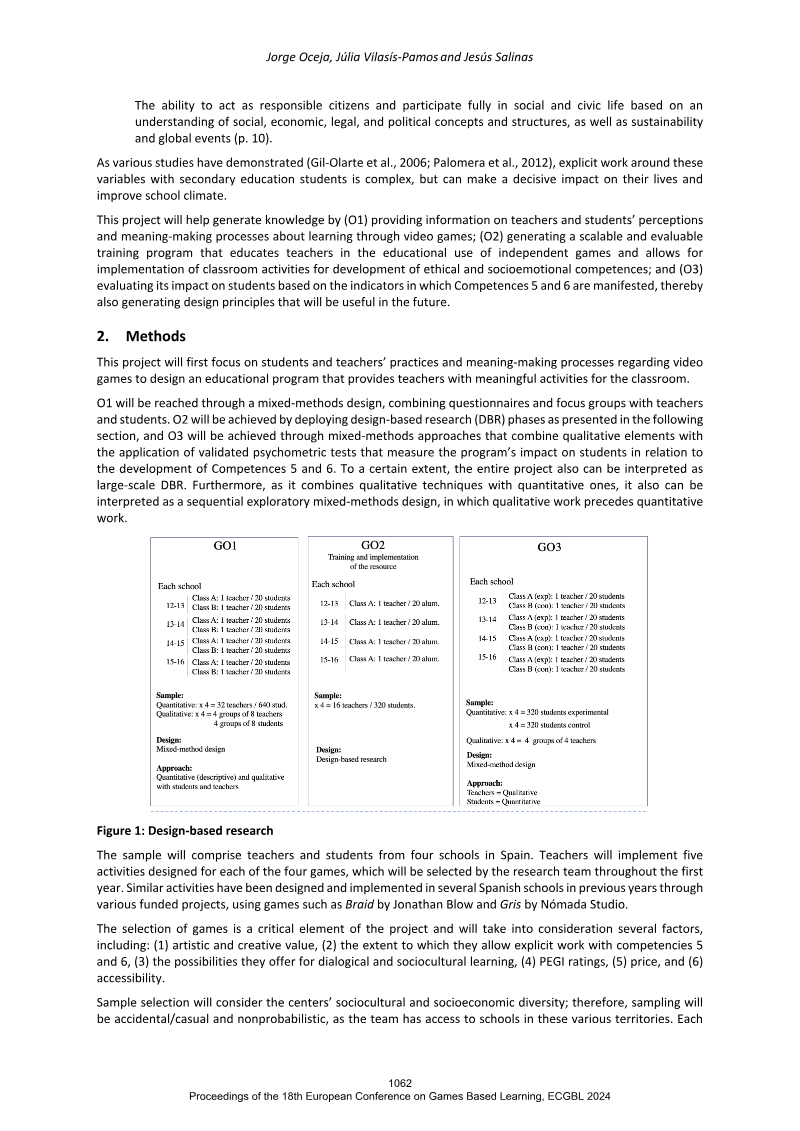
- The planned design combines design-based research with mixed methods and involves a proposed sample of 32 teachers and 640 students across four schools in Cantabria, the Balearic Islands, Andalusia, and Catalonia, with nonprobabilistic accidental sampling.


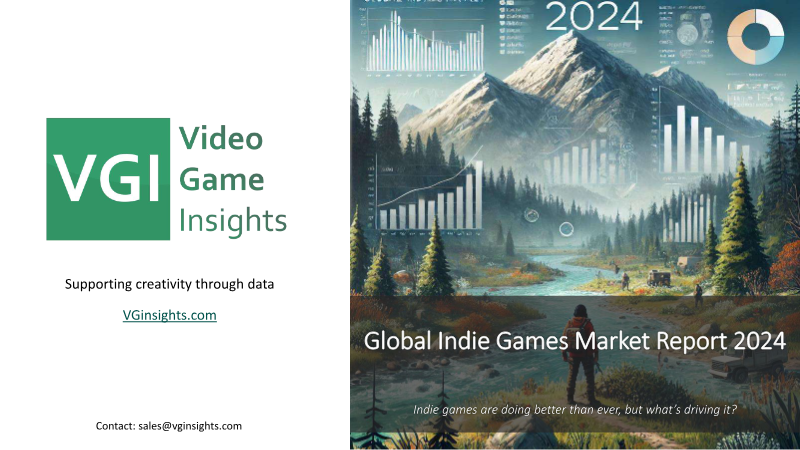
Global Indie Games Market Report 2024
Indie games on Steam are enjoying their strongest period, and the Global Indie Games Market Report 2024 from Video Game Insights examines what is driving it.
- Indie games have reached a historical milestone, doubling their revenue share since 2018 to match the combined earnings of AA and AAA titles on Steam.
- High-budget 'Triple I' projects, defined as teams of over 50 people, now generate more than half of all indie market revenue.
- Market wealth is increasingly concentrated at the top, as 2024 hits Black Myth: Wukong and Palworld sold 20.6 million and 20.1 million units respectively.
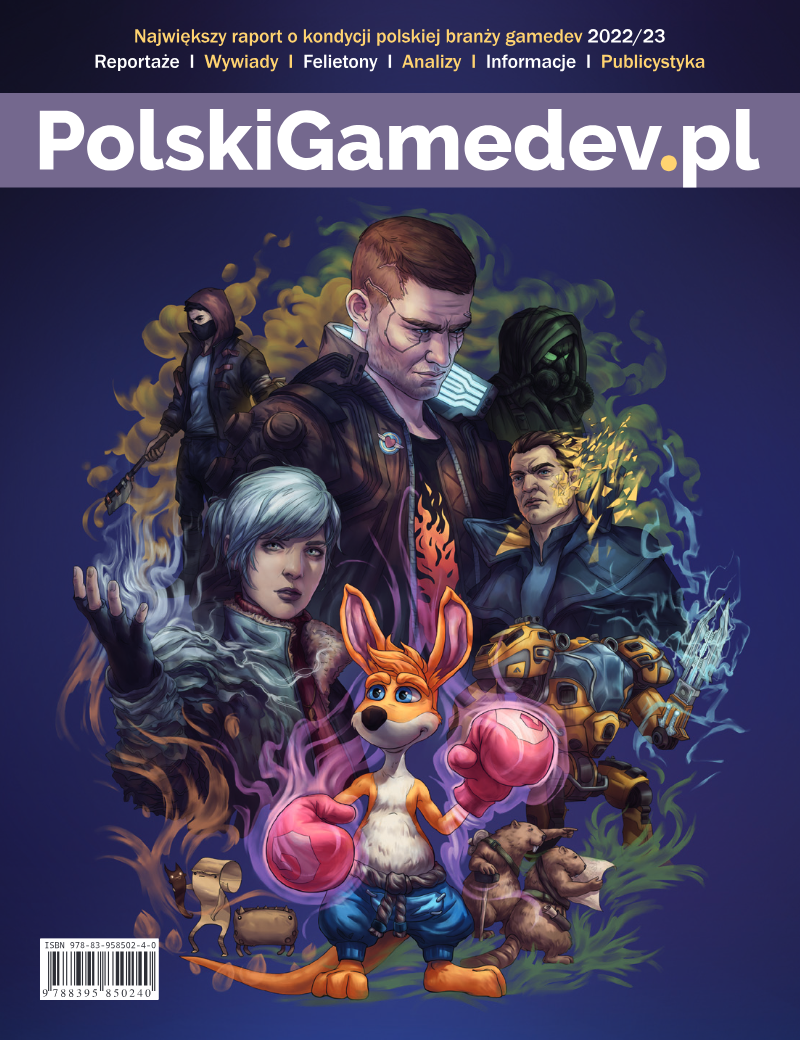
The Largest Report on the Condition of the Polish Gamedev Industry: 2022/23
This is the 2022/23 edition of the magazine PolskiGamedev.pl, published by the Indie Games Polska Foundation, with Mateusz Witczak as editor-in-chief and a range of Polish game-industry contributors.
- Polish game production employed 14,200 people, a figure the analysis places ahead of the German sector in headcount.
- The analysis states that 97% of domestic game production is exported.
- Within a sample of 200 top-wishlisted Steam titles from August 2021, Poland had 38 entries, more than the United States.
Developer's Guide to the Chinese Market
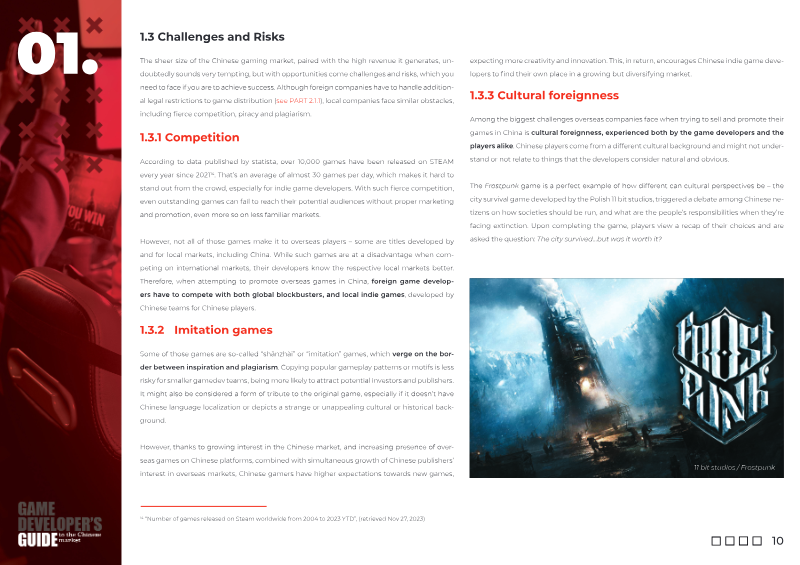
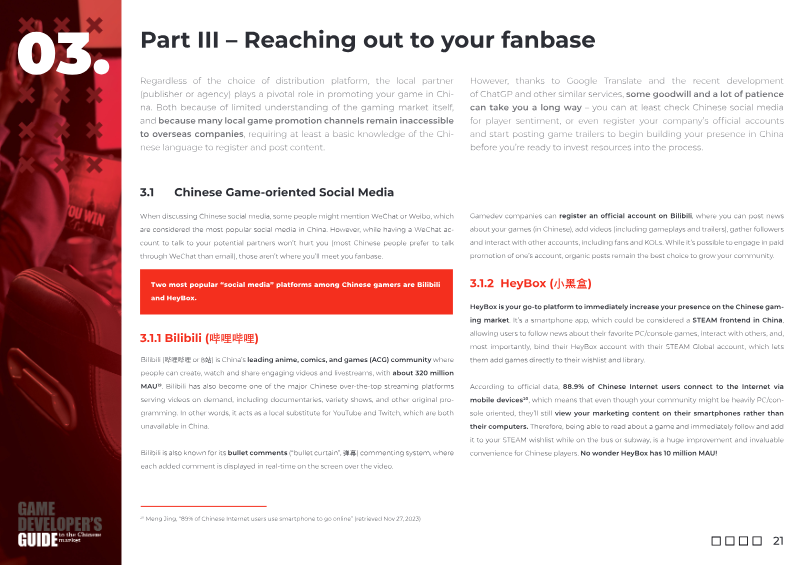
This guide, "Developer's Guide to the Chinese Market", was written by Damian Jaskowski, a Chinese gaming market expert, and is aimed at Polish game developers seeking to enter China with a focus on premium PC and console games.
- The author cites CGIGC data showing China's domestic market generated 144.263 billion CNY in the first half of 2023, a 2.39% year-on-year decline, while the gamer population reached a record 668 million.
- Citing the CGIGC, the guide states that almost two-thirds of Chinese market revenue comes from mobile games, with the remaining third mostly from client games.
- The guide states that ISBN applications can only be submitted by Chinese companies, so foreign companies must first find a local partner to apply on their behalf.
The Elusive “Indieness”: Measuring the Defining Characteristics of Indie Games
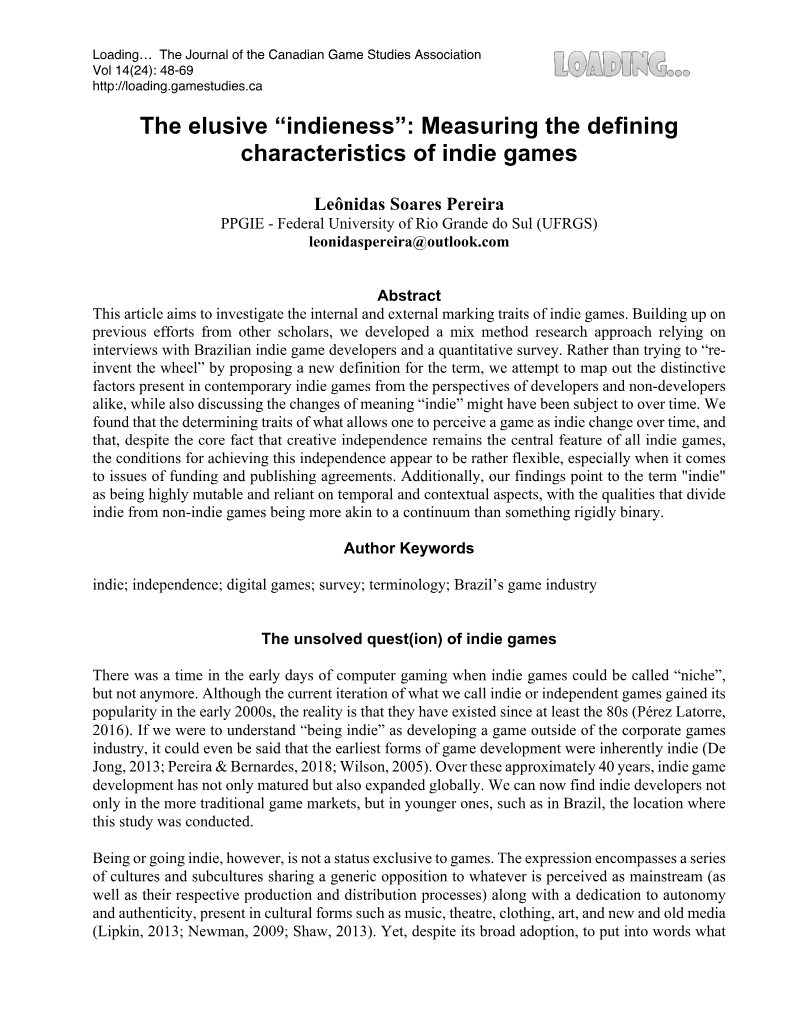
This article by Leônidas Soares Pereira was published in Loading...
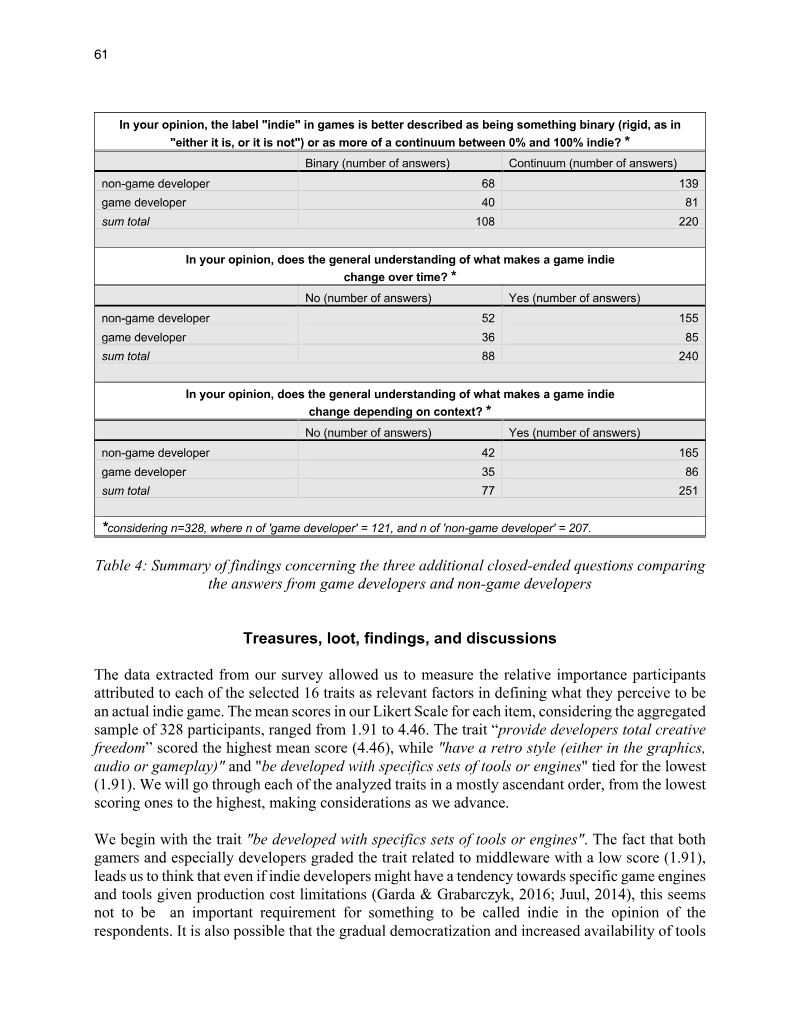
- Creative freedom was the highest-rated indie trait by a clear margin in the survey, while retro style and reliance on specific tools or engines were the lowest.
- Most respondents viewed the indie label as a matter of degree rather than a binary category.
- A large majority of respondents said the understanding of what makes a game indie changes over time.
Kodeks Dobrych Praktyk w Sprawie Stosowania Ratingu Gier Wideo: Polska
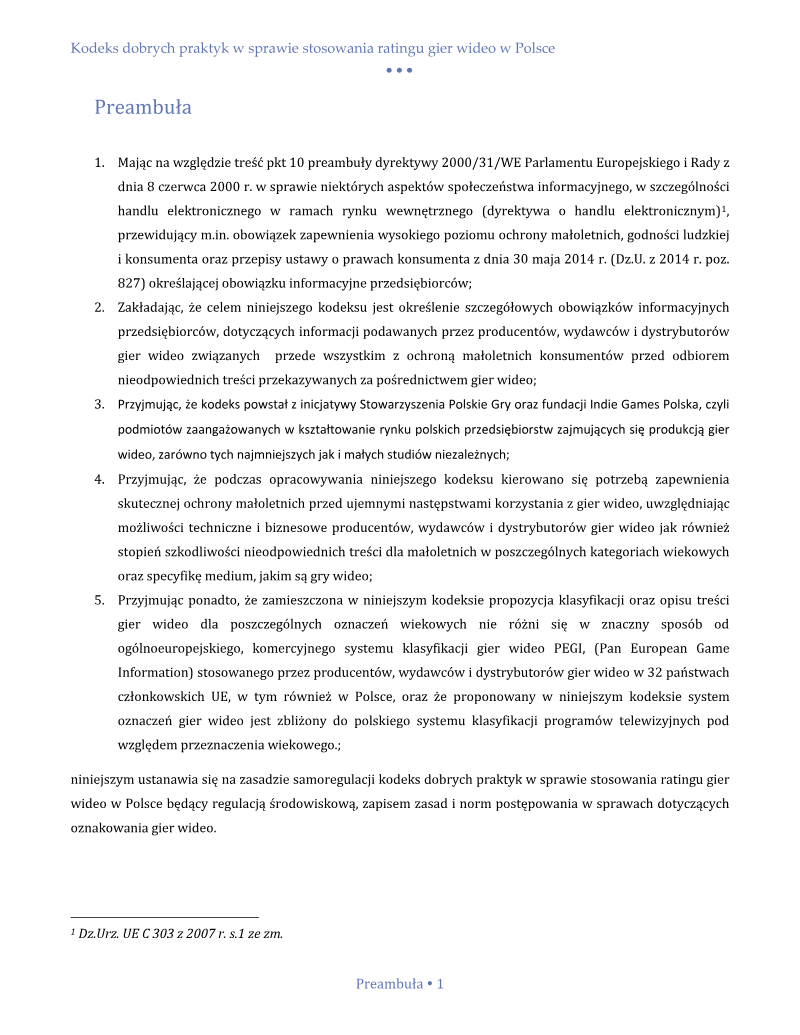
The "Kodeks Dobrych Praktyk w Sprawie Stosowania Ratingu Gier Wideo: Polska" (Code of Good Practices for Video Game Rating in Poland), published on November 10, 2016, by the Polish Games Association (Stowarzyszenie Polskie Gry) and the Indie Games Poland Foundation (Fundacja Indie Games Polska), establishes a self-regulatory…
- The Kodeks Dobrych Praktyk, established in November 2016 by Stowarzyszenie Polskie Gry and Indie Games Polska, serves as the self-regulatory framework for age-appropriate game labeling in Poland.
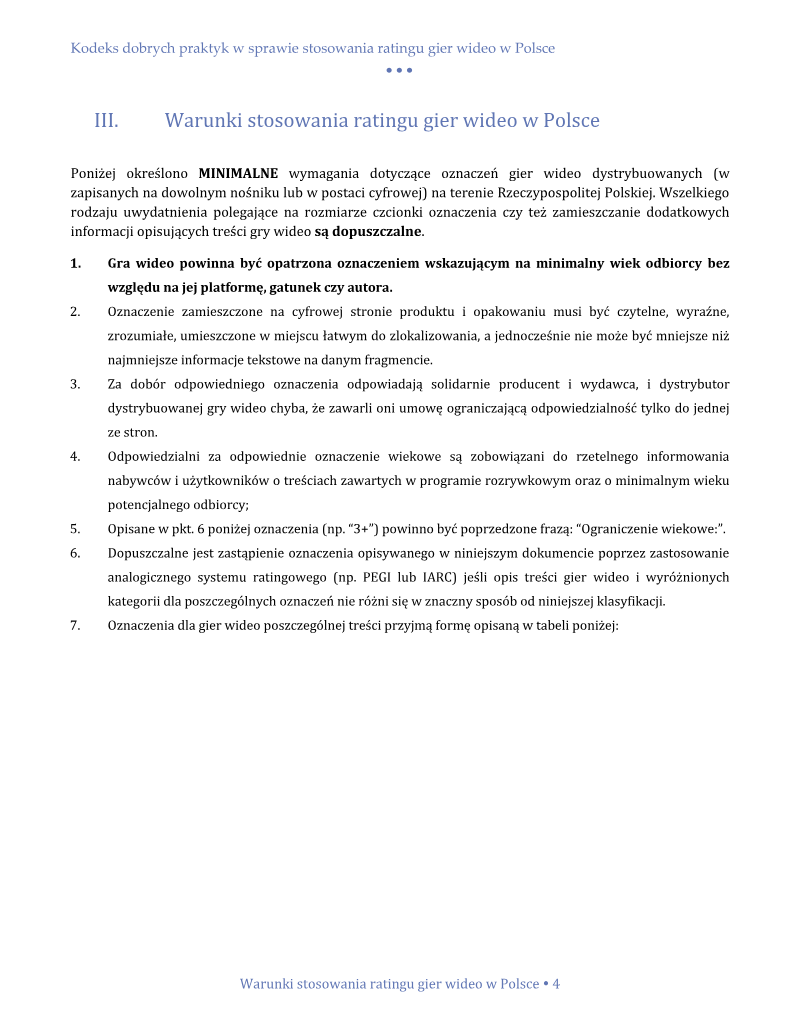
- The framework utilizes five age-based categories—3+, 7+, 12+, 16+, and 18+—which are aligned with the Pan European Game Information (PEGI) system to standardize content warnings for violence, language, sexual content, and fear.
- Producers and publishers hold the primary responsibility for accurate labeling and are required to assess the effectiveness of their rating practices at least every two years.
Untangling Twine: A Platform Study
This platform study analyzes Twine, an interactive story creation tool, to understand how its design facilitates the development of highly personal and experimental games, particularly those exploring themes of marginalization, queerness, and discrimination.
- Twine, a free tool for branching interactive stories first released in 2009, has become the main venue for personal and non-mainstream games dealing with marginalization, queerness, mental health, and discrimination, with the study covering its development through the surge of activity in 2012 and early 2013.
- The study argues that Twine's design, rather than its technical power, makes it especially suited to personal works: its documentation asks why someone would make a game and encourages individual experience as subject matter instead of focusing on coding.
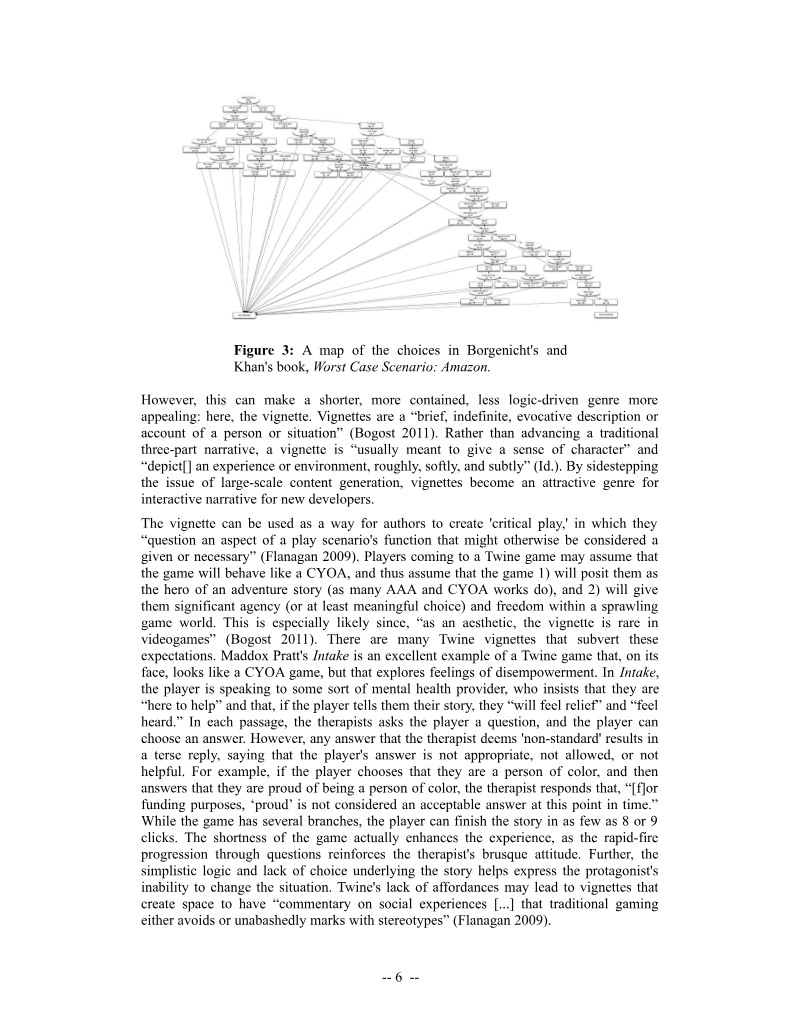
- Twine's passage-based interface resembles the corkboard and notecard planning used by writers, with links managed automatically so authors can arrange story nodes spatially without disturbing the underlying logic.