Hero
Company
Documents about Hero
RPG Genre Snapshot
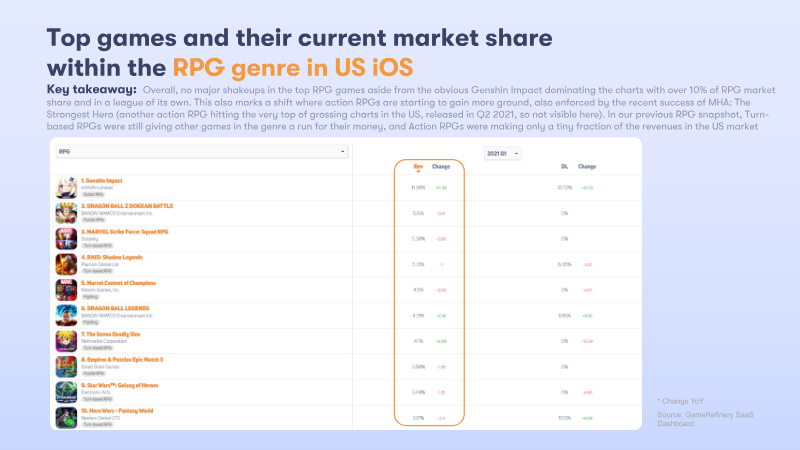
Role-playing games represent a significant pillar of the mobile gaming market, currently holding a 14% revenue share on the US iOS platform.
- RPG titles account for 14% of the total revenue share on the US iOS mobile gaming market.
- Genshin Impact alone captures 10% of the total RPG market share, signaling a shift from turn-based titles toward high-production action RPGs.
- Market leaders are increasingly defined by console-quality production values, open-world environments, and narrative-heavy gameplay.
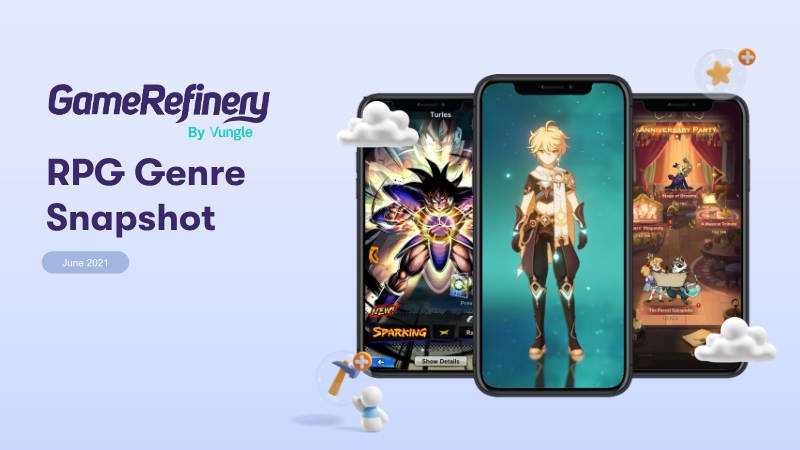
RPG Genre Snapshot Report June 2021
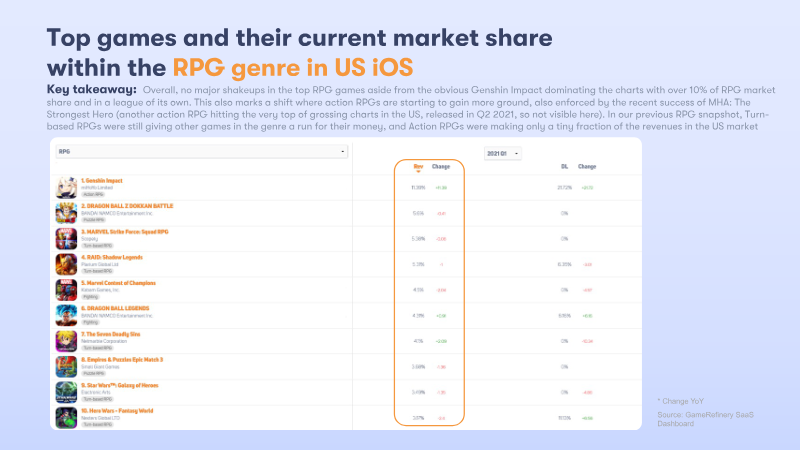
Role-playing games (RPGs) represent a cornerstone of the mobile gaming market, accounting for approximately 14% of total revenue on the US iOS platform as of mid-2021.
- As of mid-2021, RPGs account for approximately 14% of total revenue on the US iOS mobile gaming platform.
- The RPG market is shifting from traditional turn-based titles toward high-fidelity, open-world Action RPGs that offer console-quality experiences.
- Genshin Impact is the primary driver of the genre's evolution, currently commanding over 10% of the total RPG market share.
When Demos Can Radically Expand Your Game's Discoverability
Strategic use of game demos and prologues on Steam can significantly enhance a title's discoverability and community building, provided the game features a specific type of replayable loop.
- High-quality, replayable demos can function as early access experiences, as seen with The Riftbreaker, where 34,500 players engaged for over 200 minutes each.
- Strategic use of demos and standalone prologues can drive significant discoverability, evidenced by The Riftbreaker achieving over 415,000 combined downloads and a top-25 wishlist ranking on Steam.
- Demos should feature short, highly replayable gameplay loops to sustain long-term engagement without cannibalizing sales or exhausting player interest before the full release.
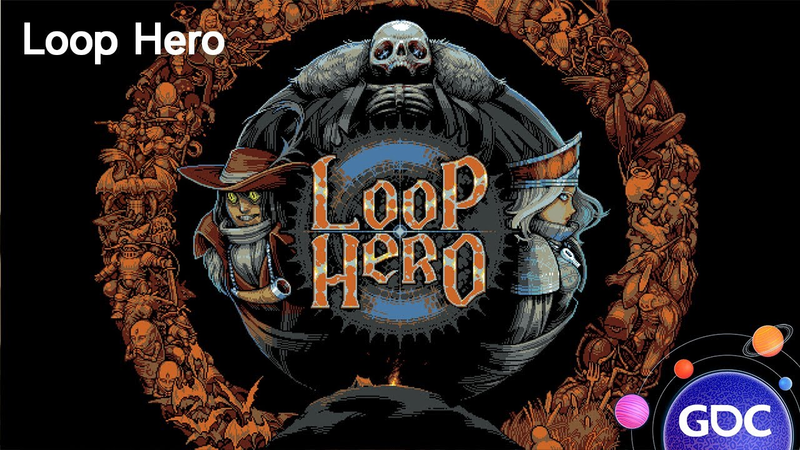
GDC Plays Loop Hero with Four Quarters team
Loop Hero centers on a unique design philosophy that shifts the player’s role from a direct combatant to an architect of the environment.
- Loop Hero originated during a 2019 Ludum Dare game jam, where the team focused on the core concept of a hero walking in circles to create an engaging 'zero-player' experience.
- The game's design relies on a 'mental training' philosophy where players act as passive observers, similar to watching a stream or caring for a Tamagotchi, rooting for the character's success despite having limited direct control.
- Developers implemented a complex enemy skill system where each chapter introduces new abilities for enemies, resulting in over 100 unique skills that required extensive coding and debugging to prevent game-breaking interactions.
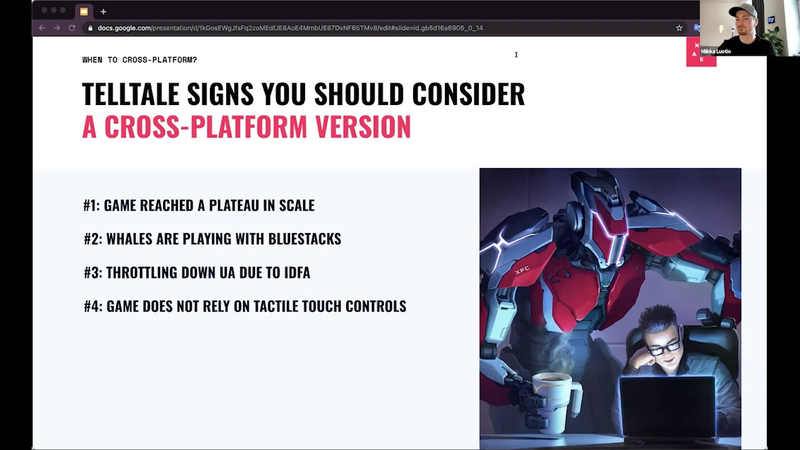
Finding New Audiences for Your Mobile Games
Mobile game developers are increasingly shifting toward cross-platform strategies to mitigate the challenges of market saturation, discoverability hurdles, and the limitations imposed by restricted tracking protocols.
- Expanding mobile titles to web and PC platforms generates an average revenue increase of 20% for every dollar earned on mobile.
- Cross-platform strategies allow developers to bypass restrictive platform fees, improve user acquisition attribution accuracy, and utilize localized payment methods.
- Web and PC environments reduce customer acquisition costs and eliminate installation friction, while larger screen real estate supports better social features and re-engagement of lapsed players.
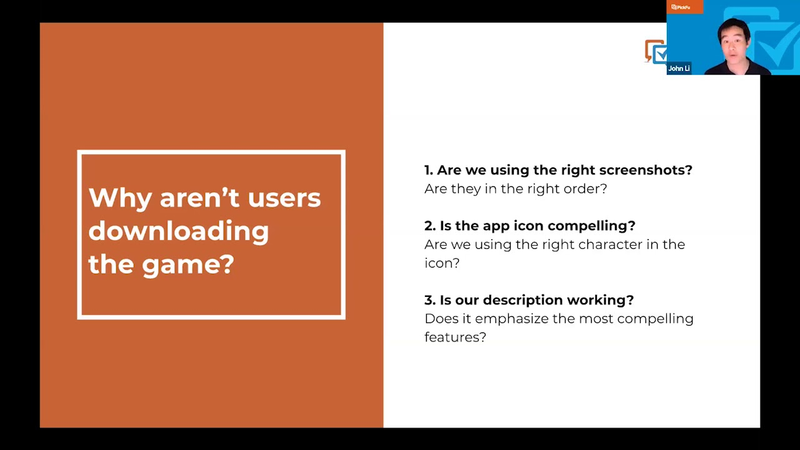
From Zero to Hero - Give Gamers What They Want with Rapid User Testing
Rapid user testing serves as a critical bridge between raw quantitative analytics and subjective community feedback, enabling game developers to refine their products through direct consumer insights.
- Rapid user testing bridges the gap between quantitative analytics and subjective community feedback, allowing studios to validate creative assets and gameplay mechanics with precision.
- Implementing testing protocols early in the development lifecycle reduces financial risk and production time by ensuring concepts resonate with target audiences before significant resource investment.
- The methodology transforms development from speculative decision-making into a data-driven workflow, enabling teams to iterate and optimize conversion metrics both pre- and post-launch.
How to Design Advertising Creatives for Roguelike Games
The purpose of the text is to outline best practices for advertising creatives tailored to roguelike games, emphasizing how these titles can leverage visual and narrative strategies commonly found in medium-to-heavy RPGs.
- Successful roguelike advertisements prioritize high-contrast visuals, saturated colors, and pixel or voxel art styles to capture audience attention.
- Effective creative content focuses on showcasing core gameplay mechanics, walkthroughs, and dramatic battle sequences to highlight the genre's inherent randomness and replayability.
- Developers can reduce psychological barriers to entry by incorporating humor, such as the mixed-reality graphics and voice-overs used in Gumballs & Dungeons.
Kill the Hero, Save the (Narrative) World
The traditional hero’s journey, a narrative structure inherited from cinema, frequently fails to sustain meaningful stakes or thematic focus within the extended timeframes of modern video games.
- Modern video games should transition from traditional, singular hero-centric narratives to ensemble-based models to better sustain thematic focus and complex social dynamics over extended playtimes.
- Adopting structural rhythms from long-running television soap operas allows developers to foster genuine narrative jeopardy and represent interconnected human relationships more effectively than the standard hero’s journey.
- The game Mutazione demonstrates the efficacy of an A, B, and C plot system, which prioritizes character-driven exploration and intergenerational themes over traditional, objective-based problem solving.
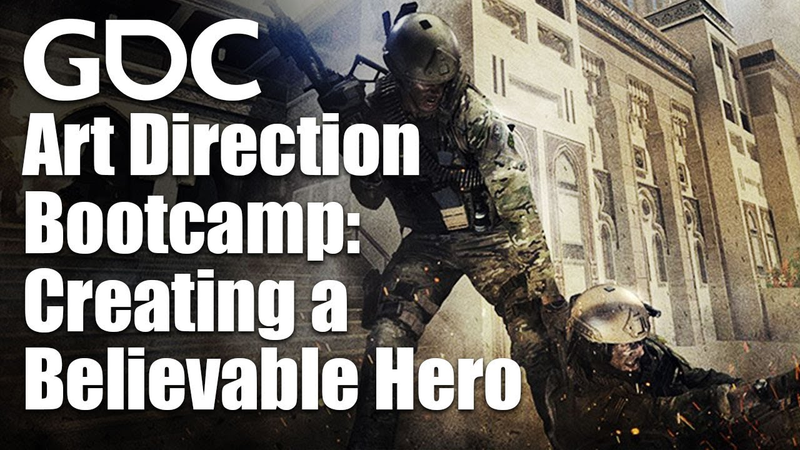
Art Direction Bootcamp: Creating a Believable Hero
Creating a believable hero requires a synthesis of universal narrative archetypes and grounded, iterative design.
- Character believability is achieved by grounding protagonists in human emotions like guilt and vulnerability, as demonstrated by the 2013 Tomb Raider reboot's shift from an invulnerable adventurer to a survivor.
- Visual design must function as an extension of the internal narrative, using scanned real-world materials and dynamic shaders to reflect environmental stressors like mud, blood, and weather.
- Narrative archetypes, specifically Joseph Campbell’s Hero’s Journey and Jungian archetypes, provide a thematic foundation that ensures character resonance across diverse audiences.
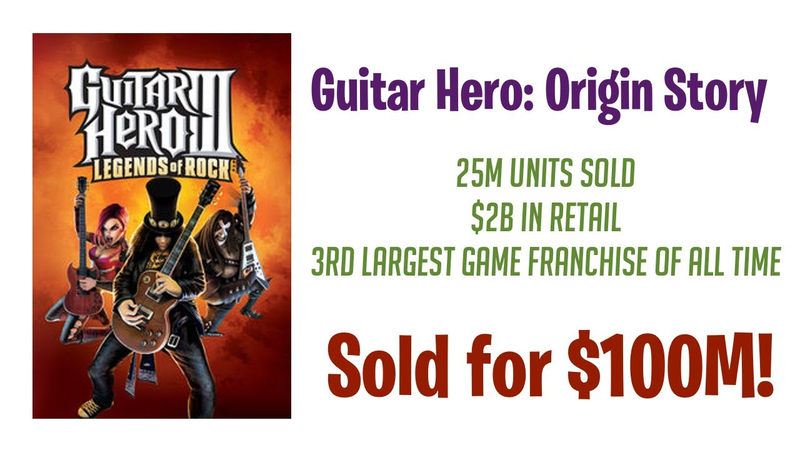
Guitar Hero Origin Story | Lessons Learned with Kai Huang former CEO and Co-Founder of Red Octane
RedOctane emerged as a pivotal force in the mid-2000s gaming landscape by transitioning from an online rental service to a specialized hardware and publishing powerhouse.
- RedOctane achieved financial stability by pivoting from an online rental service to a high-margin hardware business, specifically focusing on niche accessories like dance pads before partnering with Harmonix for Guitar Hero.
- Product pricing should be based on the perceived value delivered to the consumer rather than a cost-plus calculation to maximize profitability.
- To maximize the return on fixed marketing expenditures, companies must execute simultaneous product launches across all platforms and territories to ensure immediate market penetration.
Games Featured on iOS 11's App Store Games Tab See Up to 450% Boost in Installs
Editorial placement within the iOS 11 App Store’s dedicated Games Tab serves as a powerful catalyst for user acquisition, consistently driving substantial growth in download volume for featured titles.
- Games featured on the iOS 11 App Store Games Tab experienced significant growth in new installs, with all four primary feature types at least doubling median weekly downloads.
- The 'Medium List' feature type drove the highest percentage growth, resulting in a 451% increase in median weekly installs.
- The 'Hero Banner' feature provided the largest absolute volume of new downloads, generating approximately 20,000 more median weekly installs compared to the preceding week, a 236% growth rate.
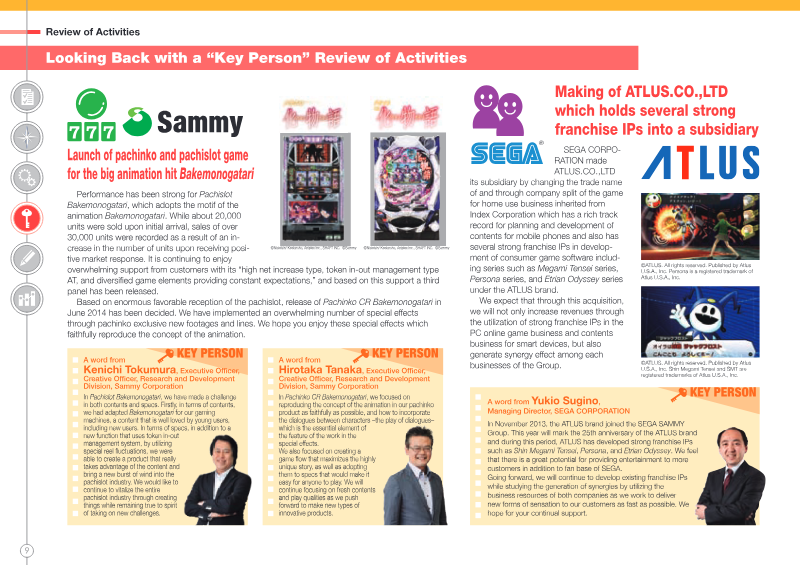
Sega Sammy Holdings Business Report: Fiscal Year Ended March 31, 2014
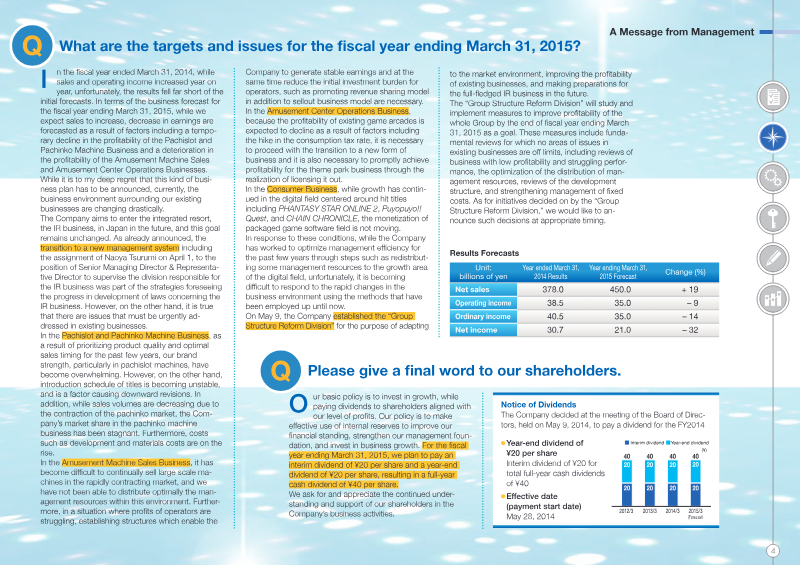
Sega Sammy Holdings achieved a significant financial recovery during the fiscal year ended March 31, 2014, recording net sales of ¥378.0 billion and operating income of ¥38.5 billion.
- Sega Sammy Holdings achieved net sales of ¥378.0 billion and operating income of ¥38.5 billion for the fiscal year ended March 31, 2014, marking an 18% increase in sales and a 103% surge in operating income.
- Financial growth was driven by the pachislot and pachinko machine business and the digital consumer segment, though results missed internal forecasts due to rescheduled title launches and weak amusement center performance.
- The company maintains a strong financial position with ¥542.9 billion in total assets, ¥202.7 billion in cash, and an equity ratio of 63.2%.