Disney
CompanyUnited States
Documents about Disney
From Animation to Zynga to Baobab Studios - Maureen Fan on Building Interactive IP Across Platforms
The evolution of modern entertainment lies in the convergence of cinematic storytelling and interactive gaming.
- Successful interactive entertainment requires a hybrid leadership model that balances data-driven product management, such as A/B testing, with high-quality creative storytelling.
- Studios should prioritize long-term stability by securing strategic partnerships and investment from established industry entities like Comcast and Disney rather than chasing short-term financial gains.
- The core strategy for modern media production involves creating transmedia intellectual property that allows audiences to transition from passive viewers to active protagonists.
The Halo Effect, 3x Gaming Entrepreneur Alex Seropian
The evolution of the gaming industry over the past three decades reflects a transition from garage-based bootstrapping to complex corporate integration and mobile-first strategies.
- Scaling a studio requires transitioning from early-stage creative risk-taking to organizational maturity, specifically by hiring specialized leadership early to manage operational complexities.
- The evolution of the Halo franchise from a real-time strategy concept to a first-person shooter demonstrates that long-term success relies on rigorous playtesting and active community engagement.
- Large conglomerates like Disney have struggled with vertical integration in gaming, suggesting that licensing models are often more pragmatic than attempting to build internal development capabilities without institutional experience.
The Mobile Economy and Digital Ad Space in 2022 and Beyond: An Analysis of the Global Trends Shaping the Mobile and Digital Advertising Industry
This analysis examines the global mobile economy and digital advertising landscape throughout 2022 and into early 2023, utilizing proprietary market intelligence data from the App Store and Google Play.
- Global consumer spending on mobile games declined for the first time in 2022, falling to $79 billion, with Android devices experiencing a 7 percent revenue drop.
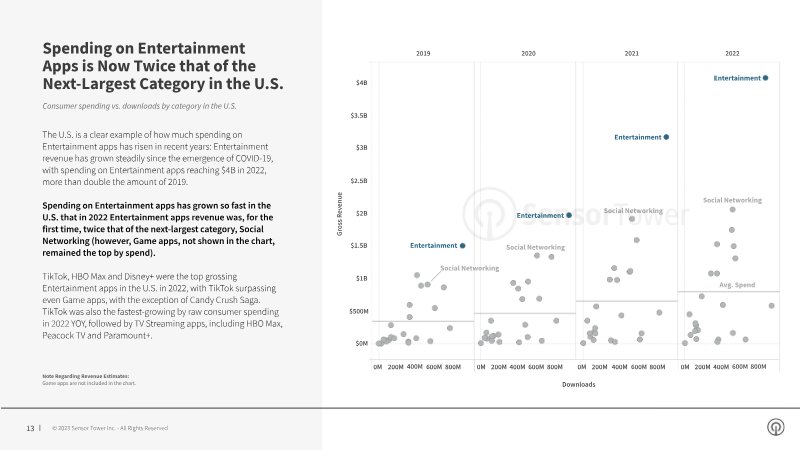
- Entertainment apps have overtaken gaming as a primary revenue engine, with U.S. spending on entertainment doubling since 2019 and apps like TikTok, HBO Max, and Disney+ reaching record highs.
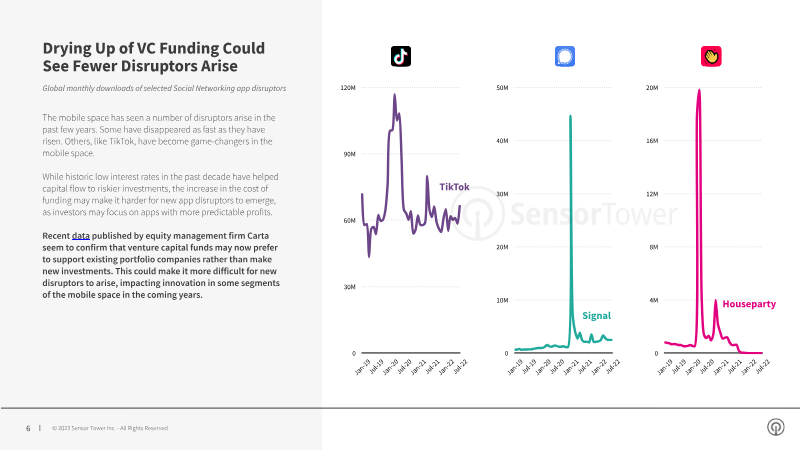
- Digital advertising reached $28 billion in North America and major European markets in Q4 2022, with TikTok emerging as the fastest-growing channel via a 60 percent quarterly increase in U.S. ad spend.
Market Wire: February 13, 2023
This market analysis provides a mid-February 2023 update on the video game industry, focusing on mobile market performance, corporate acquisition activity, and streaming trends.
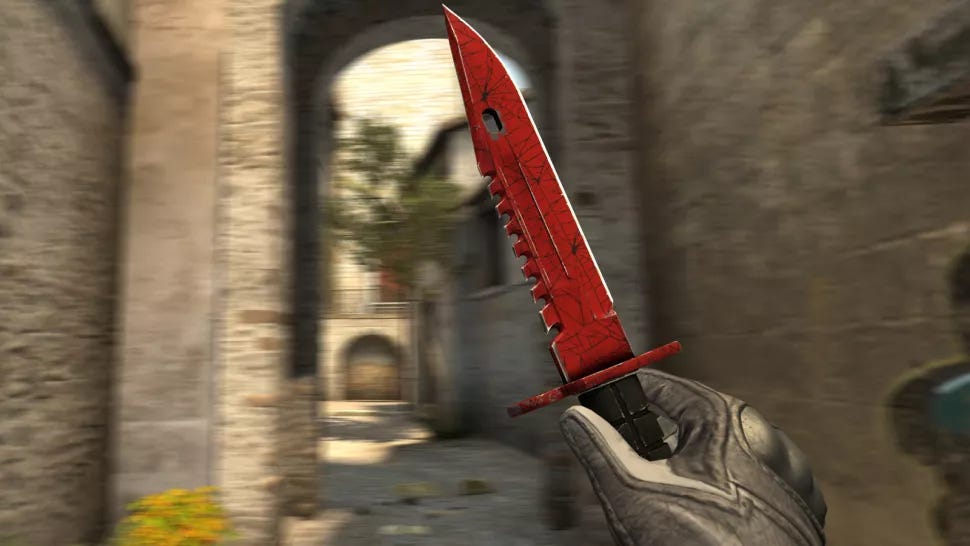
- Counter-Strike: Global Offensive reached a new all-time concurrent player record of 1,320,219 on February 11, 2023, nearly 11 years after its initial release.
- Rovio reported a Q4 2022 revenue decline of 2.5% to $82.8 million and a 42.1% drop in adjusted EBITDA to $10.3 million, amid negative internal reception to a potential acquisition offer from Playtika.
- Total live game streaming watch time decreased by 13.5% year-over-year in 2022, with Facebook Gaming experiencing the most significant decline among major Western platforms.

Predictions for 2023: Life Comes at You Fast
The 2023 outlook for the global video games and technology sectors emphasizes a period of rapid transformation driven by the intersection of gaming, music, and emerging technologies.
- The $200 billion global video game market is increasingly functioning as a social platform for other entertainment sectors, evidenced by events like Blackpink’s 16-million-viewer virtual concert in PUBG.
- The North American gaming labor force, totaling 429,000 professionals, is shifting toward unionization, marked by the successful organization of 300 Microsoft/ZeniMax employees.
- The esports sector is experiencing a significant contraction, highlighted by a 37 percent year-over-year decline in major prize pools and falling stock prices for public firms.
FaZe Clan Promotes Rana Kaplan to General Manager
FaZe Holdings, a publicly traded esports organization, announced a significant leadership restructuring in January 2023 to support its strategic expansion.
- FaZe Holdings (Nasdaq: FaZe) promoted long-time Chief of Staff Rana Kaplan to the role of general manager in January 2023.
- Rana Kaplan joined FaZe Clan in early 2018 and previously held roles at Walt Disney Television, Universal Music Group, EMI Music Group, Capitol Music Group, and Warner Music Group.
- FaZe Clan announced five additional executive appointments: Summer Martin (VP of content operations), Stash Slionski (executive producer), Vera Salamone (VP of talent), Brooke Grant (head of Web3), and Laura Ryk (head of creative operations).
How Disney Inspired a Generation of Designers
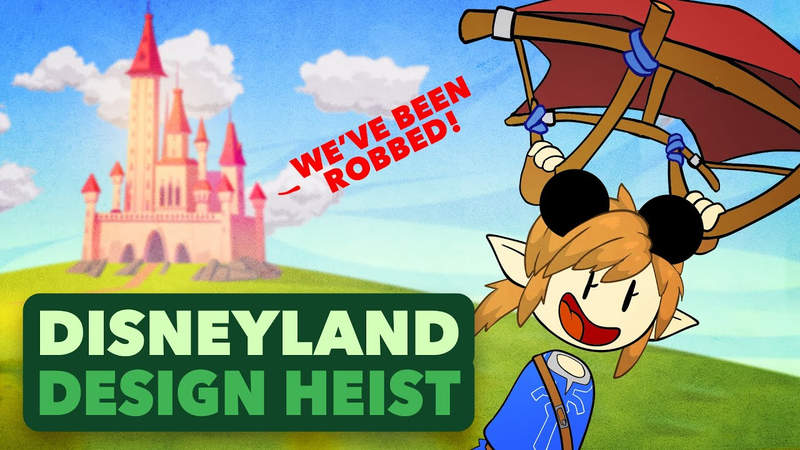
Disneyland serves as a foundational blueprint for modern open-world game design, providing a physical template that has influenced the industry for decades.
- Disneyland’s hub-and-spoke layout serves as a foundational architectural model for modern open-world games, enabling efficient navigation and structured quest distribution.
- Designers utilize a central landmark, such as Sleeping Beauty’s Castle, as a persistent visual anchor to facilitate player orientation and exploration without reliance on in-game maps.
- The use of a long, linear entrance path acts as a controlled transition space, mirroring the tutorial-to-open-world progression common in game design.
Why Blizzard Didn’t Renew NetEase Partnership and What’s Next? - The Metacast by Naavik
The gaming industry is currently undergoing a significant structural shift characterized by cross-platform expansion, the integration of generative AI, and intense scrutiny of platform distribution models.
- Google’s 'Project Hug' initiative utilized hundreds of millions of dollars in financial incentives to major developers like Activision Blizzard and Riot Games to discourage the development of competing app stores and maintain the 30 percent platform fee.
- The Blizzard-NetEase partnership collapsed primarily due to Blizzard’s demands for higher revenue shares and the pursuit of global mobile IP development, exposing the volatility of international publishing in restrictive regulatory environments.
- Mobile-first studios, exemplified by Gameloft’s Disney Dreamlight Valley, are increasingly adopting cross-platform strategies to reduce market volatility and expand their reach beyond mobile-only audiences.
61% of Total U.S. Digital Ad Spend Went Towards Social Channels in Q3 2022
The Q3 2022 Advertising Data Digest provides a comprehensive analysis of digital advertising trends within the United States, highlighting a resilient market despite broader economic challenges.
- U.S. digital ad spend reached over $23 billion in Q3 2022, representing a quarter-over-quarter growth of more than 5 percent.
- Social media channels captured 61 percent of total U.S. digital advertising expenditure during the third quarter of 2022.
- TikTok experienced the highest growth among social platforms, with ad spend increasing 29 percent quarter-over-quarter.

Global Mobile Apps in October 2022: India's Electric Bikes Demand
The October 2022 snapshot of global mobile app activity highlights a pronounced shift toward shopping, streaming, and social-media apps during the year-end season.
- Streaming services drove significant revenue growth in Q4 2022 through content exclusivity and pricing adjustments, led by Peacock TV (35.1% growth on App Store) and Hulu (21% growth via fee increases).
- India’s digital market showed extreme volatility and growth, highlighted by a 2632% surge in Normal VPN downloads following app bans and a 72.8% increase in Flipkart downloads.
- CapCut achieved massive cross-platform adoption, growing 46.6% on the App Store and 67.7% on Google Play, bolstered by TikTok integration and new motion-tracing features.

Cloud Gaming, Post-mortem: The Afterlife of Defunct Cloud Services
This analysis examines the shifting landscape of the video game industry during a period of high inflation and market consolidation, focusing specifically on the transition of cloud gaming following the discontinuation of Google Stadia.
- Cloud gaming is shifting from consumer-facing platforms to a B2B model, where infrastructure providers offer white-label streaming services to telecom companies and major IP holders.
- The industry is moving away from centralized 'winner-takes-most' platforms toward a fragmented ecosystem of single-publisher services and specialized aggregators.
- Economic pressures, including a 10.9% inflation rate in Germany and rising debt-to-capital ratios for firms like Embracer Group, are forcing a strategic pivot in how cloud gaming is deployed.
Plus: We Welcome Our New Steam Chart Overlords
This analysis examines the significant 2022 update to Valve’s Steam charts and provides a comprehensive performance review of recent PC and console game releases.
- Valve’s 2022 Steam chart update now ranks games by total revenue, including DLC and in-game transactions, rather than unit sales, which inherently favors live-service titles like Apex Legends and Destiny 2 over premium releases.
- Slime Rancher 2 achieved strong market performance by selling over 100,000 units within six hours of release and peaking at more than 21,500 concurrent users.
- Established franchises and niche simulators remain high-performing, with Construction Simulator and Return to Monkey Island reaching 17,300 and 15,500 concurrent users respectively.