Digital Games
Company
Documents about Digital Games
Toward a Framework for Analyzing Adaptive Digital Games' Research Effectiveness
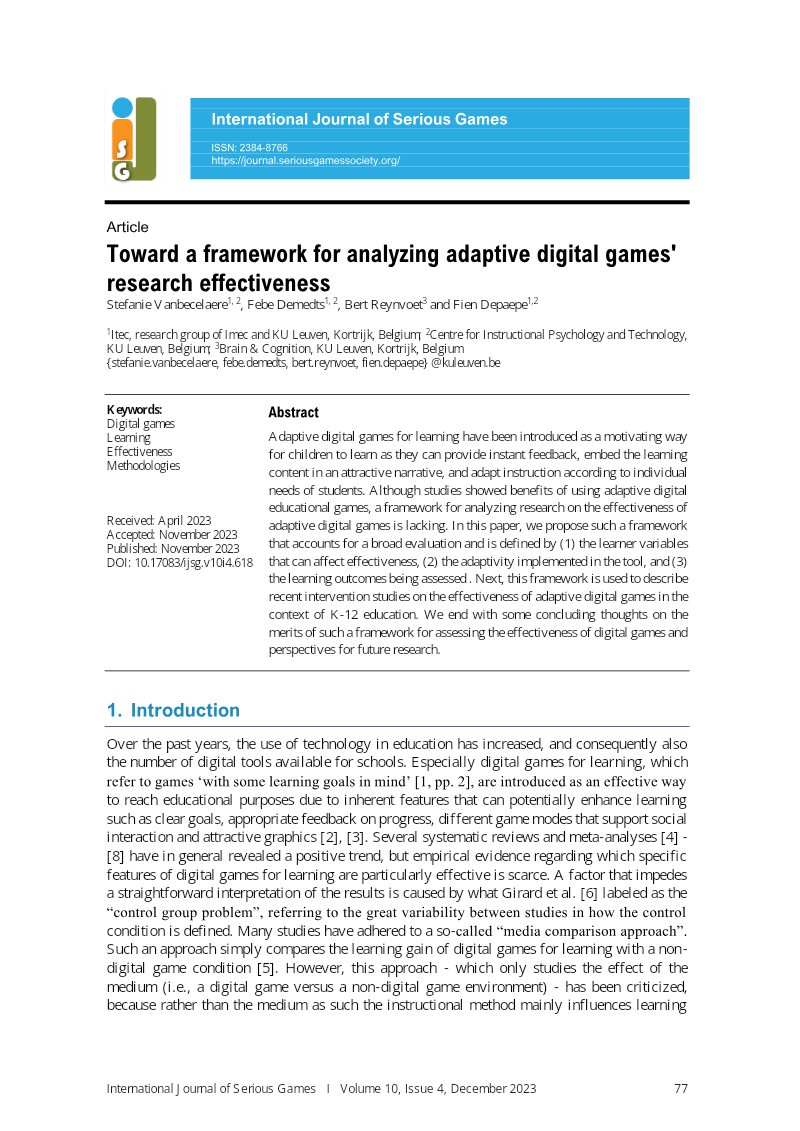
Adaptive digital games represent a significant pedagogical tool, yet the field lacks a standardized methodology for evaluating their efficacy.
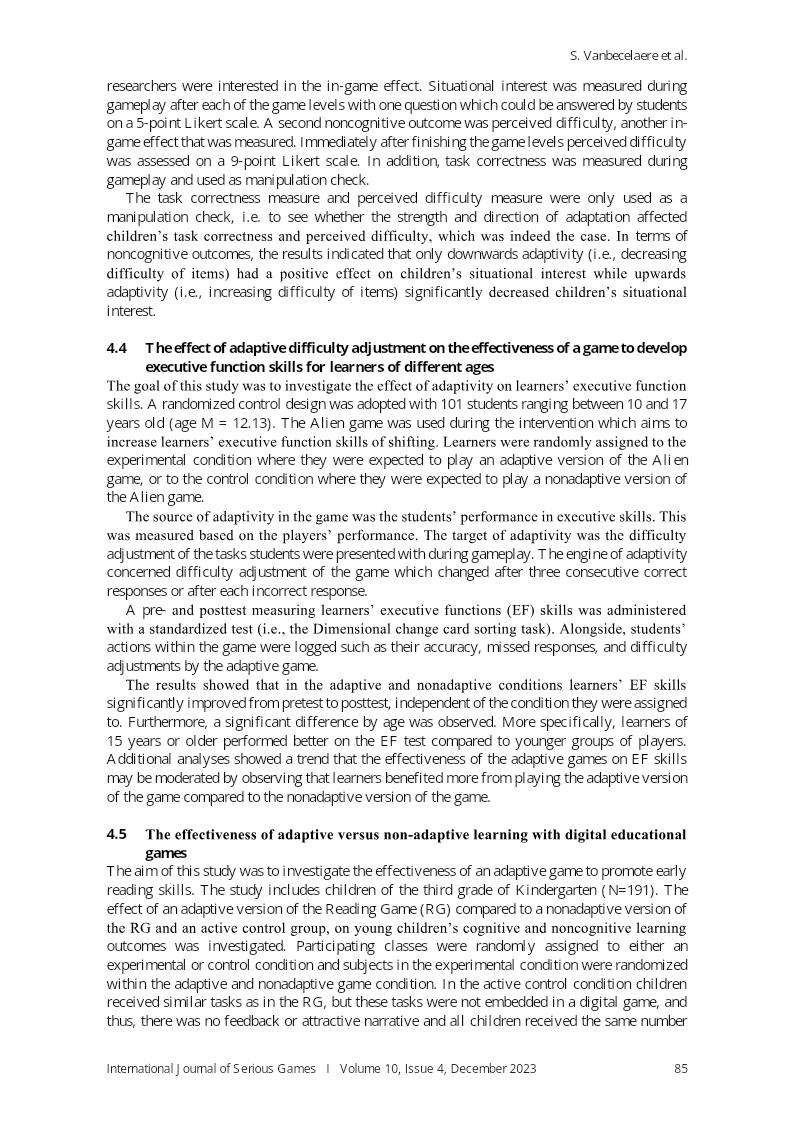
- The effectiveness of adaptive digital games is not universal but depends on the specific interaction between the adaptivity engine's design and the individual learner's characteristics.
- Adaptive scaffolding often fails to produce superior cognitive gains compared to non-adaptive versions, suggesting that its primary value lies elsewhere.
- Adaptive mechanisms frequently improve learning efficiency and boost non-cognitive outcomes, such as situational interest, rather than just raw performance.
A UK Games Plan: Why Government Needs a Dedicated Strategy to Grow the Sector
The UK games industry requires a dedicated government strategy to sustain its growth and competitiveness against international rivals.
- The UK video games industry generates £6 billion in gross value added and supports 76,000 jobs across regional clusters.
- The sector currently lacks a cohesive national government strategy, leading to fragmented regulation and inconsistent policy support.
- International competitors including Australia, Germany, and Saudi Arabia are actively implementing state-backed strategies to capture global investment and talent, threatening the UK's market position.
A Look into Darkness: Ludofictional Aesthetics from the Non-Mechanical Difficulty
This article by Mateo Terrasa-Torres, published in the Transactions of the Digital Games Research Association (January 2023, Vol. 6 No 2, pp. 127-151), examines difficulty in video games beyond mechanical challenge.
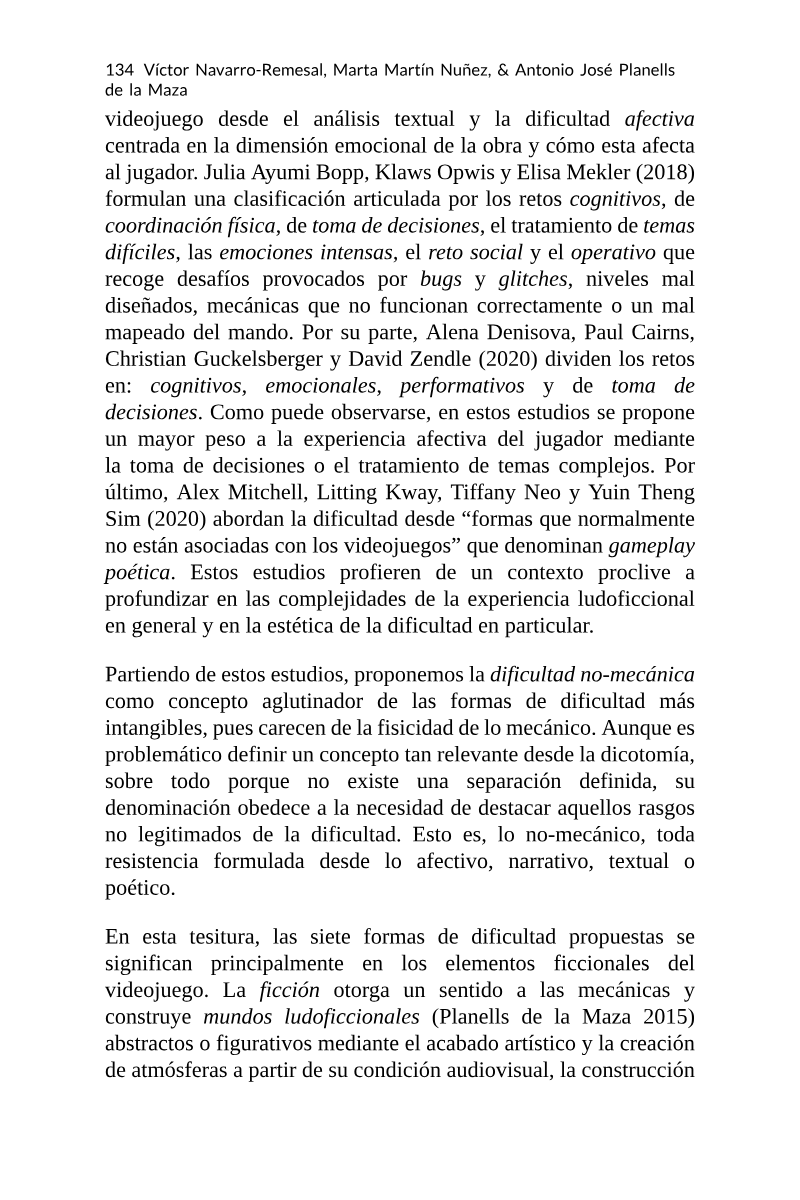
- The author describes difficulty as resistance to the advancement, compression, and access to the ludofictional text that causes some kind of suffering to the player, and identifies seven non-mechanical forms of difficulty.
- The author cites Daniel Vela as reading Dark Souls' difficulty as aiming for an experience close to the sublime, in which the player's insignificance before a hostile world is revealed.
- The study bases its seven forms on close reading and playtesting of a set of contemporary video games from 2009 to 2020.
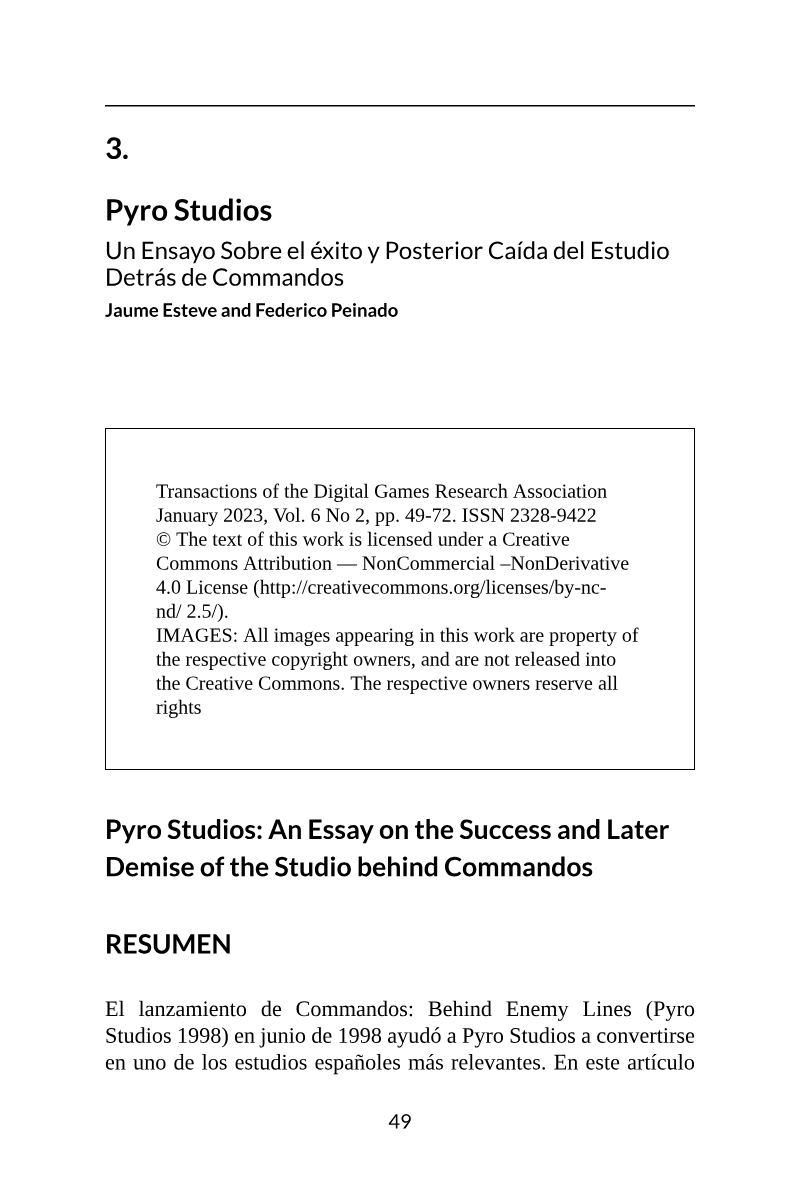
Pyro Studios: An Essay on the Success and Later Demise of the Studio behind Commandos
This essay by Jaume Esteve and Federico Peinado, published in Transactions of the Digital Games Research Association (January 2023), traces the history of Spanish studio Pyro Studios, from its founding in 1996 to its closure in 2017.
- Commandos: Behind Enemy Lines reached number one in sales in several major European markets within weeks of its June 1998 release. The authors state that Eidos part-financed its development and handled distribution.
- Commandos 2: Men of Courage had a budget six times larger than its predecessor, but its final sales were similar to the original game's.
- Commandos 3: Destination Berlin sold roughly 500,000 units, according to Ignacio Pérez Dolset, which was below the sales of the original Commandos.
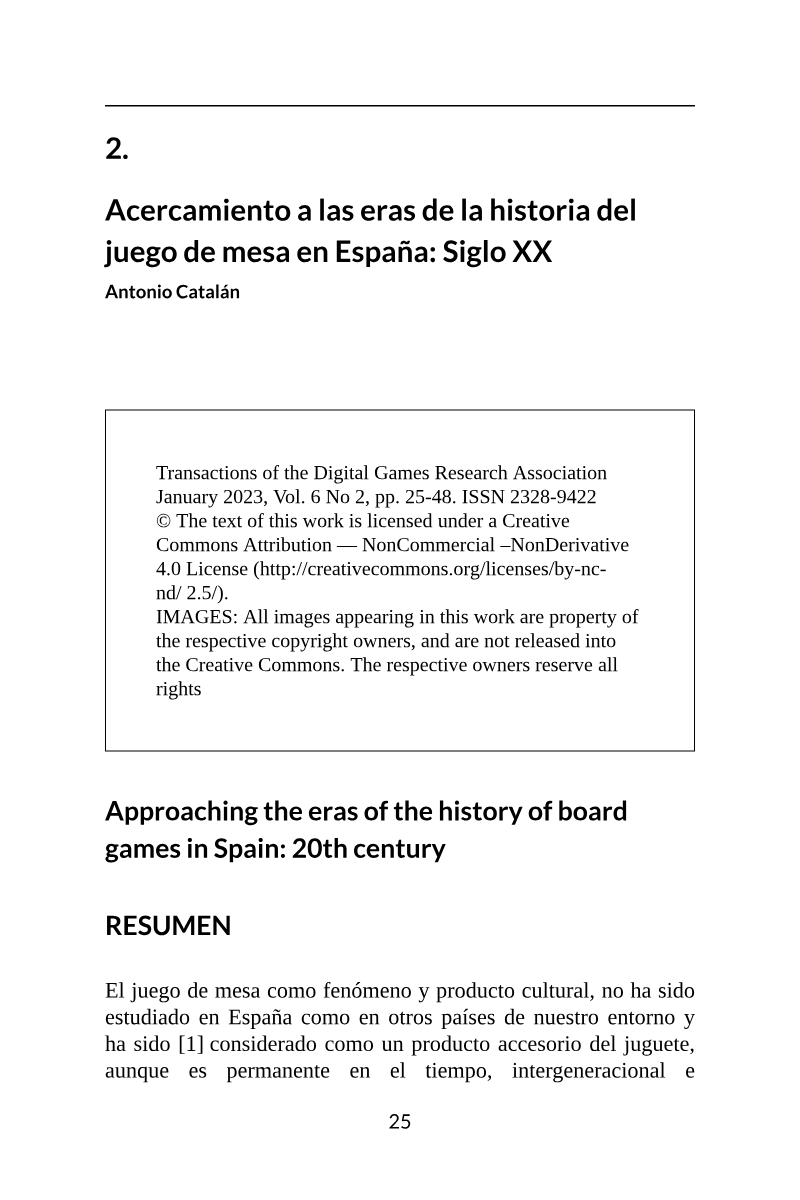
Approaching the Eras of the History of Board Games in Spain: 20th Century
Antonio Catalán's article, published in Transactions of the Digital Games Research Association (January 2023, Vol. 6 No 2, pp.
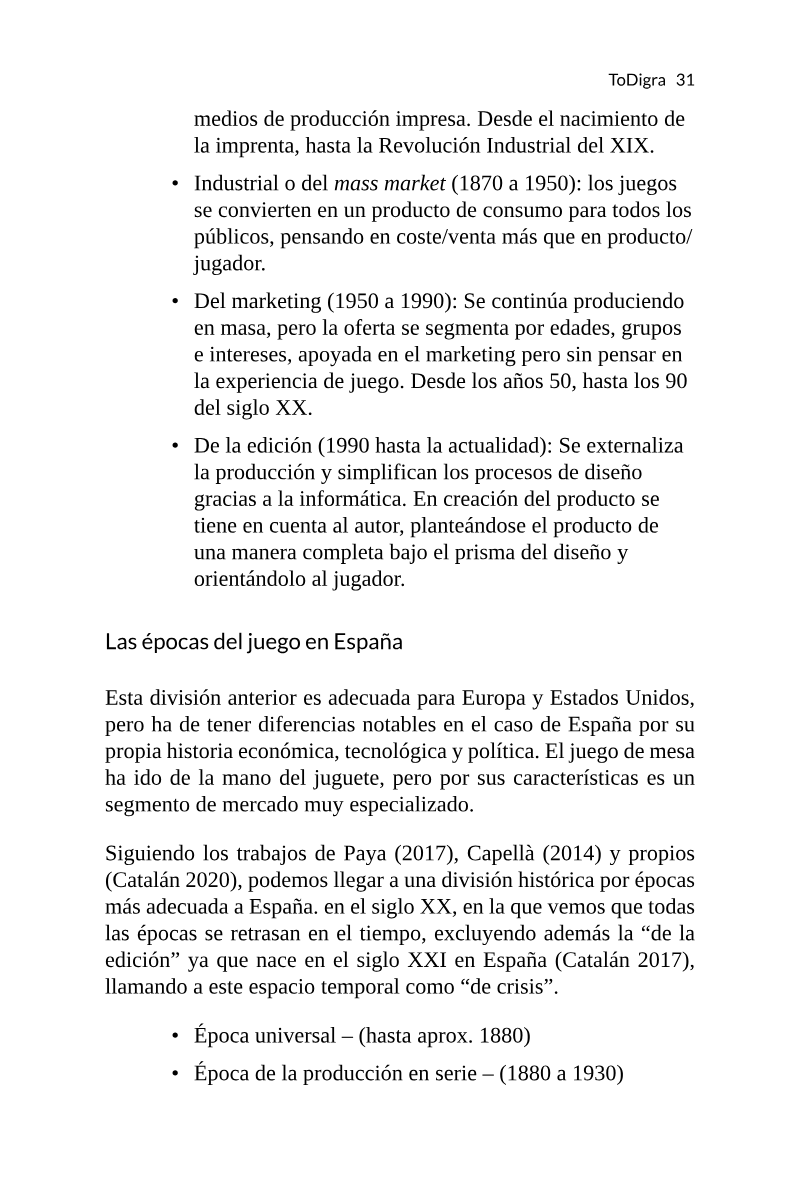
- The article divides Spain's 20th-century board game history into five periods, with the industrial period running from 1931 to 1975. Its framework is adapted from the European and American division to reflect Spain's later development.
- The author says Spain's board game industry began later than in neighbouring countries, and that most foreign products reached the Spanish market about thirty years late.
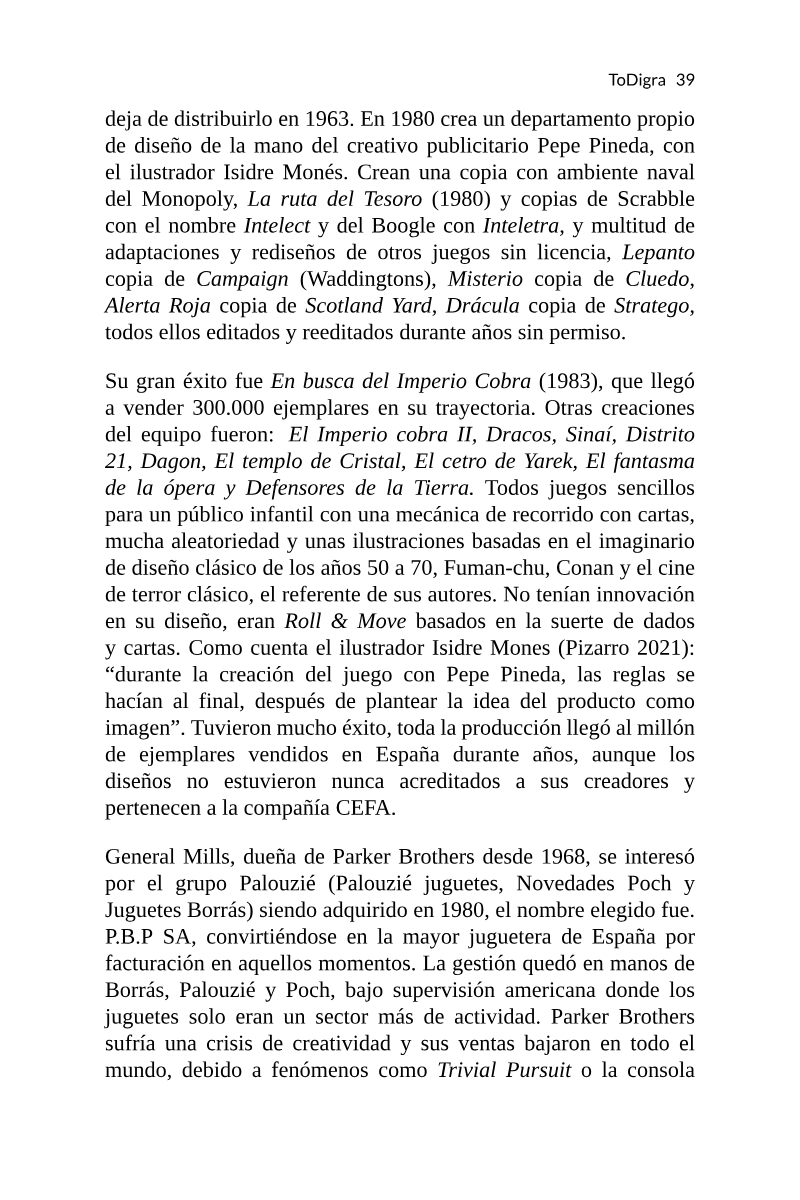
- According to the author, Borrás and Palouzié formed a monopoly in design, production and distribution from the 1920s, which restricted the market until nearly the 1970s.
Revisión de los Game Studies desde la estética del formalismo y el romanticismo
Alejandro Lozano's article was published in Transactions of the Digital Games Research Association (January 2023, Vol. 6 No 2, pp. 1-24). The article is in Vol. 6 No 2, pp. 1-24.
- The author identifies formalism and romanticism as the two frameworks used to interpret the selected Game Studies sources; the article also refers to a formalist moment in Game Studies that accompanied the first 20 years of the discipline.
- Sicart's ludocapitalism is presented as a concept in which capitalism appropriates play for profit, which the author links to the Romantic diagnosis of a fragmented culture.
- The author cites a passage from Sicart's Play Matters in which Sicart calls his theory romantic (or rhetorical) and based on creativity and expression, and the author notes that the debt to Romanticism is explicit in that essay.
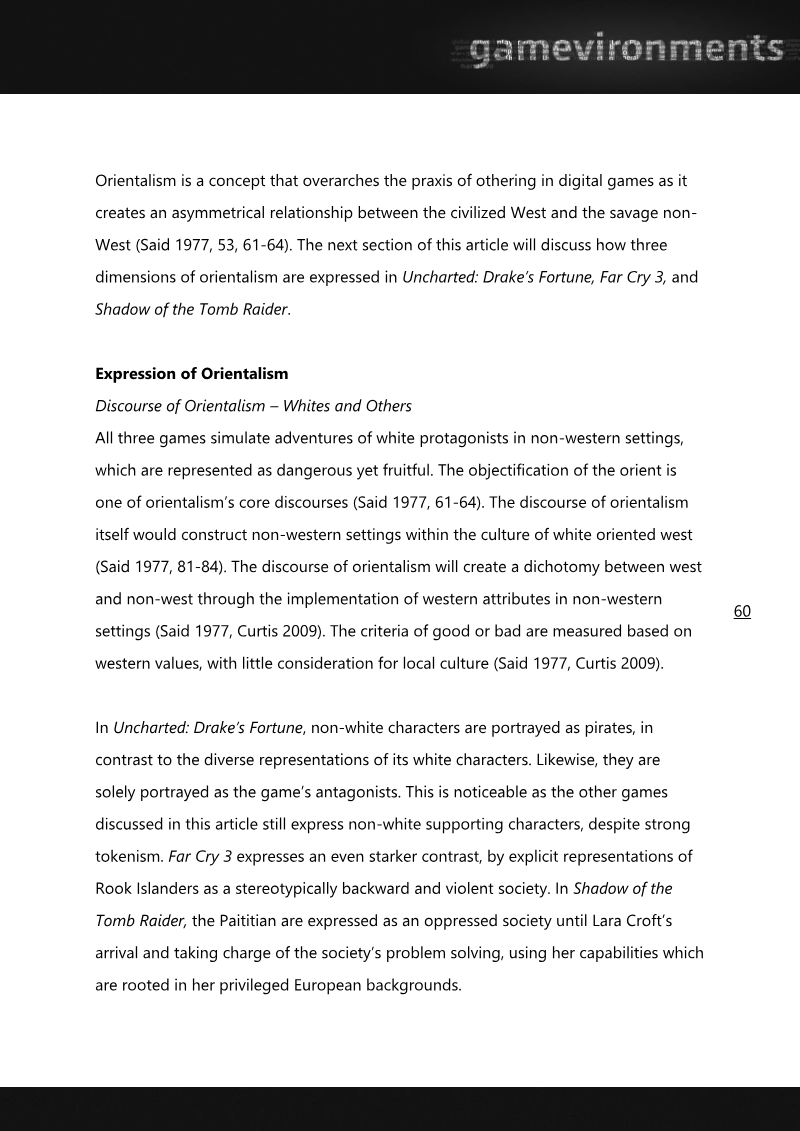

The White Peril: Colonial Expressions in Digital Games
"The White Peril: Colonial Expressions in Digital Games" argues that colonialist values, rooted in orientalism and white supremacy, persist in mainstream action-adventure games through invisible defaults that position white protagonists as universal and non-white settings as exotic backdrops.
- The report's central thesis is that mainstream action-adventure games embed colonialist values, rooted in orientalism and white supremacy, through invisible defaults that treat white protagonists as universal and non-white settings as exotic backdrops.
- The author argues that games teach players to "be white" through embodiment, a mechanism presented as distinctive to the medium compared with other forms of media.
- The qualitative analysis centers on three triple-A titles, Uncharted: Drake's Fortune (2007), Far Cry 3 (2012), and Shadow of the Tomb Raider (2018), all set in South American or Southeast Asian locales.
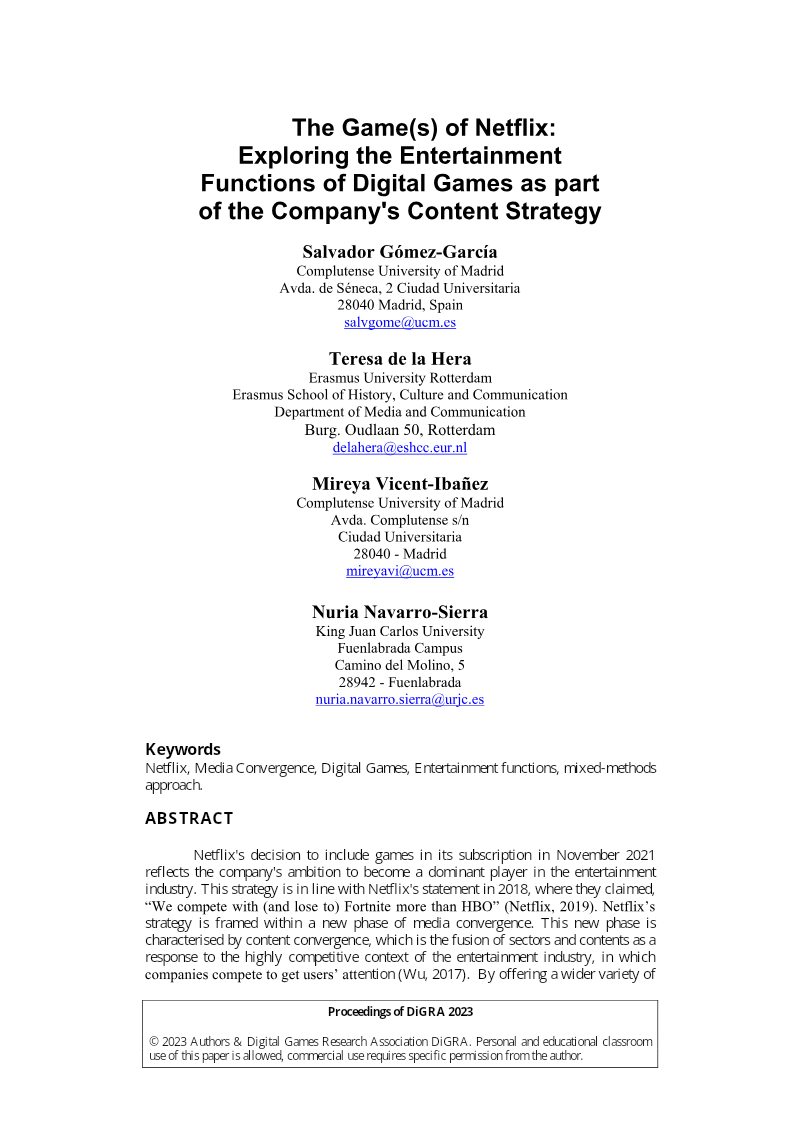
The Game(s) of Netflix: Exploring the Entertainment Functions of Digital Games as Part of the Company's Content Strategy
Netflix's integration of games into its subscription service, initiated in November 2021, represents a strategic move to solidify its position within the broader entertainment industry.
- Netflix began including games in its subscription in November 2021, a move the report frames as part of a broader ambition to become a dominant force in entertainment through content convergence.
- The study analysed the 48 games Netflix released through December 31, 2022, combining SensorTower app-monitoring metadata (genre, release date, downloads, age rating, links to audiovisual content) with a thematic play-based analysis.
- Netflix's primary approach centres on basic interactive entertainment meant to enhance the perceived value of its subscription, while transmedia, branded, and third-party licensing strategies are only beginning to emerge.
Skillful Play Is Dependent on Rules: Notes on a Phenomenology of Skills in Games and Digital Games
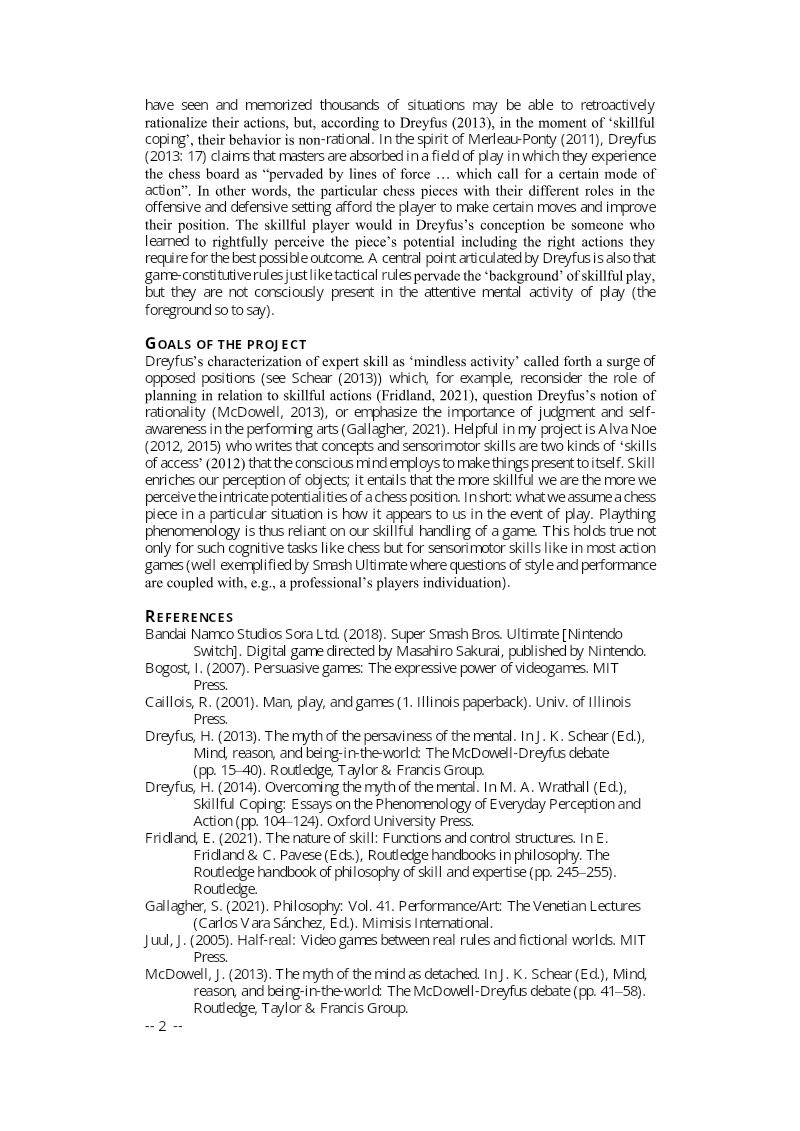
This extended abstract, presented at DiGRA 2023, argues that skillful play depends on rules and that skills provide the epistemic access necessary for aesthetic and phenomenological study of games.
- Skillful play depends on rules, and acquired skill is what gives a player or scholar epistemic access to a game's form and potentialities, making it central to the aesthetic and phenomenological study of games.
- The paper identifies a gap in game studies: rules have been widely theorized, but practical skill has received comparatively little attention.
- Drawing on Hubert Dreyfus's account of expertise, the author argues that novices move from detached rule-following toward flexible, situation-specific play, with game-constitutive and tactical rules receding into the background of expert activity.

Digital Games and the Category of Auteur: A Re-Evaluation and Perspectives
This extended abstract, presented at DiGRA 2023 by Filip Jankowski of Jagiellonian University, re-examines the application of auteur theory to digital games.
- The paper argues that the auteur concept, borrowed from film studies, carries problematic associations, including conservative origins, legitimization of exploitative labor conditions, and canonization of a narrow demographic of designers such as Peter Molyneux, Sid Meier, and Will Wright regardless of their actual production roles.
- Rather than abandoning auteur theory for games, the author proposes a contextual redefinition built on three principles: an auteur may be an individual or a small persistently collaborating group, developers with varied roles can qualify if their output is coherent, and an authorial signature such as placing one's likeness in a work can signal attachment to co-created material.
- Tale of Tales, run by Auriea Harvey and Michaël Samyn, is cited as an example of a small, persistently collaborating group that can be considered an auteur under the redefined framework.
Materially Random Stories: Randomness and Narrative as Material Structures in Digital Games
Janik's paper, presented at DiGRA 2023, argues that randomness in digital games should be understood as a material-discursive practice rather than merely a design mechanic for generating uncertainty.
- Janik's DiGRA 2023 paper reframes randomness in digital games as a material-discursive practice, not merely a mechanic for generating uncertainty, drawing on Karen Barad's agential realism and her concept of the apparatus.
- The central claim is that randomness acts as an apparatus: a mechanism selects one outcome from many possibilities, and embedded discursive practices give that outcome its meaning.
- The paper argues that narrative uncertainty is not just anticipation of events but a material process through which fiction emerges, and that unrealized alternatives heighten players' sense that their story is singular.
Theorizing Digital Games: Play Theories & New Materialism
The document, an extended abstract by Soomin Hong, proposes a theoretical framework for analyzing digital games by integrating classic philosophical concepts from Bergson and Bachelard with new materialism.
- The paper proposes that digital games should be understood as "materialized play," in which the material qualities of games and their players are mutually constitutive rather than separate.
- The central argument combines Henri Bergson's view of matter as continuous (with discrete objects an artificial product of perception) and Gaston Bachelard's philosophy of science to frame game materiality theoretically.
- The core analogy is that a game's materiality functions like a scientific instrument, enabling players to select, filter, and shape the chaos around them, as Bachelard describes instruments as materialized theory.