Digital Games
Company
Documents about Digital Games



2020 Year in Review: Digital Games and Interactive Media
The "2020 Year in Review: Digital Games and Interactive Media" report by SuperData, a Nielsen company, provides a comprehensive analysis of the global digital games and interactive media market for 2020, with projections for 2021.
- The global digital games and interactive media industry grew 12% year-over-year in 2020, reaching $126.6 billion in total revenue.
- Free-to-play titles dominated the market, accounting for 78% of total digital revenue, primarily driven by mobile gaming in Asian markets.
- Premium game sales experienced the fastest growth at 28%, bolstered by high-profile releases such as Animal Crossing: New Horizons and Call of Duty: Modern Warfare.
Horror, Guilt and Shame: Uncomfortable Experiences in Digital Games
Gowler and Iacovides (University of York) report a qualitative study of uncomfortable experiences in digital games, published in the CHI PLAY 2019 proceedings.
- Discomfort in the survey was linked to uncertainty in high-pressure environments, with fear and anxiety as the dominant emotions reported for these situations.
- Players frequently described the loss of characters they had invested in as causing sadness and grief, with guilt arising when they felt responsible for the death.
- The authors found that discomfort could lead to disengagement, including avoiding game areas or quitting, but the most common response to failure was to step back and try again.
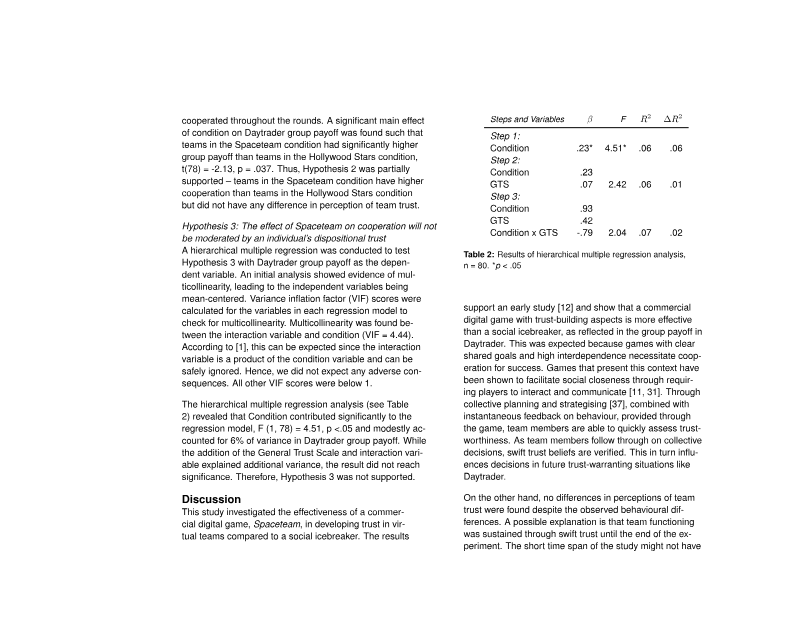
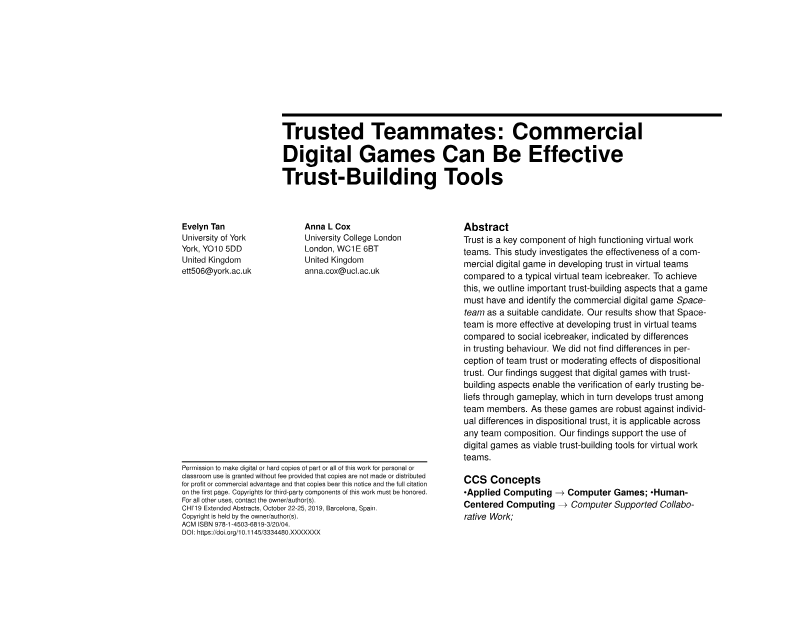
Trusted Teammates: Commercial Digital Games Can Be Effective Trust-Building Tools
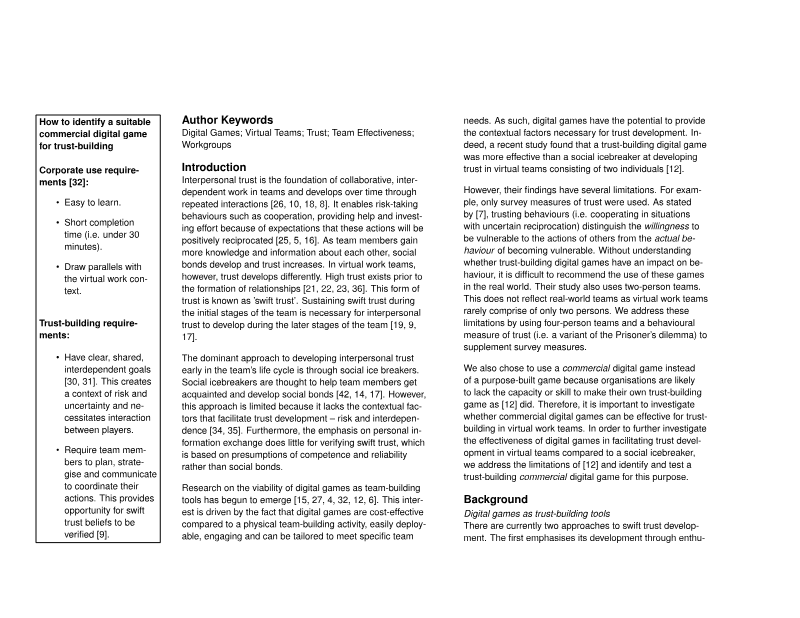
This study evaluates the effectiveness of commercial digital games as tools for building trust within virtual work teams, contrasting them with traditional social icebreakers.
- Commercial digital games requiring interdependent goals are more effective at fostering cooperative behavior in virtual teams than traditional social icebreakers.
- In a study of 20 four-person teams, participants who played the mobile game Spaceteam exhibited significantly higher levels of cooperation in a subsequent Prisoner’s Dilemma task compared to those who used standard icebreakers.
- Digital games serve as a 'strong situation' that allows team members to verify trust through active coordination rather than relying on the personal information exchange typical of traditional social activities.
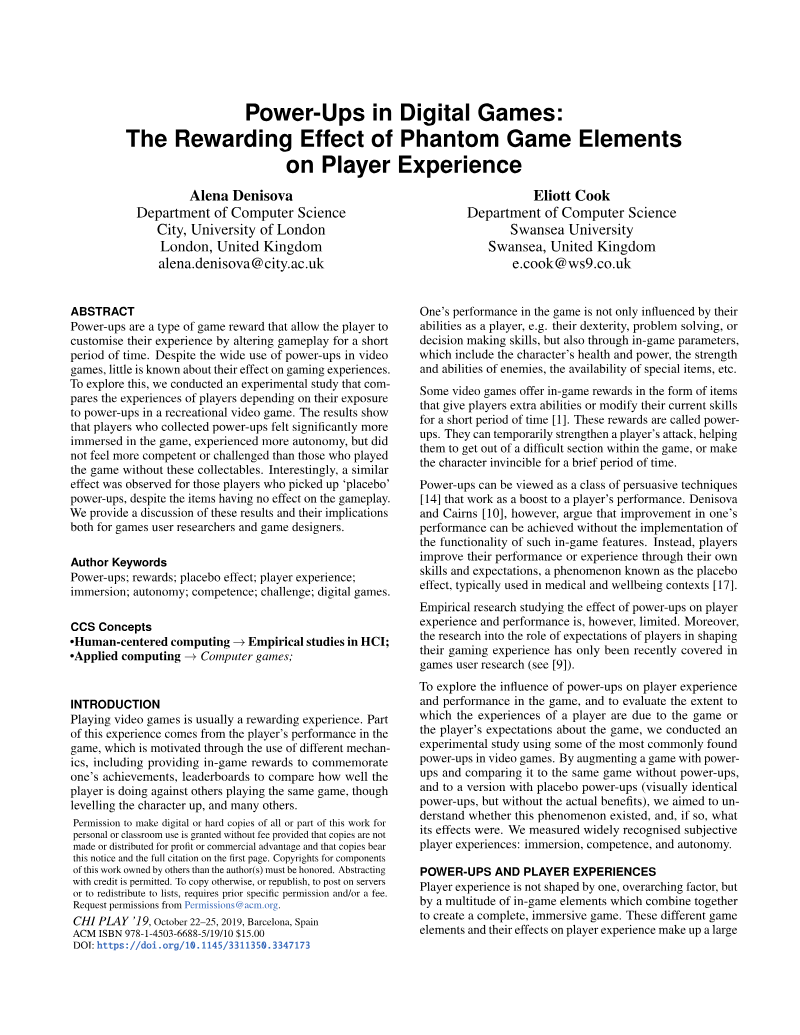
Power-Ups in Digital Games: The Rewarding Effect of Phantom Game Elements on Player Experience
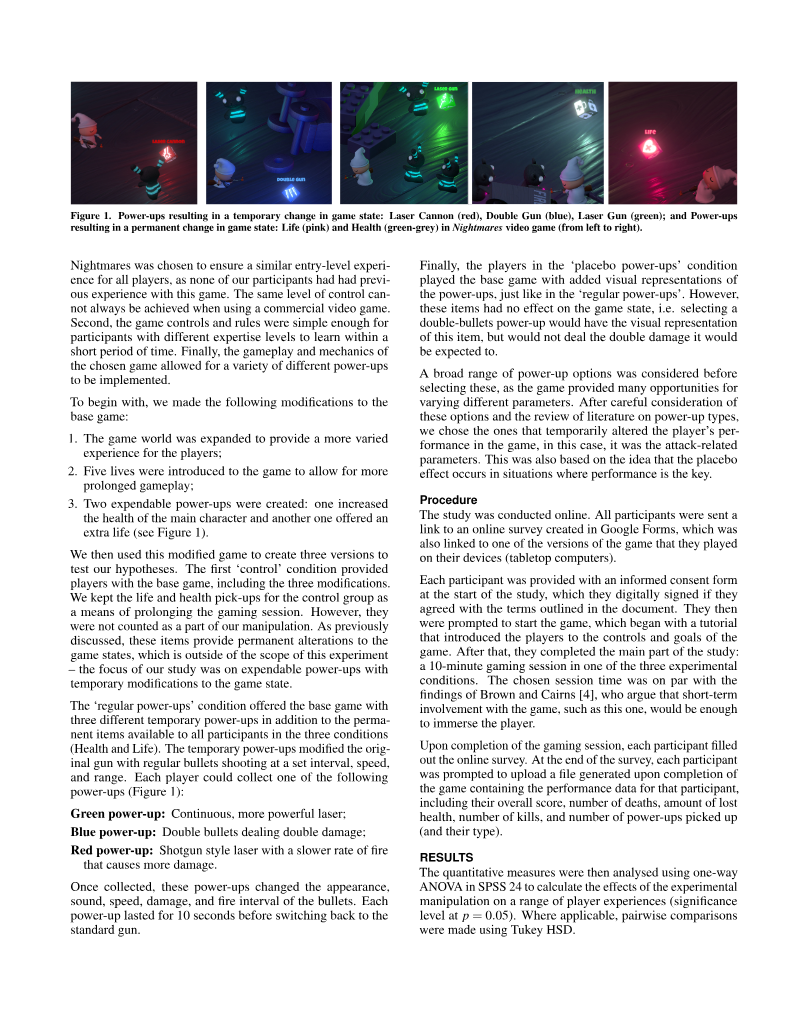
This study by Alena Denisova and Eliott Cook (City, University of London, and Swansea University), published at CHI PLAY 2019, examines how power-ups in a video game affect player experience and performance.
- Players who collected real power-ups reported significantly higher immersion than the control group with no power-ups. The authors measured immersion with the Immersive Experience Questionnaire.
- Players who picked up placebo power-ups, which had no effect on gameplay, also felt significantly more immersed than the control group.
- Autonomy was higher in both power-up conditions than in the control group, while real and placebo power-up groups did not differ from each other.
Effects of Mobile Platform on Female Engagement in MOBA Games
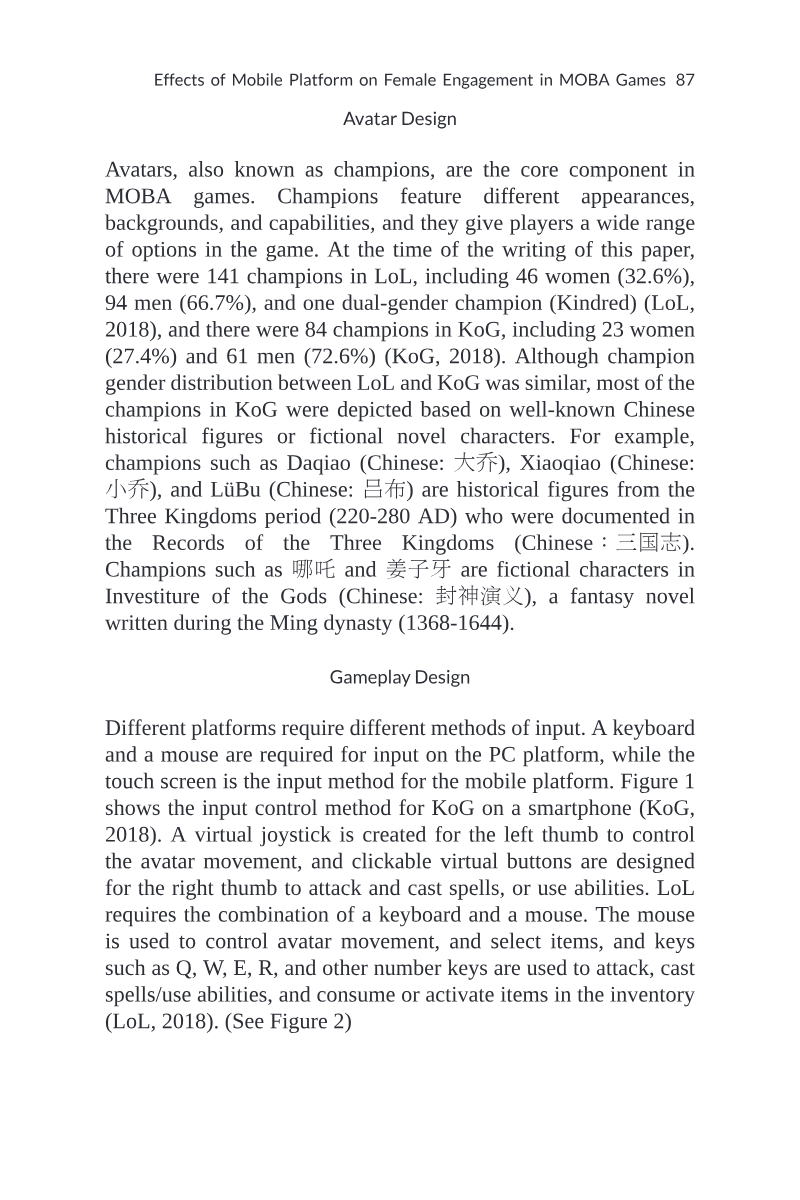
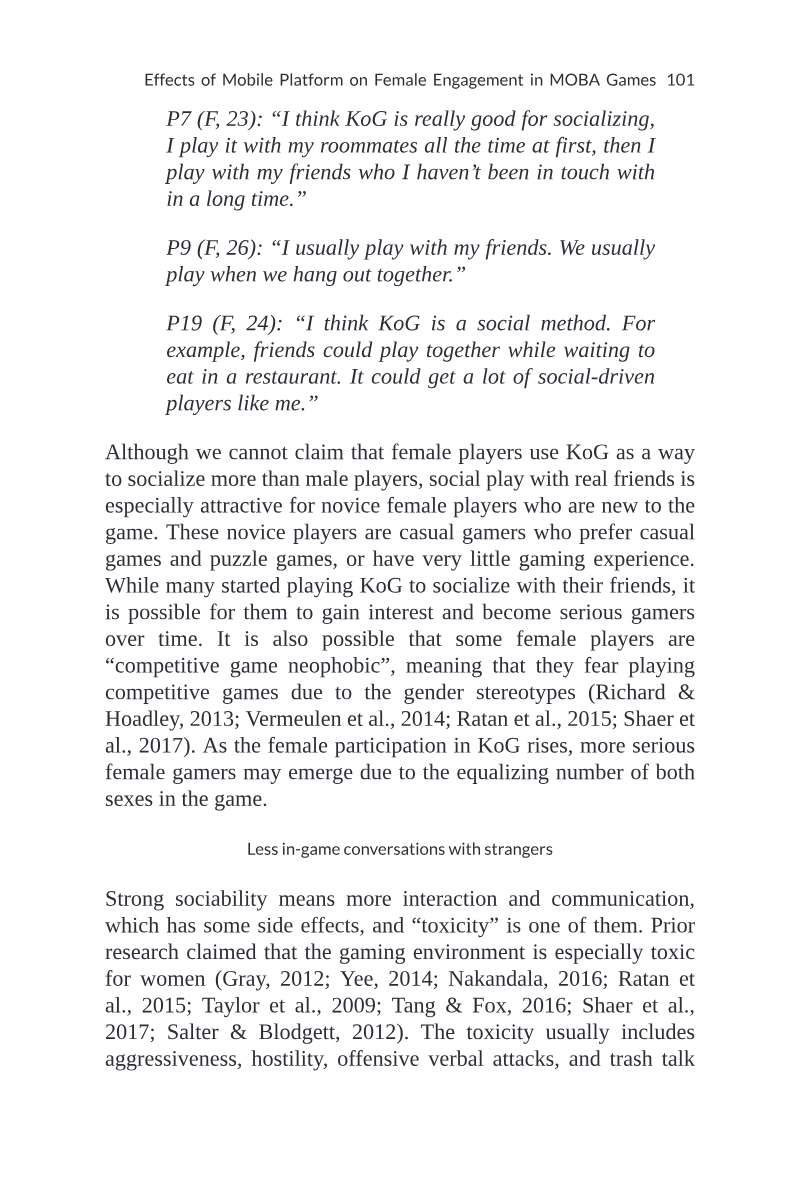
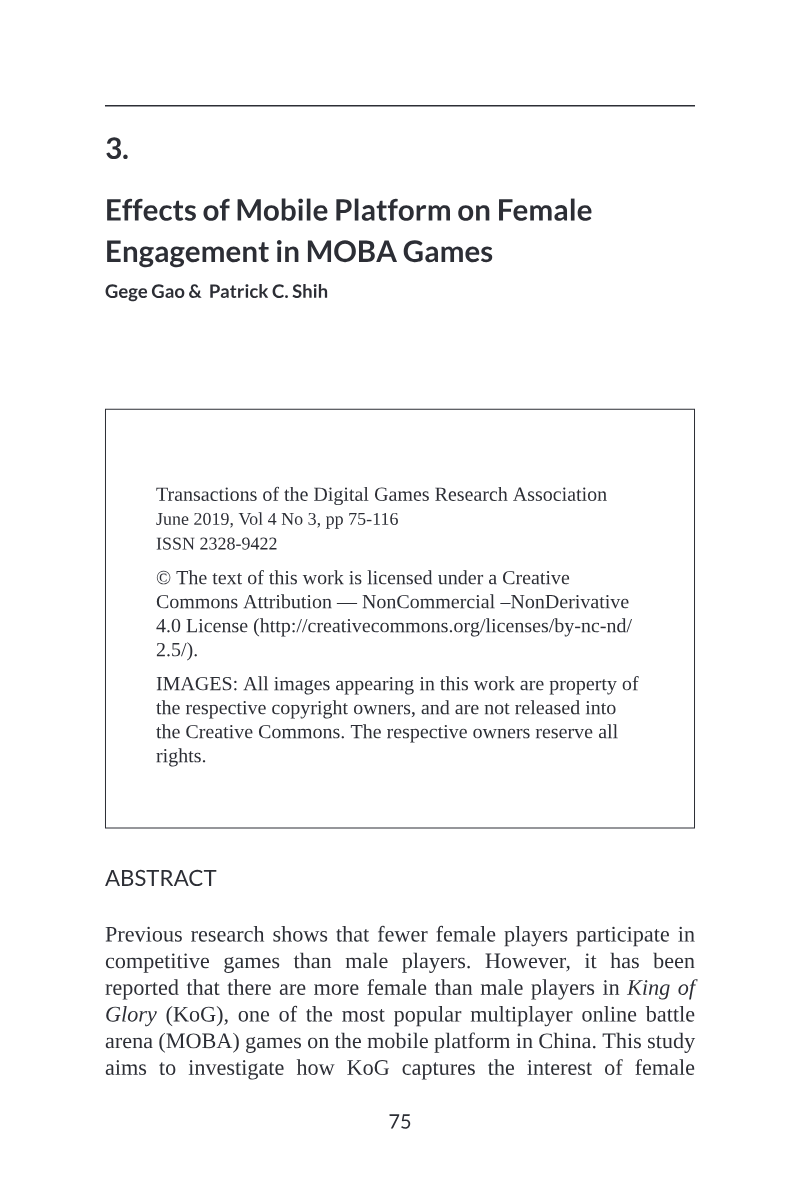
This study by Gege Gao and Patrick C. Shih, published in the Transactions of the Digital Games Research Association (June 2019), compares the mobile MOBA game King of Glory (KoG) with the PC game League of Legends (LoL) to understand why KoG has higher female participation.
- The interviewed participants all described KoG as very easy to learn, with simple controls and a shallow learning curve, which the authors connect to a lower barrier to entry.
- Six of eight female participants interviewed were novice MOBA players, compared with six of eight male participants who were experienced MOBA players.
- Females made up 54.1 percent of KoG players according to Jiguang data cited by the authors, outnumbering males for the first time in any MOBA game.
Children's Experiences on Learning the 21st-Century Skills With Digital Games
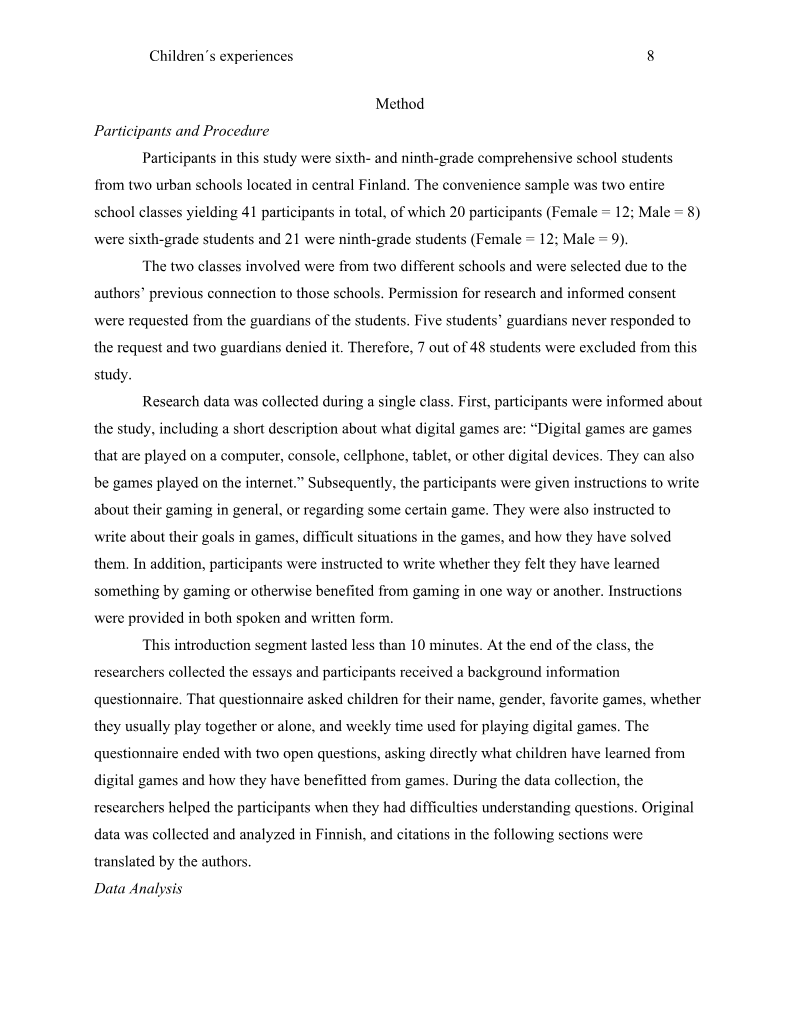
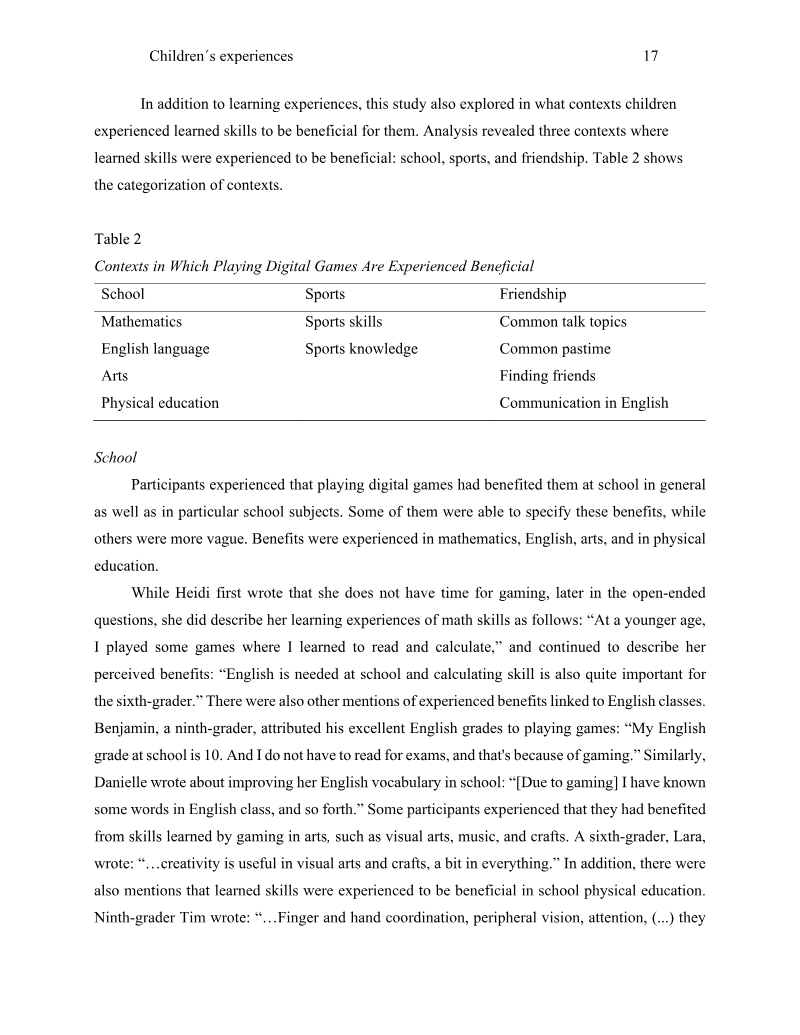
The study by Kahila, Valtonen, Tedre, Mäkitalo and Saarikoski from the University of Eastern Finland, University of Oulu and Comprehensive School of Kuhmoinen explores what children report learning from digital games, how these experiences relate to 21st-century skills, and in which contexts they find those skills beneficial.
- Children's learning experiences were often related to 21st-century skills, especially learning-to-learn skills categorised as strategic learning and self-regulatory skills.
- Children reported persistence and frustration tolerance, with some describing taking breaks to manage difficult gaming situations.
- Children reported learning English through gaming, with vocabulary and reading comprehension mentioned.
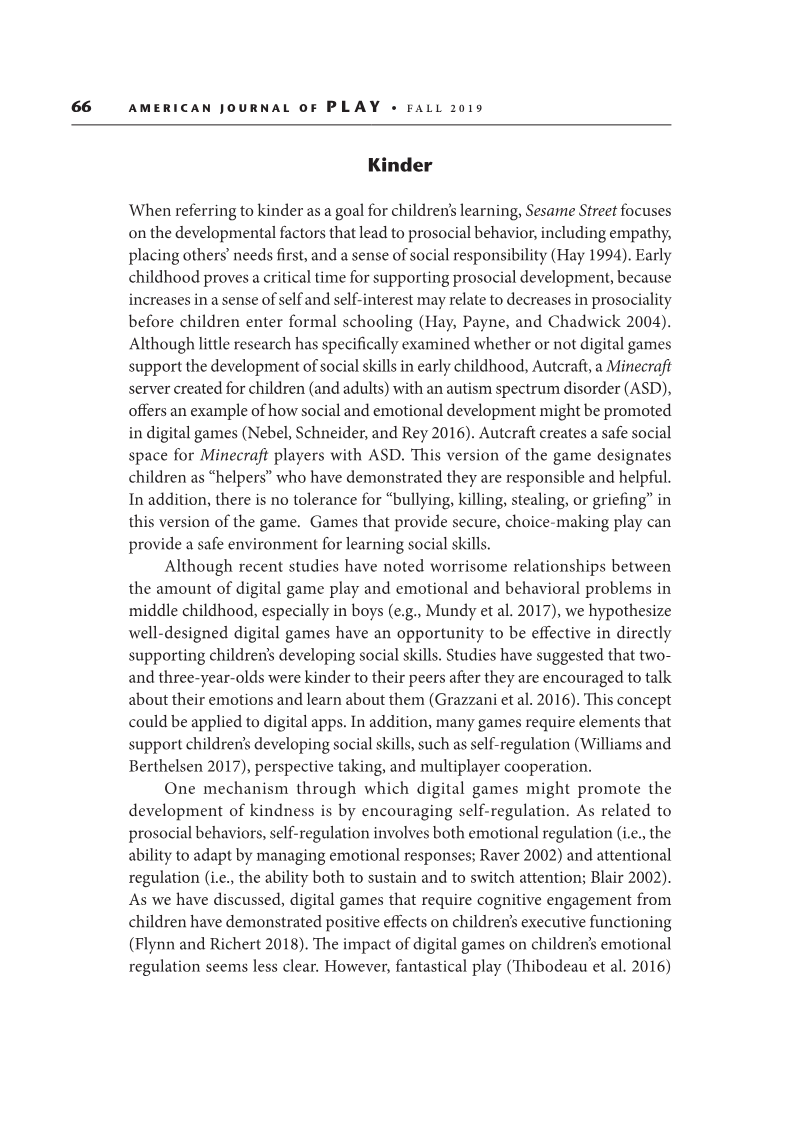
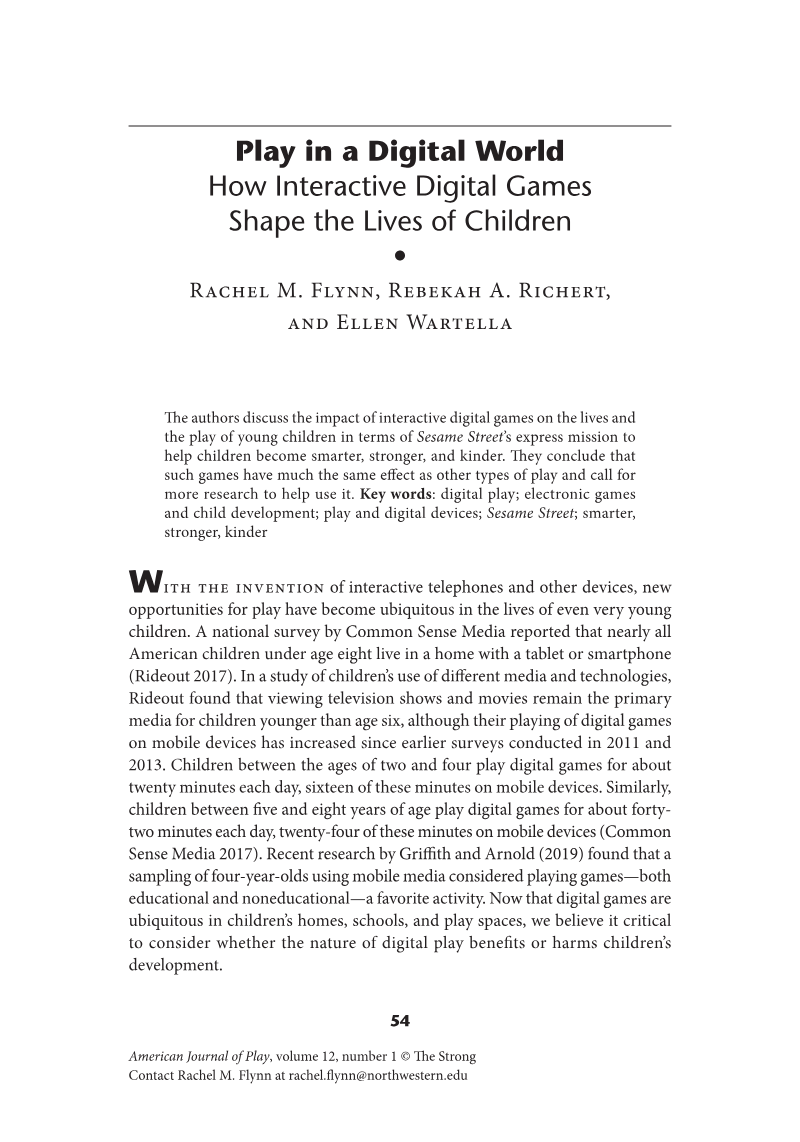
Play in a Digital World: How Interactive Digital Games Shape the Lives of Children
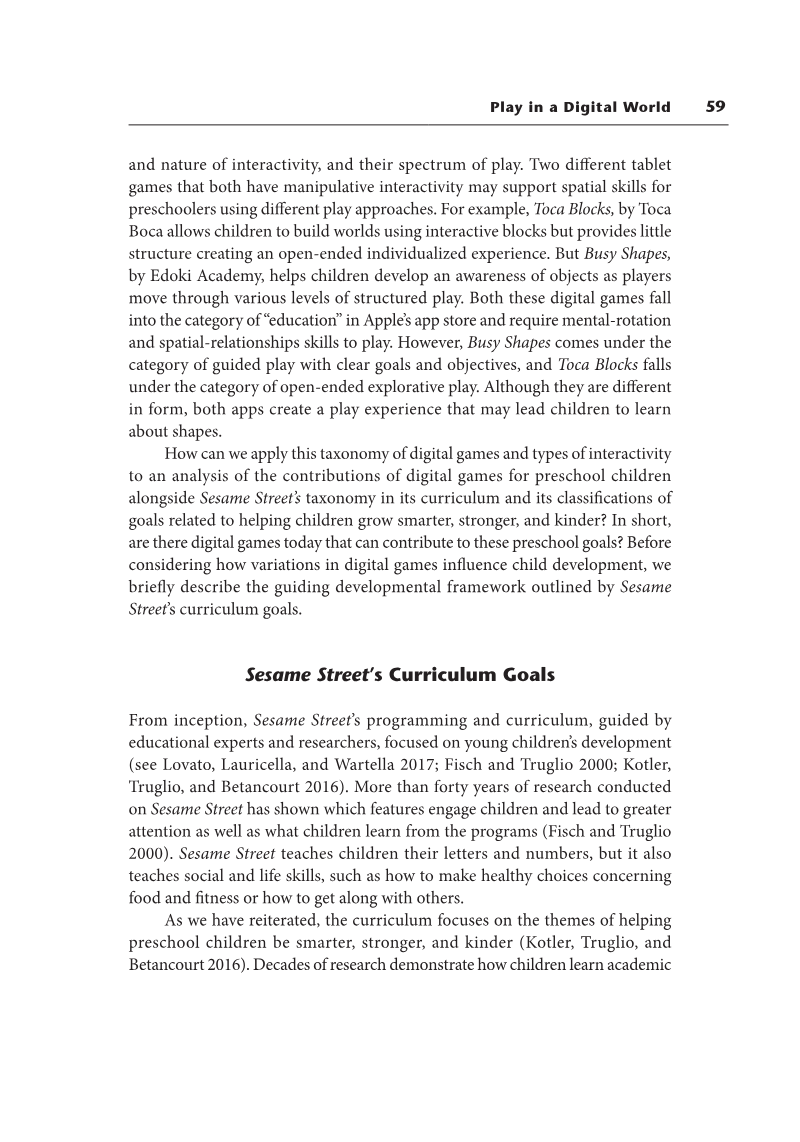
This article examines the impact of interactive digital games on the development of children before they reach first grade.
- Nearly all American children under the age of eight reside in households equipped with tablets or smartphones.
- Children aged two to four spend approximately twenty minutes daily on digital games, while children aged five to eight spend about forty-two minutes.
- A recent study by Gao et al. (2018) found that preschoolers in an active video game intervention group increased their moderate-to-vigorous physical activity more than a business as usual control group.
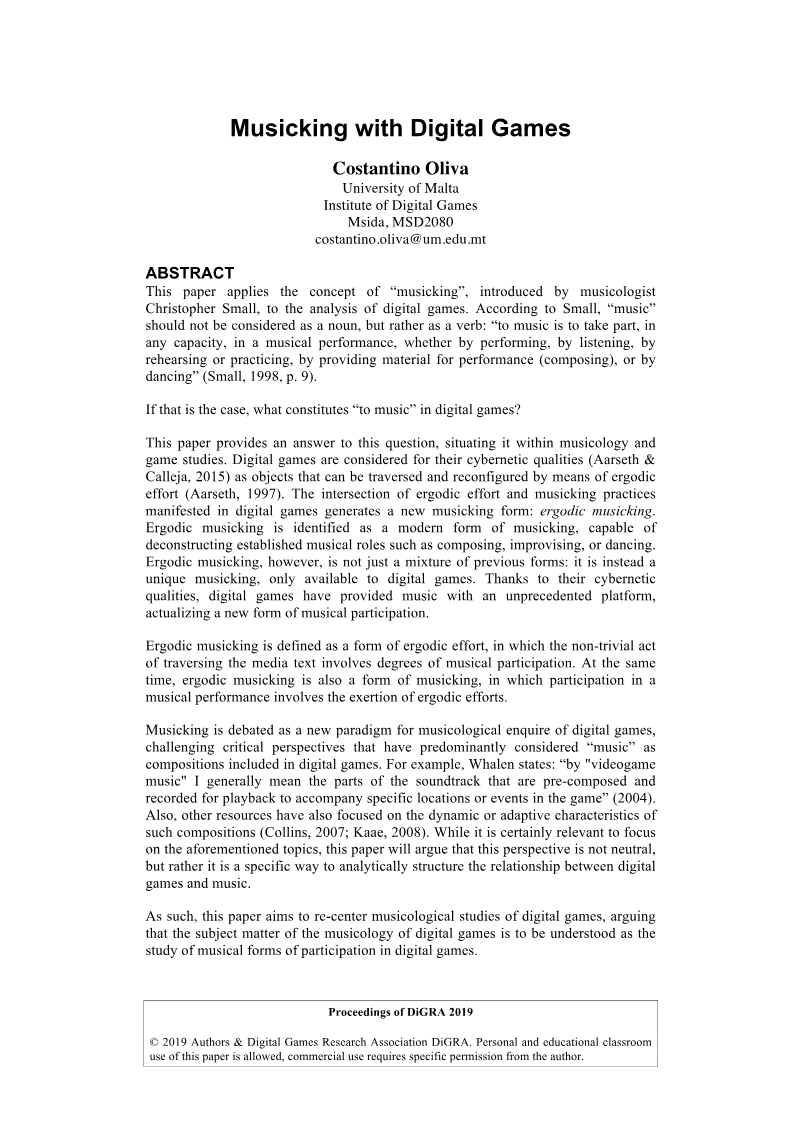
Musicking with Digital Games
This paper, by Costantino Oliva of the University of Malta, applies Christopher Small's concept of "musicking" to digital games, arguing that musicology of games should center on the forms of musical participation players engage in rather than on the pre-composed soundtrack.
- Oliva argues that game musicology should center on how players musically participate (performing, rehearsing, traversing, and so on) rather than on the pre-composed soundtrack, drawing on Christopher Small's concept of 'musicking'.
- The paper proposes 'ergodic musicking,' a form of musical participation in which the non-trivial effort of traversing a game involves degrees of musical engagement, and argues this form is unique to digital games rather than a blend of existing musicking practices.
- Rhythm games such as Guitar Hero and Rock Band are analyzed as remediations of real-world musical activity via Miller's concept of schizophonic performance, while Thumper and Tetris Effect are presented as games exploring musicalities not tied to prior musicking forms.
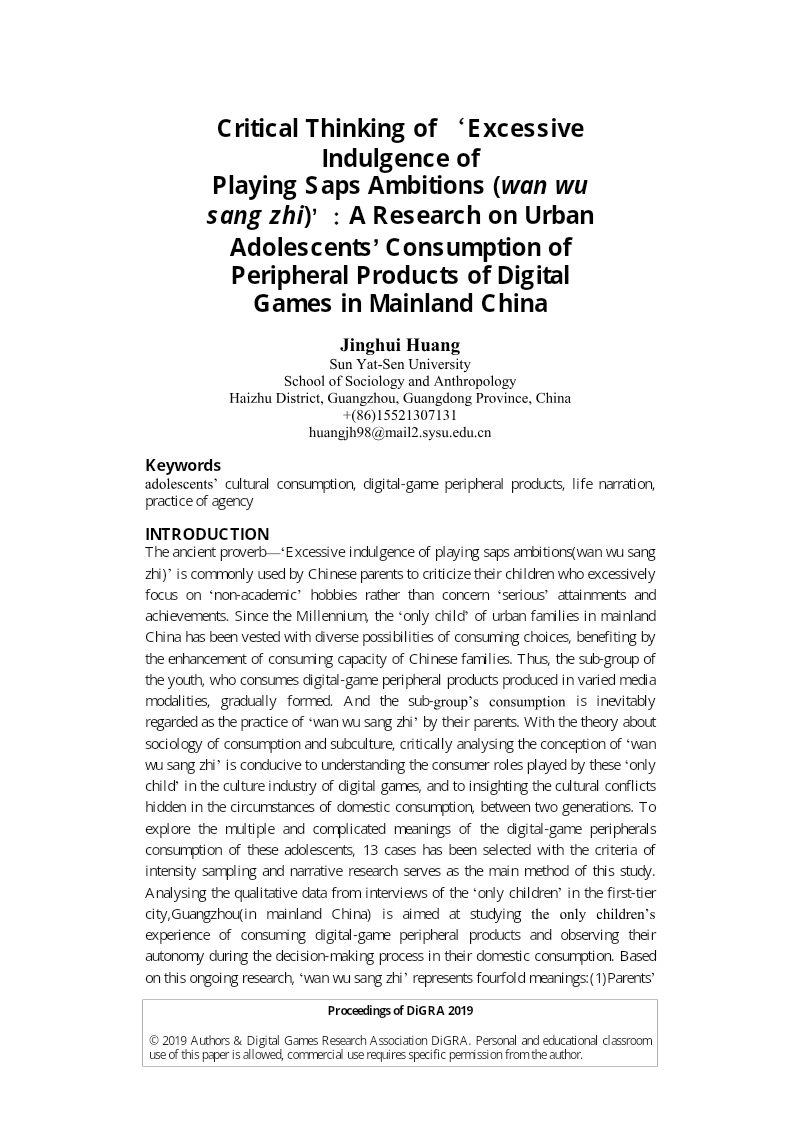
Critical Thinking of 'Excessive Indulgence of Playing Saps Ambitions (Wan Wu Sang Zhi)': A Research on Urban Adolescents' Consumption of Peripheral Products of Digital Games in Mainland China
This research critically analyzes the proverb "Excessive indulgence of playing saps ambitions (wan wu sang zhi)" in the context of urban adolescents' consumption of digital game peripheral products in Mainland China.
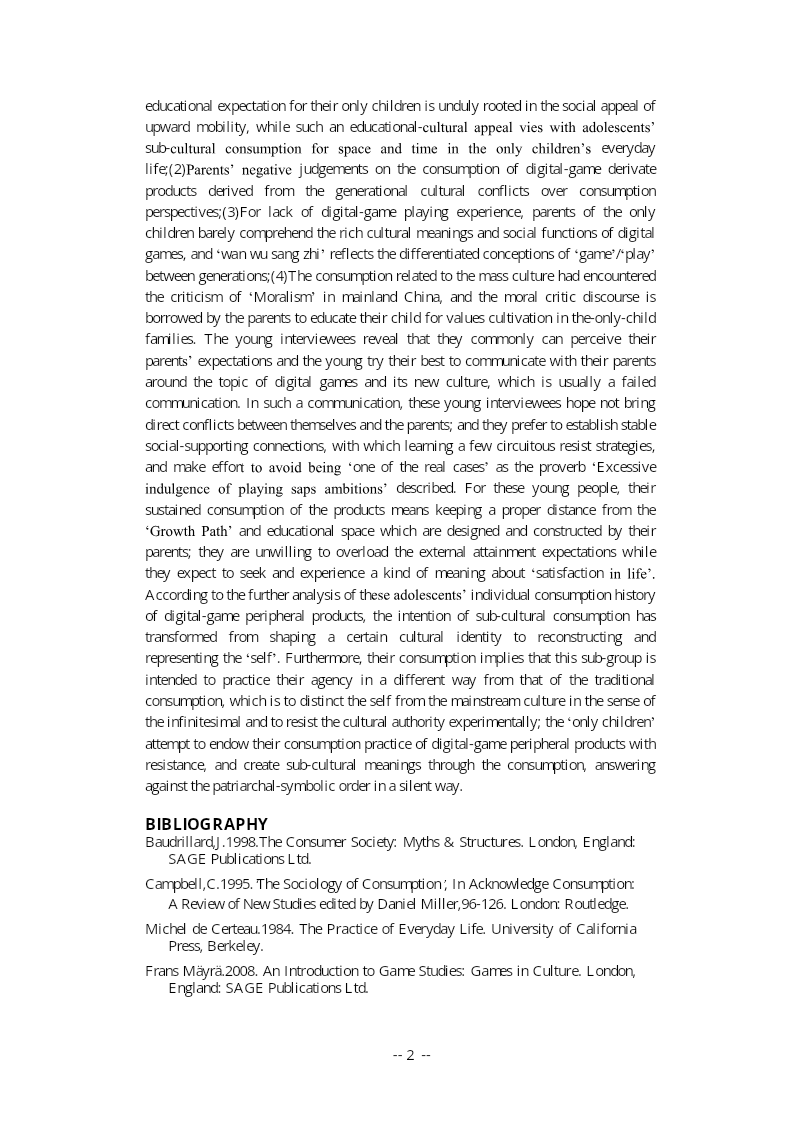
- The study, presented at DiGRA 2019 by Sun Yat-sen University researchers, argues that parents' use of the proverb "excessive indulgence of playing saps ambitions" to criticize adolescents' game peripheral consumption masks deeper generational conflicts over consumption, education, the meaning of play, and morality.
- The research is qualitative, drawing on 13 intensity-sampled narrative cases of only children in Guangzhou, a first-tier city, so its findings describe patterns in a small urban sample rather than national figures.
- Parents' criticism is linked to upward social mobility expectations that compete with sub-cultural consumption for adolescents' time, and to limited parental gaming experience that prevents recognition of digital games' cultural and social significance.
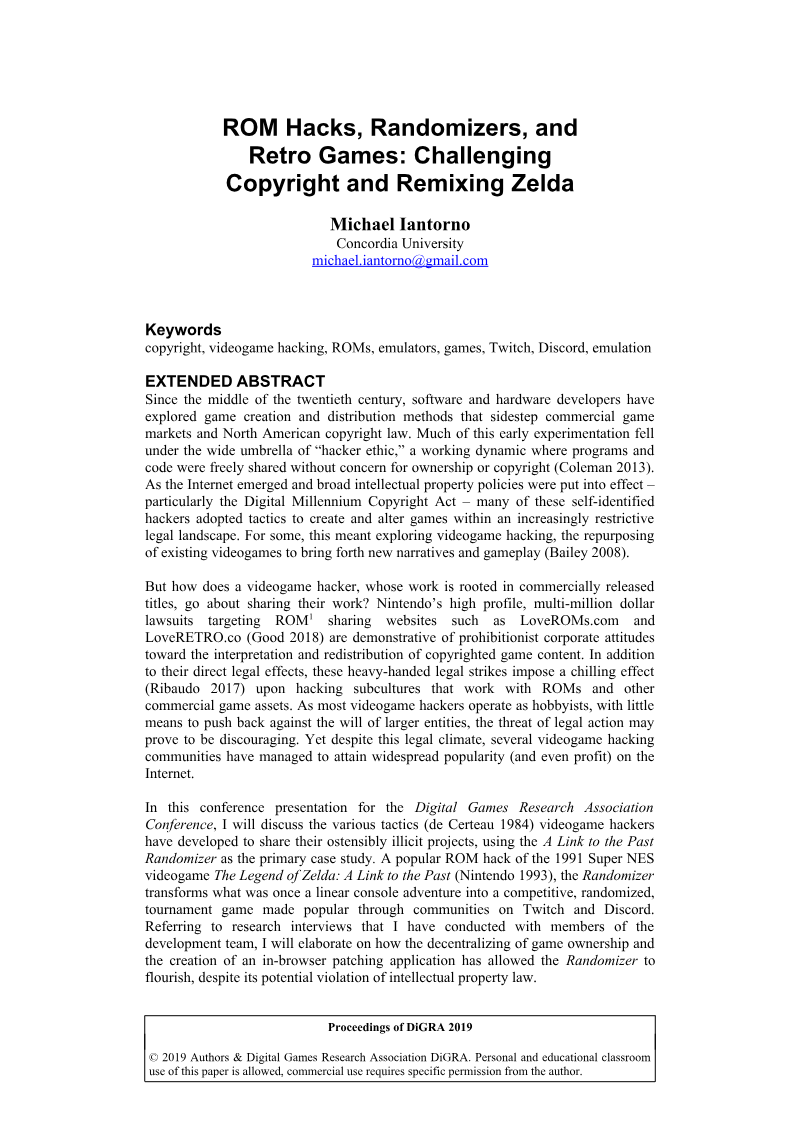
ROM Hacks, Randomizers, and Retro Games: Challenging Copyright and Remixing Zelda
This conference paper, presented at the 2019 Digital Games Research Association (DiGRA) conference, examines how videogame hacking communities share and distribute projects built on copyrighted commercial games despite legal risk.
- The paper uses the A Link to the Past Randomizer, a ROM hack of the 1991 Super NES game The Legend of Zelda: A Link to the Past, as its central case study; the hack turns the linear adventure into a randomized, competitive game played through communities on Twitch and Discord.
- The author frames ROM hacking communities as creative labour operating at the margins of media production and law, placing the work within the history of hacker ethics and the tightening of intellectual property enforcement after the rise of the Internet and the Digital Millennium Copyright Act.
- Nintendo's lawsuits against ROM distribution sites such as LoveROMs.com and LoveRETRO.co are argued to produce a chilling effect on hobbyist hackers who lack the resources to resist corporate pressure.
The Mobile Suit Gundam Franchise: A Case Study of Transmedia Storytelling Practices and the Role of Digital Games in Japan
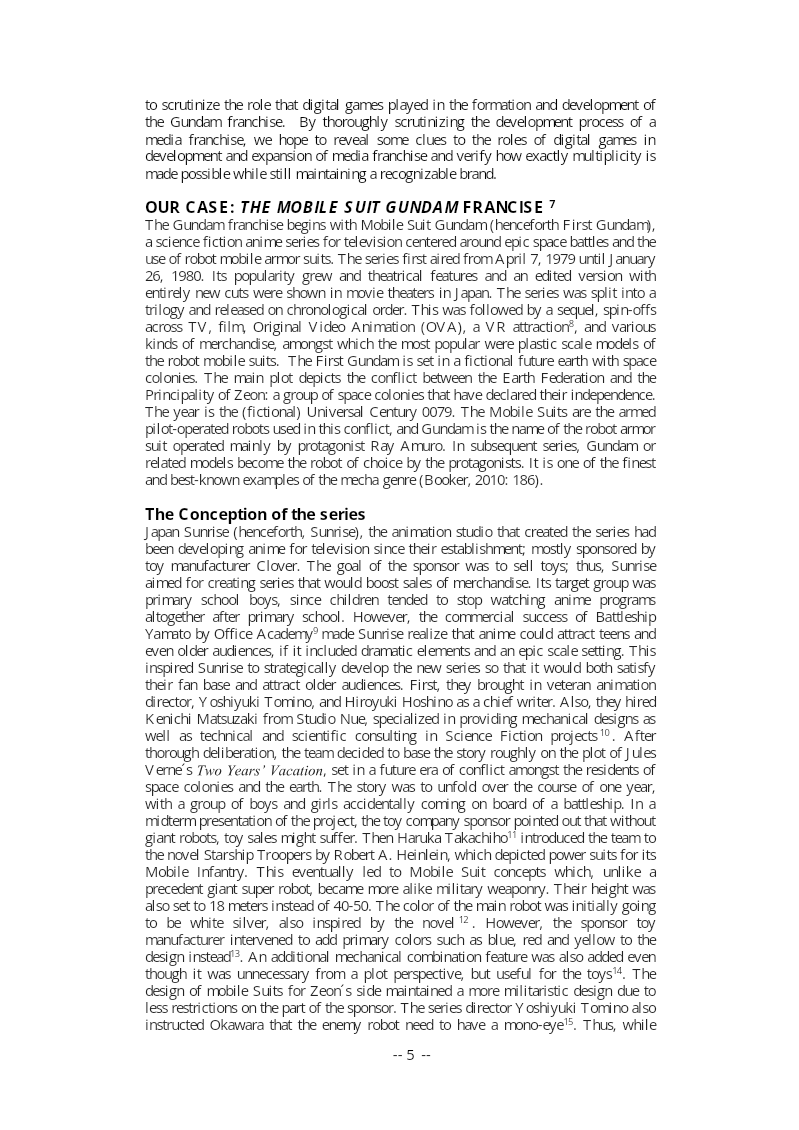
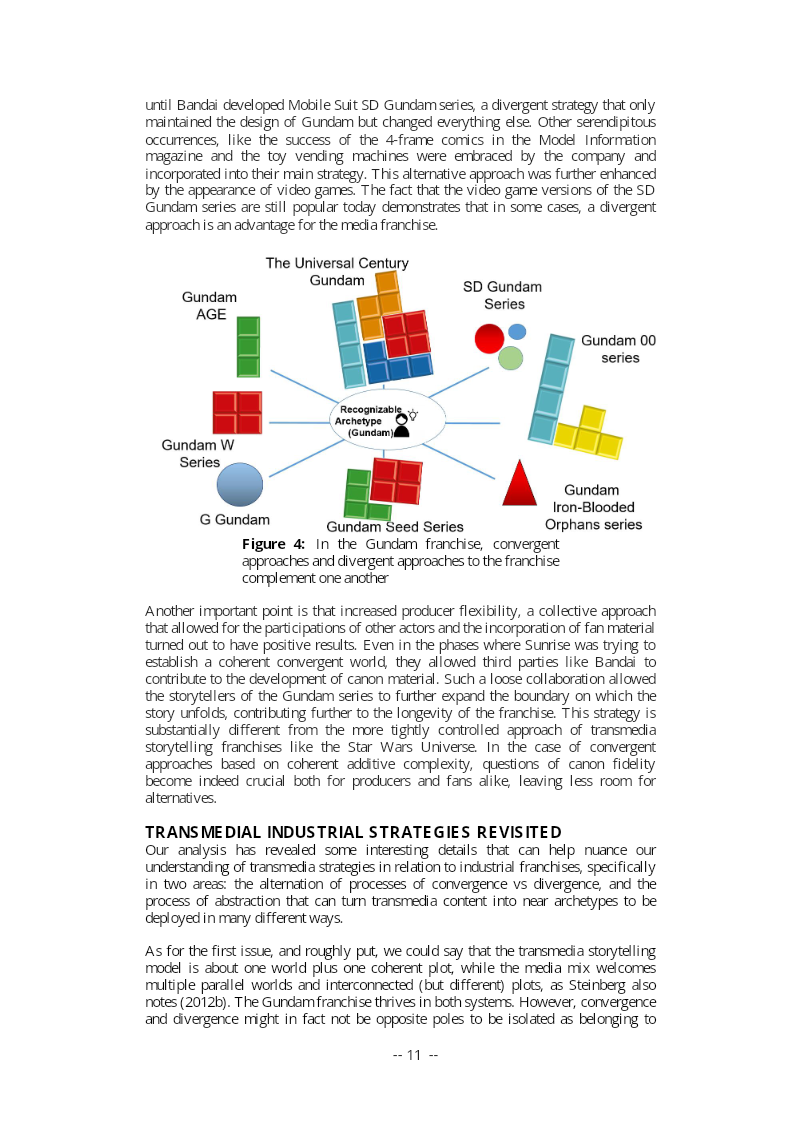
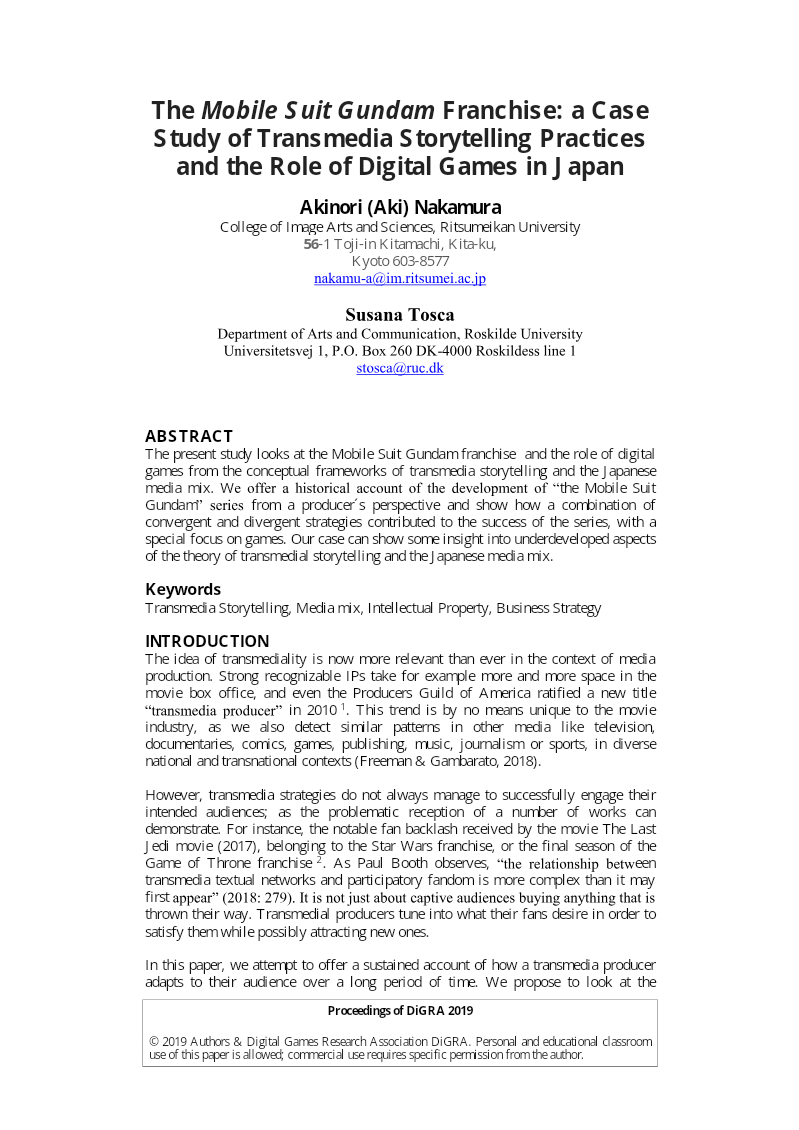
Nakamura and Tosca's DiGRA 2019 paper is a case study of the Japanese Mobile Suit Gundam franchise, drawing on a producer's perspective and examining how convergent (transmedia storytelling) and divergent (media mix) strategies shaped the series, with particular attention to digital games.
- The authors identify the SD Gundam video game series as a divergent approach that kept only the Gundam design and changed nearly everything else, which they argue expanded the franchise's fan base.
- Among the top ten best-selling Gundam games in Japan, six are SD Gundam titles, citing sales estimates from Nikkei Entertainment.
- The authors state that the most popular of the transmedia-style Gundam games sold just under 400,000 units, which they read as evidence that these titles mainly attracted existing fans.
Different Frames of Players and the Motivation of Prosocial Behaviors in Digital Games
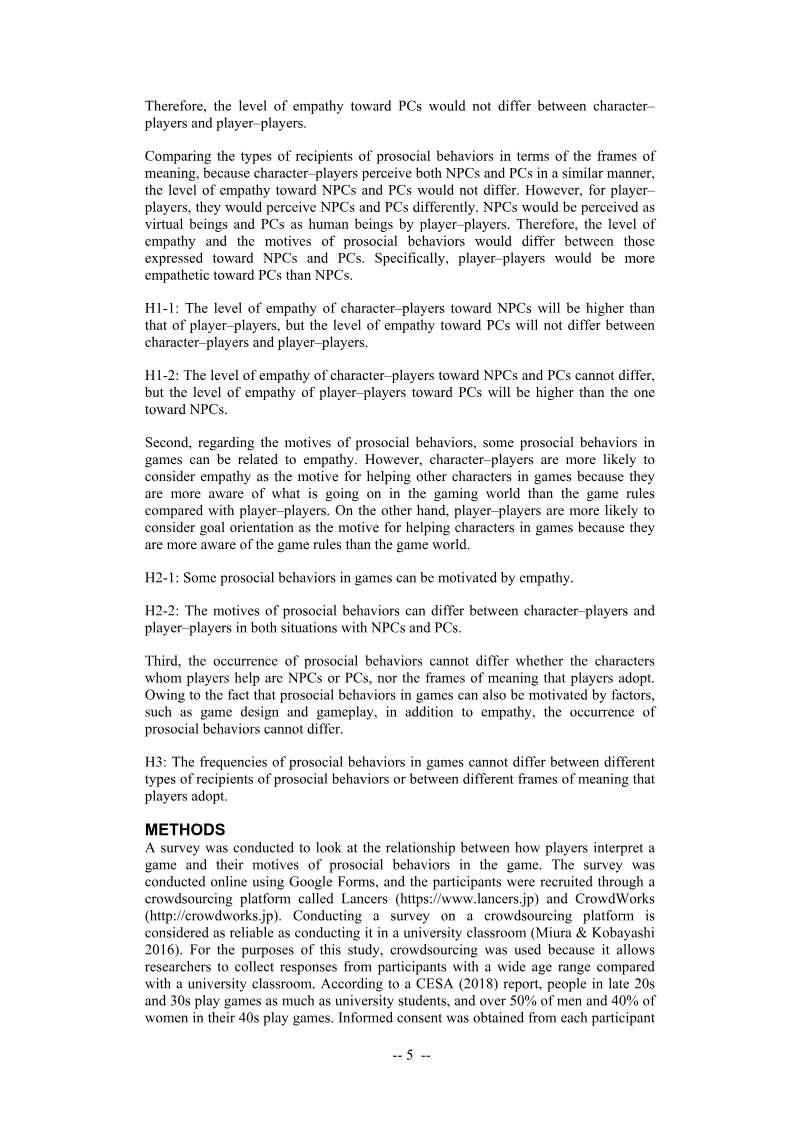
This paper by Ji Soo Lim of Dokkyo University, presented at DiGRA 2019, examines how players' interpretive frames relate to their motivations for prosocial behaviour toward non-player characters (NPCs) and player characters (PCs) in digital games.
- Emotional empathy and personal distress were significant predictors of helping NPCs for both character-players and player-players.
- For PCs, personal distress predicted helping only among character-players, not player-players, whose helping was predicted by emotional empathy alone.
- Empathy levels toward PCs were significantly higher than toward NPCs for both frame groups on emotional and cognitive empathy.