1 free read left. Create a free account for unlimited reading + AI research.
Create free accountWhitepaper ACM SIGCHI
1 free read left. Create a free account for unlimited reading + AI research.
Create free accountWhitepaperACM SIGCHI
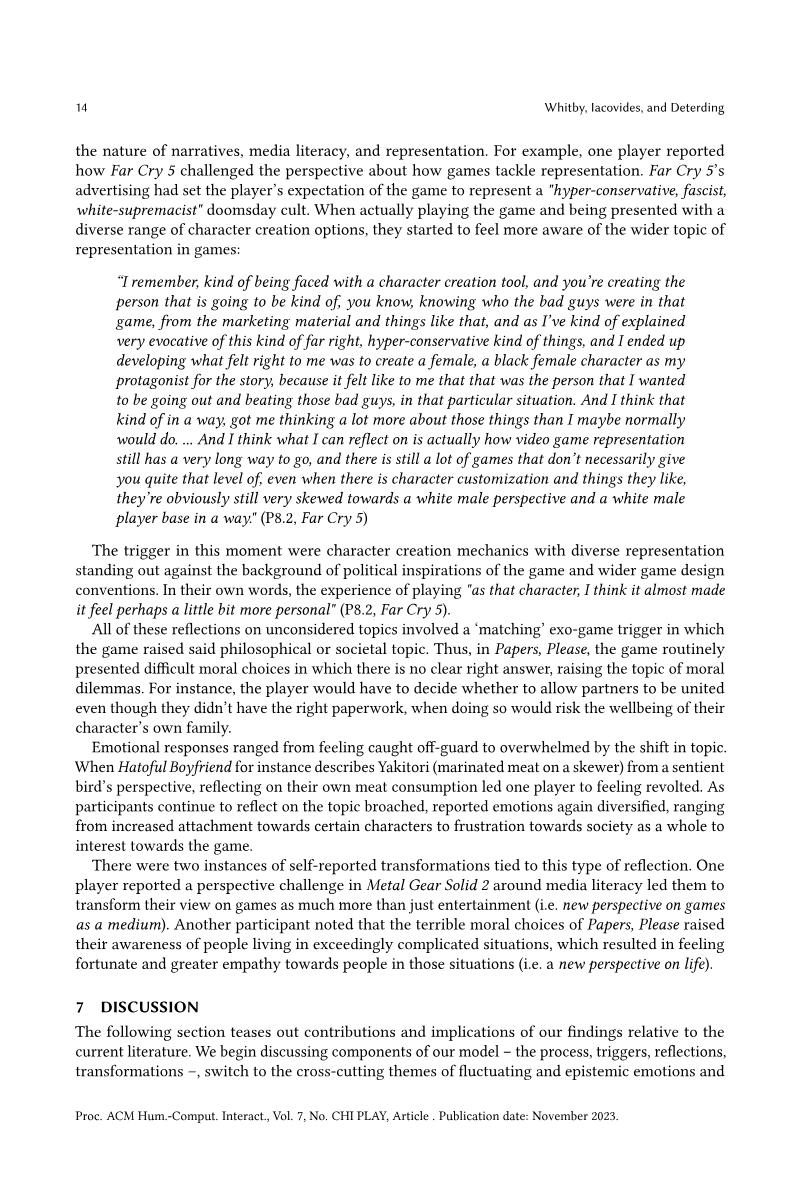
Digital games frequently utilize uncomfortable experiences—such as anxiety, guilt, and disgust—as deliberate design elements to deepen player engagement. By examining player interactions with titles like Darkest Dungeon, Fallout 4, and Papers, Please, it becomes clear that these negative emotional states are not merely obstacles to enjoyment but are instead catalysts for profound reflection. When balanced correctly, discomfort transforms gameplay into a meaningful, rewarding experience that encourages players to contemplate complex moral dilemmas and societal issues.
The primary sources of this emotional friction include persistent uncertainty, the tragedy of character loss, limited agency during high-stakes decision-making, and exposure to disturbing thematic content. While these factors often induce feelings of helplessness or distress, they simultaneously foster a sense of accomplishment and intellectual depth. However, the threshold for this engagement is delicate; if the discomfort is perceived as unfair or becomes overwhelming, players are likely to disengage or abandon the experience entirely. To manage these intense reactions, players often employ coping mechanisms such as taking breaks, documenting their experiences, or alternating between challenging and relaxing gameplay sessions.
Ultimately, discomfort functions as a sophisticated tool for game design, provided it is implemented with careful consideration for the player's capacity to process negative emotions. Designers who successfully integrate these elements allow for transformative experiences that transcend traditional entertainment. By providing the necessary space for reflection, developers can leverage discomfort to create more resonant and intellectually stimulating digital environments, ensuring that even the most challenging moments contribute to a cohesive and impactful narrative journey.
Association for Computing Machinery · 2024