Creative
Company
Documents about Creative
The Future of AI Creative Tools
The future of AI creative tools lies in shifting from simple, novelty-driven generative models toward professional-grade, node-based interfaces that prioritize granular control and repeatable workflows.
- Professional creative tools are shifting from simple generative models toward node-based, modular interfaces that support complex, repeatable production workflows.
- FLORA secured $42 million in Series A funding in early 2026, signaling a market pivot toward enterprise-grade AI creative platforms.
- Major organizations including Nike, Pentagram, and Lionsgate are adopting AI systems to compress tasks like brand sprints and 3D visualization from weeks of manual effort into accelerated timelines.
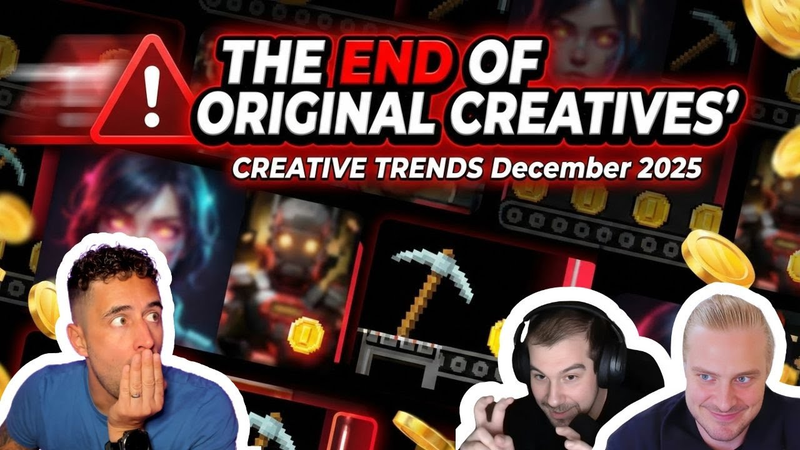
☠️ The end of original creatives: Creative Trends just got darker
The mobile gaming industry is currently undergoing a fundamental shift toward a copy-first development strategy, prioritizing high-volume, replicable creative assets over original intellectual property.
- The mobile gaming industry is shifting toward a copy-first strategy that prioritizes high-volume, replicable creative assets over original intellectual property to maximize conversion metrics.
- Artificial intelligence is being leveraged to mass-produce deceptive creative content, significantly lowering production costs while enabling the rapid deployment of fabricated, high-drama scenarios.
- Publishers are increasingly utilizing 'fake ads' that feature unauthorized use of major global brands and misleading gameplay representations to drive user acquisition.
Major Organizational, Operational and Portfolio Reset to Reclaim Creative Leadership and Restore Sustainable Growth
Ubisoft has initiated a major organizational and operational reset designed to reclaim creative leadership and restore sustainable growth in an increasingly selective AAA market.
- Ubisoft is targeting a €500 million reduction in fixed costs by March 2028 compared to FY23 levels to restore sustainable growth.
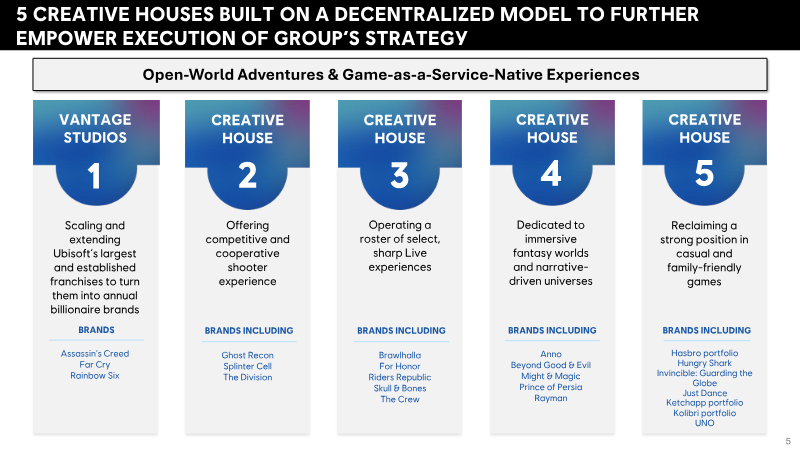
- The company is restructuring into five specialized Creative Houses to focus on core franchises like Assassin’s Creed, Far Cry, and Rainbow Six while improving operational agility.
- Ubisoft has canceled six projects, including the Prince of Persia: The Sands of Time remake and four unannounced titles, while extending development timelines for seven others to prioritize quality.
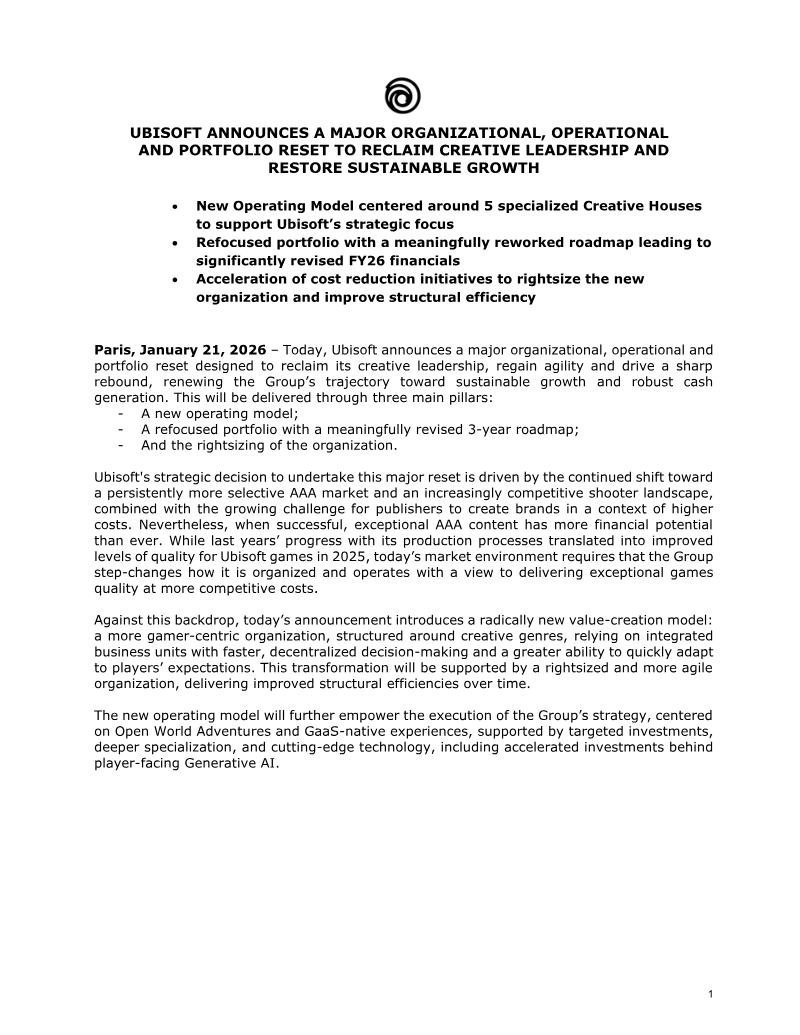
Ubisoft Announces a Major Organizational, Operational and Portfolio Reset
Ubisoft has announced a comprehensive organizational and portfolio reset aimed at reclaiming creative leadership and restoring sustainable growth.
- Ubisoft is restructuring into five specialized Creative Houses—Vantage Studios, competitive shooters, live-service, immersive fantasy, and casual/family—to grant units full financial and creative ownership over their genres.
- The company is targeting a total fixed cost reduction of €500 million since FY2023, aiming for a run-rate of €1.25 billion in total fixed costs by March 2028.
- Financial outlooks for FY2026 project net bookings of approximately €1.5 billion and a non-IFRS EBIT loss of roughly €1 billion, driven by a €650 million one-off accelerated depreciation.
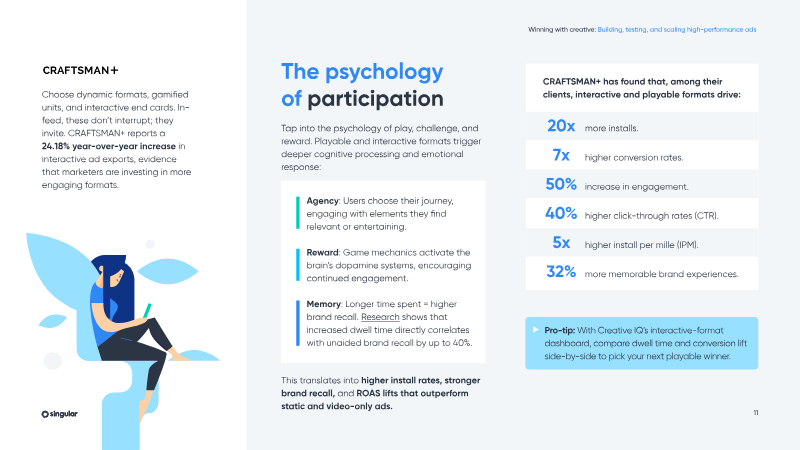
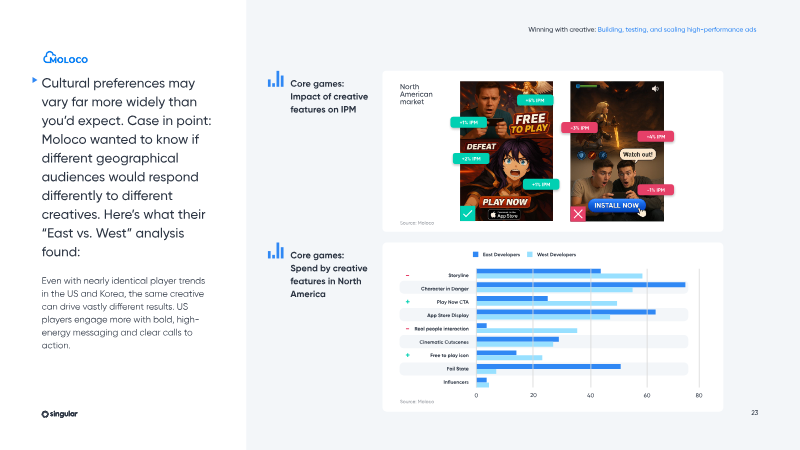

Winning with Creative: Building, Testing, and Scaling High-Performance Ads
The purpose of the analysis is to demonstrate that creative content remains the decisive lever for growth in an advertising environment increasingly fragmented by privacy constraints and platform diversity.
- High-performance ads achieve a 350% lift in ad spend when winning templates are paired with top-performing assets.
- TikTok-first video structures—comprising a hook, body, and close—can increase purchase intent by up to 77% when using 30-second, sound-on formats.
- AI-driven content creation tools, such as TikTok Symphony, provide a 57% efficiency gain in the production process.
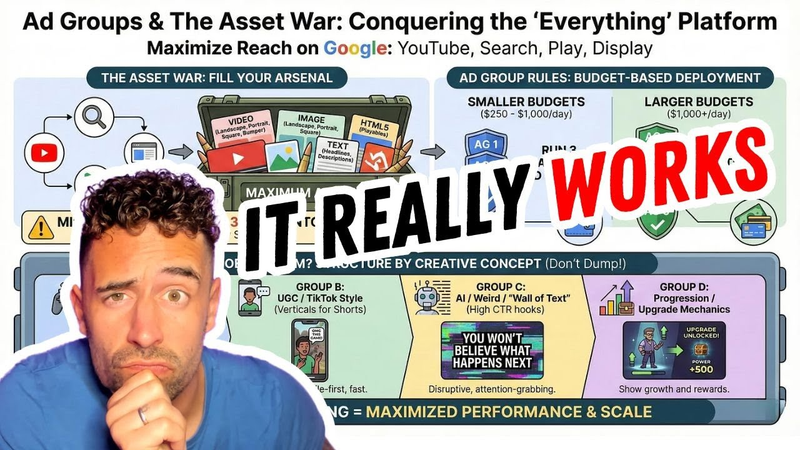
🧠 MVP UA template: How to set up your Google Ads campaigns for Success by Matej Lancaric
This analysis outlines a strategic framework for managing Google Ads campaigns for mobile games, emphasizing a structured, data-driven approach to user acquisition.
- Integrate Firebase with your Mobile Measurement Partner (MMP) to track high-quality engagement events like tutorial completions and in-app purchases, rather than relying on low-quality install metrics.
- Optimize for faster algorithmic feedback by adjusting the conversion window from the default 90 days to a 7-to-14-day period.
- Consolidate campaigns by grouping countries into tiers—such as US, Tier 1, and Rest of the World—to ensure sufficient data volume for machine learning models.
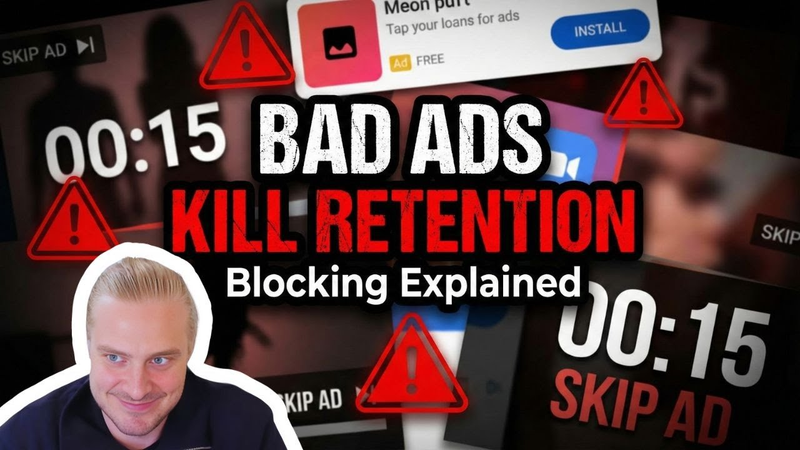
🎙️ Creative & Category Blocking: Save your retention by Felix Braberg
Active management of ad creative and category blocking is a critical, often overlooked component of mobile game monetization that directly impacts user retention.
- Proactive management of ad creative and category blocking is essential for user retention, as mediation platforms act as marketplaces rather than global kill switches.
- Publishers must maintain a centralized, comprehensive block list across every individual ad network to counter the daily influx of new, potentially irrelevant or explicit app content.
- Blocking methodologies vary by network; while AdMob and Unity offer direct dashboard controls, AppLovin and IronSource require using SDK-integrated review tools and manual reporting to account managers.
🤖 AI Creative trends November 2025: How to spot AI creative?
The mobile gaming industry is undergoing a fundamental transformation in user acquisition, driven by the rapid adoption of generative artificial intelligence for creative production.
- Generative AI has reached a level of visual fidelity by late 2025 that makes machine-generated content nearly indistinguishable from authentic user-generated content.
- Market viability in mobile gaming now depends on the ability to scale creative assets through prompt engineering and consistent character modeling rather than traditional production standards.
- Developers are prioritizing high-volume iteration and rapid testing, accepting technical flaws like inconsistent physics, lighting artifacts, and anatomical errors as trade-offs for speed and cost-efficiency.

User Acquisition & Creative Learnings: 2025
The mobile gaming landscape in 2025 is defined by a shift away from simple media buying toward a holistic, data-driven strategy that integrates creative production, game design, and sophisticated analytics.
- Profitability is now measured by the alignment of acquisition costs with long-term retention and lifetime value, rendering low cost-per-install metrics obsolete as vanity indicators.
- AppLovin is the primary user acquisition channel, requiring high in-app purchase volume and a high-velocity supply of creative assets to fuel its optimization algorithms.
- Developers must maintain a multi-channel presence across platforms like Facebook and TikTok to mitigate platform-specific volatility in the post-IDFA environment.

The Art of Scaling games: The Creative arms race
Modern mobile user acquisition is defined by a shift toward creative velocity, where the ability to produce and test massive volumes of advertising assets outweighs reliance on individual artistic talent.
- Top-grossing mobile titles earning over $2 million monthly now produce hundreds of new advertising creatives every month to combat creative fatigue and rising costs per mille.
- Modern user acquisition success is driven by high-volume industrial production pipelines rather than individual artistic talent, as platforms like Meta prioritize new uploads to determine traffic distribution.
- Studios should allocate 10 to 15 percent of their total marketing budget specifically toward creative testing to identify the high-performing assets that drive the majority of impressions.
Creative trends November 2025: Players don’t care. Platforms don’t care. Only performance matters.
The mobile gaming industry has transitioned into a performance-first ecosystem where traditional priorities such as gameplay authenticity, creative originality, and ethical branding have been largely abandoned.
- The mobile gaming industry has shifted to a performance-first model where high-frequency ad output and data-driven trend exploitation take precedence over gameplay authenticity or thematic consistency.
- Developers are increasingly utilizing misleading or 'fake' creatives, such as puzzle-based playables that do not represent the actual in-game experience, to drive user acquisition.
- Titles such as King Shot and Whiteout Survival demonstrate the success of cultural mimicry and viral hooks, prioritizing market share capture over alignment between promotional content and the product.
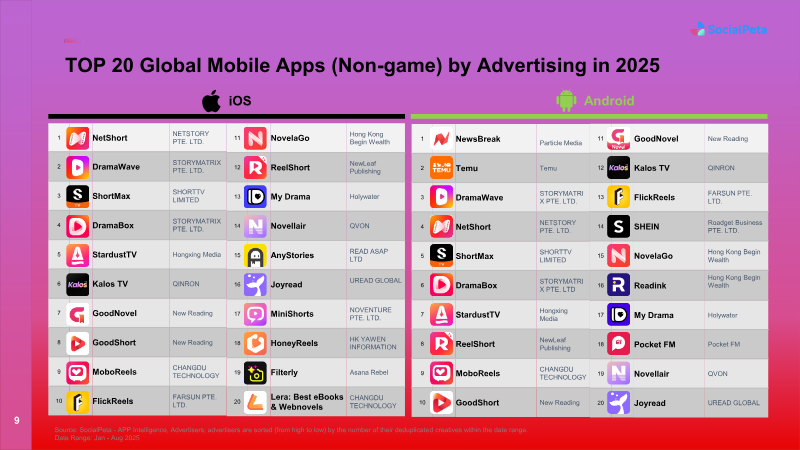
2025 Report on Marketing Trends of Productivity Apps
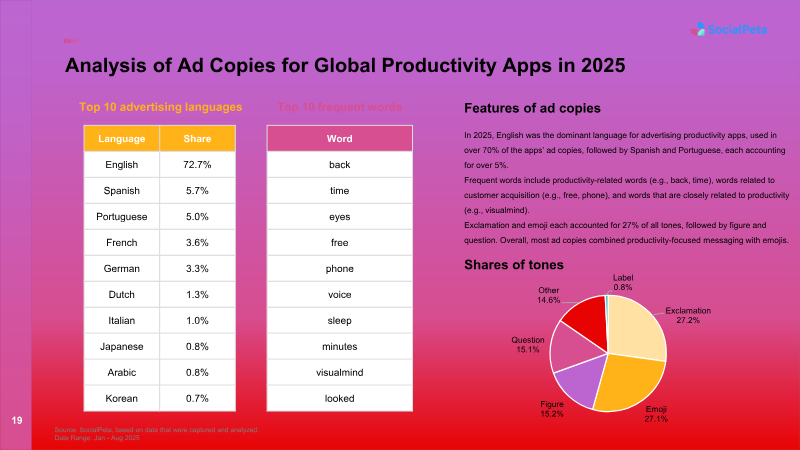
The report analyzes global marketing activity for productivity apps during the first half of 2025, drawing on a dataset of over 1.6 billion ad creatives from more than 80 channels across 80+ countries.
- The productivity app sector saw a 6% year-over-year decline in active advertisers to 8.9k per month, though new entrants surged to over 30% of the market share following Q2 2025.
- Meta, Google, and TikTok remain the primary channels for cross-platform campaigns, with Google leading in conversion rates and TikTok offering cost-efficient Gen Z engagement at a $3.2 CPM.
- Video and playable ads consistently outperform static creatives, with TikTok favoring 15–60 second native videos and Meta utilizing a combination of carousel and video formats.