VideoTwo & a Half Gamers
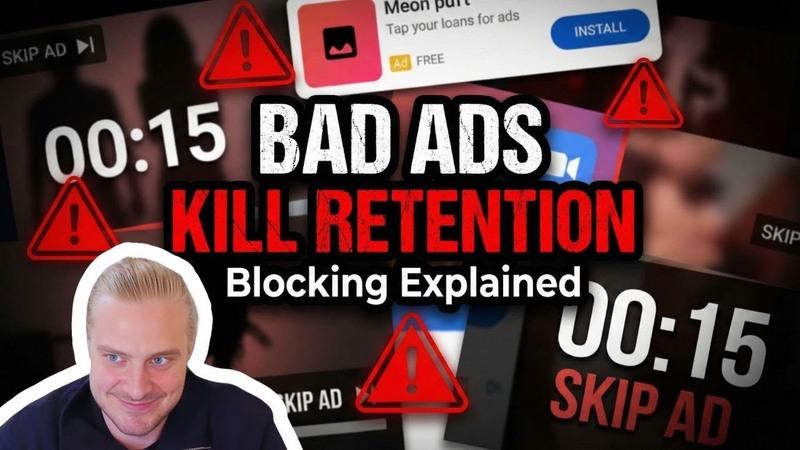
🎙️ Creative & Category Blocking: Save your retention by Felix Braberg
31 Dec 202519 min video
So there's no single place where you can actually block all the ads from because essentially the mediation platform is just the marketplace. So the first thing you need to remember is if you block it in one network, you need to block them all networks. Otherwise, you still will get that rolling dice. [music] [music] We're the two and a half gamers. The midnight crew talking UA advers and game design too. M feeling shak bringing the insight. We're rocking [music] those vibes till the early daylight. But hey, you a master eyes on the prize. Tracking data through the cyerspace skies. Felix stacks colors like a wizard in disguise. Jack crafter realms lift [music] us to the high. Two and a half gamers talking smack. Slow hockey sick. Got [music] your back. Ads are beautiful. They like the way. Click it fast. Don't delay. Uh-huh. Uh-huh. Uh-huh. [music]
Uh-huh.
[music]
Hello everyone and welcome to another special episode of the Two and a Half Gamers podcast coming up to right before the new year. So first of all, I wanted to say a big thank you to everyone for supporting us throughout this year and the last three years. As a matter of fact, we're growing quite a lot. And if you do like our content, please don't forget to like and subscribe to these types of videos. But as you can see, it's only me here today, which means we're going to be talking about ad monetization related content. And today, I want to talk about probably a topic that's a little bit boring, but very important nonetheless, and that is category and creative blocking inside of your mobile applications on the ads that you're receiving. Now, this is a topic that's quite hot for some publishers and some publishers don't care as much. So, depends a little bit where you're coming from and how much you actually care about the type of ads that are shown in
your game or application. But I want to just run over a couple of main things on how essentially it works on the network side, how to actually block these things, how you should think about category and creative blocking, and then I'm going to run through some tips and tricks that I've picked up in the last 10 years of working in admonetization in mobile. So, we've all been there. you're quietly sitting managing your ads and you get complaints that you're seeing some sort of explicit ad just like this, right? Sadly, it's very common if you don't set up blocking and category blocking that basically you start getting a lot of explicit ads like this cuz the sad truth is that inside of uh mobile ad monetization, the majority of your work on blocking is actually reactive. And what does that mean? That means that usually you're getting user complaints and then you're blocking those ads and those creatives alongside of it to make sure that you never get those creative again. However, there's new apps and games being released on a daily basis, which means that sometimes
you have to yeah, you can only play catch-up and you have to rely on complaints before you can do something about it. That doesn't mean that you can only be reactive and that's where blocking comes in. So when you're thinking about any type of network, you can usually block it from two main categories. So you can either block on an individual app level or you can block on a category level. So the first thing that I usually recommend someone who's starting with ad monetization is to be a bit of both proactive and reactive, right? So usually what I recommend is that you basically decide what type of ads you're okay with and then essentially also start making a list of traditionally explicit ads that have bad ads. So usually what I do when I start working with someone to start working on a new block list is story games is usually one of the main categories has a lot of bad ads. some social casino and famous social casino games as well and a lot of things for example dating is also
one that gets a lot of bad ads. Religion is something that also causes a lot of complaints. So what you can do there is essentially start making a list. I actually have a list that I work with and I've been working with the last four years that I just have where I put all the bad ads that I've blocked from different apps and developers that I usually just start by blocking and then you still have to start building out your own. So what does one of these would look like? Right? So usually you have a conversation. Hey, do you want to block any competitor ads? Do you want to block anything explicit? In this case, you can see here as a dating app, prevalent dating app that's in the block list. And then you just keep a long Excel file of everything that you block. So the difficult thing about blocking is that if you're mediating, let's say on AppLin Max and you have ADM Mob, Meta, Digital Turbine, and Unity as networks, right? to actually block a application from showing ads in your game. You need to block it on all the different networks. So there's no single place where you can actually block all the ads from because essentially the mediation
platform is just the marketplace. So the first thing you need to remember is if you block it in one network, you need to block them all networks otherwise you still will get that ad. which means that when you start working with a new network, you need to have your block list ready because you need to basically send it to the AM or basically input it into the dashboard yourself. So having a list like this is will save you a ton of time when you're actually working with this. So why is it important on having a list and you can't rely only on something called category blocking. So I'll show you the difference here, right? So the first network that I want to show you how it works is ADM Mob. So ADM Mob is both a network and also a mediation platform. So on the left hand side in ADM Mob you can actually see something called blocking controls. This is where you can actually go in and you can block both individual apps by either their website or or the web URL or their app IDs or uh Google Play IDs. Also you can block something called sensitive
categories. Here is essentially the list of what Google deems as sensitive categories. Is everything from dating, which I highly recommend always to block if you're actually care about explicit content because usually this is where you get a lot of ads that you can imagine being quite explicit. So here it actually says how much revenue you're actually losing by blocking these categories. And not all networks have this advanced functionality, but it's quite good to know that every time you block something, you're also in fact risking losing revenue. And that's always a trade-off they have to take in account. If you're really worried about the ads that are being shown, I would recommend blocking all of these. But basically, then realize that you still might get these type of ads from other networks that you have plugged into your mediation platform. So this is only from Google that prohibits you from sending these. Another little thing that Google has, which is one of the few networks, I think it's only DTX that has the same thing, is that inside of the app settings, they actually have the ability for you as a publisher to turn off something called high engagement ads.
So, high engagement ads is just fancy ad speak for essentially ads that basically are not closable and take longer than normal. So, rewarded ads normally they are 30 seconds plus 3 second end card. And interstitial ads are supposed to be 5-second that you can close them and then they can run for 15 seconds but you can close them after 10. So here you actually have a toggle where you can actually turn off the high engagement ads in your app and then you press save and then they're turned off. This will impact your revenue and it will actually go down. How much? In my experience usually this decreases the performance by about 12 to 13% not more than that. But the interesting thing is here if you actually untoggle this in my experience you also have to send Google a message saying that you don't want to have the high engagement ads from the general email because it's not enough that you toggle it off here. You actually also have to send them a message which is a bit cheeky but a good thing to know about ADM Mob. Now moving on to meta. So
meta is probably one of the networks that has yeah a really good blocking category because here you can block categories domains and apps. how you find it is unblocking and block lists. The funny thing to know here is that Meta probably has the easiest end cards and there's nothing you can actually do to change them. And also getting to speak to anyone at Meta, anyone will tell you these days takes more than a smile. So this is where usually I would just keep your list from before and you can actually upload it here in a CSV excerpts, right? So you can actually upload it quite easily. So when you're starting on a new meta account, you can upload the list and then you can yeah do it all from here. One of the better ones. Then Unity, they have a ad controls tool that you can access from their main dashboard. Takes a lot of clicking like with any Unity products, but eventually you do get there. So if you're actually entering from the main web page, you need to click into your monetization project and then click Unity ads monetization. Then you'll get to a place that looks like this. And
then you need to click on something called ad controls. Here you can block categories, you can block individual apps, and you can also view all the ads that you're currently seeing. So it also has a really nifty tool called unblocking insights where basically you can see all the apps that you've blocked and all the categories. And it gives you a dollar estimate on how much money you can earn extra by unblocking the different categories. So, like I said, there's always a cost when you're blocking ads. So, always take that into account. But Unity is also one of the better networks, I would say, because you can actually do it yourself, and I prefer that. So, here you can see the category filters. These are ones that I usually recommend to start with. It's just alcoholic beverages usually just cause a lot of complaints. Casino always gets a lot of complaints unless you're fine with taking that hit. And for example, health and fitness apps also tend to be quite explicit sometimes. And then religion also gets a lot of complaints. That's usually what I do as
a baseline of blocking when starting working with Unity, unless you're working for an app that doesn't care, in which case just go nuts and block as you go. So the next company that you have here is Digital Turbine. Here they're actually a bit different because they're an exchange. So what does that mean? That means that they don't have their own direct demand. they only work on reselling your demand which means that blocking categories is a lot harder on digital turbine. So how it actually works here is you need to work on something called an IAB category list. An IAB category list is just the the international I can't remember what their name is but essentially it's like the international body of advertising and they actually have category titles which we'll go over a bit later which you can actually block as categories and that's how they actually do the big blocking. But here as well this is where it's good to have your list cuz you can upload your list and essentially you can block things that way. They also are friendly just like ADM Mob because they
allow you to skip or change the end cards here inside of the dashboard which is very rare these days. Moving on to AppLoven. So Apploven has a very unique style and view of the market and how to do blocking. So if Google gives you complete control over what you block and how you block in the category of blocking, apploving gives you absolutely zero control over how and how much you block because you actually have to email all your blocking requests to an AM or the general email. So like most things, if you're a big game or big application and you actually have an AM, that's fantastic because that means that you can actually talk to someone and actually get it done quite quickly. Otherwise, you actually have to message them every time with what you want to block. So, if you're actually mediating on Max, you are able to view all the creatives inside of their creative viewing tool that you actually have to implement inside of the SDK. Sometimes this tool has been known to cause a lot
of ANRS and crashes. So, be very wary when you start working with it because it can cause crashes. But it's very good to actually have the insights that you're able to get from here because you can see that for example the creatives that you're blocking actually can lose you quite a lot of revenue. So if you don't have this implemented you don't know for example that if you block for example fish them by player that that might actually be your largest advertiser and that you might actually lose considerable amount of revenue for this. What it actually does here it actually has a tab called risky content. The risky content tab is where it actually flags content that it deems is risky for your type of mobile ad uh app or application or mobile game. So actually what you do here is you can actually set your risky content flags and then basically what happens is their system flags this type of ads and essentially shows it in your risky content app content tab. But that doesn't mean you can block the ads from the risky content tab. No, that means
that you're aware of them and then you can actually send a message about them to your AM. So they show up here. Then essentially you can flag them with your AM who then needs to block them. So there's a couple of networks that you have to do this with because in my opinion I'm assuming they expect most people actually won't do the blocking which basically means that the networks can earn more money. Yeah, some some networks are uh more leiser with this than others. So that's how it works. And then essentially you get email notifications when you see new ads appearing in your game or application. So same thing with Iron Source. You have the creative review tool that you need to have implemented especially which only works if you're actually mediating on Iron Source. Here you can actually see the type of creatives you're running but you actually can't block them either. So yeah bit difficult. Then on Mint integral, they actually have a decent blocking system where you can add your block list where individual applications or you can actually block general categories which tend to work
very well here what it looks like. So you can actually have your list. So this is why it's important to actually have your list uh available at all times. So that's the top tip. Always make a block list and keep it centralized because when you start working with a new network, you have to basically set it up otherwise you're going to get the same ads again that you've already blocked everywhere else. So that's how it works on Mint integral. So just wanted to say a few words about ad quality, right? So this is a really hot topic because one of the main things that's actually happened in our industry is that 5 years ago, a rewarded ad was 30 seconds plus 3 seconds and two clicks to get out of. And now, you know, some of the most aggressive end cards and formats on some networks is up to 180 seconds with a multiple clicks to exit out of. And same thing on interstitials that they're only closable after 15 seconds. So this type of thing really affects retention in your games, right? And this is something you always need to keep a close eye on
because if you don't stay on top of this and keep checking about ads and creatives in your games, essentially what's going to happen is that you're going to have extremely long end cards, which is good for the network, which necessarily isn't good for you. So what I usually recommend is rewarded 30 seconds plus 5-second end card with three clicks to exit. Interstitials are tend to be 15 seconds long but they should be closable after 5 seconds with maximum three clicks. And usually what I see here is like you do lose a little bit of the eCPM but usually this makes up for itself in longterm in long-term retention. Right? So the annoying thing is that sometimes when networks are testing new end card formats because you have to imagine they do a lot of testing because if they can actually get users to click more on the ads because of the end cards that essentially means that their revenues will go up quite significantly because that's actually how they earn money. So if they're testing new end card formats that essentially means that sometimes they roll it out and you don't know if you're
in the test group or not. which means that you if you have a game, you need to constantly be checking this because you don't know when they actually change the ad quality. And if you don't speak up, they're not going to tell you about this. So, here is the email template because networks don't like changing end card templates because essentially that ruins or makes their business model worse, right? Because they want to have a longer experience because it increases clicks. So, there's a really weird dynamic here. So let's say if you're mediating from the old example that I had before, you're mediating on max and uh you're mediating with networks such as Unity, Mint integral and digital turbine. So let's say that you want to change end card templates and you want to reduce actually the end cards because you want to like increase your retention. What you actually have to do is basically write an email and basically get them to change the end card templates. But usually what happens is that no network wants to change the template first because essentially that means they're worse off than other
networks. So usually what I recommend is writing an email. And the key word that you need to use in email is par. Now par is super important because basically you just have to tell them that all the other networks are kind of on that format. So basically you're the last one to go. So I know a couple of networks that refuse to change their end card templates until they're the last one. So what you have to write an email what I usually say is like hey we reviewed our end cards and you're the only network that doesn't have the 5-second closable tab on interstitials. Please can you help fix this? So once you've kind of made them feel comfortable with this that means you can actually move on and actually have better end card templates. So it does decrease your revenue slightly. Usually I see about a if you go from the most aggressive end card formats to the least aggressive ones I see usually about a 12% decrease in eCPM I see it but it's not more than that. So usually I recommend to go on the least aggressive uh format to start with and then you can always test the more
aggressive ones a bit later. So, I hope this has been very educational and now you know a lot more about blocking and actually how to treat and deal with networks if you want to block and basically wishing you a very good new year and hopefully we'll see you next year. If you have any tips or tricks about some content that you want us to run, please tell us and we would love to do so. But that's it for today. Wanted to say thank you and bye-bye. Heat. Hey, Heat.
Auto-generated captions from YouTube — names and numbers may be misheard.
Active management of ad creative and category blocking is a critical, often overlooked component of mobile game monetization that directly impacts user retention. Because mediation platforms function as marketplaces rather than global kill switches, publishers must proactively manage block lists across every individual ad network. Relying on reactive measures—such as waiting for user complaints about explicit or irrelevant content—is insufficient, as new apps and games are released daily. A centralized, comprehensive block list is essential for maintaining consistent ad quality across all integrated networks.
Methodologies for blocking vary significantly by network. Some platforms, such as AdMob and Unity, provide robust dashboards that allow publishers to block specific apps, URLs, or sensitive categories directly. Conversely, other networks, including AppLovin and IronSource, require publishers to utilize SDK-integrated creative review tools to identify problematic content, which must then be reported to account managers for manual blocking. This process is further complicated by the fact that some networks may not offer granular control, necessitating a persistent, standardized approach to ensure parity across the entire ad stack.
Beyond category filtering, publishers must monitor the aggressiveness of ad formats, specifically end cards. While networks often favor longer, high-engagement formats to maximize clicks, these can degrade the user experience and harm long-term retention. Implementing stricter standards—such as 30-second rewarded ads with 5-second end cards and 15-second interstitials closable after 5 seconds—is recommended. While these cleaner ad experiences may result in a modest eCPM reduction of approximately 12%, the trade-off is generally justified by improved player retention. Negotiating these standards requires clear communication with network representatives, emphasizing industry parity to ensure that no single network is permitted to maintain an overly aggressive ad format that negatively impacts the game’s ecosystem.

Two & a Half Gamers · 2026

Two & a Half Gamers · 2026

Two & a Half Gamers · 2026

Two & a Half Gamers · 2026

Two & a Half Gamers · 2026

Two & a Half Gamers · 2026

Two & a Half Gamers · 2026

Two & a Half Gamers · 2026

Two & a Half Gamers · 2026

Two & a Half Gamers · 2026

Two & a Half Gamers · 2026

Two & a Half Gamers · 2026
Two & a Half Gamers · 2026

Two & a Half Gamers · 2025
Naavik · 2024

Deconstructor of Fun · 2024

Deconstructor of Fun · 2026

Two & a Half Gamers · 2026

Deconstructor of Fun · 2026

Two & a Half Gamers · 2026

Two & a Half Gamers · 2026

Two & a Half Gamers · 2026
Two & a Half Gamers · 2026
Two & a Half Gamers · 2026
Comments