Creative
Company
Documents about Creative
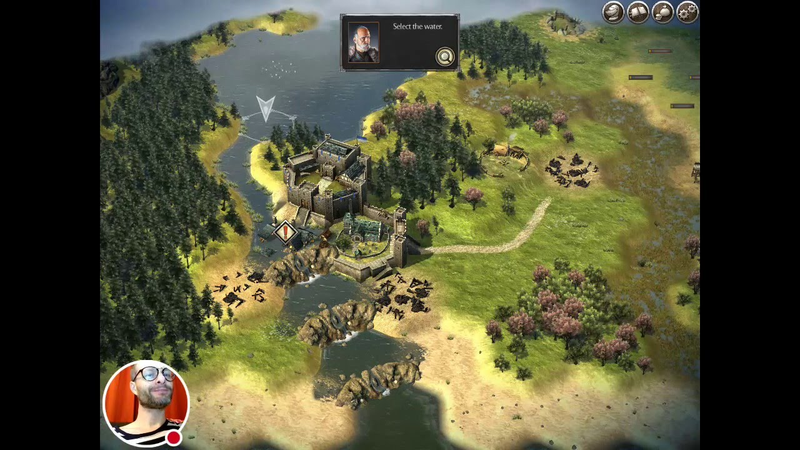
FTUE: Total War Battles: KINGDOM
Total War Battles: KINGDOM serves as a case study in the challenges of adapting a hardcore PC strategy franchise for the mobile market.
- Total War Battles: KINGDOM struggles with mobile user retention due to a lengthy, overly prescriptive tutorial process that conflicts with mobile player expectations.
- The game’s reliance on PC-centric design, such as complex menus and tedious infrastructure tasks like road building, creates significant friction for casual mobile users.
- Creative Assembly and Sega’s adaptation maintains high visual fidelity and complex mechanics, but these features often feel cluttered and inaccessible on smaller mobile screens.
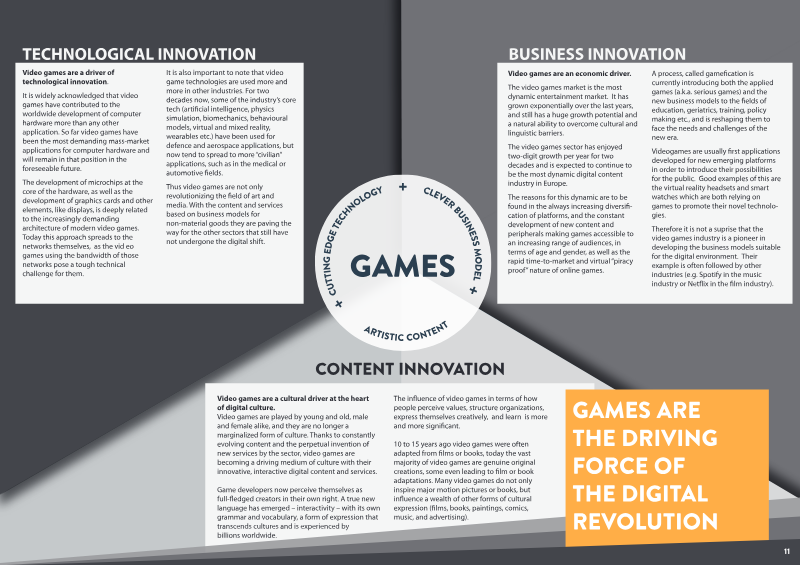


How to Enable Digital Growth in Europe
The European video game industry serves as a critical engine for the continent’s digital transformation, yet its potential remains constrained by a fragmented regulatory landscape and insufficient financial support.
- Network neutrality is crucial for the European games sector, as easing it risks dividing Europe, allowing network providers to slow access to competing virtual services, and strengthening dominant media companies over independent developers.
- Video games are a driving force in the digital revolution, creating a new interactive language that transcends cultures and influences other forms of cultural expression like films, books, and music.
- European game developers are frequently targeted by patent trolls, with legal battles in the US potentially costing hundreds of thousands to millions of Euros and fully occupying developers.

Creative Industries Including Games Add $3.848b to NZ Economy
A 2015 report commissioned by the industry alliance WeCreate and prepared by PricewaterhouseCoopers (PwC) quantifies the economic impact of New Zealand’s creative industries.
- New Zealand’s creative industries (games, music, books, and film/television) contributed $3.848 billion to the national GDP in 2014.
- The creative sector supports approximately 42,000 full-time equivalent (FTE) jobs when accounting for both direct and wider industry employment.
- Film and television is the largest contributor to the sector, accounting for 74% of the total GDP impact and 31,416 total FTE jobs.

Board Members Curriculum Vitae — 11 bit studios S.A.
The executive leadership of 11 bit studios S.A. is composed of a core group of industry veterans with extensive experience in the Polish game development sector, primarily stemming from their shared history at Metropolis Software.
- 11 bit studios S.A. is led by a core management team with a shared professional history originating from Metropolis Software, dating back to their collaboration over the last two decades.
- President Grzegorz Miechowski, who founded Metropolis Software House in 1993, has led 11 bit studios since its inception in 2009.
- The board maintains high leadership continuity, with a stable structure that has remained largely unchanged since the company was founded 15 years ago.
2015 CESA Consumer Survey Report
The 2015 CESA Consumer Survey Report provides a comprehensive analysis of gaming habits and lifestyle trends among the Japanese population.
- The total number of active game players in Japan across all platforms (home console, PC, mobile, and arcade) is estimated at 48.09 million.
- Smartphone and tablet gaming is the dominant platform, with 33.31 million active users compared to other hardware categories.
- The domestic market for home console gaming consists of 52.83 million owners, 31.38 million active users, and 15.41 million continuous players.
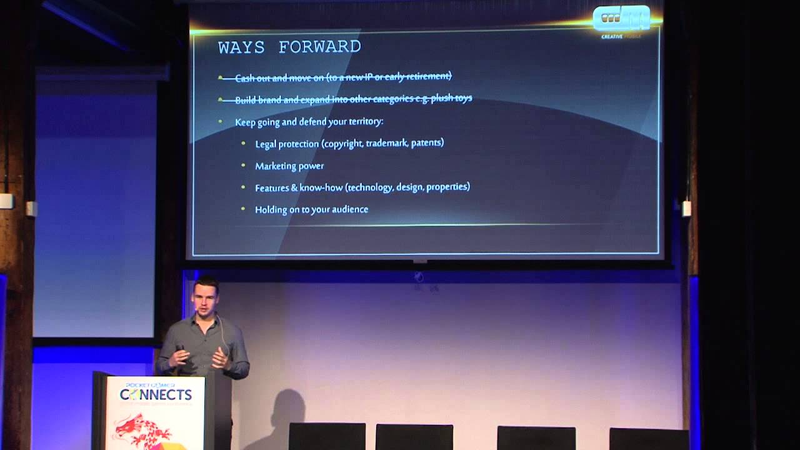
Build a brand or throw in the towel, says Creative Mobile's Vladimir Funtikov
The mobile gaming industry has shifted from a landscape where initial launch success guarantees longevity to a highly competitive, oversaturated market where developers must actively build a brand to survive.
- The mobile gaming market has shifted from a launch-success model to an oversaturated environment where brand identity is the primary defense against rapid cloning by competitors.
- Developers must transition from speculative development to a long-term business model by focusing on deep, iterative engagement with a core, loyal audience.
- When a game lacks strong intellectual property or recognizable characters, active community feedback loops via social media and forums are essential to drive product evolution.
2014 CESA General Consumer Survey Report: Japan
The 2014 CESA General Consumer Survey Report provides a comprehensive analysis of gaming habits and lifestyle trends among the Japanese population.
- The 2014 CESA Consumer Survey estimates there are 44.2 million active game players in Japan across all platforms, including home consoles, PCs, mobile devices, and arcades.
- Smartphone and tablet gaming is the largest segment by player base, with 26.72 million active users identified in the 2013-based study.
- For home consoles, the report estimates 57.5 million owners, 32.07 million active users, and 14.62 million consistent, long-term players.

Creative Mobile on fun, success and ground-breaking ambition
Creative Mobile, an Estonian game development studio, established its market presence by capitalizing on the early Android ecosystem.
- Creative Mobile scaled from a five-person team to approximately 75 employees by leveraging in-app purchases, which increased revenue by three to four times following the success of their breakout title, Drag Racing.
- The studio achieved early market traction by utilizing a rapid-prototyping strategy, releasing simple games every four to six weeks to identify viable concepts within the early Android ecosystem.
- Despite the success of Drag Racing, the studio avoided over-investing in the brand due to its generic nature and lack of strong intellectual property, choosing instead to reinvest profits into diverse genre experimentation.

Fail Faster - A Mantra for Creative Thinkers - Extra Credits
The core philosophy of successful game design centers on the mantra of failing faster.
- The core of successful game design is 'failing faster,' which prioritizes rapid iteration and course correction over the pursuit of a flawless initial concept.
- Teams should avoid excessive time spent debating high-level concepts, as even successful games often begin as simple or absurd premises that only reach greatness through refinement.
- Designers must move beyond abstract planning by creating prototypes, paper mockups, or simple concepts as early as possible to test the viability of an idea.
2013 CESA Consumer Survey Report: Japan
The 2013 CESA Consumer Survey Report provides a comprehensive analysis of gaming habits, lifestyle trends, and hardware usage among the Japanese population.
- Approximately 29.1 million people in Japan, or 25.9% of the total population, are estimated to be active home console game users.
- The most widely owned home game consoles are the Nintendo DS/DS Lite (42.6%) and the Wii (42.1%), while the Wii U, released at the end of 2012, held a 2.0% ownership rate.
- Social gaming reached an estimated 16 million users in Japan, with 14.8% of the general population participating in social games across six major platforms, led by Mobage/Yahoo!Mobage.
2010 CESA Consumer Survey Report: Japan and South Korea
The 2010 CESA Consumer Survey Report provides a comprehensive analysis of gaming habits and lifestyle trends in Japan, with additional comparative data from South Korea.
- The number of active home console game users in Japan reached 36.05 million in 2009, representing 33.2% of the population and a 3.8 percentage point increase from 2008, attributed to the 'nesting consumption' (stay-at-home) trend.
- The Nintendo DS/DS Lite was the most widely owned and used hardware, while the Wii saw a significant increase in usage, rising to 25.3% among active users compared to 16.8% in the previous year.
- 12% of active home console users utilized their gaming devices for non-gaming internet activities, primarily for video streaming (52.3%), information searches (50.0%), and browsing websites (47.7%), with the Wii being the most common device for these tasks.


Konami Group Interim Report: Fiscal 2026
The Konami Group Interim Report for the first half of fiscal 2026, covering the period from April 1, 2025, to September 30, 2025, details a period of record-breaking financial growth and strategic expansion.
- Konami achieved record-high interim financial results for the first half of fiscal 2026, with revenue reaching ¥224.8 billion (a 22.1% year-on-year increase) and business profit rising 29.6% to ¥65.1 billion.
- The Digital Entertainment segment remains the primary growth driver, fueled by the eFootball series reaching 900 million cumulative global downloads and strong sales from reboots of the Metal Gear and Silent Hill franchises.
- Shareholder returns increased significantly, with the interim dividend per share raised by ¥17 to a record high of ¥83.