Activision
CompanyUnited States
Documents about Activision
Sony Was Activision Blizzard’s Largest Customer by Revenue in 2020
The primary objective of this analysis is to quantify the revenue dependency of Activision Blizzard on major platform holders during the 2020 and 2021 fiscal years.
- In 2020, Sony was Activision Blizzard’s largest customer, generating 17% of the publisher's total net revenue, or approximately $1.37 billion.
- By 2021, Apple and Google each grew to represent 17% of Activision Blizzard’s total net revenue, while Sony’s share declined to 15%.
- Microsoft’s revenue contribution to Activision Blizzard fell from 11% ($890 million) in 2020 to below 10% in 2021.
Inside the Microsoft vs. Sony 'Unfair Competition' Feud
Public filings from Brazil’s Administrative Council for Economic Defense (CADE) provide a rare, unredacted look into the strategic friction between Microsoft and Sony regarding the proposed $68.7 billion acquisition of Activision Blizzard.
- Microsoft’s $68.7 billion acquisition of Activision Blizzard has triggered a public regulatory dispute in Brazil, revealing a fundamental clash between Sony’s hardware-centric model and Microsoft’s service-based ecosystem.
- Microsoft admitted to losing the previous console generation, noting that the PlayStation 4 outsold the Xbox One by a margin of more than two-to-one.
- Microsoft developed Xbox Game Pass as a direct strategic response to its hardware deficit and the dominance of the PlayStation brand.

Regulating Virtual Reality
The Federal Trade Commission’s decision to block Meta’s $400 million acquisition of Within, the developer of the VR fitness app Supernatural, signals a significant shift in antitrust enforcement.
- The FTC’s attempt to block Meta’s $400 million acquisition of Within signals a shift toward preemptive antitrust intervention in nascent markets to prevent early-stage consolidation.
- Regulators are applying increased scrutiny to gaming and tech acquisitions, potentially creating legal precedents that could hinder future consolidation in cloud gaming and other frontier sectors.
- The gaming industry is experiencing a post-pandemic cooling period, evidenced by declining software sales and persistent hardware supply constraints across major players like Sony, Nintendo, and Electronic Arts.

TikTok’s Sticky Algorithm Plus Games Equals Success? - The Metacast by Naavik
Activision Blizzard and Ubisoft currently face significant operational hurdles as they navigate internal restructuring and shifting market expectations.
- TikTok is integrating mini-games directly into its ecosystem, utilizing its recommendation algorithm to blur the lines between social interaction and interactive entertainment.
- Google has implemented new policies restricting intrusive, full-screen interstitial ads on the Play Store, forcing a shift in monetization models for the hyper-casual gaming sector.
- Ubisoft is facing investor skepticism and stagnant stock performance, with analysts calling for a comprehensive cultural and portfolio reboot to improve execution.
Sales Comps for Your Game: How Not to Do It
This analysis examines the methodologies and pitfalls of using sales comparables to estimate the return on investment for PC and console games.
- Predictive accuracy is best achieved by combining recent subgenre-specific performance data with Steam wishlist projections rather than relying on outdated evergreen hits.
- Steam wishlist counts serve as a reliable predictive metric, calculated by multiplying the number of Steam followers by ten.
- Developers pitching for funding should present a balanced mix of high-performing and realistic mid-tier comparables to establish credibility.
LIVE | Roundtable News: Blizzard & Meta going down in flames
The gaming and broader technology sectors are currently undergoing a significant period of correction, transitioning from the rapid, pandemic-fueled expansion of recent years toward a more cautious focus on profitability and operational efficiency.
- The gaming and tech sectors are shifting from pandemic-era expansion toward a focus on profitability, operational efficiency, and workforce reductions.
- Major publishers like Activision Blizzard are offsetting declining monthly active user counts and reputational issues by leveraging aggressive microtransaction models and mobile-focused titles.
- Tech giants such as Meta are pivoting away from aggressive hiring due to investor pressure and declining advertising revenue.
Activision Blizzard Q2 2022 Financial Results
Activision Blizzard’s financial results for the second quarter of 2022 reveal a significant downturn in performance, primarily driven by decreased engagement within the Call of Duty franchise.
- Activision Blizzard reported Q2 2022 net revenues of $1.64 billion, a 28.3% decline compared to the $2.29 billion recorded in Q2 2021.
- Net income fell 68% to $280 million, while operating profit dropped 64.7% to $338 million during the same period.
- Total monthly active users (MAU) decreased from 408 million in Q2 2021 to 361 million by the end of June 2022.
Is TikTok's Game Over?: Staring Down a Nationwide Ban
The primary focus of this analysis is the potential impact of a United States nationwide ban on TikTok and its parent company, ByteDance, within the interactive entertainment sector.
- A potential U.S. ban on TikTok would likely have a negligible impact on gaming industry revenue models, as the platform is not considered strategically indispensable to major publishers.
- Major gaming brands maintain a surprisingly small footprint on TikTok; for example, Activision Blizzard and Electronic Arts each have fewer than 10,000 followers.
- While high-profile franchises like Fortnite and Xbox have stronger engagement with 9.7 million and 5.6 million followers respectively, these figures remain modest relative to the platform's total scale.



Global Gaming Report H1 2022
The first half of 2022 marked the most active period in the history of the gaming industry, characterized by unprecedented consolidation and record-breaking investment levels.
- The gaming industry saw record-breaking activity in H1 2022 with $107 billion in total deal value across 651 transactions, dominated by $95 billion in M&A activity.
- Strategic consolidation was driven by major acquisitions, most notably Microsoft’s purchase of Activision Blizzard and Take-Two’s acquisition of Zynga.
- Blockchain gaming and metaverse infrastructure became the primary growth catalysts, accounting for over 50% of all financing transactions in Q2 and attracting $2.2 billion in funding.
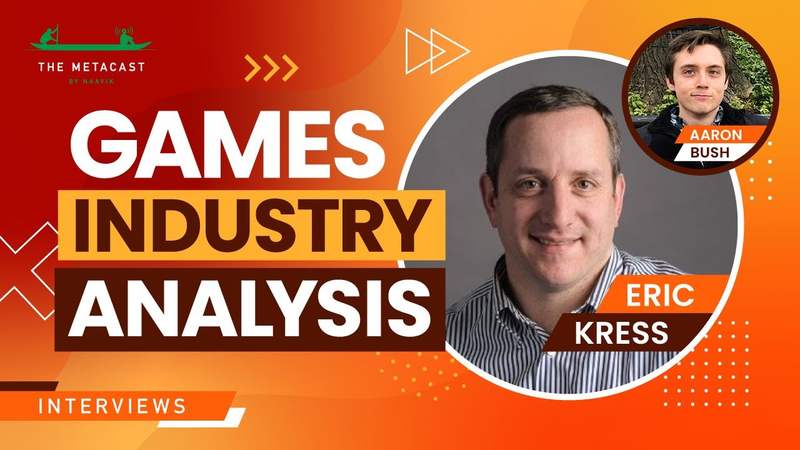
Eric Kress: Dissecting The Video Game Market - The Metacast by Naavik
The video game industry is currently navigating a period of structural transition defined by a shift away from the era of aggressive consolidation and toward a focus on organic growth.
- The gaming industry is shifting from an era of aggressive M&A consolidation toward a focus on organic growth, driven by increased regulatory scrutiny that makes mega-deals like Microsoft-Activision difficult to finalize.
- Apple’s privacy policies have fundamentally dismantled traditional mobile user acquisition models, creating structural headwinds that persist beyond current macroeconomic conditions.
- Rapid, decentralized expansion strategies have proven risky, as evidenced by Embracer Group’s struggles with talent attrition and stagnant growth, and Take-Two’s acquisition of Zynga, which underestimated post-privacy market complexities.

News Mash-Up: Week 25
This summary provides an overview of key developments in the global video game industry for the week of June 20, 2022.
- Fall Guys reached 20 million players within 48 hours of transitioning to a free-to-play model across PC, Xbox, PlayStation, and Switch platforms.
- Sony has officially withdrawn from Gamescom 2022, joining other major publishers like Nintendo, Activision, and Take-Two in skipping the physical event.
- Microsoft is developing 'Direct Capture' technology for Xbox Cloud Gaming, which has already reduced streaming latency by 72ms with the goal of enabling 4K resolution.
Activision Blizzard Shareholders Vote for Annual Misconduct Report
Activision Blizzard has faced significant scrutiny regarding its corporate governance and business practices, highlighted by two distinct developments.
- In June 2022, 67% of Activision Blizzard shareholders voted to approve a non-binding proposal requiring the company to publish annual reports on workplace misconduct, including sexual harassment, discrimination, and settlement costs.
- The Activision Blizzard board formally opposed the 2022 transparency proposal, arguing that the required reporting would divert resources away from direct employee engagement efforts.
- In early 2026, the Italian antitrust regulator (AGCM) launched an investigation into Activision Blizzard’s mobile titles, specifically Diablo Immortal and Call of Duty Mobile, regarding potential consumer protection law violations.
Its games in the library
 Halo: Combat EvolvedBungie · 200112
 Call of DutyInfinity Ward · 2003560
 Call of Duty: Modern Warfare 3Sledgehammer Games · 20117
 Halo 3Bungie · 20074
- Call of Duty: Black Ops 625
- Call of Duty: Black Ops 714
- Halo: Campaign Evolved3
 Grand Theft Auto VIRockstar North · 2026173
 Call of Duty: Modern Warfare 2Infinity Ward · 20099