Activision
CompanyUnited States
Documents about Activision
What If? Game Company M&A Scenarios | Pixels & Profits #5
The current landscape of game industry mergers and acquisitions is defined by a cautious evaluation of high-profile targets and the lingering influence of regulatory scrutiny following the Microsoft-Activision deal.
- Large-cap technology firms remain the primary viable suitors for major publishers, as media conglomerates have proven unable to effectively manage the complexities of game development.
- Take-Two Interactive is considered a highly attractive, cash-generative acquisition target due to its high-value intellectual property and the anticipated commercial impact of the next Grand Theft Auto release.
- Ubisoft’s potential for acquisition is severely hampered by bureaucratic inefficiencies, poor revenue-per-employee metrics, and a restrictive ownership structure involving the Guillemot family and Tencent.
Microsoft Wins Quick Antitrust Battle
In July 2023, a federal judge in San Francisco ruled in favor of Microsoft, denying the U.S.
- In July 2023, a federal judge denied the FTC’s request for a preliminary injunction to block Microsoft’s $69 billion acquisition of Activision Blizzard.
- The court found no evidence that Microsoft intended to make the Call of Duty franchise exclusive to Xbox, citing the company's ten-year commitment to keep the title on PlayStation.
- The ruling was supported by an evidentiary record of nearly three million documents that contained no internal communications contradicting Microsoft’s public commitment to multi-platform availability.
Denied: FTC Loses Bid for Preliminary Injunction Against Microsoft’s Acquisition of Activision Blizzard
A federal judge has denied the Federal Trade Commission’s request for a preliminary injunction to block Microsoft’s proposed $69 billion acquisition of Activision Blizzard.
- A federal judge denied the Federal Trade Commission’s request for a preliminary injunction to block Microsoft’s $69 billion acquisition of Activision Blizzard.
- The court ruled that the FTC failed to demonstrate that the merger would likely lead to a substantial lessening of competition, noting that evidence suggested the deal would increase consumer access to content.
- While the ruling removes a major U.S. legal barrier, Microsoft must still resolve regulatory concerns in the United Kingdom, Canada, New Zealand, and Australia.

Inside the Xbox Wars
The legal proceedings between the Federal Trade Commission and Microsoft represent a pivotal moment in the gaming industry, centering on the proposed $69 billion acquisition of Activision Blizzard.
- The $69 billion acquisition of Activision Blizzard by Microsoft became the subject of antitrust litigation initiated by the Federal Trade Commission to assess potential anticompetitive impacts.
- A central concern of the proceedings is whether Microsoft would restrict access to major franchises like Call of Duty to favor the Xbox platform over competitors such as Sony’s PlayStation.
- The litigation serves as a critical regulatory test for large-scale technology mergers and could establish a legal precedent for how future industry acquisitions are evaluated.
Niantic Layoffs / Square Enix’s Future / FTC Lawsuit Revelations
The global gaming industry is currently navigating a period of intense structural realignment, characterized by aggressive consolidation, technological pivots, and significant regulatory scrutiny.
- The FTC’s challenge to Microsoft’s acquisition of Activision Blizzard threatens the long-term viability of the Game Pass strategy, which depends on consistent IP acquisition to compete with Sony and Nintendo.
- Niantic has implemented a 25% workforce reduction and closed its Los Angeles office, signaling a cooling of market expectations for mainstream consumer augmented reality adoption.
- Square Enix is facing declining profitability and long production cycles, leading to pressure to refocus on core franchises like Final Fantasy and divest from speculative blockchain investments.

News Mash-Up - Week #26
The weekly roundup focuses on recent regulatory, corporate, and product developments within the gaming sector.
- The Federal Trade Commission has temporarily blocked Microsoft’s acquisition of Activision Blizzard due to concerns regarding reduced competition in the console market.
- Microsoft disclosed plans to launch its tenth-generation console in 2028 and highlighted the acquisition as a strategic move to gain a foothold in the mobile gaming sector.
- Activision Blizzard currently operates under a negotiated 80/20 commission split for game sales.
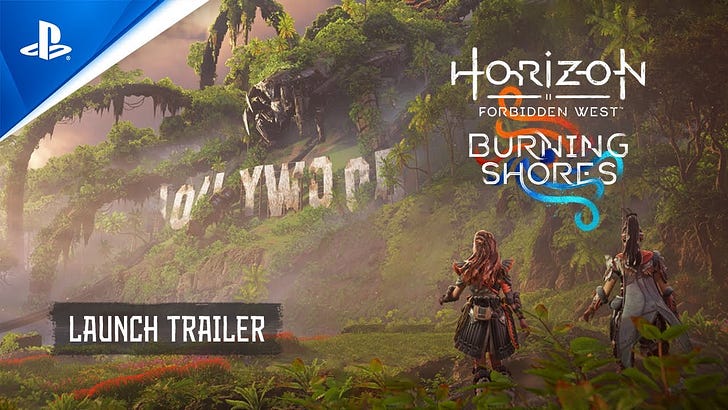
PlayStation's Top First-Party Games Now Cost >$200 Million to Make
Internal documents from the legal proceedings between the Federal Trade Commission and Microsoft have revealed significant financial data regarding Sony Interactive Entertainment’s first-party development costs and the commercial impact of the Call of Duty franchise on the PlayStation platform.
- Sony’s top-tier first-party titles now frequently exceed $200 million in development costs, with 'Horizon Forbidden West' costing $212 million and 'The Last of Us Part II' costing $220 million.
- The 'Call of Duty' franchise is a critical revenue pillar for PlayStation, generating $1.5 billion in worldwide consumer spending on the platform in 2021 alone.
- Over 43 million unique U.S. PlayStation users have played 'Call of Duty' since 2019, accounting for two-thirds of the platform's domestic user base.
What Are the Most Important Games on PlayStation
Analysis of a January 2023 YouGov survey commissioned by Microsoft provides insight into player behavior and brand loyalty within the European console market.
- Sony maintains a significant competitive advantage in brand loyalty, with 74% of PlayStation owners intending to stay with the brand for their next purchase compared to only 44% of Xbox owners.
- FIFA is the most influential title for console retention in Europe, with 6.4% of players stating they would switch platforms if the game were unavailable.
- Call of Duty and Fortnite are secondary drivers of platform loyalty, each influencing 3.1% of players to switch consoles if the titles were removed.
2023 Half-year Review
The gaming industry in the first half of 2023 is defined by a strategic pivot toward operational austerity and the dominance of established franchises.
- The gaming industry is shifting toward operational austerity and budget discipline, moving away from the rapid, unsustainable growth models of previous years.
- Market demand is currently dominated by established franchises, with players favoring high-quality iterations of known intellectual properties like Street Fighter 6, The Legend of Zelda: Tears of the Kingdom, and Call of Duty: Modern Warfare 2 over experimental titles.
- Artificial intelligence is currently utilized only for incremental production efficiency rather than transformative gameplay innovation, reflecting a broader industry skepticism toward AI hype.

Nadella's Endgame: Spending $1.3 Million to Obtain a $69 Billion Asset
The Federal Trade Commission’s legal challenge against Microsoft’s $69 billion acquisition of Activision Blizzard faces significant hurdles due to a failure to account for the modern gaming landscape.
- The FTC’s challenge to Microsoft’s $69 billion acquisition of Activision Blizzard is hindered by a narrow market definition that overlooks the mobile sector, where the acquisition of King Digital would increase Microsoft’s market share from 0.3 percent to 3.8 percent.
- Regulatory arguments regarding the exclusivity of franchises like Call of Duty are challenged by evidence from Nintendo and Steam, which demonstrate that hardware and software ecosystems can remain competitive without such titles.
- Modern gaming’s shift toward free-to-play, live-service models creates long-term social environments that render traditional antitrust frameworks, designed for one-time consumption media like film, largely inapplicable.
Tencent Becomes Top Mobile Publisher by Consumer Spend Globally
The mobile market analytics firm data.ai has released its annual Top Publisher Awards, identifying the leading global mobile publishers based on consumer spending throughout 2022.
- Tencent maintained its position as the top global mobile publisher by consumer spend for the sixth consecutive year in 2022, driven by titles like Honor of Kings and mobile versions of PUBG and Call of Duty.
- ByteDance rose to the second position in global mobile publisher rankings, reflecting significant growth in consumer spending.
- Industry consolidation is actively reshaping the market, highlighted by Take-Two Interactive’s debut at number 15 following its acquisition of Zynga.
Sony’s Confidential PlayStation Secrets Just Spilled Because of a Sharpie
The inadvertent public disclosure of sensitive Sony Interactive Entertainment business data during the Federal Trade Commission’s legal challenge against Microsoft’s acquisition of Activision Blizzard has provided unprecedented insight into the financial mechanics of the modern gaming industry.
- Sony's confidential documents, unredacted due to a scanning error, revealed that "The Last of Us: Part II" and "Horizon Forbidden West" each cost over $200 million to develop.
- In 2021, approximately 1 million PlayStation users exclusively played "Call of Duty," while over 6 million spent more than 70% of their gaming time on the franchise.
- "Call of Duty" players spent an average of 116 hours per year on the game in 2021, with those dedicating over 70% of their time to it averaging 296 hours.
Its games in the library
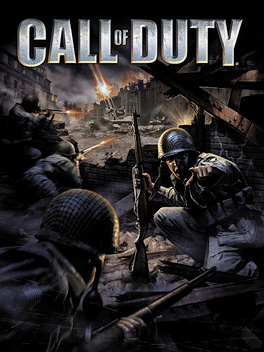 Call of DutyInfinity Ward · 2003567
 Halo: Combat EvolvedBungie · 200120
- Call of Duty: Modern Warfare 413
- Overwatch160
 Call of Duty: Modern Warfare 3Sledgehammer Games · 20117
 Call of Duty: Black OpsTreyarch · 201052
 Call of Duty: Black Ops IITreyarch · 20124
 Call of Duty: Modern Warfare 2Infinity Ward · 20099
 Halo 3Bungie · 20074
- Call of Duty: Black Ops 625
- Call of Duty: Black Ops 716
- Halo: Campaign Evolved8