1 free read left. Create a free account for unlimited reading + AI research.
Create free account
What If? Game Company M&A Scenarios | Pixels & Profits #5
Key insights
7 takeaways- 01Unity faces significant acquisition hurdles due to high dilution from stock-based compensation and a complex business model that complicates valuation for potential buyers like Adobe or Autodesk.
- 02The industry is shifting away from indiscriminate consolidation toward a model prioritizing standalone growth, operational efficiency, and the integration of engine technology into broader enterprise applications.
- 03Epic Games is increasingly positioned as a future IPO candidate rather than an acquisition target, as it leverages its Unreal Engine to support its internal publishing ecosystem.
- 04Ubisoft’s potential for acquisition is severely hampered by bureaucratic inefficiencies, poor revenue-per-employee metrics, and a restrictive ownership structure involving the Guillemot family and Tencent.
- 05Take-Two Interactive is considered a highly attractive, cash-generative acquisition target due to its high-value intellectual property and the anticipated commercial impact of the next Grand Theft Auto release.
- 06Regulatory scrutiny following the Microsoft-Activision deal has created a cautious environment, leaving the industry waiting for clear signals regarding the feasibility of further consolidation among major players like Electronic Arts.
- 07Large-cap technology firms remain the primary viable suitors for major publishers, as media conglomerates have proven unable to effectively manage the complexities of game development.
Ask AI about this video
Transcript
We're going to dive into some M&A speculation. We're saving the best for last. This is always fun to do. Uh before we get into it, I'm just going to highlight some dorky nerdy financial terms that Brian and I know, but many of you may not because we're going to use them and we want to just highlight what they are before we use them. Today's episode is sponsored by data.ai. To access estimates, rankings, downloads, revenue, usage, or engagement for millions of apps on the App Store and Google Play, sign up for data.ai. The first is what a fully diluted market cap is. So, market cap is the number of shares outstanding times the share price, the valuation of the company in the public market. But, it doesn't always show you the full picture. The reason is, particularly for these younger stage companies that are still showing losses, they don't have to show all the dilutive securities. Uh think of convertible bonds, the future impact of stock-based compensation, things like that that eventually become equity securities and eventually become the share count. Those are removed until
you're making a profit. And even if you are making a profit, they don't always show up depending on weird accounting rules that we don't have to get into. The point being though, you can go into the filings of these companies and see how many shares are excluded from the share count um based on these future dilutive things like convertible bonds, like stock-based compensation, stock options, RSUs, things like that. So, we're going to use that term fully diluted market cap and I'm going to show you why in a second. I mentioned stock-based compensation. This is something across tech that's that's kind of getting out of control at a lot of companies where they're being really aggressive with equity compensation, whether it's RSUs, options, employee stock purchase plans, whatever form it takes um to get people in the door and on the cash flow statement, it looks good cuz you're not spending the cash to pay people, but you're diluting your equity holders and you need to to for that when you're analyzing the company. So, we like to look at the impact of stock-based compensation and this ties
into what I was just saying with free cash flow. When you look at the cash flow statement, most companies report what's called an indirect cash flow statement where they take the GAAP net income and they kind of back stuff out to get to what operating cash flow is and then free cash flow takes CapEx out of that. One of the add-backs to net income to get to operating cash flow is stock-based compensation cuz it's not a cash expense, which is factually correct, but you're not accounting for the dilutive impact of doing that. And so, a lot of analysts will look at free cash flow minus buybacks or minus the requisite amount of buybacks needed to cover that stock-based compensation. Basically, you need to ding the company for diluting you to pay its people, right? So, those are kind of the dorky finance terms that that I wanted to cover before getting in. So, now let's go to our first potential M&A target. Unity. We talked about Unity earlier in in this series a couple times. They have a market cap of about 16 billion. And I pulled these numbers 2 days ago cuz I was studying, so you know, stock could be up 20% in 2 days and I missed it. But, the fully
diluted market cap is about 20 billion on top of that. So, it's 20% higher. So, we're talking really big dilution if someone were to come and buy this company because the what you own is actually dwar- not dwarf, but there's a large outstanding amount of convertible bonds, stock-based compensation, etc. that would automatically convert to common equity in the case of an acquisition and that money that's get paid to the equity holders will be shared with them. So, you have to consider that when you're thinking about the fully diluted market cap or if you're an acquirer, that's what you have to pay. It's not the 16 billion, it's the 20 billion. In terms of just some some numbers, uh as Brian likes to call them funnies, estimated revenue for Unity this year is $2.1 billion, estimated adjusted EBIT operating profit expected to be roughly break-even positive slightly positive, but stock-based compensation is 30% of revenue for this company, which is just insane. That's like that's an insane number and off uh I have some comps for for larger companies. You know, if we look at a company like EA, EA's stock-based compensation,
I'm just pulling it up, is is is like single digits percent. I think Take-Two was also single digits percent. So, like just to put this in perspective versus these more established companies, this is orders of magnitude larger in terms of the annual dilution being paid out. Um and and and if we think about the the cash flow statement, even though they're on pace to break even on free cash flow at some point in the near future, most of that gets washed out by stock-based compensation. So, um with that, um do we think Unity would be a good acquisition target? And if so, who makes sense? Cool. Um so, just I find this one perplexing sometimes because like I I I go between like liking it and hating it, I guess, but you know, I view Unity as deeply strategic on the engine side, just breast tax. Uh and I also think it's under monetized. Um I think they need more heft and traction in enterprise, especially with like the industrial and consumer goods use cases. Uh and I think
a lot of companies make sense in that regard, um like Adobe or Autodesk, and I can break into those companies in a little bit. Um The issue I have, you know, with Unity is like they floated this $1 billion revenue run rate target on EBITDA exiting 2024, and most of that EBIT comes from a business that's not deeply strategic unless uh you know, their software business shifts to ratable or materially inflex subs. Um and they just they don't have a lot of time, and so in that regard, that almost feels like an asking price for me, which is why this is a relevant topic to talk about for M&A discussions. Um IronSource was a necessary deal for them to push the profitability narrative, but the you know, the other side of that coin is it might be the hindrance in finding a strategic buyer. So, for some context here, Unity's last quarter was about $500,000 of revenue, a $250 million loss, and $32 million in adjusted EBITDA. So, they've made some significant head count cuts in the meantime, and they're still passing through price increases. So, we may see
some progress next quarter, and I think that's going to be a big thing for investors. We'll talk about it in our next I don't know, next next episode of the season after we do earnings previews. But, you know, if revenue stays flat, that means they need to get to about 12% EBIT margins. If they can grow the company 35% year-on-year, which may or may not be achievable, they still need to do, you know, 9 or 10% margins. And again, for context, we're sitting at like -50, depending on how you want to do your math that Matt talked talked about. So, even on a generous view of adjusted EBITDA, they have six quarters or seven quarters to 8x adjusted EBITDA. I also think that most to all publishers don't make sense because it's kind of competitive. The largest publishers in the market traditionally use their own engines. There's a few cases where that's not the case. Facebook is a bit of a weird setup as, you know, Apple and Meta are now foes for the mixed reality ecosystem, and
Unity aligned with Apple at WWDC. You know, I think again, if we if we were to go and ask Tim Cook if he'd like to own Unity, I think he'd probably say, "Yeah, sure. Like, this makes a lot of sense for my business." But, like, that's that's a extreme F no for like any sort of antitrust. I'll let I'm going to let Joe talk for a little bit, then I'll just break into like Adobe and Autodesk and why I think those might make sense at a certain price and sans Iron Source. Yeah, so the way that I think about this is like I don't think a acquisition makes sense for any company, and I can get into that, but like part of it is because they're two different businesses, right? And I'd love to get your take in terms of, you know, does the engine business and the ad business necessarily belong together or not? Like, what what is the actual synergy between those two two businesses being together? And I think part of the issue is that like the way that you would operate an ad company, in in my in my opinion, would probably be different from how you
would operate a technology-driven, more technically oriented engine company, right? And so, I think, you know, we've talked about this before, like what I'm seeing, and maybe they fixed it with these new hires that you mentioned, Matthew. I I I hope so. As a Unity customer, I would love to see some change, but anecdotally, like almost everybody I know is jumping over to Unreal. And it's it's it's like very discouraging, you know, as as an existing customer. And just the the lack of execution or misexecution and things like, you know, um it's almost a joke now how like how many attempts Unity has made on trying to fix net code. I think they're on the third or fourth attempt now, and it's just like, oh, it's it's painful to to watch, especially as a customer and somebody who who's who's uh kind of career and um companies uh you know, to to some degree our our our fortune sits with uh using the the engine, but
I would say that the trouble here, and and the way I think about the problem with an acquisition, is the two parts of the business, and then having the right culture, leadership, and management orientation for the engine business, right? Like, you want to be very technically oriented. You also kind of want to run the company um in this age of efficiency rather than excess in a different way. I think and, you know, I I I hope the Unity guys don't hate me, but it is kind of like word on the street is Unity is kind of being run kind of like how Twitter was being run pre-Elon. So, I think that more than an acquisition, probably more of like a like a PE take private, get like a mini gaming version of Elon, um that you know, people will like more. Um to to go in and just kind of restructure, reset the culture and stuff, which is actually an incredibly, incredibly difficult task to do,
to change the culture and orientation of a company, to get them more technically and execution development oriented. But to me, that's that's the only way I see, at least the engine part of the business moving forward and being able to gain ground again against Unreal. Yeah, I I fully agree I Private equity on paper makes sense, but not at the valuations where Unity trades. They won't pay that, right? That's the problem. But like I agree in theory, private equity buys this thing, carves off the AdMon business from the engine business. They're two standalone entities at this point. Then, Brian, the names you mentioned make a lot of sense to buy this, right? Cuz any design software company could value the engine business, Adobe, Autodesk, etc. You could even make the case that Adobe could buy the whole thing, cuz they do have a marketing advertising business, and they could you could see Adobe running an AdMon business and not being terrible at it. So, like you you could make that case, but I do think that
the AdMon business kind of grew because Unity realized they could never monetize the engine business how they want to, right? Because they charge relatively cheaply per seat, like relative to what you get out of it. And you're not going to make that You don't have the profit-sharing model that Unreal has. And so, they were never going to make enough money to ever be a public company just by selling subscriptions to game developers. So, they had to go with this route, or they had to go a different route, unless they change their pricing model. But that's the rock and a hard place that they're under in terms of that. And so, if a larger entity owned this, uh could fully capitalize on the technology they build, improve the technology that needs to be improved, and scale it beyond gaming into digital twins and metaverse. And now I'm talking my book, but um you know, that that could get interesting for a lot of these design software companies or even like a Salesforce potentially. So just a little bit of a wrapper here for those two names that I mentioned. Maybe Matt wants to cover uh Salesforce, but Autodesk uh guided next year's
revenue to 5.4 billion, up high single digits, and it's 98% recurring revenues or subscriptions. Uh 7.4 EPS at the high end, 1.2 billion in free cash flow, about a $44 billion market cap. It trades at roughly eight times revenues forward, 28 times earnings, 37 times cash flow. So relatively expensive. Um they have about 2 billion in cash. So there's obviously some things that would need to get pulled, levers, whatever else. They have three main business units. Uh AEC, which stands for architecture, engineering, and construction. That's 45% of revenues. Uh design and manufacturing, which together is about 58% of revenues. And then they have this media and entertainment business that's only 7% of revenues or 350 million. So you can see that, you know, a business like Unity, if that's a, you know, call it 900 to a a billion uh standalone without IronSource, uh would materially inflect that business. So they have a capital allocation strategy right now that is
organic, M&A, and shareholder returns. And for M&A, they look for adjacent personas and verticals and end-to-end solutions, which, you know, you would classify Unity as an end-to-end solution. Um they excel at enterprise sales, particularly in design, construction, and industrial. Uh and they also excel in subscription transitions. That's been their major part of their growth story. This was just a small hedge fund kind of cult stock back when I was on the desk, and now it's turned into this uh kind of almost $50 behemoth. So, that's kind of one to keep an eye on, not just for Unity, but just in general. Um Adobe uh is much bigger. So, full year 23 revenue guide of 19.3 billion at the midpoint, non-GAAP EPS of 1570. Uh I think GAAP EPS something more like 10 to 11 bucks. 220 billion market cap trades at 11 times revenues and 31 times non-GAAP EPS. Uh they have cash and short terms of 6.6 billion and three main
businesses, digital media, 70% of revenues, digital experience, 25% of revenues, and then that business that Matt was talking about is called publish publishers and advertisers. It's only 2% of revenue. So, it's either one of those things where they need to maybe focus on a little bit or maybe just have it go away cuz it's really de minimis right now. Um also worth mentioning, all of this is before their $20 50/50 cash stock deal for the Figma business, one of the most loved digital design platforms of the SaaS era, and that is still very much up in the air. Antitrust. Uh what I can say is that Adobe has shown that it can push through large transformative acquisitions and reap the benefits over the long term. So, I'll leave it there. Matt, maybe you want to talk about CRM. Yeah, yeah, Salesforce the ticker CRM is a behemoth. They're going to do about $35 billion of revenue this year. That's GAAP revenue. Um you know, ARR is is is quite significant. So, um you know, this is
But they've grown by acquisitions, right? They own Tableau, they own Mulesoft, they own Slack. So, you know, they have grown inorganically over the last several years on top of the core Salesforce platform. They've backed away from M&A recently to focus on improving margins organically, but at some point Benioff's going to get the itch again. You know that, right? And and you know, maybe something like Unity makes sense, particularly if you've carved off the AdMon at that point, and he can get his hands on an engine business that he can really scale, and he can bundle it, and now sell a bundle to the gaming industry, to creatives, to digital twins across CRM, HR, uh Ucas, and now, you know, design and engine. Like, there's power in having that platform approach and adding this. Obviously, the price you pay will matter a lot, but you know, I think Salesforce could be a company that's shown that they can do these large acquisitions, they can embed it into the platform, and they can improve profitability across the board. So, um it it's one that I wouldn't count
out. Cool. So, I think that wraps up Unity. Um unless JK has anything else to add. Nope, all good. All right, cool. So, we'll move into um our next uh company, and this is a private company, but you might have heard of it. We talked about it previously, Epic Games. Um you know, only only a slightly small startup, but um so, the numbers out there are always going to be suspect given it's private, and everyone tries to use third-party data, and they really do a good job of guarding any data that gets out, even though a lot of people actually own, you know, private stock. Um so, I'm not even going to bother to to quote those numbers cuz they're all over the place. Um but we know that they have three main businesses, Unreal Engine and the associated software marketplace with that, first-party games, and then the Epic Games Store. Um Tencent owns slightly less than 40%. Now, it was 40% for a while, but it's been diluted a little bit over the last several funding rounds. Um So, you know, we can just jump right into who makes sense to buy Epic. I mean, I think you can say on paper every single company makes sense to buy Epic, right? But there are some strategic uh
strategic that make a lot of sense. There's also some reasons that a deal probably can't happen. Um number one is Tencent, right? With with Sefias and and just the focus on Chinese entities. Like, I don't think Tencent wants to draw scrutiny to itself by trying to sell a stake in in Epic because that would open up their old books to scrutiny from CFIUS and they're trying to avoid that cuz that opens up Riot, it opens up Supercell, it opens up everything. So, like I think that makes it tough from the get-go, but just curious who you think makes sense other than that kind of issue. Yeah, I think that's a good point to hone in on. I think the engine business, again, makes it hard for tough publishers that, regardless of that, would love to own Fortnite. Um and I think this is another one where maybe Epic is worth more as two separate companies in a sales scenario. Uh if I had my druthers again, I think that Epic should be a public company someday. I think that would be a great uh way to broaden out the gaming public ecosystem. So, I would say that that is my my preference for the name. Um
but uh you know, again, back to that point of of two separate companies, uh a publisher takes out the Adobe and Autodesk types that would be attracted to this business for the same reasons they would be attracted to Unity, right? Like shipping this software and bundling it, getting it over to those like those use cases that investors have been dreaming about for 5, 10 years that have been, you know, being told that they're going to be like the design CAD stuff for everything from car crashes to space launches, um which really hasn't played out in the numbers yet. Um all that said, like again, Unreal is deeply strategic and arguably better positioned uh than Unity as they have a completely different monetization model. And the engine is better positioned to to make the sorts of high-fidelity cross-platform type games that are more in tune with the market these days. Uh so, a higher top end than Unity. I would say Unity, in contrast, is much better for developers that are emulating games that are already out there. Uh and that's a hard sell for this era of gaming with UA and marketing changes and mobile being somewhat saturated. So, um
I maybe I'm just too excited for ECM to come back again, but I feel like again, the the best path for Epic is is uh just to go public. Um some minor hindrances to that is that they've scored some own goals over the last few years that have dinged fundamentals. Most notably the death fight with Apple over IAP. So, Fortnite went from being, you know, arguably the best game on mobile to being unavailable on mobile. And while that was only like, maybe, you know, less than 10% of revenues, it was a much larger percentage of DAU and MAU. And investors and acquirers for that matter, like, they care about that quite a bit. So, um the last business you talked about, Epic's Games launcher, is kind of a nothing burger for acquirers. Launchers are largely commoditized outside of Steam. And it's a extraordinarily expensive proposition to pay for exclusives and free downloads. And I think that's kind of a different era of tech, like the eyeball situation, that maybe comes back again someday, but
it's it's not going to be tomorrow. Yeah, I think for I agree with your points, Brian. I do think one thing to highlight is that we'll we'll see how this plays out, but in terms of like the Fortnite and the engine business being separated. Uh you know, with UEFN, for example, that's that's kind of tying those two things together. And um from what I understand, uh it's like the the code repos are all interspersed or um it's it's like a single code repo or something like that. So, like I think that separating those two businesses is uh becoming increasingly difficult. And and it I guess we'll we'll see the the business case for that. Uh if UEFN takes off, and hopefully that does, then, you know, hopefully they'll be able to build a Roblox-like creator business as well. Um but if if you were to separate the businesses, I you know, I I think the engine side, I you know, I I think a
company like Microsoft would make sense for that for the engine side. And on the game side, Fortnite, I mean, who who doesn't want Fortnite? I I think anybody would want Fortnite. They could make sense from you know, from EA to Savvy to whoever. So. Apple. Yeah. Who they're at in a death war with, but actually makes a lot of sense on paper. Um, to your point that like the codes are intertwined, like you're technical, I'm I'm stupid. Um, you know, Tim Sweeney has said that Fortnite's a proof of concept for Unreal Engine. Like he's he's not ashamed to say that. Like you know, Unreal Tournament was a proof of concept for the original Unreal Engine, right? Like the games they've made have been proof of concepts to to, you know, uh, evangelize the technology. I mean, it's a $5 billion revenue, uh, you know, proof of concept, but it's still proof of concept in in in that sense. So, like I don't I don't think you can untangle them is what I'm getting at. I think they're so intertwined and Tim Sweeney and he controls a lot of it still, you know, he still sees it that way. And so
I don't think that that really happens unless something drastic changes with with either the Fortnite in general or Tim Sweeney doesn't is isn't involved anymore. Yeah. I think some of the some of those own goals that I was discussing, like they will cure with time. They fortunately happened at a time when pandemic things swung around engagement, monetization so much and this will kind of be an afterthought. So, you know, call it uh, maybe first half of 2024, I still think this is just a top-notch IPO candidate, especially if they have that UEFN tailwind behind them and they're able to show some traction and developers kind of hinge onto that to create new experiences for the Fortnite audience. Right. One one other point that was made and again, this you know, just a few data points from like Epic or ex-Epic employees is that um, one narrative that that was being um, you know, kind kind of promoted was that because of Fortnite, because Epic also has game developers
that they have the engine actually serves that perspective better. And so, to some degree, the reason why they're better like some of the features they they would they claim to be better than Unity are because a lot of the things that are that that are supported in engine come from feedback from the game teams. For for whatever that's worth. I mean, it makes sense. You have internal customers who can validate or reject things before you put it out in the open. Like it it blew I mean, that was partially my job at Bloomberg as as the as the equity analyst at Bloomberg, it was like they would build stuff and be like, "Does this work for you?" Like you're like our customers. Like test this before we roll it out and tell us what's wrong with it. So, like I get that. Like that seem like on paper that makes sense to me. Yeah, and oddly, even though their engine plus game publishing plus they're making their own games, the level of like just anecdotally again, a lot of people who are using the engine do not have the level of kind of distrust as
you do with other platforms, you know, I won't mention the companies where you still trust them when you like share information about publishing or use their engine things like that. Whereas, with other companies that level of trust doesn't exist and you're viewed more competitively for for whatever reason. Let's roll on to Roblox cuz I we want to try to keep this under 90 minutes even though we said we never do 90 minutes again. Um so, Roblox $25 billion market cap again fully diluted is closer to 30 billion when you add in all that diluted stock based comp. So, it's on a percentage basis, it's it's not quite as bad as Unity, but it's still pretty bad. Um SBC is 23% of revenue. So, again, not as bad as Unity, but that's still very high. Um estimate bookings this year of $3.2 billion, 65 million DAO is nothing to sneeze at. EBITDA of around 350 million, but again, that's all covered by your stock based comp. Positive free cash flow again is all covered by your stock base comp. Um
First of all, would Dave Baszucki sell cuz he controls all the voting power? And second of all, who makes sense? I think like I'm just going to go back and tell my original line here. If it's already public, I don't think that, you know, companies that are public necessarily need an exit strategy, particularly one with the tailwinds that they have behind them. I think the most attractive thing about Roblox is that, you know, it's a way for developers to reach a broader audience without all the rigmarole of going through app stores and they still have to pay fees, of course, but it's just it's a much less complicated and convoluted market than than mobile. Um The other, you know, kind of point to that is just the audience is aging appropriately along with the title, which is one of the major pushbacks to the stock when it first came out. Um Of of the the starting line. It's like Of course, it was made for a younger generation at the time, but they've shown over time that that's progressing alongside the age of the platform. And I
just think that it's best let alone. That said, you know, I do think every single mega cap out there looks at that sort of audience. Again, like the reason why it's attractive now and says who wouldn't want to have that in their ecosystem. And that I think that would that would range from like Meta, Netflix, which also be a very tough deal for them to do. Um Google, of course. Anyone that wants to get larger gaming, Amazon. But again, I I just prefer this thing just kind of stays on its own. What do you think, JK? Yeah, I think media companies like Disney, NBC Universal, I think would love to have Roblox, but Yeah, to your point goes to Hollywood. Yeah, to to your point, I think yeah, it is what it is right now. Um But yeah, I would say like strategically I think that, um, an acquire or some kind of partnership that would help them like I I do think they have been having trouble
uh, expanding their audience base of developers and just general audience as well. So, to the degree that that can that problem can be solved then I, you know, my understanding is that, um, the last time I checked on it wasn't that recent, but I I think I remember seeing users and downloads kind of dropping, but revenue holding. Um, and I know there's been some algorithmic changes just word on the street from some Roblox devs I know where uh, the revenues that some of these devs have been making have been dropping. So, I don't I don't know if Roblox is squeezing devs to keep their their own revenue numbers up, but, um, I I, you know, I'm just pure speculation, but like I I do think that something that will help them grow uh, their audience and their developer ecosystem would would definitely be, um, better for for their longer-term prospects. And I'm I'm sure they're
probably you know, there's there's smart guys. I'm sure they're fully aware, but like, um, that would be what I would worry about when I think about Roblox. Right. Isn't there some messaging around uh, various goals for Roblox and then returning some of that as incentive to developers? Yeah, I mean, we could we could do a whole episode on Roblox economics and maybe we should. Um, maybe get like game the game fam dude come talk about it or or get Yohn from my former podcast co-host, but in general, yes, the the idea is that as margins improve as they get economies of scale, they'll increase the DevEx payout uh, proportionately with margins improving for the business. So, that's kind of the the model that they're building is that they'll get scale in other parts of the business like infrastructure and trust and safety and they'll reinvest that back into higher DevEx payouts. Um I think when I talk to a lot of the bigger Roblox developers, they're not upset with it. I think it's just like every gaming platform where attention time is consolidating um because we're in a post-COVID world
where we don't have the same engagement levels we did, and you're just seeing that dichotomy. That's That's kind of my my my sense, but again, we could spend a whole episode on Roblox economics, and maybe we should. Um let us know if you think that'd be a good episode. Yeah. Uh As it as it stands, they're taking an extra, you know, 20 points than the the Apple platforms and the Google platforms, but at the same time, those mobile publishers and developers have extraordinary costs that they don't have on Roblox. So, um on the whole, you know, I do think that the ecosystem would be much better off if that was down to like a 20 30%, but right now, that wouldn't be palatable for Roblox investors given they are still relatively earlier in their growth trajectory. I I mean, Roblox is the engine provider. They're are the cloud service provider. UA, and I'm using that in air quotes if you're not watching the video, but eventually, they are going to build UA into the platform. That is my understanding. You know, they a lot of the things that you do on top of just paying the commission to Apple as a mobile developer, Roblox is trying to build into the platform. So, it's you can't
necessarily compare, you know, the net revenue take on platform to platform. You need to compare, you know, profit dollars platform to platform. And I think the profit dollars for a Roblox developer at scale are very comparable to a scale mobile developer. Um and Yohn was saying like you could spin up a relatively basic Roblox experience game for like 120k. Yeah. Don't think you can do that on mobile. You cannot. Now, now we're going to move on to some of the larger companies. I think we're going to move a little bit quicker through them because I think the gist of this is that nothing's going to happen until we get regulatory clarity, but um EA market cap $36 billion. Um fully diluted. We're only going to add 2 million shares, so it's a rounding error in the market cap. So, as I was saying before, these larger companies have much more established and, you know, proven cost structures, and they're not as willy-nilly with their stock-based comp. So, that's good to see. They're very responsible and prudent about how they, you know, dilute shareholders. In an EA's case, they
actually buy back stock to more than offset the dilution. Um, 7.6 billion of bookings in in the year ending March '24, 2 and 1/2 billion of EBITDA. Uh, stock-based comp, 7% of bookings, and free cash flow of 1.8 billion dollars is the consensus number. So, they're profitable. They're generating cash flow well in excess of their stock-based comp, and they're buying back more stock than they're diluting you, so you're actually not being diluted. So, it's a very good story. I think, uh, like you said before, I think that the entire space is very much waiting for signals from Microsoft and Activision. Um, the rationale behind that is that could be the last time for folks that want to be involved in gaming in a meaningful way, a meaningful way that have the market cap and cash to support a transaction like that, would need to move quick on players like EA, and I believe we'll probably also, um, talk about Take-Two, which I believe is also a gem. Um, the pushback on EA is sometimes that they, you know, don't own the IP behind a lot of their biggest
titles. There's also like this Star Wars juxtaposition with Ubisoft, which I think we're also going to talk about. Um, but by and large, like EA is a very successful company. It's very cash generative. It has a a well-entrenched management team that can run the business independently. So, I think, you know, if if the if the the shoe were to drop, uh, the folks that are deemed to be large-cap, uh, competitors to Microsoft, and that would be the short list would be like Google, Amazon, uh, maybe even like a Netflix, but that would be a going to be a stretch for them, um, would be the most obvious, uh, and potentially quick acquisition, uh, suitors. There's also like, you know, the various throws around media companies like NBC or Comcast. I sincerely hope that doesn't happen. I think we've seen a long storied history of how media companies tend to run video game companies and it hasn't always spelled out entirely well. There would need to be a lot of thought put into structure and how to leverage IP from
these various companies in a development ecosystem. That, you know, again, I just hope doesn't happen. I also just got to say like if that does happen, like the gaming ecosystem will be much different without any publicly traded companies. I think, you know, there is a lot of bad things about being a public company. It's it's a lot of stress and a lot of infrastructure needs to be put in place to support that, but it also drives a lot of discipline and proficiency in how folks deliver games on time and things like that. And if that were to go away or push this into a scenario where we're just providing games again as like a subscription service, I think that would be broadly in the designs for all those companies and I just hope it wouldn't go that path. But, yeah, large cap tech for sure would be buyers and then a leg down, potentially a big leg down, would be the media companies, in my opinion. Yeah, in terms of your comments on the media companies, Brian, I mean, I there were rumors, right? Pretty deep rumors about NBC and EA. I don't know where that
went, but surely very loose rumors that like Brian Roberts since they were considering carving off NBC and then merging that with EA and Andrew Wilson would run the whole thing. Like Yeah, it's not I don't think Andrew Wilson wants to run a media company, first of all. I mean, Andrew Wilson, come on, let's talk about it, but like you know, um like, you know, that's just like that that that seemed far-fetched and it came from Puck who I'd never heard of, so Okay. I don't know. It got play on Bloomberg, so I guess it had some credibility, but this comes and goes a lot. I I'm with Brian like on paper it makes sense if you're one of these companies like hey we're going direct to consumer we're going interactive. Let's buy the best of breed but for for the sake of the gaming industry I think it's bad. Yeah so and as a former NBC Universal exec and to your running game publishing and NBC I would say like I think that like if
if a media company acquires EA I think EA is kind of okay because I think the problem is trying to organically build a gaming company as a media like a media company would run. You know like like a you know like like the those guys would operate that company and so I do think it it takes a little bit of differentiated experience and expertise and kind of know-how and things of that nature and so if if Andrew Wilson were running that part even if it was owned by a media company I I think it would be fine. And you know I I I could kind of see a scenario in which a media like say Disney were to acquire EA and then you know they're already working on a bunch of you know Really big brain idea and then we can move on is like Disney's got ESPN Plus Disney Plus all the direct to consumer what if FIFA and Madden lived inside of ESPN Plus and it was one subscription. Yeah. Right like Yeah. In theory makes
sense right and and I'm not going to say in execution it would work I'm just saying on paper that could make sense. So I think a lot of these transactions made a lot more sense in the prior era where you know the industry was driven by boxes and I think you could argue that you know games like FIFA and Madden really are just live services games that you have to you know kind of pay up every year and that that works for EA's business model Um, and it it might fit better in a subscription way. And I think that, you know, even EA has taken the the the throws at doing that with their own, you know, subscription platform and things like that. So, um, certainly it's not out of the realm of possibility. And there's certainly is really good sports line with Disney or anybody that's involved in sports cuz EA does have that uh stranglehold on that part of the industry, at least. I'll just run the numbers on Take-Two briefly. I think the analysis is the same cuz I think we all agree that if Activision goes through with Microsoft, someone is going to try to scoop up EA and someone's going to try to scoop up Take-Two. And it's the same buyer list for the most part. Um, but Take-Two's
market cap, 25 billion fully diluted adds about a billion, 26. Um, if you're looking at the numbers, the share count's still a little bit wonky from the Zynga acquisition. You dig through the filings, you get the real number. Um, 5.6 billion of bookings but going to 8 billion next year when they expected to release GTA 6. They haven't formally said that, but you don't get to 8 billion of bookings without it. Um, they're profitable. Stock-based comp is reasonable on paper, but they do have a profit-sharing agreement with Rockstar, which does hurt their margins relative to their peers. So, uh it's it's not dilutive equity, but there is a profit-sharing agreement in place. So, it's something to consider. And if someone were potentially to try to acquire Take-Two, it's something to consider. And Strauss owns a lot of stock. Yeah, I think like just reiterating you said, same buyer list. I think that of all of the studios or publishers out there that are to acquire, I think, you know, it's hard-pressed to say that Take-Two isn't the gem of the bunch given especially right now with the supposition that GTA 6 is coming next year, which should be another five to eight-year platform and,
you know, doing high single-digit billions of dollars for the first few years. Um, not much else to say about that. I guess the the it's it is a bit of musical chairs, too, uh with Strauss. I mean, he's a very strong leader, uh very good good public market operator. And I think in an acquisition scenario, you know, that would need to align with his views in the market. For what it's worth, he actually does have experience running media businesses. So, it's a bit it's a bit more of like maybe a promotion and an acquisition or so to speak. But, what a time for someone to swoop in and and get Take-Two if that was the case. And I think just going back to like the Unity thing where acquisitions might detract from value, I think you could make an argument for that with Zynga a year ago, but just with the new cycle coming in, that really doesn't matter. That $12 billion they paid will be lapsed over the next couple years with microtransactions on guns and things like that. So,
off to the races. Yeah, when I think about Take-Two, I still like my my understanding is like the the operating companies operate so independently. I'm still scratching my head about, you know, just just taking it down to the fundamentals, like just basic, like if you think about, you know, why why are companies or these different businesses together? Does it make sense? What's the synergy? What, you know, I I'm still trying to wrap my head around that. So, like even that to then get acquired, then I'm still trying to understand, you know, how an acquisition would make sense or whether Take-Two shouldn't actually be multiple separate companies. But, but yeah, I am I'm with you. Like, I don't I don't think IP sharing will work between Take-Two and Zynga because it never works. It never worked for Activision and King even though that was one of the rationales for the deal, and it won't work here. But, Zynga will generate some level of cash flow, and that's valuable
depending on what you paid for it. But, even 2K and Rockstar are very different businesses. 2K is a is mostly an annualized sports business, right? 2K is the basketball game, and they have WWE, don't forget it, and golf, and I'll trigger Eric Crest by talking about golf video games, but it's also there now, right? And then some other games that they publish under 2K label, sure, but then, you know, Rockstar is Rockstar. It's big hits that come out once in a while, and now they have the live services wrapper on it. So, those two themselves are very different businesses. They also have a private division, which is a reasonably successful publisher of smaller titles and like niche hits that that can make a dent and be attractive to an acquirer. It's It's a good sales motion to have to be in touch with the the smaller gaming companies in the in the community, too, that could produce the next big hit. Yeah. Well, I think, Brian, you made a point once before that um some of these companies together help even out, I guess, predictability or cash flows or things like that. So,
maybe that's the advantage, but otherwise Oh, no no no def- definitely is. Like, you know, cuz sports is relatively recurrent. That's the term that Strauss likes to use, and it's a good It's a good term for it because it's not quite recurring, but hey, you're probably going to sell 10 million units of of 2K basketball every year. You sell a couple million of WWE and pretty much bank on that. MTX goes up every year. People spend more and more every year that they're in it. So, like, it is kind of an annuity in that sense. So, that's that's good. Um prior to GTA V and GTA Online, Rockstar was these big hits and you'd get big floods and that was It was blockbusters, but now it's not. So, it really is a different model for them. Yeah. And Zynga did add a bit of smoothing to quarterly bookings and you know, more even cash flows or EBITDA generation. So, I think you know, that was just a different time in gaming, right? Like uh if you weren't acquiring something, I feel like, you know, you either had to have a long-term view on not liking acquisitions for your business or, you know, you just weren't doing your job
right. So, um it was a a point in time. Let's move on to our last company, even though we're over our 90 minutes. Um Ubisoft. Um not in good shape. You know, I think you could you know, we've talked about it in our last earnings recap. You can't really paint a pretty picture what's going on there except to say they need to execute. Um it's a trickier acquisition for anyone. Number one because it's French. And one of the big rationale to get Ubisoft to work as an acquisition would be layoffs and lots of them because the revenue per employee, profit per employee, whatever metric you look at is horrible when you stack it up against every single company in the industry and it's not even close. So um either revenue needs to scale several X or they need to cut several X to make the model work as it stands. They would argue revenue will scale and they'll and they'll make sense of it. Um I don't buy it cuz I haven't it hasn't
worked for since what? I've been covering the stock for almost a decade and it just hasn't worked. So I'm not going to buy it. Um you have Tencent optionality cuz Tencent owns a stake. Um but again, that ties into geopolitics. The Guillemots as a family still have a lot of voting power. So that's a thing. You got to get them on board to do a deal and at the press share prices, I don't think that's happening. Market cap's only 3 and 1/2 billion US dollars, closer to 4 billion fully diluted. Um they're looking at 2.3 billion of bookings this year. EBITDA of just under a billion, operating income of 300 million. Um free cash flow will still roughly break even. Um you know, Brian, you want to jump in on Ubisoft? Yes. So I guess just trying from what you said on fundamentals, I'm just guessing here, but roughly two times bookings and four times EBIT. So it largely trades in public markets like an undifferentiated mobile gaming business. Um and I can certainly see the argument that the stock here could be uh value trap, but you know, there's significant spread between Ubisoft's valuation and
publicly traded names like EA and Take-Two. And for sure they they should not be anywhere near the same, uh for execution reasons, um but there's probably some middle ground. Uh they just have too much quality IP that hasn't matured into the microtransaction era extraordinarily well. I mean, they have they have R6, they have The Division, they have Far Cry, they have uh Assassin's Creed, which is our tentpole franchise. Um they have a Avatar game launching soon. They have a partnership on Star Wars for a new uh like a large-scale game. So, I think it's less about needing to call ahead count and certainly that would be a big issue with a transaction, but I think it's more about needing new leadership, uh strategy, and direction, and fully utilizing this IP and how that can mature into the new era that we're in now, right? With like most of your revenue coming from um DLC or microtransactions and things like that. They've tried, right? Like every every single Assassin's Creed game in the past 3 or 4 years has had some way where you can add cosmetics to your your kit or you can, you know, pay for some progression kind of things, but it's just not landing right. And sometimes you're not going to get that without being enveloped in a larger company. Um and I also I just I just stay away from mobile. Don't buy anything else. And, you know, I think that they could find a suitor uh as to who that would be, you know, I think at a point in time Activision would have made sense. I think Take-Two could have made some sense. Um I think that uh
maybe even like EA could make some sense. It's it's hard They they need an acquirer though that has that publishing and developing discipline and probably not that megacap big tech kind of buyer, because the big cap needs to lean on the acquired company for discipline and publishing expertise in building games. Um not the other way around. So, I think it'd be a slightly different set of buyers than the more well-run established company. So, I think it's a slightly different set of buyers than the more well-run established company. So, I think it's a slightly different set of buyers than the more well-run established company. So, I think it's a slightly different set of buyers than the more well-run established company. So, I think it's a slightly different set of buyers than the more well-run established company. So, I think it's a slightly different set of buyers than the more well-run established company. So, I think it's a slightly different set of buyers than the more well-run established company. So, I think it's a slightly different set of buyers than the more well-run established company. So, I think it's a slightly different set of buyers than the more well-run established company. So, I think it's a slightly different set of buyers than the more well-run established company. So, I think it's a slightly different set of buyers than the more well-run established company. So, I think it's a slightly different set of buyers than the more well-run established company. So, I think it's a slightly different set of buyers than the more well-run established company. So, I think it's a slightly different set of buyers than the more well-run established company. So, I think it's a slightly different set of buyers than the more well-run established company. So, I think it's a slightly different set of buyers than the more well-run established company. So, I think it's a slightly different set of buyers than the more well-run established company. So, I think it's a slightly different set of buyers than the more well-run established company. So, I think it's a slightly different set of buyers than the more well-run established company. So, I think it's a slightly different set of buyers than the more well-run established company. So, I think it's a slightly different set of buyers than the more well-run
established company. So, I think it's a slightly different set of buyers than the more well-run established company. So, I think it's a slightly different set of buyers than the more well-run established company. So, I think established companies. That'll be my take. Yeah, I'm with you. It's like when you look at a company like Ubisoft or when you look at any other company where it's a units game, you're building your model units times revenue per unit gets you revenue and your forecast you're doing scenarios on on units. With Ubisoft, you're freaking doing scenarios on if the game's going to be broken or not when it launches. Like you honestly can't trust that every any game they're launching is going to be functioning when they launch it at this point. And then like and until they execute and not just one game on three, four, five games in a row, they are not going to have the trust of the markets and that's the discount as Brian was mentioning. It's always traded at a discount to EA and Take-Two and definitely to Activision, but the discount has significantly widened recently. Yeah, we're trying. And that's reflecting the fact that they don't have the trust of the market and it's not just one game is not going to turn that around. They're going to need a string of three, four, five releases to show that they actually have the ability, the
know-how technically to release games on time and at the quality that's necessary to justify the investment in them. Yeah, I just think for me Ubisoft is in so much trouble. Like I I think someone acquiring the company would kind of be a disservice because to your point, Brian, they need discipline. They need to change their culture. You know, I I wrote a post about Ubisoft criticizing just how inefficient the company is and I I know a bunch of Ubisoft guys hate me. Sorry sorry guys. It's meant to be tough love not not like hatred for the company. I mean, there's been some amazing products coming out of Ubisoft, but like this is a company that really does represent you know, epitomizes the age of excess you know, ZIRP environment. And I think they're going to have a massive problem transitioning to an age of efficiency. And so like I think that instead of being acquired, I think this is company that needs to face death, right? It's kind of like um, this is like the the Elon Musk strategy, right? So, he makes his companies face death
because that then like why did he load up so much debt, right? And this is a typical PE strategy, too. PE firms go and load up debt to force discipline on management teams, to force efficiency. And when these companies say, "We have to change or we will die." that's literally like sometimes the only way of affecting the change that a company needs to save itself. So, like continuing the excess, continuing all the stuff by being acquired by a company that will continue to cash flow it, I think is probably the wrong approach. And um, you know, I again, probably more hate and not meant to be hateful or negative, but I mentioned in my post that, you know, I first started looking at Ubisoft because when I was in LA, I met a bunch of folks who were like, "Never hire from Ubisoft. They are the least productive, most political, like the worst people like we will never hire from Ubisoft ever again." And in my own experience, I got to say I kind of agreed. Like like Ubisoft has
sliced up their jobs in like these tiny small I do this. And oh, if I want to try and do this, oh, let me talk to this guy and this guy to talk to that guy, you know, and it's just like it's so crazy and so political and just like you you almost got to like tear it all down and build it back up. So, yeah, if it wasn't for the France and the Guillemot I always thing, private equity would have scooped this thing up already and they would have torn it to shreds. That I I fully believe that. It's just being French makes it very difficult to do job cuts yeah, cuz of French labor laws. And even though they have ops in Canada and other parts of the world, they still have a large base in France. And nobody's going to deal with the Guillemots as long as they stay involved. You're not going to win you're not going to get a private equity deal done with without their say so. Sure. And they're going to want to stay involved. You're not going to be able to change anything. So, you really, to your point, you need them to face death to
really enact change here. And they're not there yet, which is scary. PE returns are 3 to 4 years, maybe 5 in some cases. I think that this this is for any acquirer or investor, this is a big duration trade. But holy crap, can you make some money exiting 5 10-year time frame with like franchises like that entering into your mix. Like you talk to any CEO of a large publishing gaming company and say that you could have a chance to like own Assassin's Creed. Like of course they'd want that. Or like Sure. Division or anything like It's just a really special uh aggregation of some of the best games for the past 30 years are in that company. But um clearly missing on execution. All right, guys. Well, I think um that's it. We have our three scenarios. If you'd like to what if, we can do more what if scenarios. And like feel free to send us some thoughts on what you'd like us to hypothesize uh randomly about. And so, for our audience, we will catch you next time. Bye, everybody.
Summary
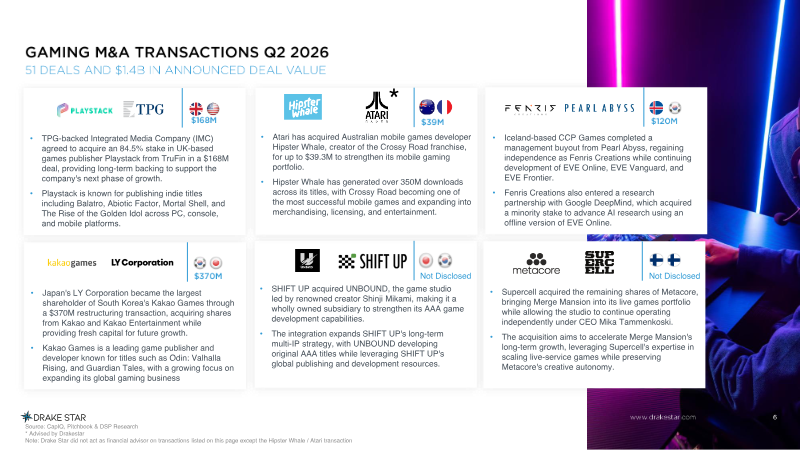
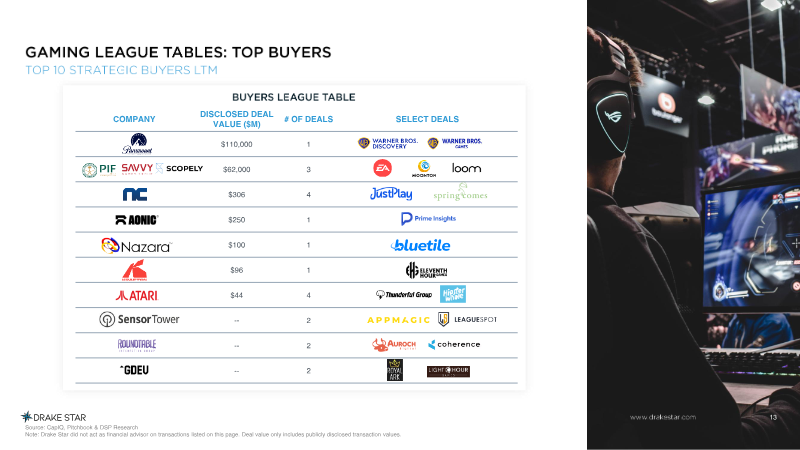
The current landscape of game industry mergers and acquisitions is defined by a cautious evaluation of high-profile targets and the lingering influence of regulatory scrutiny following the Microsoft-Activision deal. While large-cap technology firms remain the most viable suitors for major publishers, media conglomerates have largely been sidelined due to their historical inability to effectively manage the complexities of game development operations. The industry is currently waiting for clear regulatory signals to determine the feasibility of further consolidation among major players like Electronic Arts and Take-Two, both of which are viewed as attractive, cash-generative assets. Take-Two, in particular, stands out due to its high-value intellectual property and the anticipated commercial impact of the next Grand Theft Auto release.
Conversely, companies like Unity and Ubisoft face significant structural and cultural hurdles that complicate potential acquisition scenarios. Unity struggles with high dilution from stock-based compensation and a complex business model that combines engine technology with ad-monetization, making a clean acquisition by private equity or strategic buyers like Adobe or Autodesk difficult at current valuations. Ubisoft presents an even more challenging case; despite owning valuable franchises like Assassin’s Creed, the firm is hampered by bureaucratic inefficiencies, poor revenue-per-employee metrics, and a restrictive ownership structure involving the Guillemot family and Tencent. Analysts suggest that Ubisoft requires a fundamental cultural transformation that may only be achievable through extreme financial pressure rather than external acquisition.
Ultimately, the sector is shifting toward a model where standalone growth and strategic independence are prioritized over indiscriminate consolidation. Epic Games is increasingly viewed as a future IPO candidate rather than a target, as its Unreal Engine serves as a critical foundation for its own internal publishing ecosystem. Similarly, Roblox continues to operate as a strong, independent public entity, focusing on the delicate balance between platform margins and developer payouts. The future of industry M&A will likely be defined by a focus on operational efficiency and the strategic integration of engine technology into broader enterprise applications.