2015
Company
Documents about 2015
Aiming Fiscal Year Ending December 2016 Financial Results Announcement
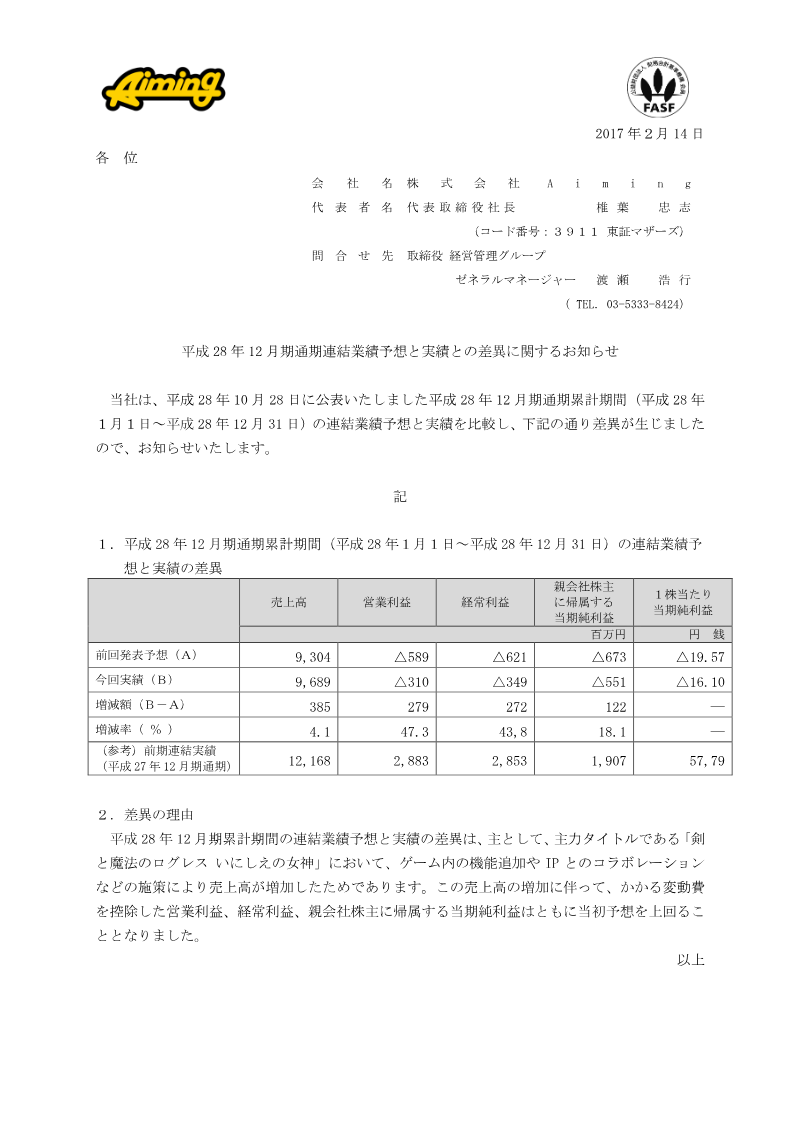
Aiming’s financial performance for the fiscal year ending December 31, 2016, reflects a positive variance compared to the initial projections released in October 2016.
- Aiming exceeded its financial projections for FY2016, reporting consolidated net sales of 9,689 million yen (4.1% above forecast) and narrowing its operating loss to 310 million yen (47.3% better than anticipated).
- The flagship title, Logres of Swords and Sorcery: Goddess of Ancient, was the primary driver of improved results, boosted by new in-game features and IP collaborations.
- Despite outperforming projections, Aiming's FY2016 financial performance significantly contracted compared to FY2015, with net sales down from 12,168 million yen and an operating loss versus a 2,883 million yen profit.

Aiming Fiscal Year 2016 Financial Results
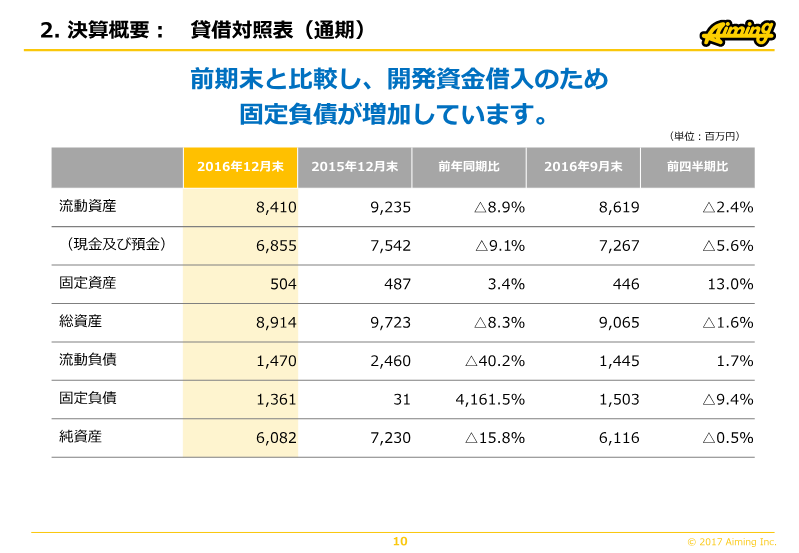
The fiscal year 2016 financial results for Aiming highlight a transition period characterized by a full-year operating loss despite a return to profitability in the fourth quarter.
- Aiming reported an annual operating loss of 310 million yen for fiscal year 2016, a significant decline from the 2,883 million yen profit recorded in 2015.
- Annual sales fell to 9,689 million yen in 2016, down from 12,168 million yen in the previous fiscal year.
- The company returned to profitability in the fourth quarter of 2016, achieving an operating profit of 126 million yen driven by IP collaborations and content updates.


Year-End Report 2016: Paradox Interactive
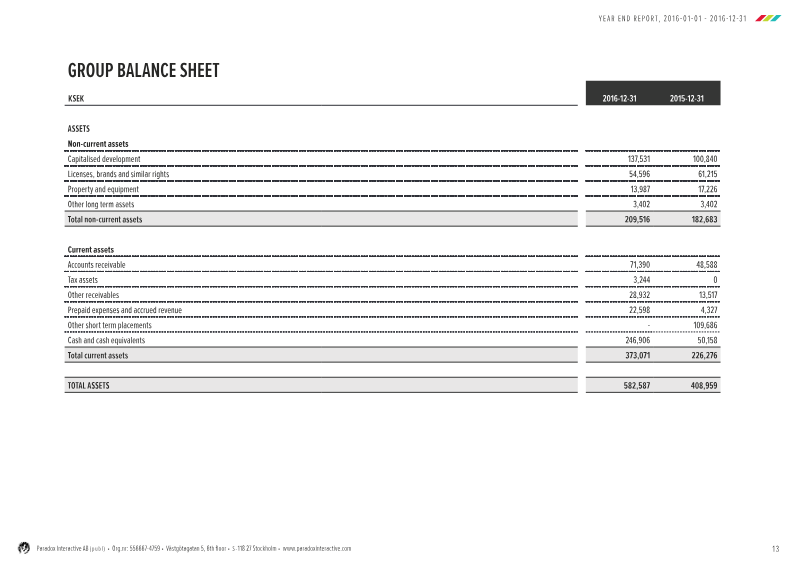
Paradox Interactive’s 2016 year-end report details a period of significant financial growth and operational expansion for the Swedish-based video game publisher and developer.
- Paradox Interactive achieved full-year 2016 revenue of SEK 653.7 million, an 8% increase over the previous year, with operating profit rising 27% to SEK 308.0 million.
- Fourth-quarter revenue reached SEK 198.4 million, representing a 56% increase compared to the same period in 2015, driven by the release of Tyranny and expansions for Cities: Skylines, Stellaris, and Hearts of Iron IV.
- The company successfully executed a strategic partnership with Tencent to expand its presence into the Chinese market.

Mobile Game Publishing Models
Mobile game publishing still largely follows a revenue-share model borrowed from boxed-goods distribution, with the publisher as distributor and the developer as content creator.
- The traditional mobile game publishing model, which relies on simple revenue sharing and platform featuring, is failing because it lacks the necessary investment in performance-based user acquisition.
- Mobile game revenue growth is projected to slow to approximately 14.5% annually through 2021, while investment volume in the sector reached its lowest level since 2010.
- Developers should define 'distribution' in publishing contracts as performance marketing rather than platform relationships, ensuring the publisher commits to financing and managing user acquisition campaigns.
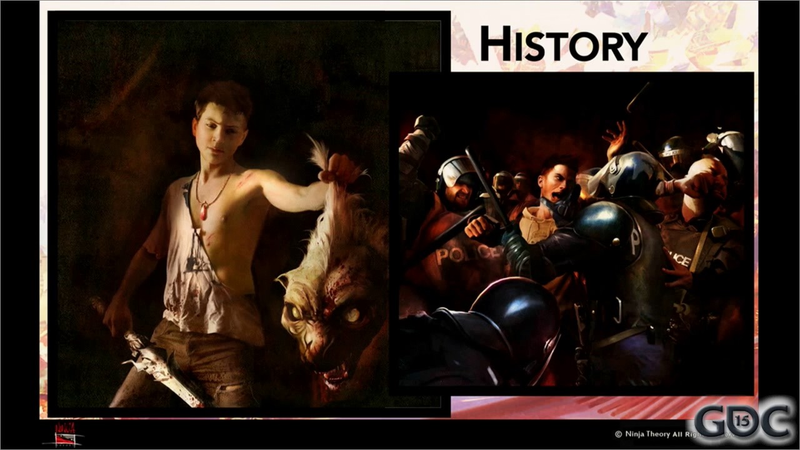
Art Direction Bootcamp: How Being Different Makes All The Difference
In this 2015 GDC presentation, Ninja Theory’s visual director Alessandro Taini outlines a philosophy of art direction centered on the pursuit of originality through unconventional creative processes.
- Art direction should prioritize originality by resisting generic industry tropes and avoiding literal keyword-based brainstorming, which often leads to clichéd visual results.
- Creative teams should derive inspiration from non-gaming sources such as fine art, experimental animation, and real-world materials to ensure a distinct and authentic aesthetic.
- Visual direction should function as a 'digital double' of the creator, incorporating personal history and diverse cultural influences to move beyond derivative design.
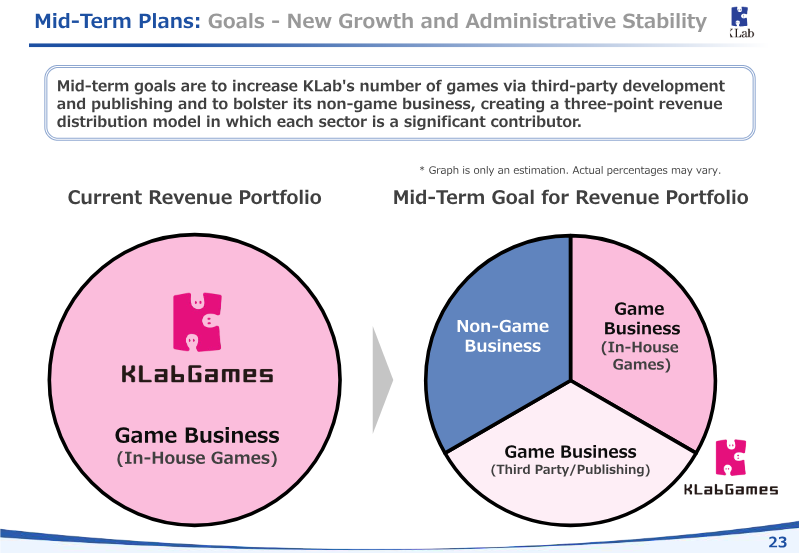

KLab Q4 and FY2016 Financial Results
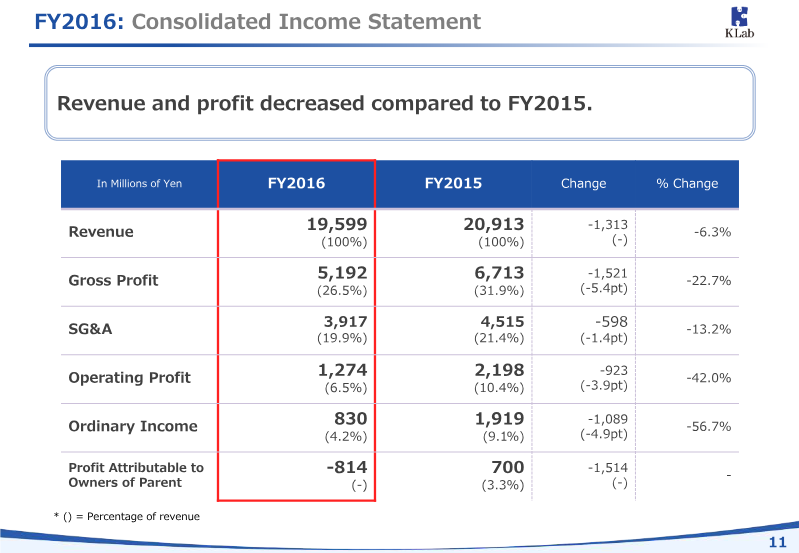
KLab experienced a challenging fiscal year in 2016, characterized by a decline in both revenue and operating profit compared to the previous year.
- KLab's FY2016 revenue and operating profit both declined versus the prior year, though the report gives no specific figures.
- The decline was driven by underperformance of titles released in 2015 and the absence of any new product launches during 2016.
- Overseas markets grew meaningfully in 2016, largely thanks to the strong performance of Bleach: Brave Souls.


Consolidated Financial Results for the Nine Months Ended December 31, 2016
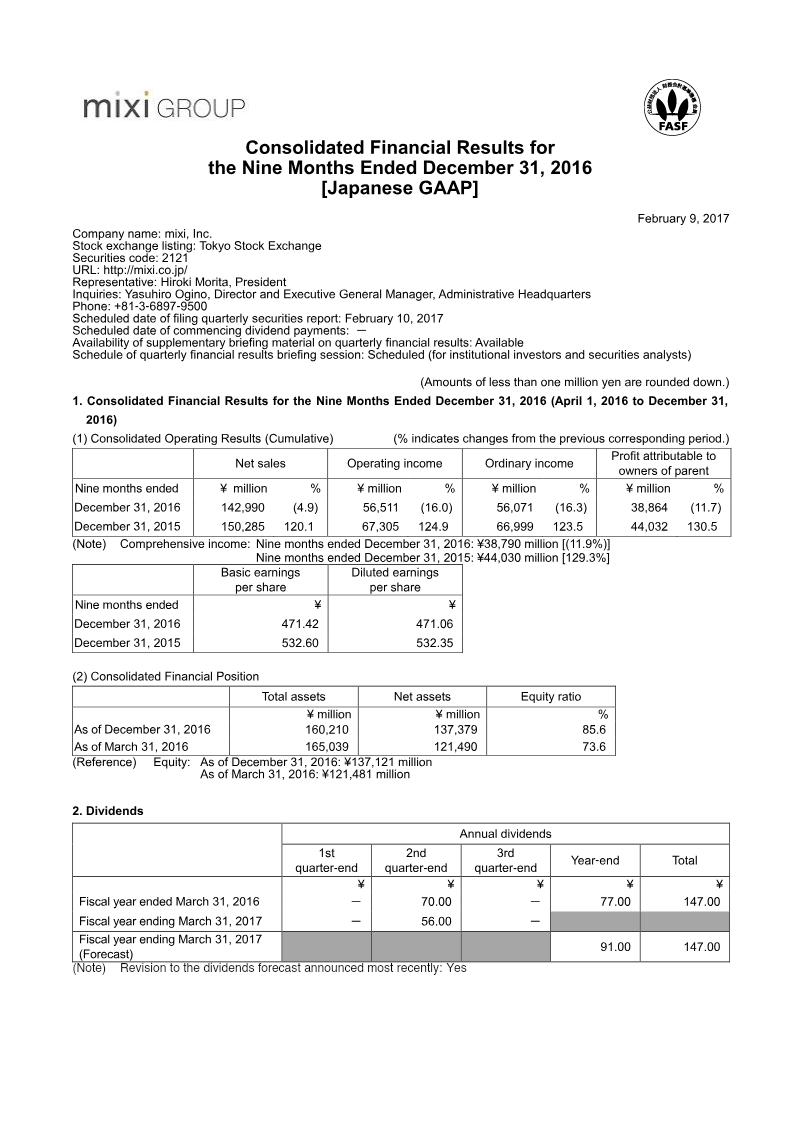
This financial report details the consolidated results for mixi, Inc. during the first nine months of the fiscal year ending March 31, 2017.
- Mixi, Inc. experienced a moderate contraction in the first nine months of the fiscal year ending March 31, 2017, with net sales falling 4.9% to ¥142,990 million and operating income dropping 16% to ¥56,511 million.
- Profit attributable to owners of the parent declined 11.7% to ¥38,864 million compared to the same period in 2015.
- The Entertainment Business remains the primary revenue driver at ¥131,805 million, while the Media Platform Business grew its net sales to ¥11,184 million despite a decrease in segment profit.
New Digimeter Report: Mobile Gaming Takes First Place
The 2016 Digimeter, the annual study from imec (formerly iMinds) directed by Prof. Lieven De Marez of Ghent University, tracks media and technology adoption in Flanders and has done so since 2009.
- Mobile phones have become the primary gaming platform in Flanders, with 34% of the population playing mobile games as of 2016.
- Mobile gaming adoption grew from 30.4% in 2015 to 33.2% in 2016, while desktop/laptop gaming dropped from 31.2% to 24.4% and console gaming fell from 14.8% to 11.4%.
- The percentage of the population using mobile phones as their exclusive gaming device increased significantly from 6.9% in 2015 to 11.2% in 2016.
Nintendo Earnings Release: Supplementary Information (Nine-Month Period Ended December 2016)
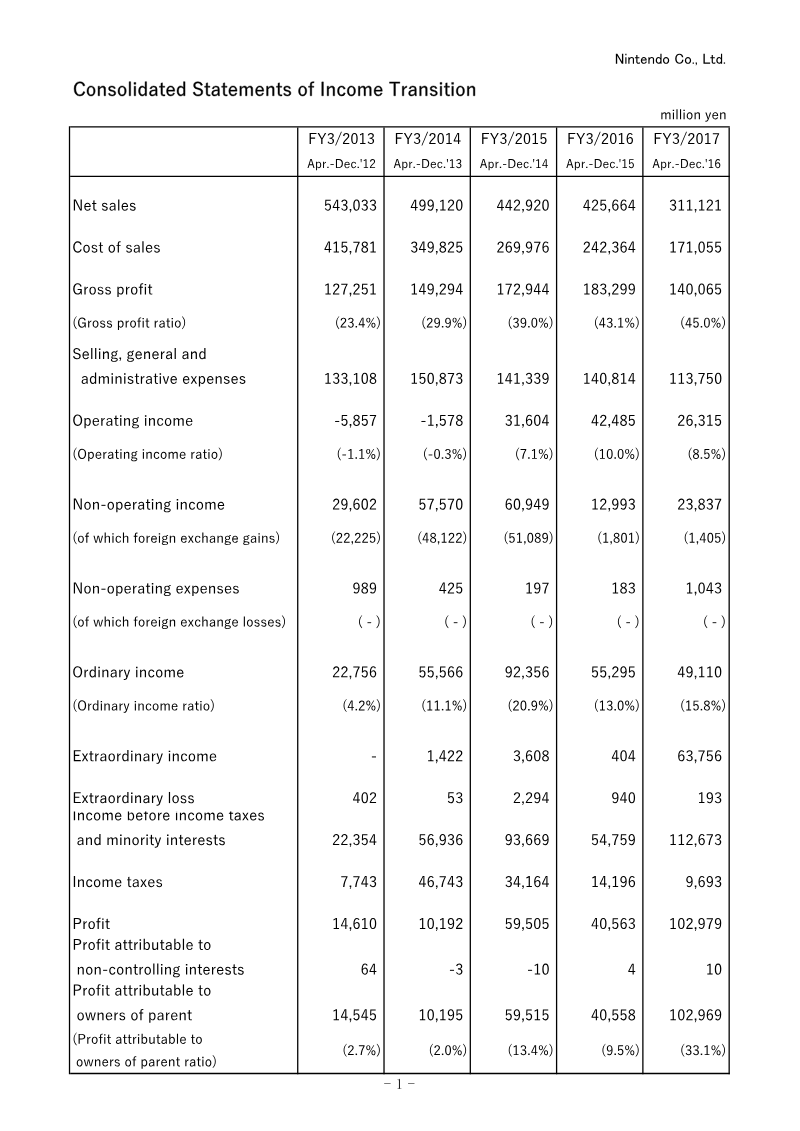
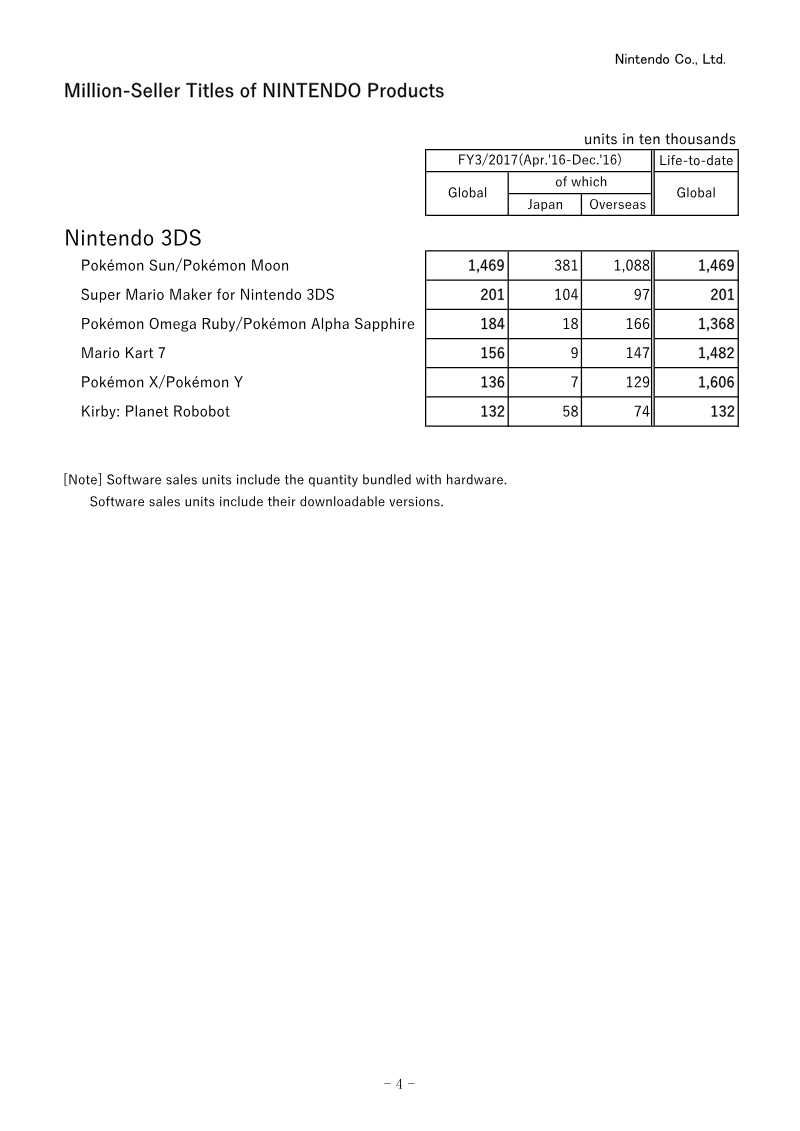
This financial summary outlines Nintendo’s consolidated performance for the nine-month period ending December 31, 2016.
- Net sales for the nine-month period ending December 31, 2016, fell to 311.1 billion yen from 425.7 billion yen in the previous year.
- Profit attributable to owners of the parent rose to 102.9 billion yen, up from 40.6 billion yen, driven by 63.8 billion yen in extraordinary income.
- Operating income declined to 26.3 billion yen, resulting in an operating income ratio of 8.5 percent.

The Coming War Between Apple and Facebook
Eric Seufert argues that Apple and Facebook, which have long occupied separate roles as content platform and advertising platform respectively, are being pushed toward conflict by slowing smartphone growth and a maturing app economy.
- Apple and Facebook are competing for control over mobile app distribution, a struggle for the 'golden fleece' of directing user attention and app installs.
- Apple has shifted from viewing the App Store solely as a hardware differentiator to a direct revenue generator, evidenced by the introduction of App Store search ads to capture a share of the mobile install ad market.
- Facebook has built a dominant mobile advertising business by leveraging proprietary data, including the integration of WhatsApp phone numbers with Facebook profile data announced in 2016.
Three Mobile User Acquisition Megatrends in 2017
Eric Seufert presents "Three UA Megatrends for 2017," a talk delivered on January 16, 2017 at Pocket Gamer Connects in London.
- The provided document serves as a landing page for a presentation titled 'Three Mobile User Acquisition Megatrends for 2017' delivered by Eric Benjamin Seufert at the Pocket Gamer Connects conference on January 16, 2017.
- The report content does not contain the specific text or data points regarding the three identified megatrends.
- The source material functions as a directory for industry commentary and resources rather than a standalone summary of the 2017 trends themselves.

Finding Lost & Found: Designer's Notes from the Process of Creating a Jewish Game for Learning
Owen Gottlieb's 2017 article in gamevironments applies design-case methodology to show how his team balanced player engagement with learning goals while creating Lost & Found, a tabletop-to-mobile game series that teaches medieval religious law.
- The game Lost & Found, developed by Owen Gottlieb through ConverJent at CLAL starting in 2011, teaches medieval Jewish law on lost property drawn from Maimonides' Mishneh Torah (1180) and Talmudic sources such as Sanhedrin 17b and Kiddushin 29a.
- The central design challenge was balancing the law's tension between communal obligation and protecting individuals from undue burden, which the team judged existing cooperative and 'coopetition' models such as Pandemic and Shadows Over Camelot could not adequately capture.
- Key mechanics included win conditions requiring cooperative construction of communal goals alongside individual family goals, hidden progress tracks, multiple win states including an all-lose outcome, and redefining winning as 'living a good life' through secret 'Acts of Meaning.'