User Acquisition reports and market data
Documents
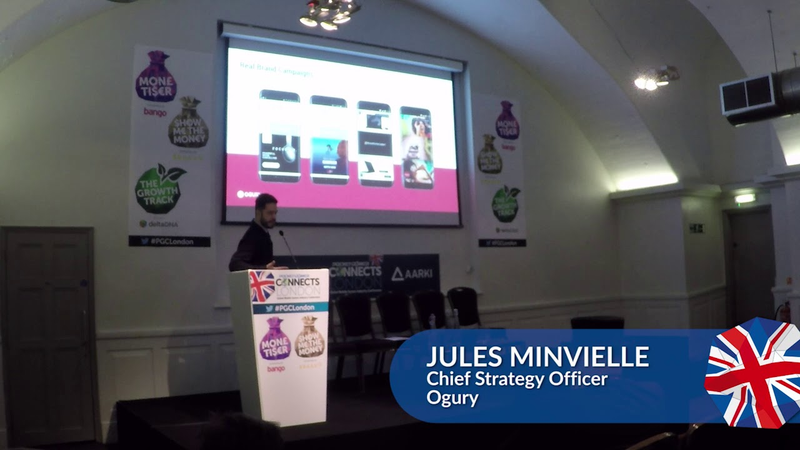
Understand the complete mobile user journey – Attract brands in your games, drive revenue
Mobile game developers often struggle to maximize revenue and user engagement because they lack visibility into the 99% of user activity that occurs outside their specific applications.
- Developers can move beyond performance-based ad networks by using first-party mobile journey data to profile users based on their broader digital behavior, including browsing habits and cross-platform engagement.
- Accessing data on the 'App Universe' allows developers to prove audience value to major consumer goods and technology brands, enabling a shift toward higher-value brand campaigns that improve ad relevance.
- Developers must move away from simplistic 'accept all' consent buttons to implement robust, transparent consent management platforms that allow users to opt out, access, or delete their data to ensure GDPR compliance.
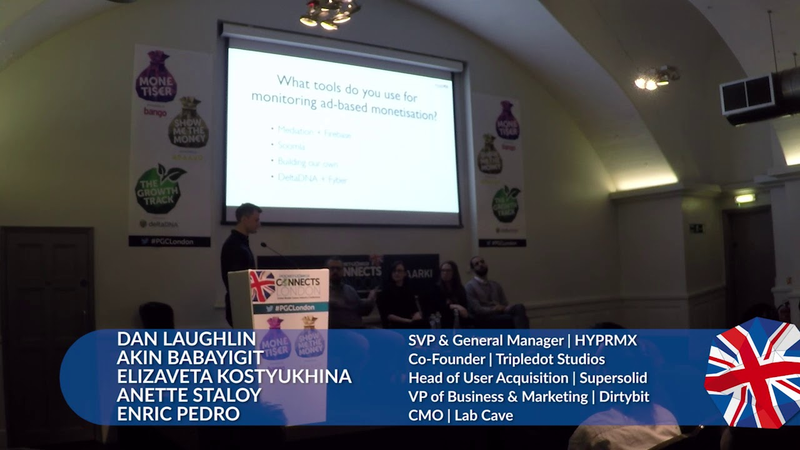
SpeedPanel: Ad monetisation takes over the world
The panel discussion at Pocket Gamer Connects London 2019 explores the rapid evolution of mobile game monetization, specifically the shift toward integrating ad-based revenue alongside traditional in-app purchases.
- Ad monetization has evolved from a secondary revenue stream into a core, data-driven product feature essential for scalable user acquisition.
- Developers should prioritize rewarded videos and non-intrusive ad formats, as these implementations can improve player retention rather than detracting from the user experience.
- The industry is shifting toward bid-based mediation, which increases efficiency but requires greater technical sophistication from development studios.

Lifetime value forecast – How to predict your game's revenue
Lifetime Value (LTV) serves as a foundational metric for mobile game developers, enabling them to determine sustainable customer acquisition costs and identify the most profitable traffic sources.
- A sustainable mobile game business model requires the Lifetime Value (LTV) of a user to exceed the customer acquisition cost by a factor of at least three.
- LTV is a composite metric derived from three core variables: user retention, payment share, and average revenue per user (ARPU).
- Predictive modeling is necessary for real-time strategy because waiting for a user cohort to fully churn is impractical for business decision-making.

App search marketing – How to conquer this new frontier
App search marketing (ASM) has emerged as a critical frontier for mobile application growth, driven by the fact that approximately 65% of all app downloads originate from store searches.
- Approximately 65% of all mobile app downloads originate from store searches, making search visibility the primary driver of growth.
- Developers must integrate organic App Store Optimization (ASO) with paid search strategies like Apple Search Ads and Google Universal App Campaigns to maintain market share.
- Paid search spend creates a feedback loop by generating initial downloads, which signals relevance to store algorithms and improves organic keyword rankings over time.
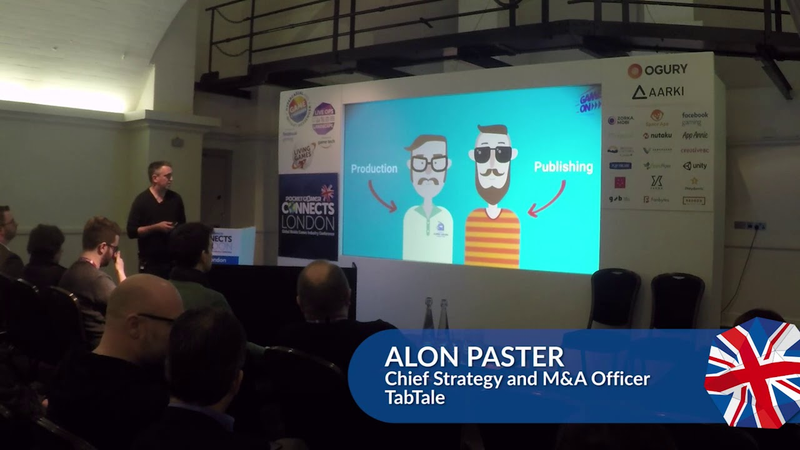
Why go hypercasual?
Hyper-casual gaming represents a highly lucrative and accessible sector of the mobile industry, characterized by simple, intuitive mechanics that require no explanation for the player.
- Hyper-casual games prioritize high-volume ad monetization over the traditional 'whale' model, targeting a massive user base to generate revenue.
- The 'fail fast' methodology dictates that prototypes must be built in under three months, with concepts abandoned if they fail to show strong metrics during soft launches of 2,000 to 5,000 users.
- Success depends on rigorous post-launch support and continuous content iteration, which can allow titles to maintain top-chart rankings for years despite the genre's reputation for short lifespans.

Facebook Instant Games - What's next?
Facebook’s strategy for its Instant Games platform focuses on building a comprehensive gaming ecosystem that leverages HTML5 technology to provide frictionless, cross-platform experiences across Messenger and the Facebook News Feed.
- Facebook Instant Games has scaled to over 6,000 live titles by leveraging HTML5 technology to provide frictionless, cross-platform access across Messenger and the News Feed.
- The platform has successfully improved day-one retention rates, moving significantly beyond previous industry benchmarks of 15–20%.
- Growth is driven by social and viral mechanics, including turn-based challenges, group tournaments, and features that help users find other players.

Growth on Messenger – What Moonfrog Labs learnt from the success of Ludo Club
Moonfrog Labs, a Bangalore-based mobile game studio, achieved significant growth for its title Ludo Club on the Facebook Messenger platform, scaling from 64,000 daily active users in March 2018 to approximately 2.8 million by early 2019.
- Moonfrog Labs scaled Ludo Club from 64,000 to 2.8 million daily active users on Facebook Messenger between March 2018 and early 2019 by prioritizing familiar board game mechanics.
- High initial drop-off rates of 10% to 14% were mitigated by focusing on minimizing load times, which proved critical for user retention on the Messenger platform.
- The studio utilized the platform's capacity for real-time client experimentation to iterate rapidly, compensating for the lack of publisher control over game discovery and listings.
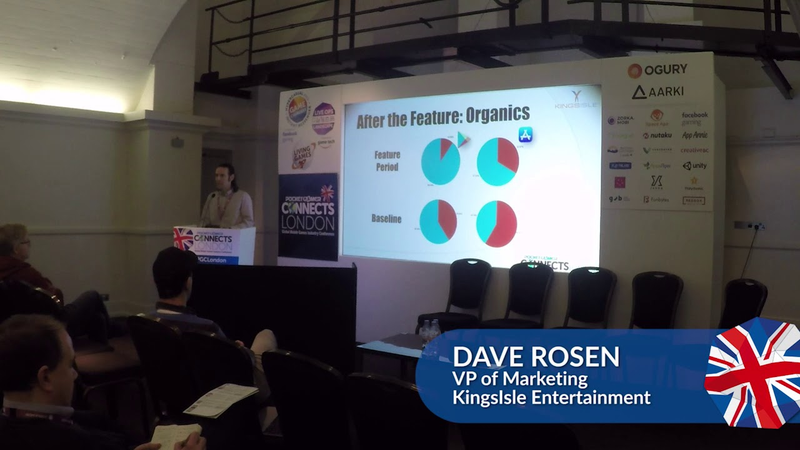
Marketing after the feature
The marketing of mobile games requires a proactive, long-term strategy that extends well beyond the initial launch window.
- Platform featuring should be treated as a growth catalyst rather than a substitute for sustained marketing, as it provides a significant initial user influx but has limited long-term impact on organic growth.
- Success in securing features requires months of preparation, including early communication with platform representatives and the presentation of data-backed performance trends from soft launches.
- Developers must maintain a deep, ongoing content roadmap to satisfy the rapid consumption habits of high-tier players acquired through featuring, as a lack of content diminishes the value of the opportunity.

Zorka.Mobi on why influencer marketing is no longer a trend, but a business
Influencer marketing has transitioned from a fleeting industry trend into a foundational business pillar for user acquisition in the gaming sector.
- Influencer marketing has evolved from a trend into a core business pillar for game user acquisition, requiring data-driven strategies to ensure predictable ROI.
- Agencies now utilize databases containing over 300,000 channels to match game profiles with creators, allowing for precise targeting based on player personas, age, and geography.
- Testing campaigns with smaller channels before scaling is a critical methodology for refining audience targeting and discovering non-obvious verticals, such as finding FPS players within automotive-focused content.

How Facebook works with games publishers to support sustainable businesses
Facebook supports game publishers by providing a comprehensive ecosystem that facilitates the entire commercial lifecycle, from initial user acquisition to long-term monetization.
- Facebook distributed $3.2 billion to game publishers through its monetization networks in 2017, highlighting its role as a major revenue driver for the mobile gaming economy.
- 73% of gamers accept advertising as a standard component of free-to-play titles, viewing it as a fair trade for content access.
- Successful publishers are shifting from retrofitting ads to designing games with monetization strategies integrated into the core experience from the outset.

App Annie on demystifying an ever-changing games market
Market intelligence platforms play a critical role in the mobile gaming industry by providing developers and publishers with the data necessary to navigate shifting global trends.
- Developers must integrate monetization strategies into core product design from the outset by utilizing market intelligence platforms to analyze downloads, revenue, and active user metrics.
- Regional genre preferences are diverging significantly, with battle royale titles dominating the Asia-Pacific market while hyper-casual games see the most traction across Europe, the Middle East, and Africa.
- Emerging markets like India and Brazil show high monthly active user counts for hardcore games, indicating that mobile devices are the primary platform for high-end gaming in these regions.
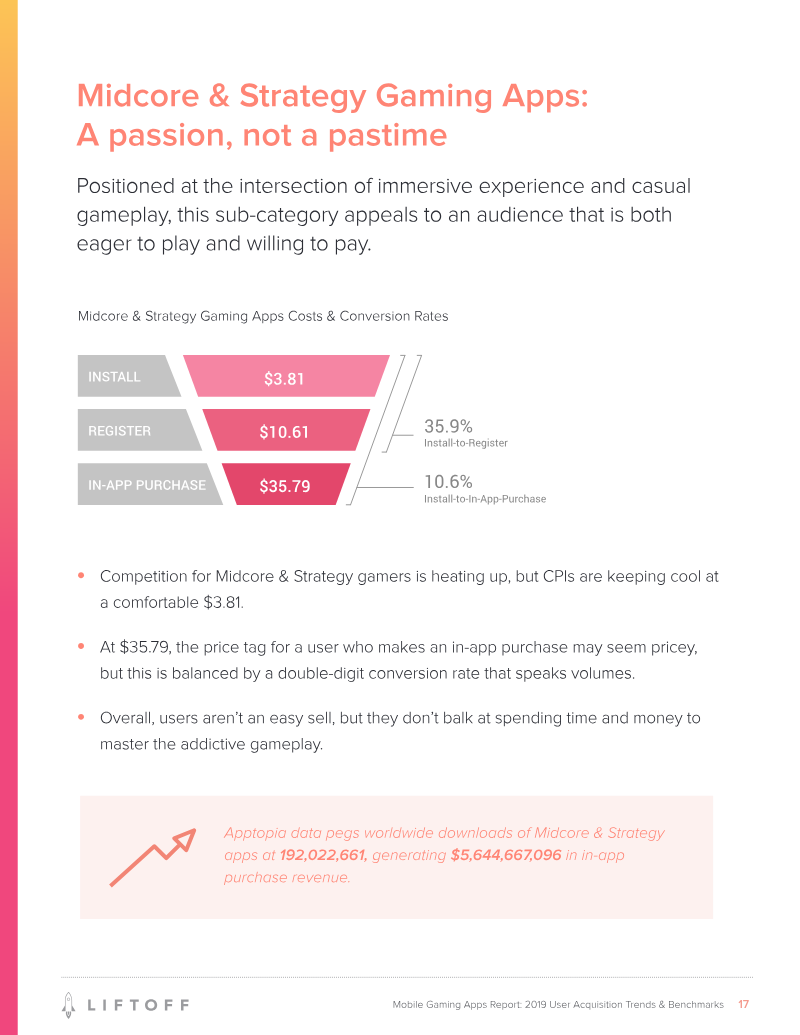

Mobile Gaming Apps Report: 2019 User Acquisition Trends & Benchmarks
The 2019 mobile gaming landscape is defined by a period of unprecedented consumer spending, with gaming apps accounting for 74% of total app store revenue.
- Gaming apps dominate the mobile market, generating 74% of total app store revenue despite rising user acquisition costs that average $35.42 per paying user.
- Android provides a more cost-effective reach for user acquisition compared to iOS, with the third quarter identified as the optimal period for high conversion rates and lower acquisition costs.
- North America, Japan, and South Korea remain the most expensive regions for acquisition but offer the highest long-term retention and in-app purchase revenue.