1 free read left. Create a free account for unlimited reading + AI research.
Create free account
How Facebook works with games publishers to support sustainable businesses
Key insights
6 takeaways- 01Facebook distributed $3.2 billion to game publishers through its monetization networks in 2017, highlighting its role as a major revenue driver for the mobile gaming economy.
- 02The platform supports small-to-medium-sized studios, typically teams of five to twelve people, by providing tools for both user acquisition and long-term revenue generation.
- 03Optimization technology allows developers to tailor ad strategies to specific business models, ranging from immediate break-even targets for hyper-casual games to long-term retention goals for mid-core titles.
- 0473% of gamers accept advertising as a standard component of free-to-play titles, viewing it as a fair trade for content access.
- 05Successful publishers are shifting from retrofitting ads to designing games with monetization strategies integrated into the core experience from the outset.
- 06Playable ads are emerging as a primary driver of engagement, representing a broader industry shift toward more interactive and entertaining advertising formats.
Ask AI about this video
Transcript
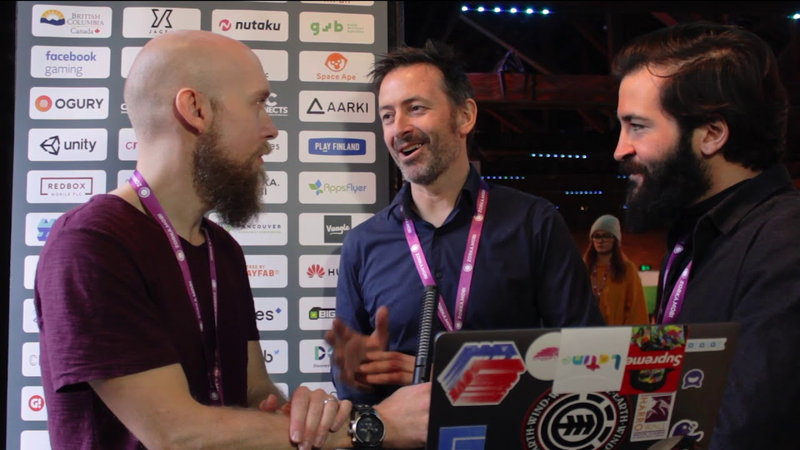
[Music] we are heading into the afternoon here at poppy Emma connects 2019 in London and I am joined by introduce yourself gentlemen so Ben Atherton from Facebook and unless your listener from Facebook gaming as well fantastic and you have described your interactions with Facebook you are the head and the torso of well okay so I'm going straight in with their bodily analogies yeah yeah no it is a good analogy so my team deals with publishers who are in the torso and tail of all publishers in amia so we have a really large number of publishers that we work with and we monetize those publishers they are almost exclusively at publishers and the gaming vertebra is really dominant so we work with gaming publishers from Siberia and we weren't gaming publishers from Warwick you know we weren't gaming publishers from the whole region people often associate
Facebook with games in terms of are we played them in the browser or in 2017 you guys did the Facebook Messenger games and obviously a lot of the date at the Facebook has and has acquired is used for publishing networks and ad networks it's shared with people but they don't necessarily immediately think of you guys as like people who are like lifting publishers and taking them through the journey of bringing a game to market and beyond to the store so in terms of making that work what is it the Facebook does differently from a standard like you know publishing network so for the year before last 2017 we gave 3.2 billion dollars to publishers so you know quite a chunky bigger probably not very well known and that's purely on the monetization side so that's the side I deal with but in terms of what we do differently which is kind of the core of your question is we try and work with the publisher to build a sustainable business throughout the if you like commercial life cycle mm-hm so from you a which you know let's talk about in a second all the way to after
you've acquired the customers how you actually you know monetize them we try to poach them and work with our tools and resources to make sustainable businesses for them there's a lot of these businesses are you know they're SMBs they're small and medium-sized businesses there might be a studio at the very largest 50 people but most of them might be in the range of you know five to 12 people so you know they do need the kind of help and the resources that we give but I think it's logical to start the beginning of the chronological journey with the us so when you're trying to grab users from a I guess the publisher perspective if we if you're trying to use your your network you want the right kind of user the highest value user and the under I guess the most for the money so how do you guys provide that exactly so every publisher on the other side of the coin is an advertiser so is it giving ever tighter than wants users inside his app and our solutions are uniquely designed to help these advertisers to get the exact players
that they want being an ad for cash well and you want just the players or highly retained players or just affordable CPI's or on the other side of the spectrum if you're a strategy game or Midland mid core market then you will need high value players or just payers and then the solutions we have the optimization technology that our solution have helped the ADIZ advertisers to get exactly the players that they need and then once you've acquired those players that kind of pulls over to your zone been sting protect and then you guys have to then like target the right kind of ads or push the right kind of thing in their faces yeah this this or two yeah I wouldn't say push the right kind of thing it makes it slightly bad phrasing of my part present in a nice month reading way okay so if you think yeah if you take the UX question first and I think a lot of gaming publishers are really sophisticated in terms of how they nicked advertising into the UX I think it's because they know full well that if the advertiser with Jack's experience so if the user rejects experience there's no sustainable future for their game from a commercial point of view what's interesting about the
gaming industry is that a large majority of people fully accept the value exchange so I think from our research seventy-three percent of all gamers accept that advertising is part of it you know it's a value exchange you know I'm getting a free game I'm getting some value out of that and immature and somebody's got to pay for it right there's a very vocal minority that pushes back and we get a lot of it on Pocket Gamer the consumer site people are complaining about I a piece but the bottom line is the reason they're there is because it works and it generates a massive amount of income because people accept it so it's just kind of there are people complaining on the fringe but there's the silent majority were like no we get we get the give and take yeah and you know it's fully fair that people complain that's you know if they don't like it they don't have to play the game it's entirely up to them you know no one's forcing them to do that but it's the Internet as we see it today right and we won't get into that argument right now it's a broader you know that's what's happening in the world you know people want to access things for free is a major trend but that's a different trend but to the next part the
chronological journey you know I've invested some money in you a with Facebook I've grown my users from maybe the first few thousand for the first few tens of thousands or the first few hundreds of thousands and now I need to make sure that actually I can pay my developers and I have a future for my business and then I've already started thinking about the game flow I've already started thinking what type of format I'm gonna have where in my game so for example if you're a casual game you might decide you know within the first few sessions you can have an interstitial reward a video yeah but if you're a mid core game or even a hardcore game you might decide that's not gonna happen too until many many many levels further and that's it's a very different business model because you've invested a lot in your carpets and objects and the startup costs in order to probably break even after 18 24 36 months whereas in hyper casual you actually think in a break and even on day why because the loot is that much more and more media yeah so that's why advertising is so important and the user knows that so they're critical formats are obviously interstitials and rewarded video I would say it's not so much these
days that people design a game and then how to advertising in that sector I think what they do is they think I need to satisfy both you know how I make my money plus my user the user understands it accepts that value exchange so if I'm playing a casual game from a voodoo or whoever it might be I know I'm gonna get an interesting slide if you were bad as gamers me you know you're gonna fail really quickly right and then you're gonna see your first interstitial brother glacier and then maybe later if I get a wee bit better and I want to get another light you may see your first reward video well it's much more established now and I think near the beginning you start to see people who decided like halfway through development Oh actually we're not going to be premium we're going to be free-to-play and it was always glaringly obvious and it didn't really work it felt like something that the games that worked had it built in right from the beginning yeah it's a very interesting trend we've seen a lot we've had a lot of our publishers come to us and we talk about this on the panel at 2:30 with one of our publishers supersolid there an IEP publisher they built a simulation game in the restaurant space and they are looking at how they
monetize users but those users are way more mature than your hyper casual user they might be in playing the game for many many tens of hours or hundreds of hours so they're very careful about finding the right cohorts and segments so when a lot of publishers are doing now are going well you know if I have you know segment X over here they'll build do anything and they'll watch anything and they're just going to keep coming back segment Y over here never gonna watch anything from an advertising point of view and they might churn really quickly I need to think I'm in the silent majority in the middle yeah I need to think how I serve all those cohorts in terms of their enjoyment of the game from a commercial point of view I want you know lifetime customer value I want low churn I want high use you know session rates but at the same time that's those are all user metrics at the same time any to make money so they're going through this balance you know how do I do that how do I do that in a way that works with the game well you talked about sustaining limiting if you're talking with publishers and trying to ensure that they have a business model that will not only work for the short-term but go for the long-term what
are the things that you're anticipating in the future because the terms of the way that things are marketed we went from like banner ads to targeted video became the next thing influencer marketing is now the big thing how do you future-proof what's the next thing or what you guys working on at the moment so definitely we see playable ads being absolutely the killer it is here so the way advertising is being more entertaining and more interactive towards users so the users are looking for ways to interact with the game when they're seeing and interstitial when they're seeing a rewarded video and it is where we see the most value but I also see for example for tonight all those all these big game game changers that are coming to the to the spectrum are actually enlarging the kind of pool of audience they're gamers are becoming more diversified and so has gamers diversify themselves you need to look for different kind of specific gamers and new business model will come up and we will help these advertisers to to look for those specific gamers [Music]
Summary
Facebook supports game publishers by providing a comprehensive ecosystem that facilitates the entire commercial lifecycle, from initial user acquisition to long-term monetization. Operating primarily within the Europe, Middle East, and Africa (EMEA) region, the platform focuses on assisting small-to-medium-sized studios—often teams of five to twelve people—in building sustainable businesses. In 2017 alone, the company distributed $3.2 billion to publishers through its monetization networks, underscoring its significant role in the mobile gaming economy.
The methodology centers on a dual-sided approach: acting as an advertising platform to help developers acquire high-value, retained players, and as a monetization partner to integrate revenue-generating formats into the user experience. Optimization technology allows developers to target specific cohorts based on their game’s unique business model, whether they are hyper-casual titles aiming for immediate break-even points or mid-core strategy games requiring long-term player retention.
A core finding is the widespread acceptance of the value exchange model among players. Research indicates that 73% of gamers accept advertising as a standard component of free-to-play gaming, viewing it as a fair trade for access to content. Consequently, successful publishers are increasingly designing games with monetization in mind from the outset, rather than retrofitting ads into existing structures. This involves balancing user experience with commercial goals by segmenting audiences to serve appropriate ad formats—such as rewarded videos or interstitials—to different player cohorts.
Looking toward the future, the industry is shifting toward more interactive and entertaining advertising formats, with playable ads emerging as a primary driver of engagement. As the gaming audience continues to diversify, the focus remains on leveraging data to help developers identify and reach specific player segments, ensuring that publishers can maintain sustainable growth despite evolving market trends and changing consumer behaviors.













Comments