1 free read left. Create a free account for unlimited reading + AI research.
Create free account
Marketing after the feature
Key insights
6 takeaways- 01Developers must maintain a deep, ongoing content roadmap to satisfy the rapid consumption habits of high-tier players acquired through featuring, as a lack of content diminishes the value of the opportunity.
- 02Success in securing features requires months of preparation, including early communication with platform representatives and the presentation of data-backed performance trends from soft launches.
- 03While the traditional re-featuring cycle is 90 days, developers should align major content updates with the increasingly dynamic windows used by platforms to maximize visibility.
- 04Follow-up features often yield lower total user volume than initial launches, but they can generate higher revenue per user if the game is positioned within a more relevant, genre-specific category.
- 05Platform featuring should be treated as a growth catalyst rather than a substitute for sustained marketing, as it provides a significant initial user influx but has limited long-term impact on organic growth.
- 06Data from the match-three title Animal Cove confirms that relying solely on featuring is insufficient for long-term success, necessitating a strategy that balances platform relations with diversified paid user acquisition.
Ask AI about this video
Transcript
[Music] thanks everyone I know you've only got an hour to go before food and drinks so appreciate you staying around to hear from me so my background I've been in gaming for about two decades now across a range of different companies kind of living living all the way from disc and cartridge through PC online and now mobile live services free to play games and currently I'm the VP of Marketing for Kings Isle entertainment so I'm ster sure a little bit of a case study on animal Cove which is a game we launched last year it's a match-three with an island decoration component and then storyline based on the animal characters in the game it was so we did get
featured it was featured at launch on the week of August 16th that Thursday so featured on both iOS and Android in both both cases in their new games or in the case of Android new and updated games categories so how did we get featured this is I think sometimes a challenge for independent developers you know we're a smaller marketing team we don't have someone who has the bandwidth to be fully dedicated to our relationship with these platforms so we worked with an agency called mobile game partners they were really were and continue to be a good partner for us as far as insights on what's happening on the store platforms for mobile the the biggest thing I would say is we began pitching early so we started sharing information with them about six months before launch provided them a one-pager to share with the platforms three to 12 to 16 weeks before launch and then kind of a final pitch about two months out and then we
updated from there with what was unique in the game in our case really the story component was was what we felt made our game different and then we backed it up with ongoing updates around our soft launch data particularly trying to show the positive trend and I think the you know the key challenge here is that you know as we all know there's hundreds of games a day launching thousands of games a week so if you wait for the platforms to notice you they won't so you have to find a way to be proactive if you have the bandwidth to do it internally do it it you don't find someone who can help you so what was the actual impact of this because I think this feeds into what we needed to do afterwards so we saw an interesting trend where you know installs were massively higher on Android you know order of magnitude higher but the revenue was actually fairly similar between the two so we saw a higher monetizing cohort on iOS but a much bigger cohort on Android a big
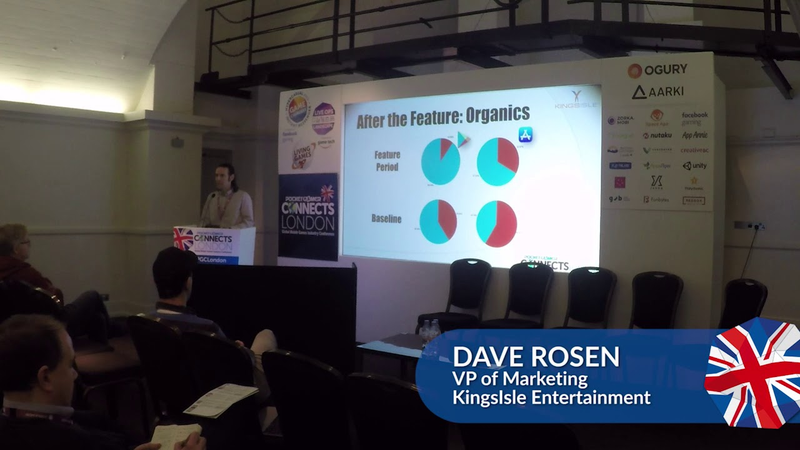
piece of that was the result of retention so the blue on the right is our baseline organics the green are the left are the cohort that came in during the feature so on the iOS side there's only about a 16% difference lower on the Android side that was about 40% so a significantly lower retention which just means they're not around as long and then from a monetization standpoint we also found a much different mix of geography for where people came from so you know compared to our soft launch audiences where we had been in very specific markets to give us a sense of monetization we saw a very different mix despite it being globally featured where on Android it was you know India Russia Brazil lower monetizing markets that really dominated and then on iOS us you know Canada Netherlands sort of higher higher monetization markets a big learning for us was around consumption compared to what we had seen during soft launch so we launched with 300 levels
come having looked at competitors with similar games that was in the ballpark of what they had launched with based on the consumption we saw during soft launch we anticipated that that would give us 6 to 8 weeks of runway and we had a plan in place to continue adding levels what we actually saw this is our d14 progression I apologize the numbers are a little bit small but the purple are paid user paying users the red are free free-to-play players and those last two columns that's our 95th and and top 1% of consumption so within two weeks the top 1% of paying players had consumed all 300 levels and 9 5% of paying players had consumed at least 2/3 and clearly quite a few were on track to it seed what we had ready to go and so this was a you know a big learn for us that we needed to be ready to follow the feature with a significant runway of content because as it was I think we you know we somewhat reduced the value of that feature opportunity for ourselves
because we didn't have as much content available for people which I know you know as a challenge was often a rush to get the game to market a rush to get out but this is definitely something you need to consider what's gonna happen to those players after that week of the feed feature or after that first month so other learns we had we're your featured matters so we you know we didn't see quite as big a scale of users as we had hoped for but we weren't in one of those big featured story kind of bespoke spots we were we were in the list and depending on the player and what other games they had it's all become very algorithmic so how far up the list they saw us varied it's hard to stand out and the bar for distinctiveness is always rising right so when you want to catch the platform's attention what was unique and interesting six months or a year ago is is no longer unique because people move so quickly in in this industry to follow up on what's been successful so I think we were successful in that we really pushed hard our background is in MMO
development before we move to mobile so we have a lot of experience with story and live live services so we we did a nice job on the story piece and I think that's what helped us catch the eye but you know if we come back with our next game and kind of have that same pitch I wouldn't expect we'd be successful so the other thing that we were trying to take a look at was kind of what's the ongoing effect on organics so during the feature period we saw about 90 percent organic rate on Google and about just under 70% on iOS afterwards kind of the baseline we've seen seen since is about 60% on Android and more like just over 40% on iOS we haven't a little bit of an exception I'll talk about on the Android side but in general we haven't seen anything compared to our prior games to suggest that the fact we got featured significantly changed the or ganic trajectory after the feature so I
think you know I've heard a lot of teams and people have talked to who are sort of like oh if we can just get featured then it's all gonna skyrocket from there we don't need to do anything else that is very much not the case you will have a great week everyone in the building will be very excited we certainly were but they need to be ready to do some heart after to keep new players coming in historically it's a 90-day window for featuring one of the surprises we had is that that is shifting particularly with the Google Play Store they are becoming a little more fluid and dynamic with that so we had you know we'd been communicating on an ongoing basis sharing updates of performance new content that was coming and we had actually built a schedule of game updates both content and feature updates to align to that expected 90-day cadence in my time at gree that was something that was very successful for us and working with platforms that we you know as we came into that window when they were ready to look at us again we had substantive updates to share with them
so that's something I would recommend but we actually found that in this case because of how they're shifting that Google went ahead and featured us again a month later so they featured us this time in the casual category we didn't know it was coming we had neither we nor MGP got any particular heads-up from them until sort of the week of when all of a sudden we got a you've been certified for featuring so we sort of went okay we'll see what this means it had as you can see a big impact so this is our you know our daily installs and in this case so it looks like the organic rate lifted what's a little bit fuzzy there is that we were also increasing our spend on Android at the time we had we were seeing strong performance on Android as a platform for our game so we were spending into that so it's a little bit hard to unpack how much of that improving organic rate came from this feature happening and how much of it came from the mix of increased spending and additive features in the game so we
also added features like clubs that really encouraged collaboration and bringing friends into the game so I I wouldn't feel comfortable saying that that lift was necessarily result of the feature but it may have played a role from a scale standpoint because I think we also had no idea to it what to expect here and I'm presuming others don't we saw about 26 percent of the volume so about a quarter of the volume that we had seen on the launch feature on the follow-up feature so again if you're doing your business plan and you're saying great we're gonna get featured then we're gonna get featured again and that'll be the same kind of thing and then again and again but probably not a responsible way to do your planning assume that you know you may get featured again but you're probably not gonna see as big an impact the second time around the third time around that you saw at the start now on the flip side there was definitely a benefit to being in the casual category for us as a match-three game in that we saw a much better revenue performance so we saw more than two and a half times better revenue per users at day 30
so actually despite having only a quarter of the audience from our launch feature we saw almost 75% of the day 30 revenue that we had seen from the launch feature so this this turned out to be really beneficial for us and certainly as we move forward trying to be proactive about how our games when we work across different genres map to kind of genre areas of interest is something that we're gonna you know try and pitch around down the road we also saw something interesting happen with retention so again this is what our our comparison between our baseline organics and our launch feature organics we actually had better retention among the follow-up feature organics than what we see ongoing basis which again huge surprise for us we presume that we'd see something very similar to what we'd seen at launch maybe a little bit better but certainly didn't think it would be superior to what we were getting on an ongoing basis and then similarly again despite being a global feature so sorry
the term ignored the terminology a little bit so the 1.50 was our launch build so that top is the launch featuring that we've already talked about the bottom is the ongoing organic that we talked about and then the middle is casual featuring and the casual featuring audience looks much more similar to our ongoing organic audience so I think it just speaks to that being in that category people who are finding us on an organic ongoing basis are doing it because they're interested in that style of game and similarly someone who's coming to you know look at what's being featured in in casual or you know other kind of genre specific feature setups is looking for the same so we saw you know this I think speaks to why we saw such better revenue performance and retention performance and so what were some of our primary takeaways first that featuring still matters so you know I know there's a lot of talk and concern and disruption because as you know as the platforms
have made different changes about what's presented where for how long from what standpoint it still made a big difference it had a meaningful impact on our profitability during that time it certainly you know increased our user base and was also you know just a huge win for us as a team to kind of have that visibility and awareness and really drove enthusiasm for what we know you know as a number of the other great presenters have talked about is really an ongoing journey of live ops so having having that success moment for the team is really motivational to keep everyone moving forward and and definitely you know you're gonna want to make featuring still part of your your marketing plan with any platform you're working with however you know the ongoing effect is limited so work towards it take the win get the benefit from it but don't presume that just doing that will bring
you all the way home because it won't and then maximize the opportunity so I think this was the biggest learn for us is that really the bar has moved as far as what level of content volume and what level of systems depth you need at launch to really take advantage of that feature you know we've since added more to the game both from a content and a system standpoint and every addition we've made has improved the revenue per user of the game has improved the revenue for playing player of the game and I think if we went back in time we might have done the math slightly differently on our timing to market versus the level of depth that we have obviously there are other business considerations that come into that timing that can force your hand a bit but I think when you're looking at historical examples assume that whatever they launched with you probably need more and that's just unfortunately the reality of an ongoing evolution in the business and then plan for your follow-ups so you know think
about how you're gonna reengage any platform that you're working with think about how you're gonna leverage not only your marketing plan but in partnership you know with the game development teams or if you are a game development team aligning your content releases your feature releases around featuring opportunities because these will be great visibility opportunities for your game and that's it I think I'm 45 seconds ahead so if people have questions we we have time for that and if you don't have questions I'll put it down to the desire to get to food and drink and not a judgement of me all right thank you all so much oh all right not getting out of here so it's obviously also about marketing beyond the future yeah so what do you do generally also in turn yeah so for getting a reef feature yeah no that's like that's a great question so you know
we had a plan in place both starting at launch and ongoing for paid user acquisition I think like a lot of people really started with Facebook as our anchor platform for that and use that to really calibrate what the CPI's looked like we had comparison points from soft launch and then as soon as possible' started diversifying into other networks both diversifying networks and diversifying geography that's I think one of the places where we've found the most kind of little pockets of wins is by looking at different territories different geography where the CPI is maybe lower and the revenue per user may be lower but you might have a delta there that's different so we've we've found pockets of opportunity and when we find them we spend into them I think what was nice about sort of thinking about the feature as part of that is the feature kind of gave us a little bit of user user volume air cover while we were figuring out what channels
were gonna work the best for us for acquisition and then that's that is ongoing to today to you know just keep trying new networks keep trying new places as we go well thank you very much Dave thank you okay [Applause] [Music]
Summary
The marketing of mobile games requires a proactive, long-term strategy that extends well beyond the initial launch window. While platform featuring remains a significant driver of visibility and user acquisition, it is not a standalone solution for long-term success. Developers must treat featuring as a catalyst for growth rather than a substitute for sustained marketing efforts, such as paid user acquisition and continuous content updates.
Strategic planning for featuring begins months before a game’s release. Success relies on early and consistent communication with platform representatives, providing them with clear value propositions and data-backed performance trends from soft launches. Data from the launch of the match-three title Animal Cove demonstrates that while featuring provides a substantial initial influx of users, the long-term impact on organic growth is limited. Furthermore, the quality and retention of these users can vary significantly by platform and geography, necessitating a nuanced approach to monetization and market targeting.
A critical finding is that developers often underestimate the volume of content required to satisfy players acquired through featuring. Because top-tier players consume content rapidly, failing to provide a deep, ongoing content roadmap can diminish the value of a feature opportunity. Additionally, while the traditional expectation for re-featuring is a 90-day cycle, platforms are becoming increasingly dynamic. Developers should align major content updates and new feature releases with these potential windows to maximize visibility. Even when follow-up features occur, they may yield lower user volume than the initial launch, though they can offer higher revenue per user if the game is placed in a more relevant, genre-specific category. Ultimately, success in the live services era requires balancing platform relations with aggressive, diversified user acquisition and a robust, ever-evolving content pipeline.












Comments