USA reports and market data
Documents

Panel: CFO Confidential: Best Practice Tips & Tricks
Financial literacy and strategic fiscal management serve as the foundational pillars for long-term viability in the volatile mobile gaming industry.
- Studios must prioritize granular, game-level profit and loss tracking and rigorous cash flow forecasting to navigate rising user acquisition costs and the impact of IDFA deprecation.
- Early-stage companies should utilize fractional or contract financial support to establish fiscal discipline if a full-time executive is not yet feasible.
- Financial leadership must integrate deeply with product development to translate complex data into strategic narratives for internal teams, boards, and investors.
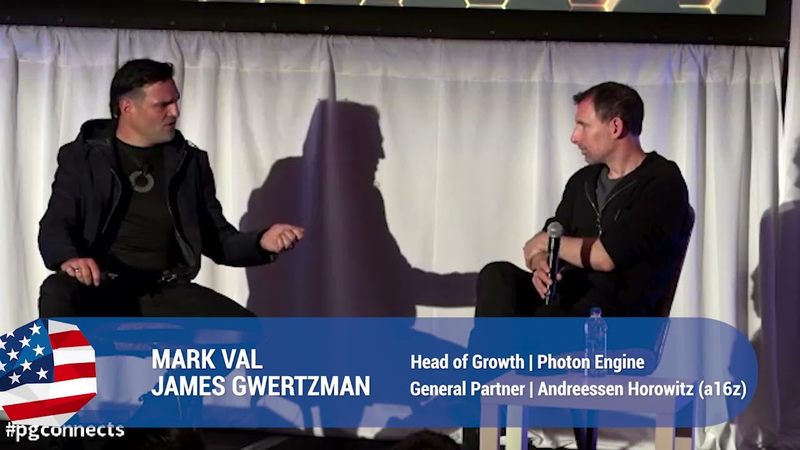
Fireside Chat: The Future of Multiplayer
Success in the modern gaming industry is increasingly defined by rapid execution and iterative development rather than rigid, long-term planning.
- Modern multiplayer success relies on rapid, iterative development and continuous updates rather than rigid, long-term planning or monolithic release structures.
- Studios should prioritize maintaining a playable build throughout the production cycle to mitigate the risks associated with the technical complexities of scaling multiplayer games.
- Multiplayer titles are evolving into persistent social networks, necessitating a shift in development strategy toward live-service models.

How to get into the games industry with Hashbang and AIE
The partnership between the Academy of Interactive Entertainment (AIE) and Hashbang Games illustrates a collaborative model for bridging the gap between specialized game industry education and professional studio employment.
- The partnership between the Academy of Interactive Entertainment (AIE) and Hashbang Games demonstrates that studios can mitigate the risks of hiring junior talent by pairing them with senior mentors within a culture of continuous learning.
- The game industry currently faces a significant talent imbalance, characterized by a surplus of applicants for creative roles like character artistry and a shortage of specialized professionals in rigging, game design, and production.
- There is a specific industry-wide deficit of producers who possess a nuanced understanding of game-specific agile development, as many candidates lack experience beyond general project management.
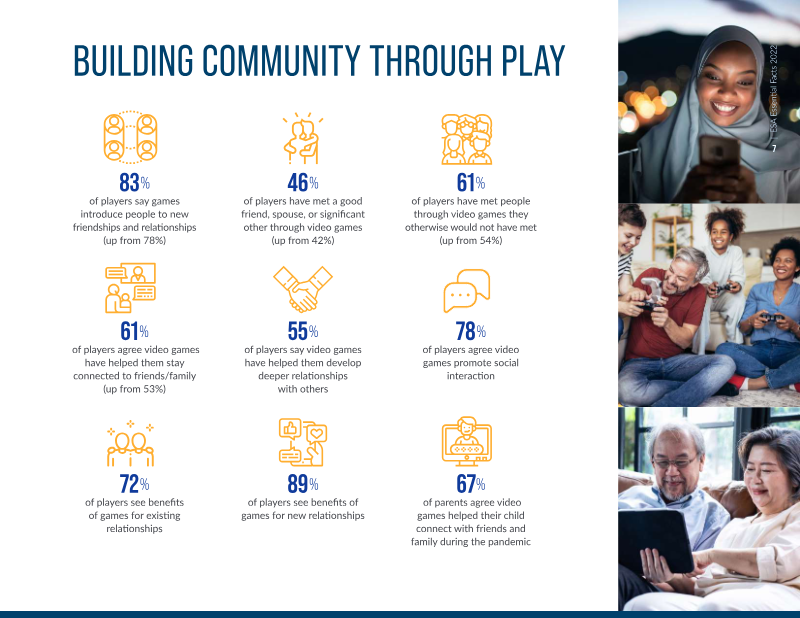
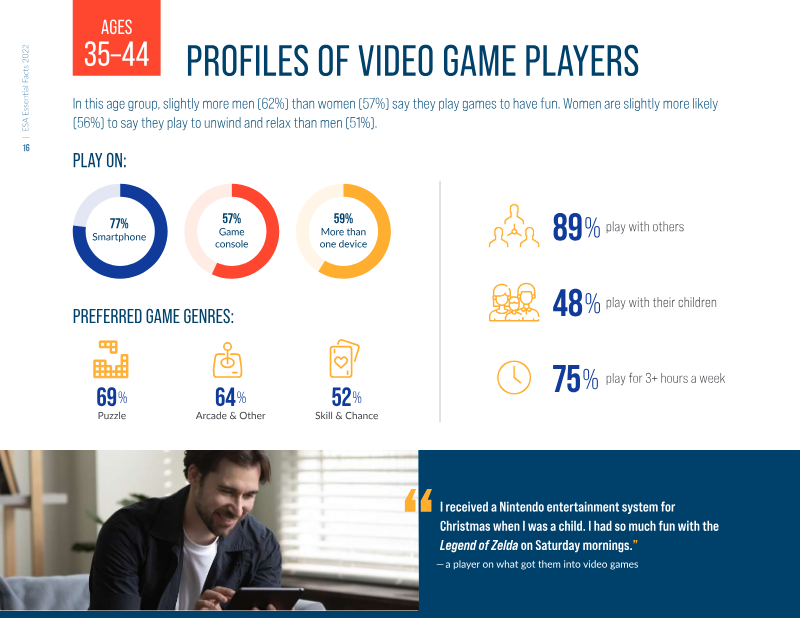

Essential Facts About the Video Game Industry 2022
The 2022 Essential Facts About the Video Game Industry provides a comprehensive analysis of the American gaming landscape, asserting that video games have become a vital tool for social connection, skill-building, and mental well-being.
- The U.S. gaming industry generated $60.4 billion in total sales in 2021, with 67% of players participating in in-game purchases.
- Approximately 215.5 million Americans, or 66% of the population, play video games at least weekly.
- Pandemic-era engagement levels have stabilized, with 90% of players maintaining or increasing their playtime since the peak of the pandemic.

The importance of understanding your players with Josh Rivers from Solsten
Solsten provides game development studios with AI-driven psychological insights to foster human-centric design.
- Solsten provides AI-driven psychological profiling to help studios move beyond surface-level demographic and behavioral metrics to understand the underlying motivations driving player engagement.
- Psychological profiling in Eve Online, which focused on themes of friendship and overcoming challenges, resulted in double-digit increases in player completion rates.
- The developer of Linguinis successfully pivoted a new feature to a team-based format after identifying that their player base was motivated by collaboration rather than competition, leading to improved engagement.

Why My Students Design Escape Rooms
Designing escape rooms functions as a highly effective pedagogical framework for teaching foundational game design principles.
- Designing escape rooms is an effective pedagogical tool for teaching game design fundamentals because it allows students to practice brainstorming, rapid prototyping, iteration, and fine-tuning without requiring complex coding or software skills.
- Escape room projects are highly egalitarian and accessible, enabling teams of four to five students to function as dedicated designers who can collectively build, test, and balance physical puzzles using low-cost materials.
- The curriculum utilizes a three-week structure: week one focuses on research and thematic brainstorming, while subsequent weeks prioritize rapid prototyping and live playtesting.

Extreme Makeover Game School Edition: Do It With or Without a Grant
Academic institutions seeking to bolster their game development programs can achieve significant growth by prioritizing community engagement and strategic internal partnerships over a singular reliance on external funding.
- Academic game programs should prioritize internal partnerships and community engagement over a singular reliance on external grants to ensure long-term institutional viability.
- State-funded matching grants, such as those utilized by NYU, RPI, and RIT, should be treated as supplementary resources rather than foundational requirements due to their rigid spending constraints and administrative burdens.
- Sustainability is best achieved by collaborating with internal departments like governmental affairs and sponsored projects to build a resilient, self-sustaining ecosystem.
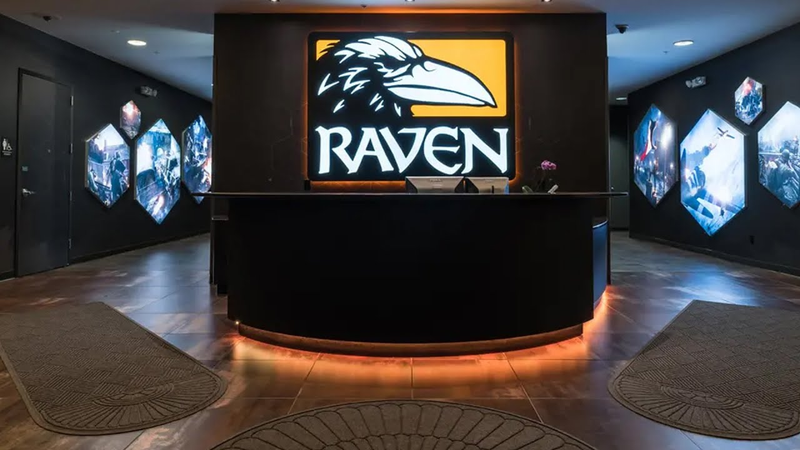
Raven QA are Unionizing | Games ReCAP
Quality assurance (QA) workers at Raven Software, a subsidiary of Activision Blizzard, have initiated a historic effort to form the first major North American video game industry union, known as the Game Workers Alliance.
- Raven Software QA workers have formed the Game Workers Alliance, marking the first major unionization effort in the North American video game industry.
- The organizing effort was triggered by a December 2021 strike following the non-renewal of contracts for several QA staff members.
- Activision Blizzard has countered unionization efforts by restructuring, including a 41% increase in minimum compensation for Raven QA staff and transitioning over 60% of temporary QA personnel to full-time roles.

Personal Projects from Art Boost | Best of 2021 Part 4
The modern game art industry demands a sophisticated blend of technical proficiency and iterative problem-solving.
- Professional success in modern game art requires balancing labor-intensive manual techniques, such as hair card placement, with rapid prototyping tools like VR sculpting and voxel-based modeling.
- Concept artists must shift from static illustration toward modular design and architectural thinking to ensure artistic concepts function effectively within game level systems.
- Personal projects are critical for career longevity, serving as both a portfolio marketing tool and a necessary outlet to mitigate burnout from high-pressure studio production cycles.
Motivations and Demographics Snapshot Report: The Motivations Driving Top Mobile Games, February 2022
The mobile gaming landscape in the United States is defined by a complex interplay between player demographics and a diverse set of motivational drivers.
- Gender and age are primary indicators of genre preference, with women comprising 63% of the audience for Match3 and Hidden Object games, while men make up 76% to 84% of the audience in 4X strategy and synchronous PvP titles.
- Every top-grossing casual game released between 2020 and 2022 has integrated renovation and customization elements to increase player expression and broaden market appeal.
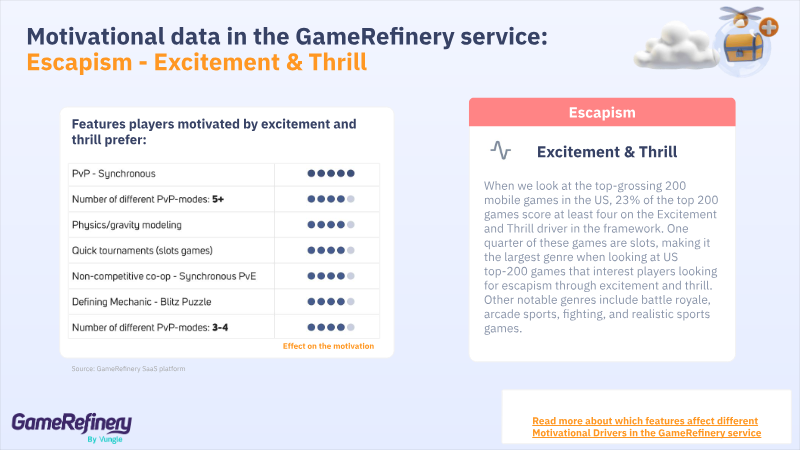
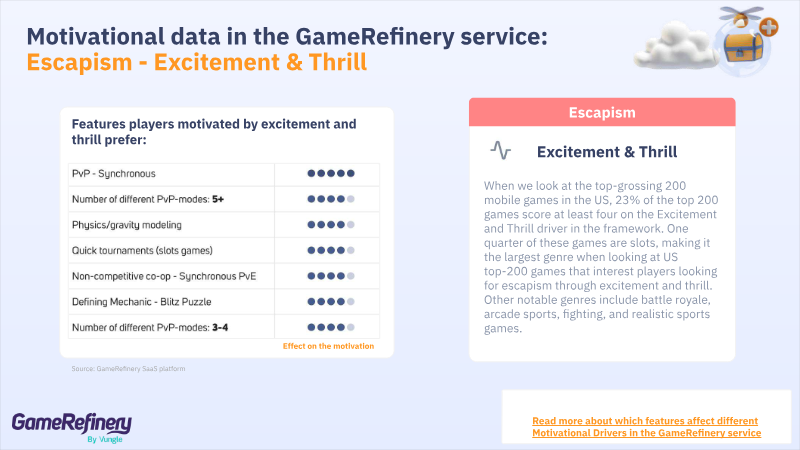
- Motivational drivers are demographic-specific; younger males prefer high-sensomotoric challenges like Battle Royales, while players aged 45 and older seek similar thrills through low-sensomotoric experiences like Slots.
Motivations and Demographics Snapshot Report
The mobile gaming landscape in the United States is defined by a complex interplay between game mechanics and player psychology, categorized through a framework of twelve distinct motivational drivers.
- Renovation and customization mechanics are now a fundamental requirement for casual gaming, appearing in 100% of the top-100 grossing casual titles released in the last two years.
- Motivational drivers for US mobile gaming are highly demographic-specific, with younger males prioritizing mastery and competition in PvP, while players aged 45 and older favor social slots.
- The 'Expression' driver, centered on customization and decoration, is a primary engagement factor particularly among female players who show a strong preference for tycoon and creative titles.

Key Insights Into American Gamers
The United States represents the second-largest gaming market globally, generating $47.3 billion in revenue from a population of 191 million gamers.
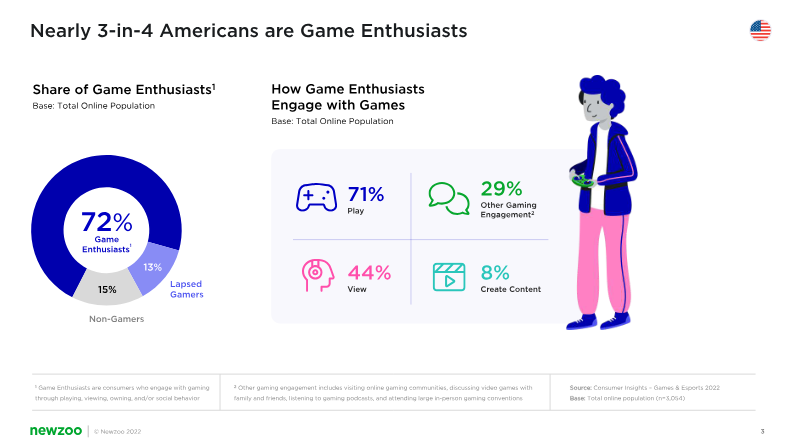
- The U.S. gaming market generated $47.3 billion in revenue from 191 million gamers, representing 72% of the online population.
- Engagement is driven by a mix of play and viewership, with 71% of the population playing games, 44% watching gaming content, and 18% engaging with esports.
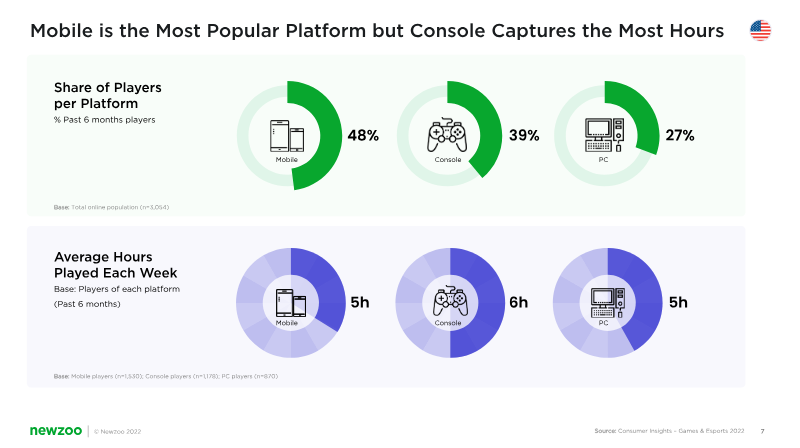
- Mobile is the most popular platform by reach at 48%, while console gaming commands the highest engagement at an average of six hours per week.