1 free read left. Create a free account for unlimited reading + AI research.
Create free account
Panel: CFO Confidential: Best Practice Tips & Tricks
Key insights
6 takeaways- 01Early-stage companies should utilize fractional or contract financial support to establish fiscal discipline if a full-time executive is not yet feasible.
- 02Sustainable growth requires grounding creative development in precise data, specifically focusing on lifetime value (LTV) and return on ad spend (ROAS) metrics.
- 03Studios must prioritize granular, game-level profit and loss tracking and rigorous cash flow forecasting to navigate rising user acquisition costs and the impact of IDFA deprecation.
- 04Financial leadership must integrate deeply with product development to translate complex data into strategic narratives for internal teams, boards, and investors.
- 05Studios should maintain fluid, realistic financial models to manage the inherent volatility of game development, rather than relying solely on venture capital for survival.
- 06Investment trends are shifting away from saturated free-to-play models toward projects featuring platform-like elements, user-generated content, and Web3 integration.
Ask AI about this video
Transcript
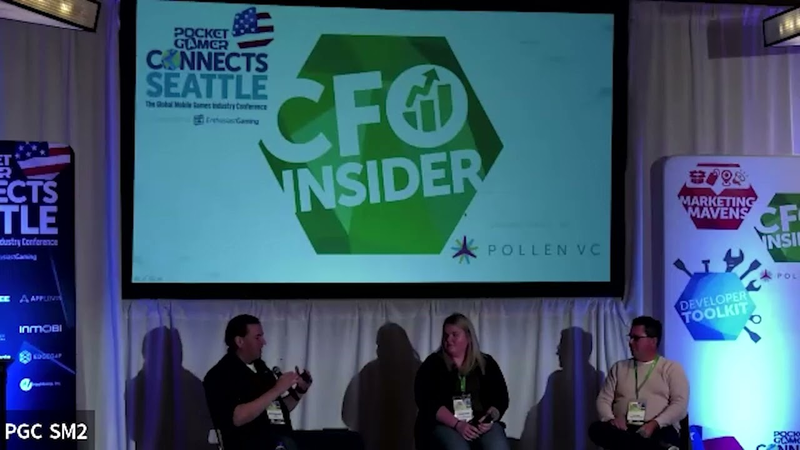
[Music] uh so thanks everyone for tuning in i think technically this is not a panel but a posh fire size i think i think you have to have three to have a panel um three three uh non-moderators so um uh we thought we'd keep it at two and then dive hopefully a little bit deeper into uh into some of the topics and so on so um you guys know me or you would if you were here for my solo about half an hour ago um martin mcmillan founder of poland dc we're sponsoring the cfo uh track uh the whole point of doing this is um to kind of raise the overall level of kind of financial literacy um but also to um you know also for uh for
these guys to to share some of the kind of tips and hints and tricks of um years of experience of you know being cfos and advising startups and so on as well so again we're drilling into the financial topics because this is this is the sort of the the in the armor this is the bit that no one else really kind of tunes in for us that's why we're sort of we're trying to drill into the um financial topics here so um maybe i can ask you guys to introduce yourself want to go go first sure hi i'm joanie i'm the ceo at women in games international we are a non-profit focused on getting more women non-binary and femme identifying professionals in the games industry on a professional side so we want to see more women running studios making games making decisions and really having that seat at the table so we have mentorship programs professional development programs everything is completely free to access and uh it's a really cool opportunity so check us out at getwiki.com i personally am the ceo i started as a cfo about three years ago and i was promoted to ceo because i had an opportunity to just kind of build up that program and then see what else more
what more impact we could make and what more we could be doing uh i started my career in uh data analysis and uh data entry and kind of bridging that gap between finance and i.t and trying to figure out how they could speak better to each other and i just kind of went from there and ended up a cfo um got about 20 years of professional experience now excellent thanks i think whoever's running the slides we've got the people fun slides up there not the cfo panel slides um i'm eric ludwig uh i was at glue mobile for 17 years i was i joined them we were a mobile gaming publisher developer uh back in the dumb phone days um we were 10 million people 10 million bucks in revenue when i joined them back in 2005. we went public in 2007 before the iphone came out i had to change our business model completely from dumb phones to smartphones and free to play and social free-to-play games uh you know i can identify with probably most people in this audience even though we were public we almost went bankrupt back in 2008 uh so like we we have i've dipped my toes into the abyss and you know survived um you know
we then uh acquired 17 companies in my years there uh we ultimately got sold to electronic arts last year for two and a half billion dollars i left in august from ea and now i'm an advisor board member a bunch of different companies i'm together labs a gaming platform metaverse and crypto about 100 million plus in revenue i work for an iot sas company as well i'm the interim cfo there i'm helping out a company in stockholm sweden that's uh electric autonomous vehicles and then lastly i'm working with an ai company in israel i'm on the board of and a seed investor so just kind of really love the the business of games love the business of digital cool okay right so i'm going to i'm going to kick off with a question because this is like from our experience like for some reason and i still don't know what it is mobile gaming companies don't hire anyone into a finance role or a finance lead or a cfo or whatever stage the business is at until way later than a
normal company right sometimes you can see like people doing 10 15 million dollars a year in revenues and there's no one really got their hand on the rudder of the frances so i'm gonna put out there and see if you guys have got some thoughts on when when a mobile gaming studio should hire their first cfo finance lead you know whatever according to whatever stage they're at jenny you've advised a lot of startups here right yeah i i yeah um i think the easy answer is you should bring a cfo on as soon as absolutely possible but if you look at the budget it doesn't always make sense um i'm usually pulled on when people realize that there's an issue or when they want to start paying their friends or their employees and so it's it's more of a cleanup game and a strategy game so i would say the best time to bring on a cfo is when you are ready to be strategic and when you're ready to have a thought partner and that's not always the very beginning of your company sometimes you just need to be really really scrappy and put in way too many hours and try and figure out what your company can look like and how you can monetize it and what what
changes you can be making i know from my perspective because i love data so much i love being part of those conversations on monetization strategies i love to be part of especially pricing because a lot of times you don't consider overhead and so you're under pricing yourselves and you're kind of running yourselves even though you have money in the account you actually don't have as much money as you should have in your account and i know the last speaker kind of talked about having at least six months of payroll in your account so what does that look like to you and it really depends on the size of that company as well so at what point do you start investing and using that investment to help offset your operational expenses as well um so i think from my perspective my favorite time to come on is is when you're ready to actually have that strategic thought partner and have that kind of second in command to to really help you strategize your financial processes and your strategy and and using your your audit team even as a thought partner as well to really make sure that you have everything kind of in place and and ready to go yeah i think if you listen to the last speaker um most of these studios have
less than six months of cash a a month of cash so i i would say it's less about hiring the cfo and you need the skill sets of being able to forecast and that could be a an fp a person it could be a gun for hire who comes in one day a week could be the full-time cfo so i'd say starting with that like if you're a ceo and you don't know when you run out of cash uh you've got a problem already so first start start to try to solve that problem uh and then try to you know add pad the nest and you do that with hiring a gun an outside gun and then at some point when you are looking for strategic uh you know growth or other other components you probably want to bring somebody in-house full-time part-time any views on that sure yeah i mean absolutely there's there's folks you can hire that will do your books and then they'll have a cfo partner that will do two hours a month of helping review the numbers with you so you could kind of you could you can rent a lot of team members without having to go spend a lot of money on the cfo i think that's so important too to have that as almost like a contractor role at first to make sure that it's a
good fit because even if they know everything for finances if you don't talk to each other and you don't listen to each other and you don't work together it's not a good fit even if they know everything and then one thing i would continue to add there is i mean there are folks that you know may not even know the games industry and you may have a bias saying i need somebody that knows games industry and the reality is some of a lot of the skill sets of a cfo are transferable it's why i'm working with an electric electric autonomous vehicle company that's why i'm working for a sas company um so i would start like don't be biased that way there is a point when you're getting a strategic component tree where you really want somebody that has an expertise i mean as martin was talking on two panels ago about ua understanding ua and roas and cpi like there are stuff where you really need that expertise but to start with that function of when do you run out of cash i think that's the number one thing that a ceo is worried about and the last panel said it's a loaning job being a ceo um and you know there's times when you you are worried about the abyss and when you're getting out of cash and you don't want to tell your employees that and knowing that to the payroll when you're going around to cash is important i would say though gaming finance nerds
are like a special kind of nerd that you're really going to have a lot of fun with so so and again we've been asked this question a lot we've been asked even to like interview and arrest where do you find a good gaming cfo i look in the mirror so all right um so i actually i started you know everybody kind of starts at the very beginning so i was starting in accounting and it was it was really understanding that strategy so being put in those meetings with the ceo and being put in those meetings with vps and really understanding what their end goal was and seeing their kpis and then using the financial data to kind of tell the story to help them i'll um really make that happen uh was was huge for me so i would definitely say if you have a bookkeeper if you have somebody who's interested in kind of the big data bring them into those those strategy meetings and have them kind of understand where it is that you're trying to get and that's going to be one of your best allies for sure um i i kind of have
accidentally fallen into a lot of friends startups and non-profits and and other companies that are like how do we do this next thing and kind of coming in to help them set up their financial processes manual and setting up the that consistency especially with finance even if you're consistently wrong if you're consistent you're right and then you can kind of make those adjustments and changes at a later time so i would definitely kind of start with you know doing your research and making sure that if you have somebody who is doing the thing ask them who they are using and and kind of get a good reference from there and the great news is this industry has been around for about 35 years i was at glue for 17 years and you know ea's been around for 30 35 years so there are there are hundreds of people that have worked in finance studio finance um throughout their careers and you can tap into them and you know i i look for a bias frankly of the studio finance as opposed to kind of corporate fp a people uh studio fans finance is really important it's all of your ltv curves it's understanding the game it's working with the game teams on
profitability etc and so that's where i would look i'd be looking for people that you know worked their way through a big gaming organization and then have made the leap into a smaller company so you want that expertise that they've seen it and then now that they've been in a small company as well right so spoiler alert we're not going to get down a massive rabbit hole about ua and ltv modeling stuff but one of the things when we were shooting some notes around is you know forecasting so rather than sort of do it from a unit economics point of view why do we talk a little bit about you know just forecasting how important is because obviously you need to get your you need to get the finances right and so on but when it's you know when the metrics are looking are looking right then um then there's a you know there's a different conversation to have so uh eric i know this is dear to your heart this is this that i mean if if you have multiple games inside your company and you don't have pnls down to the the minutia uh you're you're doing yourself to the service like you you need to be able to do fully allocated pnls for your games that's number one so when i was at glue i was both cfo and ceo um and over the
last eight years of co i grew our india game studio from 30 people doing art for one studio to 300 people overseeing art qa customer care business intelligence etc and we also put our games that were had peaked and were declining our live ops games over to india so i had a p l of 20 million dollars uh in 10 million of profit so this this is if you don't know when your game is you know peaking when your game is declining when you're what your your game profitability is and more importantly you know when you've got an expensive game team in the us and you you want to spin them up on something that's going to be much more higher value-add you need to have a team to hand them off to and do the live ops so um you know knowing all that that's probably the number one thing having gained pnls and understanding all the economics as well as really understanding i know we're not going to talk about this but i mean ua cpi if you don't know your your details in great detail on on your your ua costs on your cpi on your payback curves et cetera um you're flying blind and you're you're torching
a lot of capital man glue we were 700 million dollars of revenue 125 million dollars of profit and we spent 150 million dollars a year on ua um you know we put out a hundred games hundred new games um during my tenure at glue in the social mobile free-to-play games and about four were successful i mean this this is such a hard industry i mean so don't hobble yourself without having great data definitely own your p l i think that was always the number one thing for me is you should be able to speak to every single number on your p l um and i always do like a budget versus quarter and then a budget versus annual so you can always really see that variance and kind of know where you're heading so even if you're a header behind and one quarter is it still in line with your annual um and don't be afraid to reforecast as well so making sure that your your forecast actually matches those kpis and that long-term goal is so huge and so um so powerful to kind of really change the trajectory of your organization for sure staying vaguely on that topic idfa it's a four-letter word that's for sure
um so it's a year now right it's been it's been a year it's almost a little over a year it was it actually deprecated the day that our acquisition with uh ea closed um april 29th and um you know i i think we all had a relatively long time to prepare for it but i don't think anybody really knew what the true impact was gonna be we could hypothesize uh and you know it's it's been tough i mean i think you saw a lot of people shifting to android you saw you saw cpi's dropping but also visibility you know getting very very opaque um and you know i think now people are starting to you know get out of the the fog but uh it definitely do a lot of monkey wrenches for people yeah and yeah you're right the fog seems to be fog seems to be lifting but a lot of people that got used to this world of kind of you know particularly from a kind of a financial point of view almost perfect attribution all of a sudden it's just like you know legs from legs job but um again could get down another rabbit hole on that um why don't we move on to in terms of like a little bit of organizational design where where do finance sit within you know
where's the role is it is it sort of like something that sits to the side or is it super integrated where have you seen it work where have you seen it kind of not work working alongside it doesn't take great it's off the side i mean i mean i think finance strategic finance and to me like that that is a key if you're not looking at a strategic then you you push it to the side so it's got to be woven in with everything i mean my ceo nick earl and i you know we were tied at the hip together i saw him probably four times a day with meetings i was embedded in every you know my team embedded in all of our ua discussions and all of our product p ls i mean actually some of the people i hired in studio finance actually were development directors who also had a finance in accounting degrees and so they like they knew the development process and they wanted to be in finance and and they had done some fp a work before and those were the best people because they they could talk to develop and talk with our game teams and we had games at all life cycles i we had always you know four or five games in development we had we had six big games so for those that maybe don't know who glue is i mean we had we
had design home we had covered fashion we had tap sports baseball we had um we had um diner dash adventures we had kim kardashian hollywood and for us those were we call them growth games so these games grew year over year over year um for six to eight years and and they just kept growing and you know it's kind of on the backs of this ltv curves and you know it was you know the average paying player only played for nine months but you were stacking cohorts on top of cohorts and you know the overall stacking effect allowed us to grow revenue over year over year and then we had games that then peaked and we had games so we had the entire life cycle of game development and so you know finance was woven into every piece of that mix um and then you know that was the studio for the inside then corporate finance we were a public company um so i i was public for 58 quarters and had to talk to wall street you know i was the main face to wall street um and so we had on the corporate side we dealt with the board of directors we did all the board package we did all the forecasting for the entire company we then haircut it for wall street and and dealt with wall
street on the earnings calls you know every three months yeah i couldn't agree more i think the time it doesn't work is when when somebody hires a cfo and then says okay numbers are your thing that's your job and just tell me what i'm supposed to say to the board but really having it as a thought partner really using that data to tell stories um and we know finance is boring we know it we do it every day so if you find somebody who can actually use that data to tell a story put it in and sometimes in a picture form you know using graphs using charts and using it in a way to kind of have somebody have their aha moment of like i i finally understand i finally understand where these numbers are coming from and where they're supposed to be going and what it's supposed to look like it's so powerful but that's that's the kind of partnership you need is with that cfo who can use those numbers to kind of help you elevate what it is that you're trying to do um that's also huge for investors right your investor if you can completely understand your p l and be able to speak to that um having that that ceo with that that strength and that um that ability to speak to their numbers is a really powerful thing and i really feel like that's the cfo's job is to make
sure that the ceo knows their p l and understands exactly what it is that they're doing johnny you've called us nerds and not fun you're still taking a lot of offense to this it's okay so what i'm hearing is integrated right so however you do whatever size a company integrated and then the telling stories through numbers so that's and that's probably important to project internally but you know let's talk maybe for a little bit about investor reporting so and so it can be i mean well we've got we've got the bookends here right we've got the the wall street you've got you know what you think they are and then it's kind of haircuts if you like because you've got to build a margin of error for the public but also you know i'm sure people the other end uh very often kind of override it maybe for their for their early stage investors showing more maybe more progress is there whatever so what i don't know what what lessons maybe you go from kind of early early to later how do you advise people to you know like is there a sort of a template or how do you get them to tell us to tell the right story through the numbers to investors i like to have a meeting with the team and really listen to what they are saying to
me and what their pain points are um i know when i first started with an organization the ceo didn't have any any trust in the financial system so it didn't have any trust in the numbers themselves or in how they were being reported and didn't understand them and so kind of taking that step back and doing sort of a whole financial strategy for the entire organization to really say this is what we're trying to do this is the true you know cost of not knowing your numbers and really being able to speak to um to what that looks like so that the the internals of the company can understand what those numbers should be and what they what they're saying as they as they're coming out um it really also helped with you know the sales people and being able to speak to what it is that you're trying to sell if you don't fully understand why the cost is you might start communicating that oh we know it's overpriced and that's not something you want to be telling your investor or a buyer so so being able to fully understand what it is that you are doing from an internal standpoint i think is the very first just kind of that baseline is making sure your employees and your staff and your team know exactly what
those numbers are and what they mean and where they want to be from there you can take that to the investor because then you can start being able to speak to what it is sort of externally and and having that opportunity to again tell the story of the organization but also that one three five year strategy of where you want to be um is also so important so um i always kind of start with internally what is it that we're having our pain points on where is it that somebody doesn't understand what it is that we're doing and then kind of growing from there but again i've i've been working with a lot of smaller companies that are working on growing so i'm sure that's very different when you have seven million people that under you so yeah i mean to me there's multiple constituents as to who i speak to i mean my job is to be a narrative storyteller um you've got employees you've got you know private company investors and then as glue and public we had we had public market investors and you know we went public back in 07 and our first ipo roadshow deck you know actually had us a picture of a cell phone bill and it showed listen in wall street you can actually buy buy a game on your phone and charge
sprint and verizon by the way that was the model back in 9 before the iphone came out before the app stores came out and our entire business was that you know there was there was glue and there was jammed at with the only com public companies that were doing they were public and doing mobile games and the iphone came out and that changed and so my my job was a narrative storyteller to kind of walk wall street through that then we were public before zinger went public and you know i had to talk to wall street about what free to play is what is a social game what is a social mobile game so that was a whole bunch of storytelling then we acquired crowdstar back in 2016 and we rebranded the company and we had a whole bunch of storytelling around that and it was about growth games and how these games are stacking we're stacking cohorts and stacking revenue on top of each other um so i think three i've had three big big narrative shifts at glue uh where it was about storytelling and then you know every quarter we were public i had my internal constituents i talked to my employees and we would have uh all hands once a quarter and you know i had my board of directors i had to talk to so
different audiences different messaging uh but a lot of the same messaging as well cool um so one of the things we're going to talk about is when it's when it's you know when you've got a brand new game so you're sitting there and there's all these different things you basically know nothing how do you think about forecast or planning and forecasting of how you're going to build how quickly you get to market how you're going to acquire use because it seems like at that stage there are just so many unknowns in the equation hardest thing hardest thing to do i mean new game forecasting is incredibly hard and we i've done it right and i've done it wrong um you know we had a game wwe that launched in 2019 and you know i we we had a complete face plant we we had some golden cohorts and you know people were misinterpreting the golden cohorts and we thought this was going to be a great game on that earnings call a month a month later i talked about we're launching this at the end of may and within literally six eight ten days of launching the game the cohorts just collapsed and you know we had massive
egg interface where i actually put a forecast out there to wall street um with the game and these numbers and i was at a conference ten days after launch in the game and i had to talk that down because i was entering my quiet period and it was terrible it was an absolute disaster and you know at that point after that part of my narrative storytelling is we stopped giving guidance for new games so you know i think where this is really difficult is i think everybody that creates games think that they are going to build the next clash of clans from supercell and you know how many people try to chase supercell clash of clans there's thousands of them and nobody replicated that and so this is a hard business and you couple that with what the last speaker talked about how most of these game companies have one or two or three months of cash like that isn't that's a vice grip of stress um so getting that that first game forecasted correctly if you don't know your cpi if you don't know you so for us when we were launching a new game if if it was a game that had two other corollary games inside so if it was tap sports baseball 2020 we obviously could look at 19 and 18 and 17 that was our games to
accurately forecast that if it was disney sorcerer's arena which is one of our games you know we can look to the game team that we hired from ea that did uh galaxy heroes um we were disney source arena so we could look to replication games but when you're launching a brand new game and a new genre that you probably don't even know about that's where it gets really murky and you know you want to be doing beta so i mean all the i'm talking mobile games now so i'm not talking pc or console but in mobile you you launch in in canada you launch in new zealand and you're doing that for three six nine months before you go global so hopefully by then you know what your cpi looks like you know you know what your curves look like you know what your day 90 looks like and you know if if you've got targets that you're not hitting them you you you don't get a second chance for a first launch and so like you should not launch that game until you know it's ready for prime time i think keeping in mind too that um that the forecast is really a tool and it's fluid and it's ever evolving but using it in a way to determine factors
that maybe you don't want to be changing three six nine months down the line so should it be free to play should it be subscription based um things like that based on you know where you want it to live is is really the goal of that that very first initial plan that you're putting together as well how many people should be working on it what should their salaries be how much time should they be dedicating towards it how much overhead can you really accommodate marketing things like that is is really the goal of that very initial uh plan that you're kind of putting together as well so what about venture funding then of of new games you you know it used to be you know you would pitch a concept whatever how far down the line i mean well it's a different market it used to have to seem to a few years ago get really far down the line before you're gonna be able to venture fund it and that line seems to have come back a bit in terms of like you're back to kind of good ideas and working at good companies i don't know if you've got any any uh any views on that yeah i mean i i guess i i don't know that the market is super frothy on on gaming uh investments i mean a lot of vcs have been burned by games i mean
anybody here who's who's been laid off by a gaming company i mean hopefully i would suspect it's mostly most everybody here if you've been in more than three games i mean it's it's a very it is a very vicious business um and what i've seen from my perch and you know i've been public not private in a lot for a long time so i may not be that in touch with the the venture community most of them have invested in games and been burned and i don't i wouldn't say it's frothy and certainly in the past three months i mean the nasdaq's down 24 as of this morning you know that's trickling through the the private sector as well so this feels like 0.8 this feels like 2001. um for those who've been through you know i've been through three recessions 91.01203 and 08 so for the for those and i think that's that's an important let me kind of side sideways topic here you know if you're if you're a ceo if you're at a game company and you've got a bunch of you know 30 or younger people's they've never been through a tough cycle like boy that that is that's difficult so prepare like you know there's some great presentations out there if you go to sequoia capital from 2001 it was like
winter is coming and that wasn't the title i think that's more of a game of thrones reference but they got a great presentation for that they presented to their companies back in 0-10203 but there is going to be some really tough times coming up now there's a recession coming most likely and you know this is going to ripple through you know employees etc and i think getting prepared for that so sorry i kind of want a right turn on that question anytime you bring up game of thrones it's totally fine it can keep going um so we have an entire workshop at wiki um focused on uvc funding and how to pitch a game and what that looks like and what it means and so um i know there are you know a lot more steps specifically for for women and marginalized people who who maybe have to answer a couple extra questions then um people who already have maybe have a successful game or or maybe just already know the vc funders um so there's there's definitely kind of that that balance of how much time and energy and effort do you put into something that you can't pay yourself for um versus you know how much time do you do you kind of invest in which vc investors you're looking for as well so
i think there's there's a lot of opportunities to kind of um use models to build out what the game deck the pitch deck really looks like um and i would love to talk to you if you have any questions on that how's that uh another thing i would add here is i mean i've i've spanned both gaming for 17 years and software for another 15 years before that so there's a reason why software companies on public wall street trade at 20 to 30 times revenue it's because you build it once and it's a repeatable machine and it's a selling problem and that's why software companies have such a high valuation gaming business you know you could have the game team that built star wars galaxy of heroes and give them the next you know star wars ip and they might fail there's there's many many experiences where you know the team did not replicate success you know two three times in a row because it's hard it's very very hard so like you can have a lot of conditions in in items of your recipe and that that recipe is going to come out wrong the second time in the third time and i think that's why vc funding is less less exciting for this
industry it's my valuations are lower um it's it's why like you you don't have that success um always it's gonna be interesting i remember when we first started doing this there were very very few investors that would invest into gaming companies and all of a sudden gaming's got really hot tons and tons of money is trying to find a way into gaming so there's been a lot of you know vc funds have raised huge rounds and so on and you know some of these recently closed just at the time they've got to sort of deploy them and everything in sort of public market stuff so there's a sort of lag of the vc markets the public markets and that capital is going to have to find a home if it's going to be deployed so i don't know we've seen definitely more people get more funding at an earlier stage than was the case maybe two or three years ago um but it'd be interesting to to see i mean the answer is no one knows how that's gonna that's gonna pan forward and and play forward but well i think the the money will chase things that are more repeatable so subscription is great versus one-time purchases uh platforms you you look at roadblocks i mean that
is the definition of a platform and you know so games that have have platform look-alikes that have ugc um you know blockchain and nfts so i think that's where the money will chase um you know tradition traditional free-to-play games you know if if you don't have any of those elements i think you'll have a harder time raising money if you've got one or more of those elements you'll have an easier time yeah i think that that's definitely playing out just you know wigging conversations here you know just around there in the market there's like you know if there's a if there's a web 3 angle to it that's the new shiny thing frida plays a little bit sort of that's been around for a while now right so it feels a little bit jaded particularly with like super super high cost of advertising and stuff um well maybe we should we wrap up there i don't know ask if we've got any any any time for any uh any quick q as well we've got these guys here yeah i mean i was just gonna actually um make a comment because um well this is a your opening question about when to hire a cfo i think it's a really important one
and we struggle with it in our company particularly because we do know data we do know stuff and there is a lot you can do with things like xero and we're a big fan of float uh which is a really good tool that works with um with xero so what the question really is is um for people in our situation who we have some competence but we're not accountants we're not those kind of things and you kind of talked about directory what can we do in the meantime as we're getting to the point where the company is sustainable enough to then hire that very necessary cfo what do you do in the meantime yeah i mean it's it's probably you know have your ceo or somebody who's inside your finance or network with folks and you know it's built the list is a are are you doing the following things you know forecasting properly do you know your ltv curves do you know your your cost of cost acquire and roi and roads and you know um do you have integration with your do you have studio pnls you have game team p ls if you if you say yes to all those things you're probably doing the right things if you said no to all those
things you can seek those out pretty quickly um certainly the cash forecast like cash forecasting maslow's hierarchy that is the base level if you if you're not doing knowing when you're running out of cash uh you've already got a problem so it would be like those are probably the four five or six things that i would say that should be on your list and if you if you're not doing them you know start seeking out people i mean in our case we've actually replaced our milestones with the kpis so as we get games ready for live we're building our kpis as part of that process until we get hit the kpis we don't launch the game right but then that does all have all sorts of other consequences about timing and management and i'm not going to bore you with all that do you have any connected to that yeah i think that was a really great answer like really having that list of your need areas and figuring out what it is that you're looking for you're not just hiring a cfo because you're supposed to hire a cfo now but actually hiring somebody to help you fill any need gaps that you have yeah i think that i mean like you say having the right advice around you having friendly people you can bring in and obviously with the publisher it's kind of a different beast as well because we've got to worry about paying people
when they're coming lots of fun things being an entrepreneur in this industry um so we are i mean unfortunately sadly out of time but i mean i think there are so many areas that i think hopefully you guys have picked up from what you know martin and the folks have been talking about you know understanding how we build businesses is what matters here you know the strategic principles about the vectors of what we're trying to achieve has to be underpinned by data has to be underpinned by sound financial principles because i don't know about you but i'd like to make another game even if this game succeeds i want to be able to make the next and the next and the next and if i run out of money before i get a game that works i'm not going to get to do that and that's to me what it's all about guys thank you so much really appreciate it is this the point where i kind of point out i think i think um glue was selling me games back in 2003 i think well 2003 2004 or something like that is when you guys were selling me games i was running a three in the uk so uh long long
american space and all those kind of guys uh yeah there's amazing amount of stuff that went on back in the good old days of when i was in charge that was moving swiftly on thank you very much guys have been great and of course we have to thank our sponsors because basically as i've said many times we don't get to do this unless we have amazing people who really want to invest in our industry and the people we're talking about here are people like our gold sponsors about loving xola um edge gap we've got uh transperfect gaming we've got um uh in moby we've got free verse we've got shebang games we've got aie we've got 12 traits we've got zebedee we've got pangol we've got um a snappier and for this particular panel martin and polon bc so thank you very much for your contribution you
Summary
Financial literacy and strategic fiscal management serve as the foundational pillars for long-term viability in the volatile mobile gaming industry. Studios must prioritize rigorous cash flow forecasting, granular game-level profit and loss tracking, and precise data analysis to navigate rising user acquisition costs and the structural shifts caused by IDFA deprecation. Even in the absence of a full-time executive, early-stage companies should leverage fractional or contract financial support to establish these essential disciplines, ensuring that development decisions remain tethered to realistic economic models rather than speculative growth projections.
Effective financial leadership requires a deep integration between finance teams and product development, transforming the CFO role into a strategic storyteller. By translating complex financial data into clear narratives, leaders can provide necessary transparency to internal teams, boards, and investors. This approach is particularly critical given that game development represents a high-risk, non-repeatable business model that differs significantly from traditional software. Maintaining fluid, realistic financial models allows studios to weather the inherent volatility of market cycles and game launches more effectively than those relying solely on venture capital.
Current investment trends favor projects that incorporate platform-like elements, user-generated content, and Web3 integration, reflecting a broader market pivot away from saturated free-to-play models. To secure sustainable growth in this competitive landscape, studios must move beyond basic survival metrics and adopt sophisticated financial principles. By grounding creative development in sound data—specifically regarding lifetime value and return on ad spend—studios can better align their strategic objectives with investor expectations, ultimately fostering a more resilient and scalable business model within the global gaming sector.