ReportGameRefinery
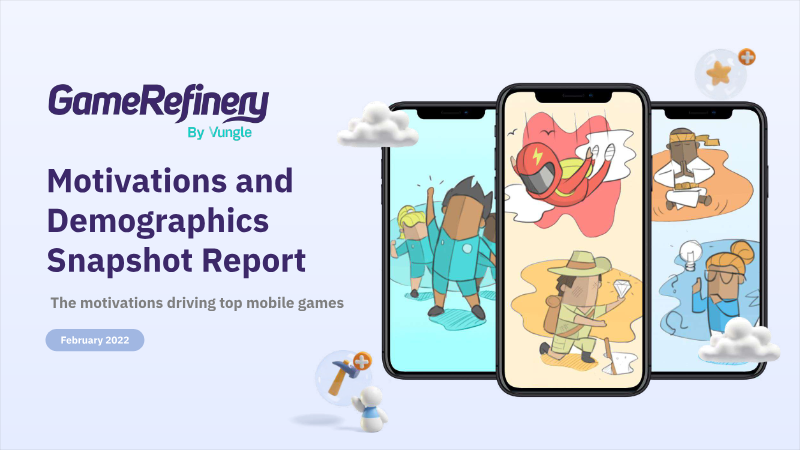
Motivations and Demographics Snapshot Report: The Motivations Driving Top Mobile Games, February 2022
1 Feb 202231 pages~33 min full read
The mobile gaming landscape in the United States is defined by a complex interplay between player demographics and a diverse set of motivational drivers. Analysis of the top 200 grossing titles as of early 2022 reveals that while certain motivations like excitement and thrill are universal, their execution is highly demographic-specific. Younger male audiences gravitate toward high-sensomotoric challenges such as Battle Royales, whereas players aged 45 and older seek similar thrills through low-sensomotoric experiences like Slots. A significant shift in the casual market is also evident, as every top-grossing casual game released between 2020 and 2022 has integrated renovation and customization elements to broaden appeal and foster player expression.
Gender and age remain primary indicators of genre preference and monetization behavior. Thinking and solving motivations, prevalent in Match3 and Hidden Object games, attract a 63% female audience that frequently monetizes through level retries. Conversely, strategic planning and mastery drivers are dominated by male players, who make up 76% to 84% of the audience in 4X strategy and synchronous PvP titles. However, these gender lines blur in specific sub-genres; for instance, while men dominate resource optimization in strategy games, women represent 61% of the audience for similar mechanics within the Tycoon and Crafting categories.
The integration of secondary motivational drivers has become a standard industry practice to enhance retention and engagement. Collection mechanics have permeated nearly all genres, with Slots and character-driven RPGs leading the trend. Social drivers are increasingly facilitated through non-competitive co-op and guild systems, particularly among men aged 25 to 44, while exploration is driven by live events and sandbox elements. Ultimately, the most successful mobile titles are those that layer multiple drivers—such as milestone completion, skill improvement, and social interaction—to appeal to the nuanced psychological profiles of their target demographics.
GameRefinery · 2026

GameRefinery · 2026

GameRefinery · 2026
GameRefinery · 2026
GameRefinery · 2026

GameRefinery · 2025
GameRefinery · 2024
Liftoff · 2024
GameRefinery · 2023
GameRefinery · 2023
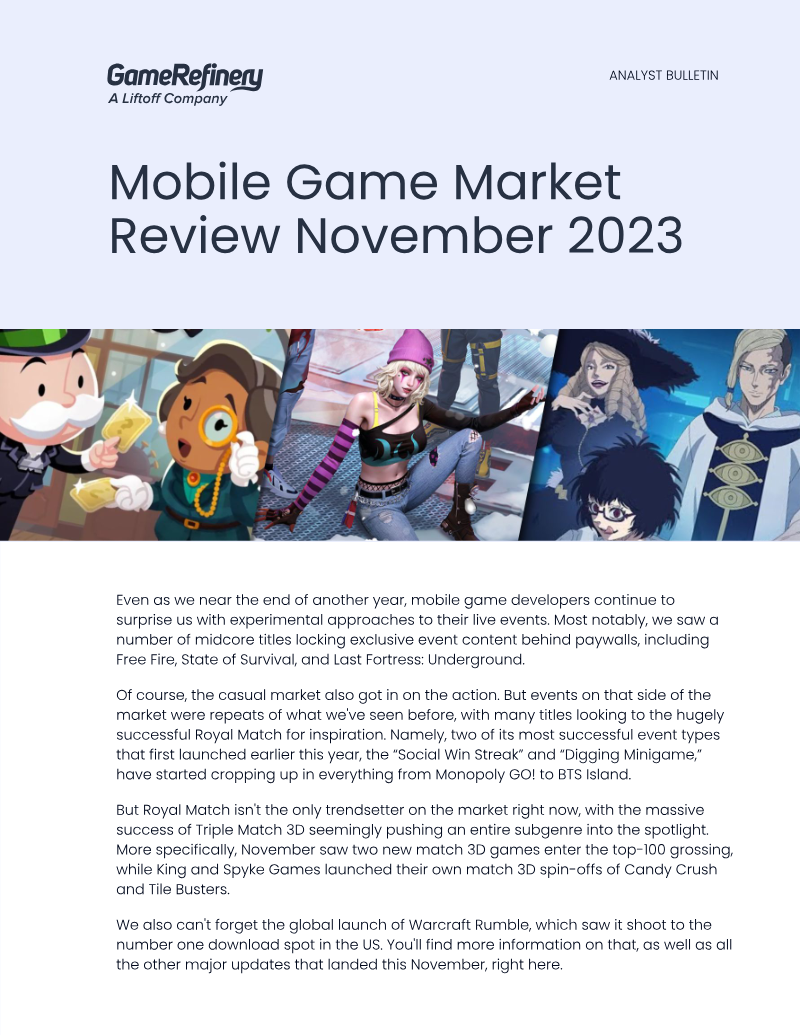
GameRefinery · 2023
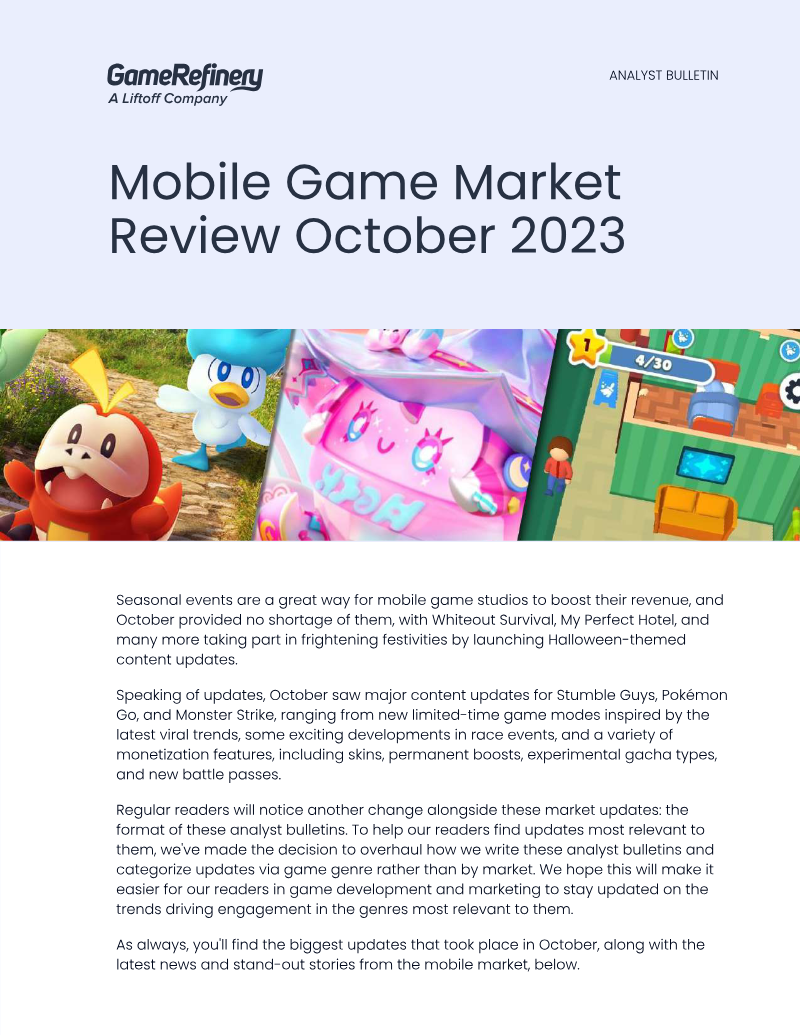
GameRefinery · 2023
Bryter · 2026

Niko Partners · 2026
Vorhaus Advisors · 2025

Entertainment Software Association · 2025

Anzu · 2025
Circana · 2024

Skillprint · 2023

Entertainment Software Association · 2022
GameRefinery · 2022
Newzoo · 2022
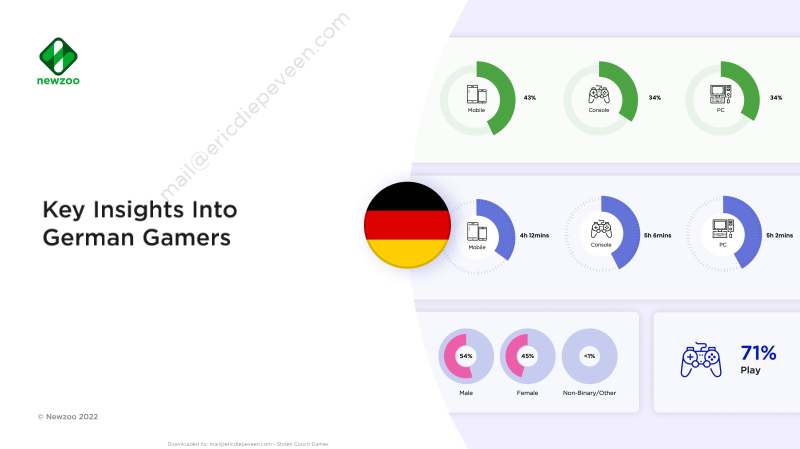
Newzoo · 2022
Entertainment Software Association · 2013