USA reports and market data
Documents

Video Game Lawyers Tackle Fair Use - Extra Credits
The fair use doctrine serves as a critical, albeit nuanced, legal mechanism within United States copyright law, functioning as an essential escape valve that permits the use of copyrighted material for purposes such as criticism, commentary, and education.
- The Supreme Court ruling in Andy Warhol Foundation for Visual Arts, Inc. v. Goldsmith established that altering the aesthetic of a work is insufficient for a fair use defense if the new use competes in the same market as the original.
- Fair use functions as a legal escape valve in U.S. copyright law, permitting the use of protected material specifically for purposes of criticism, commentary, and education.
- Legal analysis of fair use is highly fact-specific, requiring courts to weigh the nature of the original and new works, the amount of material used, and the economic impact on the original market.
Casual Mobile Gaming in H1 2023
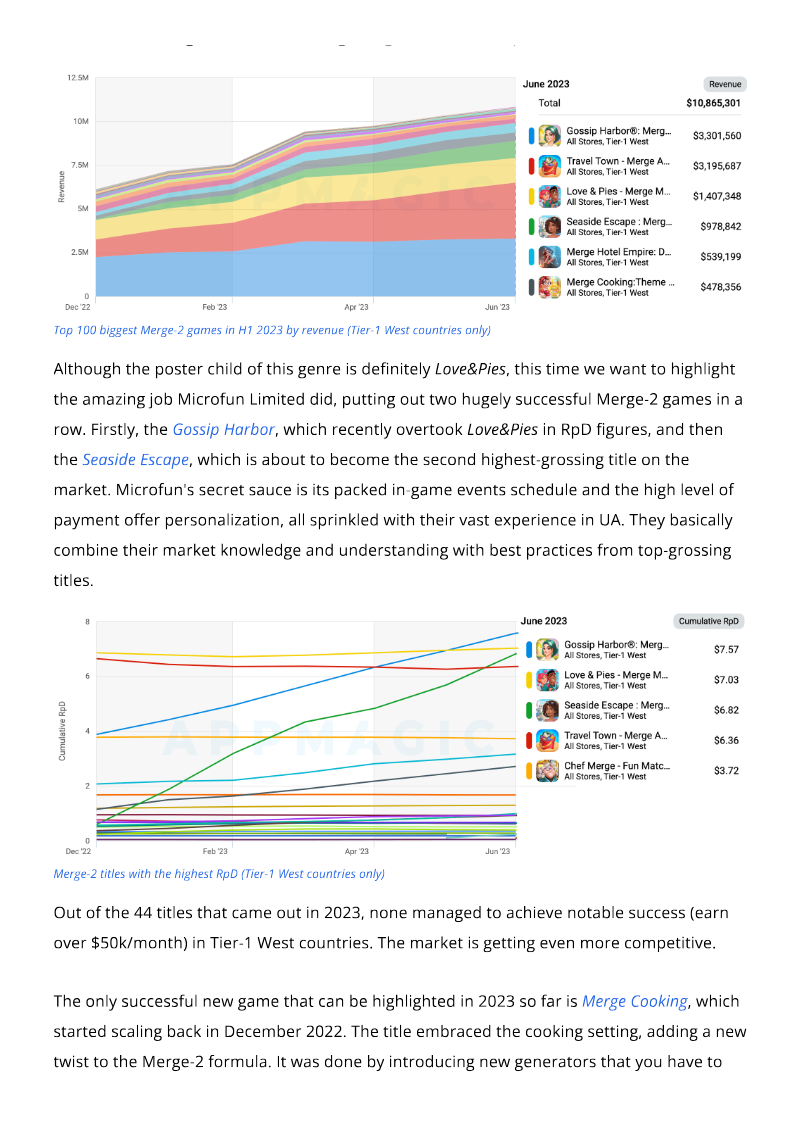
The mobile gaming market in Tier-1 Western countries—comprising Australia, Canada, France, Germany, the UK, and the US—experienced significant shifts during the first half of 2023.
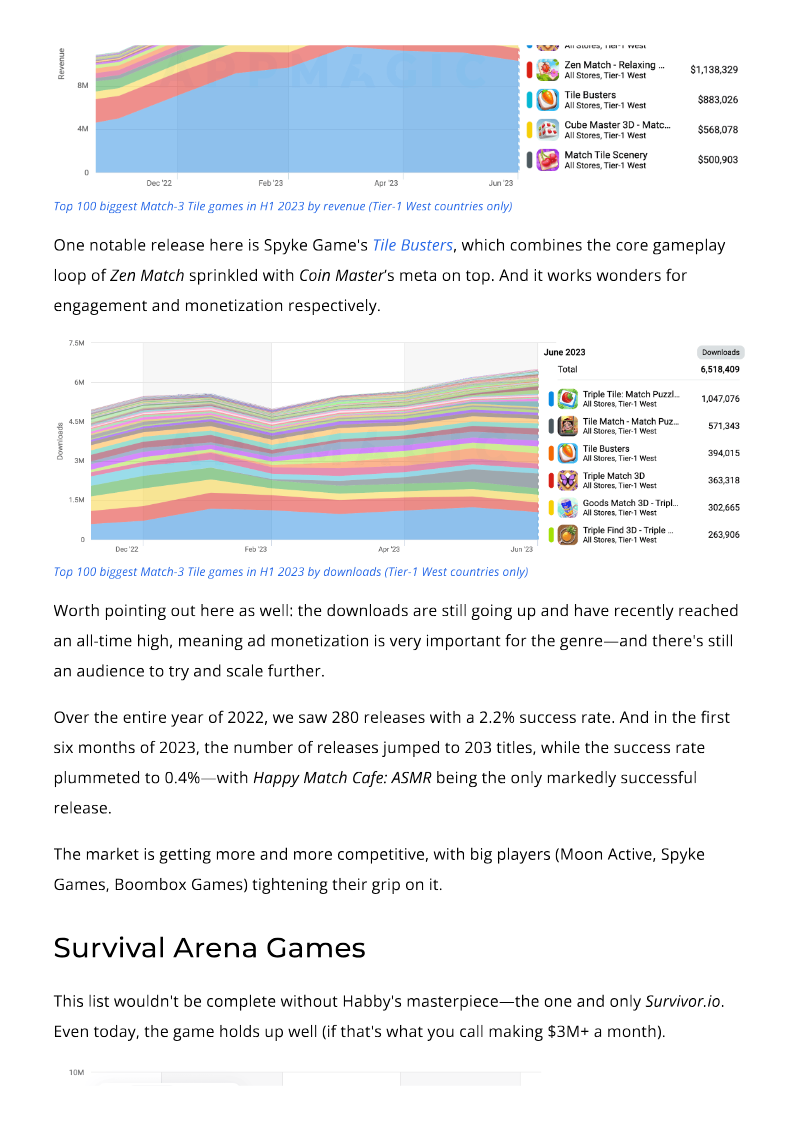
- The casual mobile gaming market in Tier-1 Western countries is experiencing increased saturation, leading to a notable decline in success rates for new releases across most categories.
- The Merge-2 subgenre saw a 60% increase in monthly revenue during H1 2023, though the market has become inaccessible to new entrants with no new titles achieving significant success.
- The Idle RPG sector grew by approximately 20% in monthly revenue in H1 2023, bolstered primarily by successful new releases from South Korean developers.

Using AI to get more from your base | Tara Bryant from Optimove
Customer-led marketing platforms leverage artificial intelligence to optimize player retention and maximize the lifetime value of existing user bases.
- AI-driven retention strategies are now a critical priority to offset the high costs of user acquisition and reduced consumer spending in the current economic climate.
- Centralized customer data platforms enable personalized, multi-channel engagement by targeting players through their preferred communication methods like push notifications, email, and SMS.
- Machine learning models remain effective despite privacy regulations because they leverage a decade of accumulated historical data to maintain predictive accuracy.
The Art of Game Creation: Slim and Trevor of Valorant and Raid Base Live from LA Tech Week
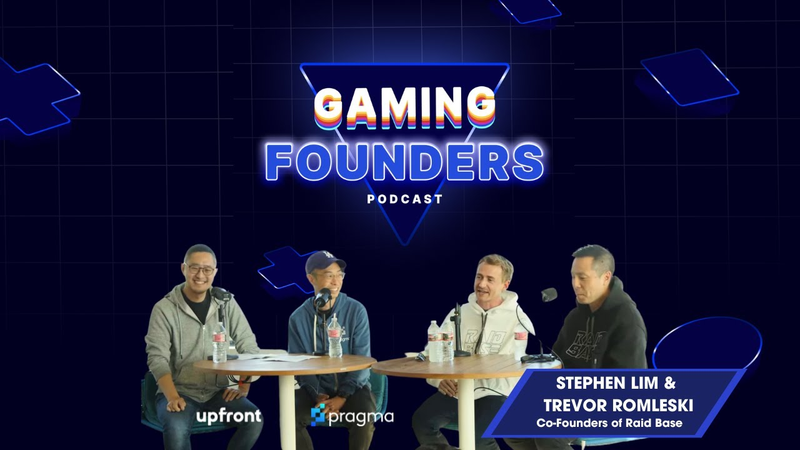
Successful game development hinges on the ability to maintain a singular, cohesive vision through rigorous focus and intentional team structure.
- To resolve design ambiguity during prototyping, Raid Base utilizes a stack-ranked list of approximately 80 features to assess existential questions and prioritize development based on opportunity cost.
- When building a new game, keeping the team size thin is critical to avoid 'too many cooks' and to maintain focus while resolving subjective design decisions.
- Founders should prioritize soft skills, empathy, and team alignment over raw technical capability, as lack of cultural fit is a more common cause of failure than insufficient discipline expertise.

Steel Media’s Dave Bradley On Hot Topics, Hot Takes, And Surprising Statistics At PGC Seattle
Pocket Gamer Connects Seattle serves as a critical barometer for the current state of the global games industry, highlighting a strategic pivot toward quality-focused development and professional resilience.
- The mobile gaming sector is experiencing a significant contraction in new iOS game releases, driven by the erosion of IDFA-based user acquisition strategies.
- Developers are shifting away from high-frequency, low-retention business models toward sustainable, high-quality gaming experiences.
- Blockchain integration in gaming is transitioning from speculative hype toward a model of cautious utility that prioritizes core gameplay mechanics over secondary features.
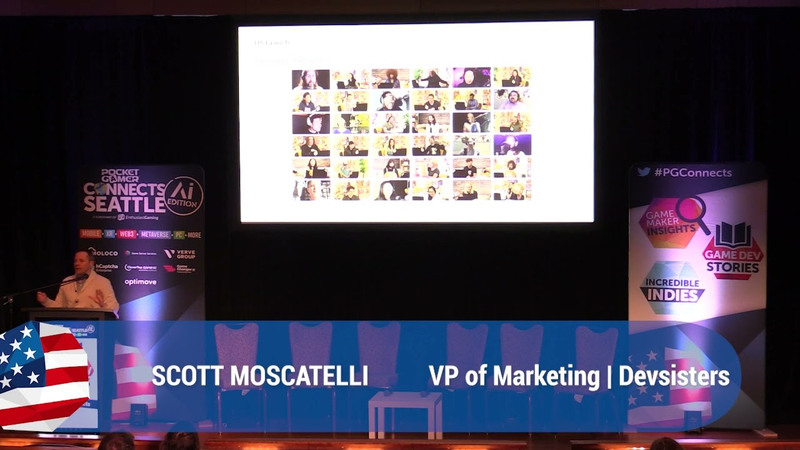
Session: 'Crossing the Pacific' Lessons Learned - Scott Moscatelli, Devsisters
The presentation examines the strategic challenges and successes associated with launching the mobile game Cookie Run: Kingdom in the United States, contrasting this effort with its initial release in the South Korean market.
- Launching a game in a new international market requires a shift from efficient user acquisition (UA) to brand-building when the IP lacks existing local awareness, as evidenced by the initial failure of UA-only campaigns for Cookie Run Kingdom in the US.
- Successful market entry depends on deep localization and community listening; Devsisters achieved this in the US by aligning their voiceover casting with Gen Z values regarding diversity, inclusion, and representation.
- Strategic partnerships with established brands, such as the collaboration with Sonic and Sega, can provide immediate legitimacy and signal strong investment to new audiences in competitive markets.
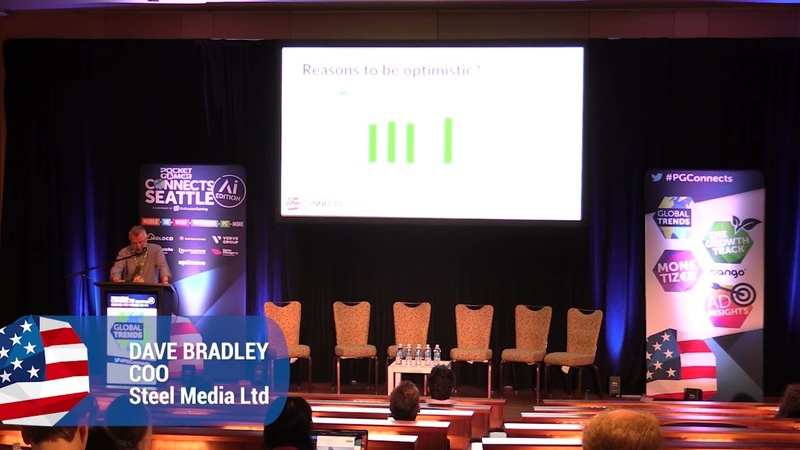
Introduction to PG Connects Seattle 2023, Dave Bradley, Steel Media Ltd
Pocket Gamer Connects Seattle 2023 serves as a professional gathering for the global mobile and broader gaming industry, marking the event's third iteration in the city.
- The gaming industry is experiencing its first revenue decline in approximately 25 years, driven by global economic instability, inflation, and a contraction in investment.
- Despite current headwinds, the industry is projected to achieve 3.4 percent growth by 2025, maintaining its status as the world's largest entertainment sector.
- Market data shows a resilient performance among top-tier gaming companies, which saw a 12 percent share value increase in the first quarter of 2023.
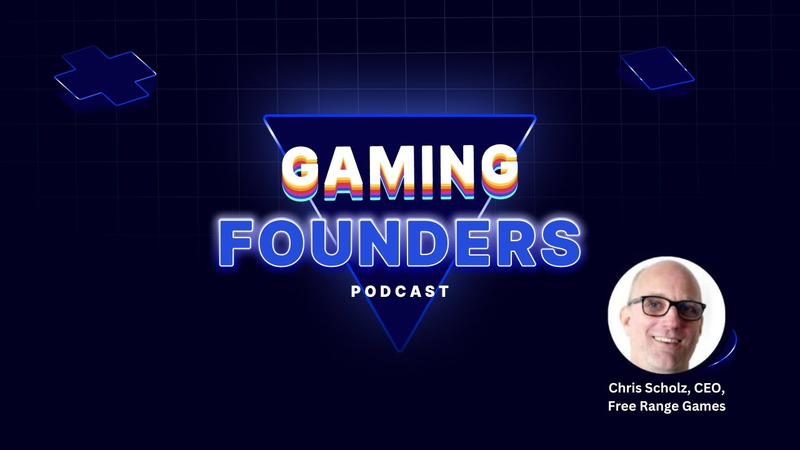
2x Founder Chris Scholz of Free Range Games and Upcoming Blockbuster: Return to Moria
The evolution of game development from the late 1990s to the present reflects a shift from experimental, high-growth environments to a more disciplined, craft-focused industry.
- Free Range Games, founded in 2009 by industry veterans, is set to release its major title, The Lord of the Rings: Return to Moria, a survival-crafting game based on the original J.R.R. Tolkien texts.
- The company maintains a workforce of approximately 100 full-time employees, with a total operational scale of roughly 150 people when including international partner groups.
- Chris Scholz advises founders to stay small and lean until they have validated their product, noting that his team operated with a core group of partners before scaling.
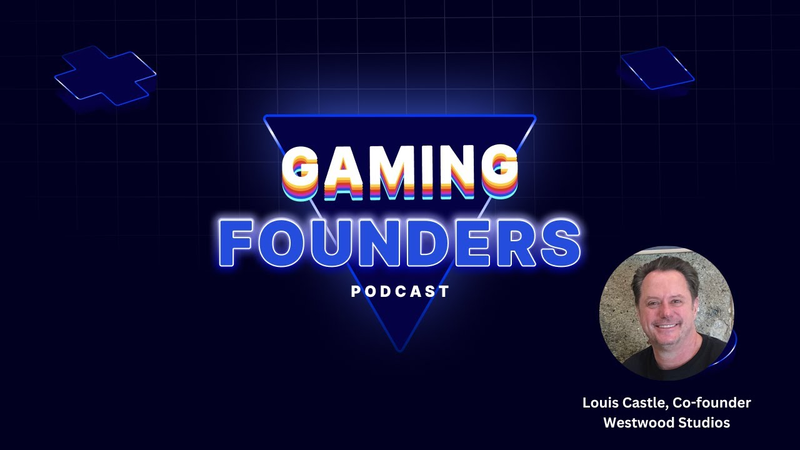
The Storied History of Gaming Veteran Louis Castle, Co-Founder of Westwood
The evolution of the real-time strategy genre and the professional trajectory of Louis Castle illustrate the transition of the gaming industry from a hobbyist pursuit to a sophisticated corporate enterprise.
- Westwood Studios scaled its operations by using contract porting work to self-fund original intellectual property, a pragmatic model that allowed for creative autonomy.
- The studio achieved peak growth between 1992 and 1998, reaching a workforce of 250 employees through the success of genre-defining titles like Command & Conquer and Blade Runner.
- Westwood maintained creative control during four major acquisitions by strictly dividing leadership responsibilities between design and operations.

Jonathan Knight: The New York Times Games Strategy
The New York Times has strategically positioned its games division as a cornerstone of its digital subscription model, aiming to replicate the comprehensive experience of a traditional Sunday newspaper.
- The New York Times utilizes its games division as a core pillar of its digital subscription model, aiming to build daily user habits that drive long-term retention.
- The 2022 acquisition of Wordle serves as a strategic centerpiece, leveraging the game's viral social mechanics and accessible design to bolster the existing portfolio of puzzles.
- The company maintains a disciplined development philosophy by prioritizing internal prototyping and beta testing to ensure new titles align with its broader subscription bundle strategy.
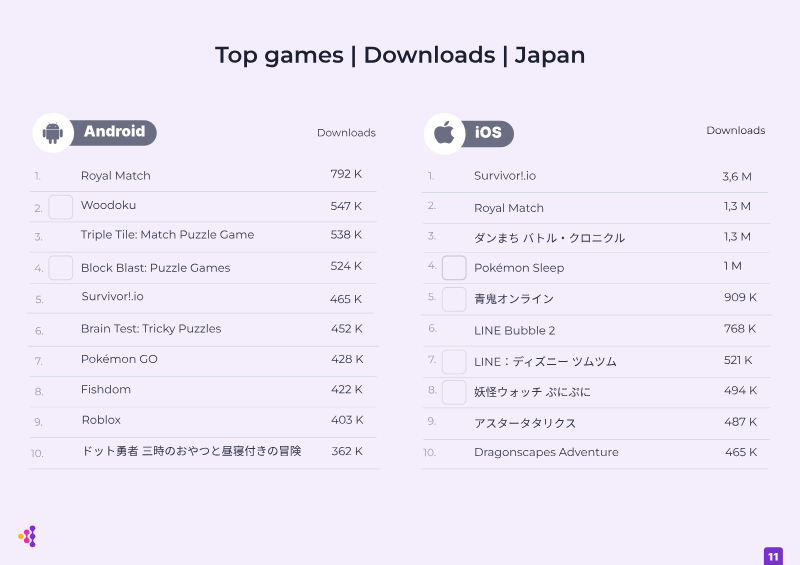

Mobile Games: State of the Market & Playtime Q3 2023
The global mobile gaming market faced a contraction in total installs during the third quarter of 2023, reflecting a broader cooling trend in user acquisition.
- iOS remains the dominant platform for mobile gaming revenue, accounting for 56.01% of the total global share compared to 43.99% for Android.
- The United States and Japan are the leading revenue generators among major markets, contributing $2.92 billion and $2.03 billion respectively, with the six analyzed countries accounting for 59% of global gaming revenue.
- South Korea experienced the highest growth in game installs at 32% compared to Q3 2022, while the United States and France saw declines of 5% and 0.7%, respectively.


State of Mobile Games: Cognitive and Psychological Benefits
The report investigates how mobile games influence cognitive and psychological well-being, drawing on a large U.S. sample of 483 participants (252 men, 213 women, 18 non-binary) and a series of 28 individual game studies.
- Mobile games function as effective, scalable tools for mental well-being, with specific titles demonstrating significant positive effects on creativity (Colorize, d=1.17), focus (Sound Sky, d=0.90), determination (Nature Video, d=0.76), and calmness (Color Breathing, d=0.61).
- Personality traits significantly dictate user engagement, as extraverts favor social and action-oriented games while introverts prefer relaxation-focused titles, and openness correlates with immersion and inspiration motives.
- Game mechanics directly influence psychological outcomes: puzzle-centric titles consistently boost creativity and curiosity, whereas timed or competitive games are more effective at enhancing focus and grit.