1 free read left. Create a free account for unlimited reading + AI research.
Create free account
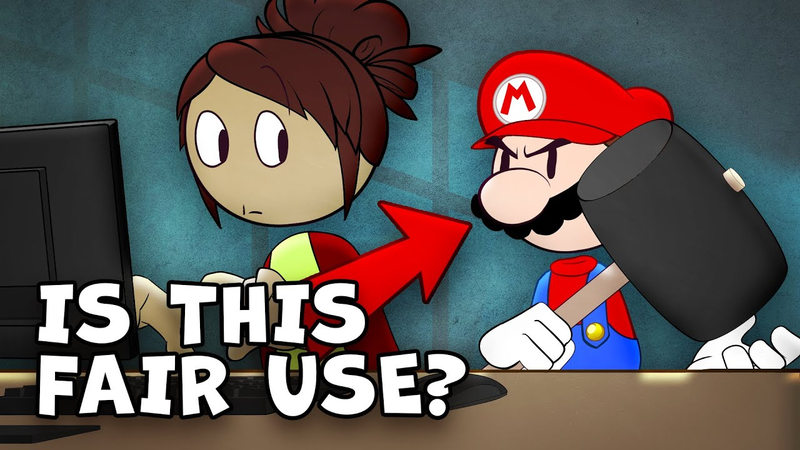
Video Game Lawyers Tackle Fair Use - Extra Credits
Key insights
6 takeaways- 01Fair use functions as a legal escape valve in U.S. copyright law, permitting the use of protected material specifically for purposes of criticism, commentary, and education.
- 02Legal analysis of fair use is highly fact-specific, requiring courts to weigh the nature of the original and new works, the amount of material used, and the economic impact on the original market.
- 03The Supreme Court ruling in Andy Warhol Foundation for Visual Arts, Inc. v. Goldsmith established that altering the aesthetic of a work is insufficient for a fair use defense if the new use competes in the same market as the original.
- 04The Warhol decision emphasizes that the context of a work's use is as legally significant as its expressive nature, particularly when commercial licensing is involved.
- 05For the gaming industry, the Warhol precedent means that fan games, mods, and derivative content must provide clear commentary, criticism, or parody rather than just changing the expressive effect of the source material.
- 06Future legal scrutiny regarding fair use in the gaming industry is expected to focus heavily on the training of artificial intelligence models.
Ask AI about this video
Transcript
Way back in 2016, we gave an overview of US intellectual property law. In that video, we talked about the need to strike a balance between keeping design ideas open and available while providing some protection for the people who actually develop and introduce cool new stuff. But what we didn't talk about in that video, and we'll be talking about now, is one of the most frequently misunderstood concepts in the world of copyright law, fair use. And wouldn't you know it, the US Supreme Court just issued one of its biggest fair use rulings in years this past May. So we've once again brought in our video game lawyer friends from Ties Law, Joe Newman and Jonathan Downing, to explain what this decision means for the games industry, as well as, you know, the making content about the games industry on the internet industry. You know, just in case that ends up being relevant for anyone here. This legal discussion that affects the gaming space is made possible by Nebula, where you can watch this and all of our other episodes without ads like this one for Nebula.
Now, real quick up top, it is only fair for us to remind y'all that the views expressed in this video are Joe and Jonathan's own and do not constitute legal advice. But of course, we'll leave their links in the bio if you want to get in touch with them directly. The goal of copyright law is to promote creativity. We incentivize people to make new creative works by letting them, quote unquote, own their work and license it as they please. And despite how any of us feel about certain companies and their approaches to copyright enforcement, the games industry as we know it, frankly, couldn't exist without some form of copyright protection. But by the same token, we also have to make it very clear that there must be some limits on this right, because if you could block any copying of your work, it might actually undermine people's creativity and slow the development of new works. Enter the fair use doctrine. Fair use is sometimes referred to as an escape valve that allows the US copyright system to function properly and not clash with people's first amendment right by permitting them to use portions of copyrighted works to criticize, comment
on, report on, or otherwise talk about the works for educational or research purposes. Fair use is also a legal defense in a copyright dispute that essentially says, yes, I did copy your work without permission, which is usually not allowed, but it's legally okay here because reasons. But what reasons you ask? Oh, there's the rub. Fair use analysis is an extremely nuanced area of the law. Courts consider a bunch of different factors, such as the nature of both the work copied and the new use, the amount of the original work used, and the effect on the market caused by the new use. Ultimately though, the reality is, if you find yourself in court arguing fair use, you've probably already been sued for copyright infringement, which is not a particularly fun thing to happen. And making matters more complicated, fair use analysis is very fact-specific, which makes it hard to generalize about. So, rather than dive into a lengthy law school lecture, let's instead focus on this one recent Supreme Court precedent, Andy Warhol Foundation for Visual Arts
Incorporated v. Goldsmith, and how it applies to games. First, a bit of background though. Lynn Goldsmith, a professional portrait photographer, was commissioned in 1981 by Newsweek to take a picture of the then up-and-coming musician, Prince. Then in 1984, Vanity Fair paid Goldsmith for a one-time limited license to use that photo as an artist reference. And Goldsmith's photo was then adapted by Andy Warhol into a series of silk screen portraits. In 2016, following the death of both Andy Warhol and Prince, Condé Nast paid the Andy Warhol Foundation $10,000 to publish one of those silk screen portraits on a magazine cover to accompany a story commemorating Prince's life. Goldsmith got bubkes, and that led to a lawsuit. Now, the Supreme Court was not tasked with definitively ruling on whether this was fair use. Instead, they were just answering a narrow question. Specifically, whether the Andy Warhol Foundation's licensing of Orange Prince was transformative enough to weigh in
the Warhol Foundation's favor. And in short, the Supreme Court said, "Nope." Now, hold up a minute. They're saying Andy Warhol is found not to be transformative? I mean, isn't that his whole deal? Taking pop culture stuff like soup cans and transforming them into different styles of art. So, if that's not sufficiently transformative to be fair use, what is exactly? Ah, but you see, this is why we said this is a nuanced area of law. If you go back and check this episode's transcript, or you know, just scroll back on the player, the question wasn't whether Warhol's creation of the Prince portraits was transformative. It was whether the licensing of that portrait to Condé Nast was transformative. Remember, it's fair use, not fair work. Fair use may apply when a person uses a work in one context, say when they repurpose a celebrity photograph as a work of visual art, hung in a gallery, and not protected when used in another context. So, when the Warhol Foundation licensed Orange Prince to Condé Nast to promote Prince, that was pretty much the
same thing they could have used Goldsmith's original photo of Prince for. So, in this case, not sufficiently transformative. Okay, so what does this all mean for games and similar content based on existing media? Well, when someone creates a fan game or mod, remix, artwork, or some other work that contains copyrighted material, they'll often point to how their new work has a totally different aesthetic or expressive effect than the original. But now, this case shows that if that new use is still in service of a video game or song or whatever, then changing the expressive effect alone might not be enough. Even more so, if your new use is commercial or competes in the same market as the original work. So, if you are dead set on copying a recognizable source, you need to take a deep look and see if your use truly counts as fair. Ask yourself, what am I saying about the original work by using it here? Am I just using it because it's cool, or am I trying to say something specific about that original work? And critically, is
it clear to my audience what I'm doing? This applies to both entertainment content and content about entertainment. The clearer it is that you're commenting on, criticizing, or parodying the original work as opposed to just using that work or criticize something else, the better off you'll be. Fair use is ultimately a tricky but important aspect of copyright law, one we expect to see developed a bit more over the coming years. But one big question that's begging to be answered, but that we're actually not going to dive into today, is whether using copyrighted artwork to train AI models is fair use. Yeah, both sides of the AI debate are claiming that this Warhol decision helps their side, so I guess we'll see who's actually victorious when the courts weigh in. As always, there are plenty more angles to discuss here. Do you think the Supreme Court got it right? Or do you think that the Warhol print sufficiently transformed Goldsmith's original photo? Be sure to let us know what you think in the comments or on the socials, and thanks again to Joe and Jonathan for providing this breakdown. Nothing compares to you guys. What, it's a
Prince reference? I'll look it up. Wait, you all thought that Sinead wrote that classic? Jeez, IRL Matt, how did you get into the animated space? That would be you leaving the animated door open that IRL Zoe noticed. Mind if I take a moment at the lectern? Um, sure. I'll just be over here freaking out about how my entire universe works. Thanks, bud. Hey, everyone. Now, I know you've heard animated me talk about Nebula in the past, our creator-owned and operated streaming service that I'm just really proud to be a part of, but I realized that I'd actually never had the chance to talk to y'all in sort of like a non-bean person form and tell you why I think Nebula is just something really special. The first one being that Nebula is something that we all built together with a bunch of our other wonderful creator friends like Philosophy Tube, The Great War, Princess Week, Jacob Geller, LegalEagle, Lindsay Ellis, to name a few of our 180 plus creators we have at Nebula at this point. Actually, there's an awesome video Sam put together over at Wendover that talks about Nebula's start and its journey if you want that sort of deep dive. But,
the short version is we all came together to build a streaming platform that we wanted to be a part of and designed it to be a place that we knew you'd all enjoy. Which brings me to my second reason. When you subscribe to Nebula, you get access to just a gigantic level of content. Want to see videos from us and your other favorite creators early and ad-free? It's there. How about extended cuts or bonus content? Nebula has that in spades. Heck, maybe you just want to enjoy seeing a ton of prestige videos that you can't see anywhere else. Then Nebula Originals is definitely up your alley, you should check them out. Or perhaps you just want to watch stuff on the go. Well, in that case, you're going to love our Nebula app on iOS and Android to download your shows and watch them anytime, Wi-Fi be damned. Or perhaps you just want to support your favorite creator. Well, honestly, that's really kind of you. But, let me break down that last point just a little bit. When you sign up using our link, you know, down there, a significant portion of the money goes directly to support our channel. But, it actually goes a little bit beyond that because whether you sign up for a monthly plan or an annual one, our channel continues to get that cut
for as long as you're signed up. And this extra support has already helped us in a bunch of different ways. The most recent being we were actually able to hire an additional researcher for our Extra History series. Who is here right now. Hey there, Alexandra. Look at that. Cartoon person. Next to me again. This isn't weird at all. Anyway, thank you all so much for your continued support and honestly, just for listening to this little bit of a different style ad read. Because I do really believe that Nebula is a win-win. You get a ton of amazing content while directly funding our ability to make more of it. So, that is my piece. Again, link in the description below. Or, actually, I had a QR code in my pocket the whole time, so you can try that if you like. Uh but now I think I'd like to get back to the real world. This place, the void, is damaging my calm. Wait. No. Zoe, do not shut that door. Do not Who's going to feed you, cat? In a world where Ahmet Zia Turk, Angelo Valenciana, Arclight Games, Casey Musgraves, Dominic Valenciana, Izzy Coin, Joseph Blaine, Kuyakoy, and Skyler Holmes are legendary patrons, no one can hear you meme.
Summary
The fair use doctrine serves as a critical, albeit nuanced, legal mechanism within United States copyright law, functioning as an essential escape valve that permits the use of copyrighted material for purposes such as criticism, commentary, and education. While copyright protection is fundamental to incentivizing creative development in the gaming industry, fair use provides the necessary flexibility to prevent these protections from stifling innovation or infringing upon First Amendment rights. Legal analysis of fair use is highly fact-specific, requiring courts to weigh factors such as the nature of the original and new works, the amount of material used, and the economic impact on the original market.
A significant recent development in this area is the Supreme Court ruling in Andy Warhol Foundation for Visual Arts, Inc. v. Goldsmith. The Court addressed whether the commercial licensing of a transformative artistic work—specifically a silk-screen portrait of Prince—constituted fair use when the licensing purpose mirrored the original use of the source photograph. The Court determined that the licensing was not sufficiently transformative, emphasizing that the context of the use is as important as the expressive nature of the work itself. This decision clarifies that simply altering the aesthetic of a work is insufficient for a fair use defense if the new use competes in the same market as the original.
For the gaming industry, this precedent carries significant implications for developers of fan games, mods, and derivative content. Creators must move beyond merely changing the expressive effect of copyrighted material and instead ensure their work provides clear commentary, criticism, or parody. The ruling underscores that commercial intent and market competition are vital considerations in legal disputes. As the industry evolves, these principles are expected to face further scrutiny, particularly regarding the application of fair use to the training of artificial intelligence models.













Comments