Market (Overall)·Updated Apr 13, 2026 by Skillprint
Report · January 1, 2023
Published by Skillprint
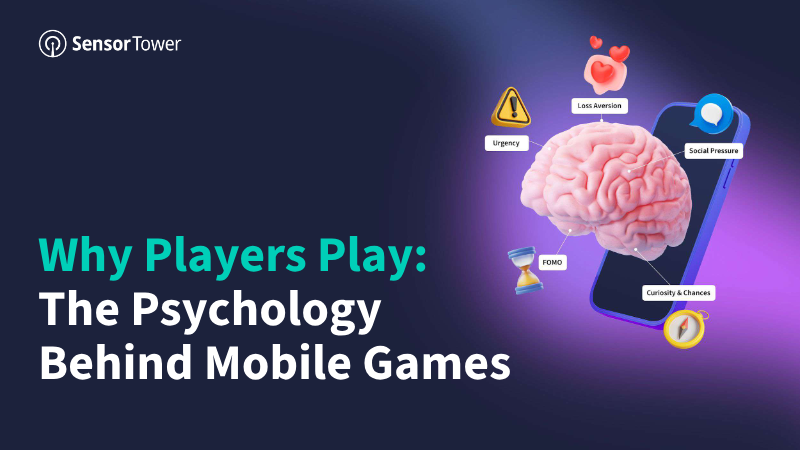
The report investigates how mobile games influence cognitive and psychological well‑being, drawing on a large U.S. sample of 483 participants (252 men, 213 women, 18 non‑binary) and a series of 28 individual game studies. Personality was measured with the Big 5 inventory, while gaming habits included frequency, genre preference and primary motivations. The study found that personality traits significantly moderate game effects: extraverts gravitate toward social and action games, while introverts prefer relaxation‑oriented titles; openness predicts immersion and inspiration motives. Mood impact was quantified using Cohen’s d effect sizes for pre‑ to post‑play changes. Several games produced moderate to large positive effects on focus (e.g., Sound Sky, d = 0.90), creativity (Colorize, d = 1.17), determination (Nature Video, d = 0.76) and calmness (Color Breathing, d = 0.61). Puzzle‑centric titles consistently boosted creativity and curiosity, whereas timed or competitive games enhanced focus and grit. Non‑game controls such as a dripping faucet video yielded negative mood shifts, underscoring the relative benefit of game interventions. The findings suggest that mobile games can serve as low‑cost, scalable tools for improving mental well‑being, particularly when game design incorporates personalization to match diverse personality profiles. Recommendations target developers (to broaden appeal through adjustable difficulty and genre alignment), players (to select games aligned with desired emotional outcomes), and health professionals (to consider mobile gaming as adjunct therapy for mood disorders or attention deficits). The report calls for future research incorporating real‑time behavioral metrics to refine these insights.
Games Can Be Good For The Mind State of Mobile Games: Cognitive and Psychological Benefits An Empirical Report by Skillprint Games: Cognitive and Psychological Benefits An Empirical Report by Skillprint An Empirical Report by Skillprint
In a landscape dominated by concerns about potentially negative effects of gaming, our company seeks to explore why people play games, and the benefits of gaming for our psychological well-being. Our extensive research includes a large-scale study examining relations between personality (the Big 5 inventory), game genre preferences, and gamer motivations, along with 28 studies evaluating the emotional impact of particular mobile games. The data paints a nuanced picture of how mobile games can be a force for good when it comes to mental well-being. After introducing our methods and the measures, we will walk you through the key findings and highlight actionable takeaways for people - those who already play games, and those that may want to, if given the right context. These findings will likely be as actionable (if not more) for game developers, educators, and health professionals. To preview our results, we identified several mobile games that positively impact mood, differentially benefitting creativity, determination, focus, and relaxation. Personality traits play a surprising role in moderating these effects, and are also associated with preferring particular genres of games, and with different gaming motivations. Finally, we offer actionable takeaways. Table of Contents Introduction 02 Background 02 Methodology 03 Gamer Personality, Motivations, and Genre Preferences 06 Individual Game Impact Studies 07 Key Findings 10 Recommendations 11 Conclusion 11
psychology of games The aim of this report is to provide a comprehensive understanding of the cognitive and psychological benefits of mobile games. [key citations: Bediou meta-analysis suggesting broad cognitive benefits; 2021 study showing benefits to mental health] Building on these past studies, we leverage best practices of psychological science to pave the way for more constructive discussions toward understanding 1 what people look for in a game, 2 how much it varies from person-to-person, and 3 whether they experience emotional benefits. Background Research interest in games is strong, and much of this work suggests benefits of some types of games on some aspects of cognition and mental health. Action video games have been the target of the most research, and this genre has also been found to have the most robust and wide-reaching cognitive benefits: Figure 1 shows the average effect size of playing action video games on different cognitive domains from a recent meta-analysis of dozens of published studies. verbal Figure 1. Average effect sizes top-down attention from Bediou et al.’s 2018 spatial meta-analysis of studies of Skills cognition action video game players problem showing significant benefits in Cognitive solving all cognitive domains except perception problem solving, where there multitasking / have been few published task-switching studies. (Adapted from Bediou inhibition -1.0 -0.5 0.0 0.5 1.0 et al. 2018.) Effect Size (Hedge’s g)
Large Scale Study We co lle cted data fro m alm os t 500 on lin e pa rtici pa n ts, using p s y cho logis ts ’ p refe rr ed pe rson al ity te s t, th e B ig 5 Inve n tor y, which gi ve s a con tin uo us scor e (no t ju s t a type) on five be h av ior al tra its : C onsci en tio usn ess, Ope nn ess, Ext rave rsion , A gr eeable n ess, a n d Em o tion al ity. N o te th at m os t pe o ple fall in th e m iddle – a n d be ing too ext reme is p ro blemat ic .. We al so co lle cted data on pe o ple’ s g am ing h ab its, inc lud ing th e freque nc y o f g am ing , p refe rr ed g enr es, a n d p ri ma ry m o tivat ions for play ing g ame s. Ou r fin al U.S.-ba s ed s ample consis ted o f 252 me n, 213 wo me n, a n d 18 non -b in a ry pe o ple. The “Big 5” Personality Traits Talkative, Active Extraversion Trusting, Lenient Emotional, Quiet, Reserved Agreeableness Worried Critical, Irritable Emotionality Even-tempered, Imaginative, Calm Creative, Curious Openness to Organized, Experience Hard-working High- Conventional, Conscientiousness scoring Down-to-earth Low- Disorganized, scoring Late
> **[Chart page]** This page contains visual data — view in PDF for the best experience. Motivation Frequency Age Group Responders by Age 18-22 15 22-25 16 25-30 23 30-35 20 35-40 13 40-50 13 0 5 % 10 15 20 of Respondents Game Frequency Never 8 Quarterly 16 Monthly 7 Weekly 11 Almost daily 24 Daily 33 0 10 % of Respondents20 30 Gaming Motivation Challenge 59 Focus 36 Immerse 61 Inspire 15 Relax 75 Socialize 26 0 20 % of Respondents 40 60 Individual Game Studies For a selection of 28 mobile games, we collected data from a random subset of ~50 participants from the larger study, analyzing baseline mood (before playing the game) and the change in mood after the session (see Evaluating Games’ Mood Effects), as well as looking for impact of personality traits (see our game blog posts for full personality effects). Participants also evaluated each game on six characteristics: fun, engaging, challenging, boring, frustrating, and confusing.
Pre-game Intervention Mood Survey Play game Curious Relaxed Focused Creative Joyful ... Not at all Very 2 3 Post-game assigned Mood Survey (≈10 min) E Curious Relaxed Focused E Creative Joyful ... ... Not at all Very Individual Game Studies KAMI Subway Surfers Flow Free Ball Sort Puzzle KAMI 2 Penguin Isle Two Dots KAML2 Wᴿ CAT D Angry Birds 2 Cat Snack Bar BLUE Sound Sky Secret Signs Wordscapes Wordscapes Angry Birds 2 Jetpack Joyride Cooking Fever Crowd City Color Zen Orbit ... and 11 m ore Ski llp rin t g am es inc luding cla ssic M at ch-3, bubb le sh ooter , sp at ial puzz le, hidd en o bj ect, M ahj o ng and m em ory g am es
The digital landscape in the United States has reached a pivotal turning point as smartphones and connected televisions officially surpass traditional broadcast media as the primary vehicles for entertainment. With smart TV penetration reaching 63% and subscription services now more prevalent than cable or satellite, the American household is firmly rooted in a digital-first ecosystem. This transition is fueled by a surge in spending among younger consumers aged 18–34, who have increased their annual digital media expenditure by $235 over the past year. While the average household maintains 3.5 subscription video services, a growing trend of "subscription cycling" suggests consumers are becoming more price-sensitive and strategic with their digital commitments. Gaming has emerged as a near-universal activity, with 80% of the population engaging across various platforms and over half of the country playing mobile games daily. The industry is seeing a significant rise in social and cloud gaming, alongside a burgeoning interest in user-generated content and non-programmer creation tools. Although traditional game discovery channels are losing influence, total annual in-game spending has risen dramatically. Notably, 70% of computer gamers now spend $30 or more annually, and there is a growing consumer appetite for the ability to trade virtual goods between different titles, potentially facilitated by blockchain technology. Emerging technologies reveal a stark generational divide in adoption and sentiment. While the 18–34 demographic shows double-digit increases in familiarity and interest regarding the Metaverse and Virtual Reality, interest in Augmented Reality has declined sharply across all age groups. Cryptocurrency remains a niche expertise, yet a significant portion of younger investors plan to commit substantial capital to the sector in the coming year. Despite these advancements, privacy remains a critical barrier; over 60% of Americans express deep concerns regarding information security and the use of personal data for advertising. This tension between high digital engagement and data anxiety defines the current state of the American digital consumer.
The mobile gaming landscape in the United States is defined by a complex interplay between player demographics and a diverse set of motivational drivers. Analysis of the top 200 grossing titles as of early 2022 reveals that while certain motivations like excitement and thrill are universal, their execution is highly demographic-specific. Younger male audiences gravitate toward high-sensomotoric challenges such as Battle Royales, whereas players aged 45 and older seek similar thrills through low-sensomotoric experiences like Slots. A significant shift in the casual market is also evident, as every top-grossing casual game released between 2020 and 2022 has integrated renovation and customization elements to broaden appeal and foster player expression. Gender and age remain primary indicators of genre preference and monetization behavior. Thinking and solving motivations, prevalent in Match3 and Hidden Object games, attract a 63% female audience that frequently monetizes through level retries. Conversely, strategic planning and mastery drivers are dominated by male players, who make up 76% to 84% of the audience in 4X strategy and synchronous PvP titles. However, these gender lines blur in specific sub-genres; for instance, while men dominate resource optimization in strategy games, women represent 61% of the audience for similar mechanics within the Tycoon and Crafting categories. The integration of secondary motivational drivers has become a standard industry practice to enhance retention and engagement. Collection mechanics have permeated nearly all genres, with Slots and character-driven RPGs leading the trend. Social drivers are increasingly facilitated through non-competitive co-op and guild systems, particularly among men aged 25 to 44, while exploration is driven by live events and sandbox elements. Ultimately, the most successful mobile titles are those that layer multiple drivers—such as milestone completion, skill improvement, and social interaction—to appeal to the nuanced psychological profiles of their target demographics.
The study examines how mobile gaming spending patterns differ between Eastern and Western markets, focusing on frequency of purchases, average spend per transaction, and motivational drivers. Findings reveal that Eastern gamers purchase in‑app items more often than Western players; 35 % of East spend frequently versus 36 % in the West, with a higher proportion of occasional and rare spenders in the West. When it comes to transaction size, Eastern users tend to pay more per purchase: 76 % spend over $10 compared with only 42 % of Western users, while a smaller share of East spend under $5 (30 %) versus 8 % in the West. Motivational analysis shows that Western gamers prioritize value and bundles, whereas Eastern players are more attracted to exclusivity, limited‑time items, new offers, and character acquisition. The research covers key markets in Asia—Korea and Japan—and Western regions including the United States, United Kingdom, and broader Europe. Data were collected through a survey of mobile gamers across these regions, with sample sizes sufficient to compare spending behaviors and motivations. The report concludes that monetization strategies should be tailored regionally: value‑based bundles may resonate better in the West, while exclusive content and limited editions could drive higher spend in Eastern markets.
The analysis focuses on mobile application usage patterns observed during the Ramadan period of 2026 across the Middle East and North Africa (MENA) region. The primary objective is to quantify shifts in user engagement, subscription behavior, and platform preference relative to the preceding year and a broader baseline average. Key metrics examined include overall app usage, subscription growth, in‑app purchases, and social media interaction. Findings indicate a pronounced rise in overall app engagement during Ramadan 2026, with total usage increasing by approximately 111 % compared to the same period in 2025. Subscription activity shows a 42 % uptick, while in‑app purchase volume climbs by 91 %. Social media engagement metrics—measured through likes, shares, and comments—exhibit a 63 % increase. When benchmarked against the average growth rate for the same timeframe (2025‑2026), these figures represent a significant acceleration, suggesting heightened consumer activity during the holy month. The data set covers all MENA markets and aggregates daily usage logs from a representative sample of mobile devices. The methodology involved longitudinal tracking of app sessions, transaction records, and social media interactions over the 30‑day Ramadan period. Comparative analysis was performed against both the previous year’s Ramadan metrics and a rolling 12‑month average to isolate seasonal effects. In conclusion, the Ramadan period of 2026 drove substantial growth across multiple facets of mobile app consumption in MENA, with overall usage and monetization metrics surpassing historical trends. These insights underscore the strategic importance of tailoring app offerings, promotional campaigns, and user experience enhancements to align with cultural and religious calendars in the region.