USA reports and market data
Documents

How to connect with users beyond Google and Facebook - Bharat Sharma from VEVE
The gaming industry faces significant challenges regarding user acquisition costs and market saturation, primarily due to an over-reliance on dominant platforms like Google and Apple.
- Hardware manufacturers such as Samsung, Oppo, Vivo, and Xiaomi are evolving into major software platforms, offering game developers an underutilized ecosystem for incremental user acquisition.
- The software monetization sector within hardware companies is currently expanding at a compound annual growth rate of approximately 36%.
- Android video advertising costs are significantly lower than those on iOS, presenting a more cost-efficient alternative to traditional big-tech channels.

"I Suck At Game Art... Should I Hire Someone?"
Independent game developers often face the dilemma of whether to utilize personal savings to hire professional help when their own artistic skills feel insufficient.
- Solo developers should complete their own prototype and polish it as much as possible before hiring external help to ensure they understand every aspect of the project's development.
- Managing a team is significantly more difficult and prone to financial waste if the developer does not first master the core systems, including coding, project management, and art design.
- Performing the work personally, even if the initial results are low-quality, provides the necessary expertise to accurately estimate costs and prevent contractors from being lazy or overcharging.

Creatives end cards arms-race, why is soft launching in US a terrible idea? Night crows review (#69)
The mobile gaming industry is currently grappling with an escalation in aggressive advertising tactics, specifically regarding rewarded ad end cards.
- Aggressive rewarded ad end cards, including 45-second durations and deceptive design patterns, are actively degrading player retention and brand sentiment.
- Publishers should prioritize long-term player health over short-term click-through metrics by using negative user feedback to demand more equitable ad formats from network partners.
- Soft-launching in the U.S. is often misguided due to high acquisition costs and intense competition that obscure accurate performance data.

two & a half gamers session #32 - Global launch games like a pro, Playrix GL rumour, Google updates
Global mobile game launches have transitioned from high-risk, singular events to iterative, data-driven processes that prioritize long-term retention and technical stability.
- Modern mobile game launches should move away from single 'big splash' events in favor of iterative, data-driven processes that prioritize long-term retention and technical stability.
- Developers should set initial price floors 30 to 40 percent above benchmarks during the launch window, refining these figures only after two weeks of empirical performance data.
- Monetization strategy requires a mix of global and geocentric ad networks organized into tiered waterfalls based on eCPM values to maximize revenue.

Age-Friendly Design for the 50-Plus Gamer
The video game industry faces a significant opportunity to engage the 52 million players in the United States aged 50 and older, a demographic that remains largely underserved and misrepresented.
- The 50-plus demographic includes 52 million players in the United States, with the 26% of this group categorized as enthusiasts and immersives accounting for 45% of total spending.
- Older gamers prioritize mental stimulation, social connection, and meaningful challenges over simplified content, requiring gameplay that respects their cognitive abilities.
- Developers should move away from narrow, stereotypical character tropes and adopt authentic, diverse depictions of aging to better align with the expectations of this underserved audience.

How Gamers Discover What to Play
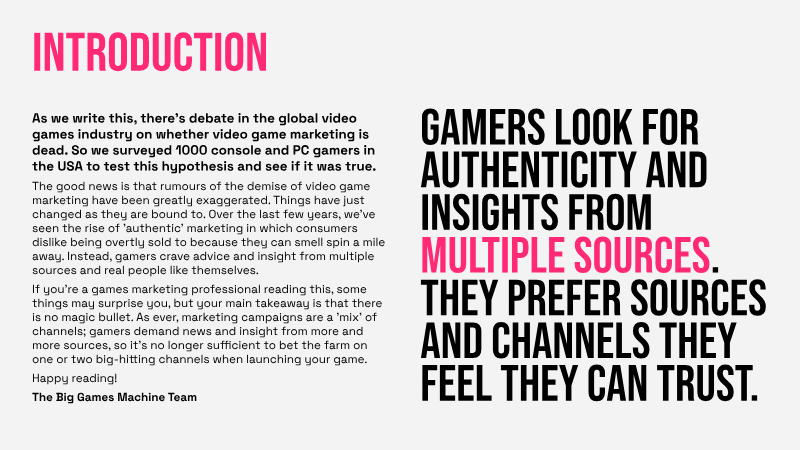
Video game marketing remains a vital component of the industry, though consumer preferences have shifted toward authentic, multi-channel discovery rather than traditional overt sales tactics.
- Gamers utilize an average of four to five distinct information sources before purchasing a new title, reflecting a shift away from single-channel marketing reliance.
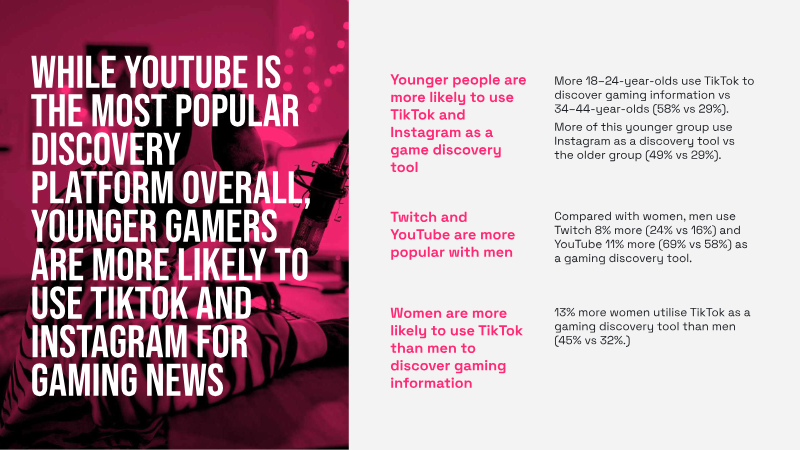
- YouTube is the primary discovery platform for 52% of gamers and is ranked as the most trusted source of information.
- Purchasing decisions are driven by risk mitigation, with 40% of players prioritizing established franchises and 25% favoring games from respected developers.

GDC Vibes / data.ai x Sensor Tower / Epic Announcements / US v. Apple
The gaming industry is currently navigating a period of significant structural adjustment, defined by a transition from speculative growth toward an era of efficiency and operational discipline.
- Mobile consumer spending is projected to decline in 2024, with 32% of all users and 41% of high-value spenders planning to reduce their in-app purchases.
- The gaming industry is shifting from speculative growth to operational discipline, characterized by widespread layoffs and a trend of experienced developers launching new studios focused on core quality.
- The U.S. Department of Justice’s antitrust lawsuit against Apple and Epic Games’ launch of a mobile store represent a direct challenge to the dominance of closed, vertically integrated mobile ecosystems.


Level Up – Harnessing the Power of Gaming Audiences
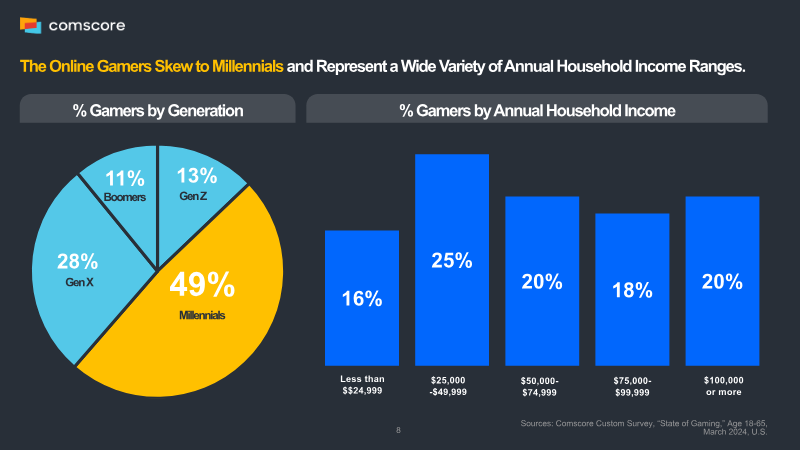
The gaming industry has evolved into a mainstream entertainment pillar, commanding significant consumer time and offering a robust landscape for brand engagement.
- Gaming is a mainstream U.S. medium, with 62% of adults aged 18–65 playing games multiple times per week.
- Cross-platform engagement is high, as 77% of gamers use more than one device and 40% play across PC, console, and mobile platforms.
- Two-thirds of gamers view in-game advertisements as having a neutral or positive impact on their experience, with 34% noting that product placement enhances realism.

Video Games in the 21st Century: The 2024 Economic Impact Report
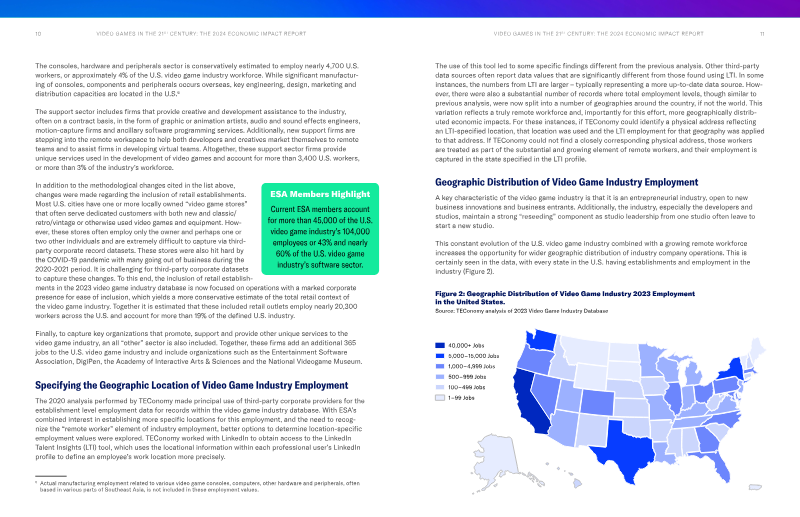
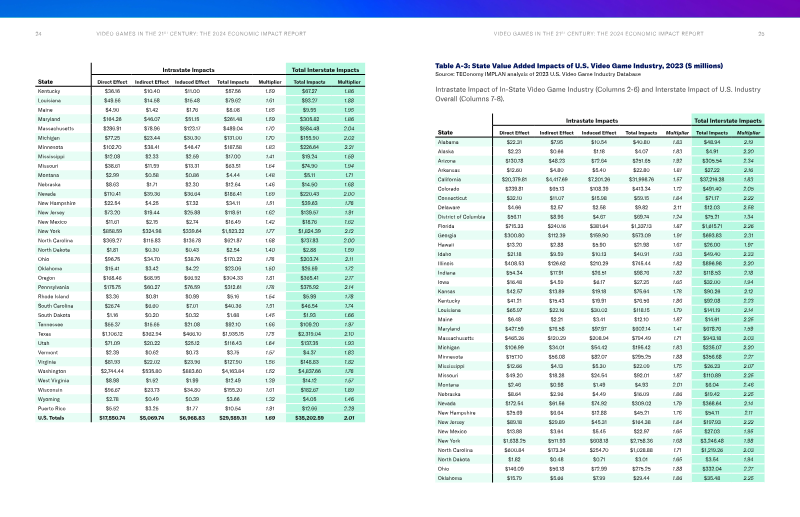
The United States video game industry serves as a primary engine of national economic growth, generating a total economic impact of $101.4 billion and contributing $65.7 billion to the national GDP in 2023.
- The U.S. video game industry generated a total economic impact of $101.4 billion and contributed $65.7 billion to the national GDP in 2023.
- The sector supports over 350,000 jobs nationwide, maintaining an employment multiplier of 3.36 where every direct hire sustains more than three additional roles in the broader economy.
- Direct employment reached 104,080 workers in 2023, with software development representing 74% of that workforce.

The State of Games Media Buying United States Spotlight
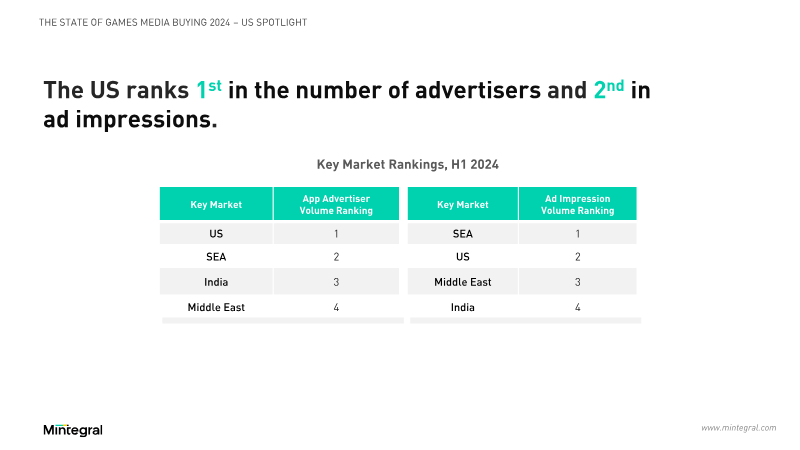
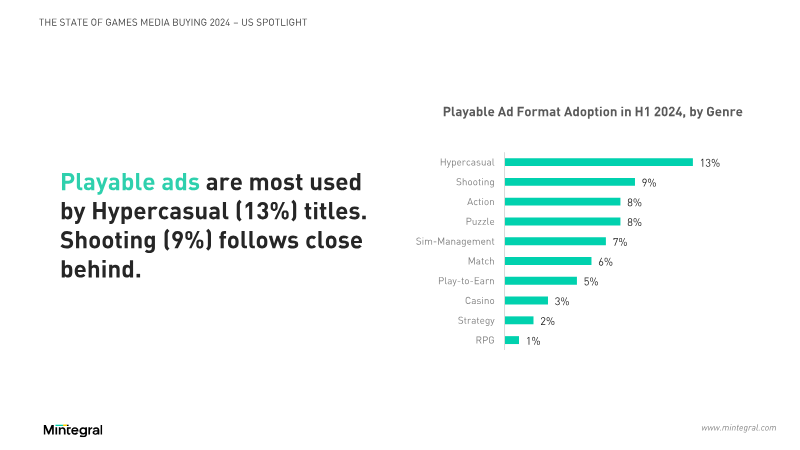
The State of Games Media Buying 2024 provides a comprehensive analysis of the mobile gaming advertising landscape in the United States, utilizing data collected between the second half of 2023 and the first half of 2024.
- The U.S. mobile gaming ad market is maturing, evidenced by a marginal 0.25% growth in active advertisers and a 29% decline in new market entrants during the first half of 2024.
- Publishers are prioritizing established assets over experimentation, as total ad purchases grew by only 0.46% while the volume of new ad creatives dropped by 12%.
- Genre dominance is shifting, with Puzzle games now leading in ad impressions, while Sports and Shooting genres saw the fastest growth, rising six and four places respectively.

Essential Facts About the U.S. Video Game Industry
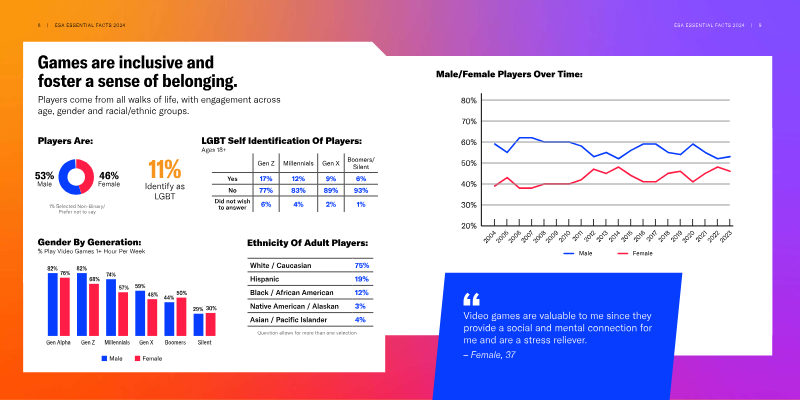
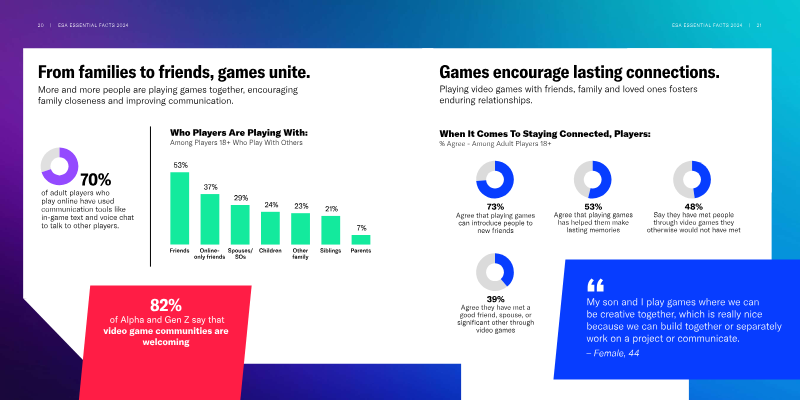
The U.S. video game industry has evolved into a mainstream, multigenerational pastime that encompasses 190.6 million weekly players.
- The U.S. video game industry contributed nearly $66 billion to the GDP in 2023, with total consumer spending reaching $57.2 billion.
- Video games are a mainstream activity in the U.S., with 190.6 million weekly players representing 61% of the total population.
- Mobile devices have become the dominant gaming platform, utilized by 78% of players compared to only 33% in 2012.


Creative Analytics: Mobile Market Analytics and Ad Intelligence
This analysis examines the mobile advertising landscape during 2023, focusing on market trends, creative formats, and the strategic integration of user-generated content (UGC).
- Video formats now dominate the mobile advertising landscape, accounting for 80% of all ad creatives in Q3 2023, up from 69% in the previous quarter.
- The mobile advertising market saw a 7% decline in active advertisers year-over-year, totaling 54.9 thousand in Q3 2023.
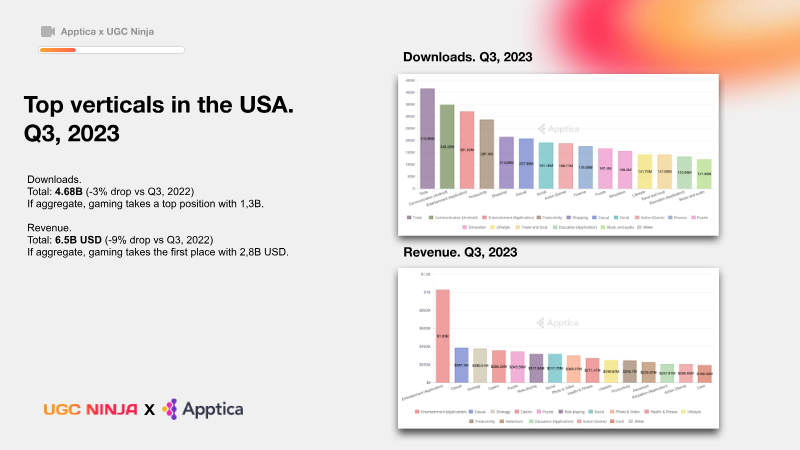
- Gaming remains the leading industry vertical, generating 1.3 billion downloads and $2.8 billion in revenue during Q3 2023.