UK reports and market data
Documents

How Leap Day integrates rewarded video ads
Leap Day, developed by the London-based studio Nitrome, serves as a case study in utilizing daily content updates and rewarded video advertising to drive player retention in mobile gaming.
- Nitrome utilizes a daily content cadence in Leap Day, where levels reset every 24 hours to establish a consistent habit loop and reduce player churn.
- The game employs an opt-in rewarded video model that allows players to bypass in-game currency requirements for unlocking checkpoints or accessing past levels.
- The core retention strategy relies on time-gated, fresh content to prevent the player fatigue typically associated with static mobile gaming titles.

Rewarded video ads in RAID HQ
Eight Pixels Square utilizes rewarded video advertisements within the free-to-play shooter RAID HQ to enhance player progression and resource acquisition.
- Eight Pixels Square integrated rewarded video ads into RAID HQ to create a value-exchange model where players trade time for tangible in-game progression.
- Players can choose to watch an ad to reduce base upgrade timers by ten minutes, directly impacting the game's metagame development loop.
- The game offers a ten percent gold reward boost for combat missions if the player opts to watch an advertisement before starting the mission.

Pitching games to investors at Pocket Gamer Connects London 2016
Securing investment in the mobile gaming sector requires a shift in focus from broad market statistics to the specific strengths of the product and the development team.
- Investors prioritize visual gameplay demonstrations over text-heavy presentations, as the primary goal of a pitch is to secure a follow-up meeting by articulating a unique value proposition.
- Successful pitches must demonstrate a deep understanding of retention metrics, monetization strategies, and the operational realities of live-service games to mitigate the impact of high user acquisition costs.
- Founders should avoid focusing on exit strategies or early equity dilution, instead providing concrete performance data from previous titles and a realistic path to profitability.

How to qualify for the Video Game Tax Relief scheme's Cultural Test
The Video Game Tax Relief (VGTR) scheme in the United Kingdom provides a significant financial incentive for game developers, offering a tax credit of 25 percent on qualifying core expenditure, effectively resulting in a 20 percent return on investment.
- The UK Video Game Tax Relief (VGTR) scheme provides a 25 percent tax credit on qualifying core expenditure, yielding an effective 20 percent return on investment.
- To qualify, a company must be UK-registered, the game must be intended for public supply, and the project must pass a 31-point Cultural Test administered by the British Film Institute.
- Applicants must reach a minimum threshold of 16 points on the Cultural Test, which evaluates cultural content, creative hubs, and the residency of key personnel.

Myriad's Barrie Dowsett on getting public money for your game
Securing public funding for game development in the United Kingdom involves navigating a complex landscape of grants and tax incentives.
- Developers can leverage non-repayable grants and tax incentives to de-risk projects, retain intellectual property, and avoid equity dilution.
- Innovate UK grants typically cover 40% to 65% of project costs for early-stage research and prototyping, while Horizon 2020 SME instruments offer up to 70% funding for commercialization projects.
- The Video Games Tax Relief (VGTR) provides a 20% rebate on production costs for qualifying British games, which can be claimed alongside other incentives.

UK Games Talent & Finance CIC's Mark Hogart on supporting new UK games IP
The UK Games Fund, operated by the UK Games Talent & Finance CIC, serves as a government-backed intervention designed to stimulate the creation of original intellectual property within the UK games industry.
- The UK Games Fund provides early-stage grant funding of up to £25,000 for prototype development, with future plans to introduce a £50,000 tier for advanced projects.
- To be eligible for funding, applicants must be UK-based, own the intellectual property being developed, and focus spending on UK labor and employment costs.
- The program operates on a reimbursement basis, requiring recipients to possess sufficient working capital to cover initial project costs before claiming grant funds.

Myriad Associates' Barrie Dowsett on UK R&D tax credits
The United Kingdom offers significant financial support for game developers through R&D tax credits and the Video Games Tax Relief (VGTR) program.
- The UK government provides a 20 percent subsidy toward game production costs through R&D tax credits and the Video Games Tax Relief (VGTR) program.
- Tax relief is claimed retrospectively, meaning developers must secure private investment to fund the initial development cycle before accessing government subsidies.
- Independent developers often struggle with the administrative complexity of navigating requirements between the British Film Institute and HM Revenue and Customs.

Roadhouse announces Iron Maiden: Legacy of the Beast
Roadhouse Interactive, in collaboration with Phantom Music Management, is developing a mobile role-playing game titled Iron Maiden: Legacy of the Beast.
- Roadhouse Interactive is developing 'Iron Maiden: Legacy of the Beast,' a mobile RPG that integrates the band's 40-year history and mascot, Eddie, into an interactive experience.
- The project is built on a collaborative model where Phantom Music Management and Iron Maiden’s sound engineers work directly with the Vancouver-based development team to ensure brand authenticity.
- The game is designed as a standalone, high-quality RPG that functions as a living product, with ongoing updates and events synchronized with the band’s global touring schedule.
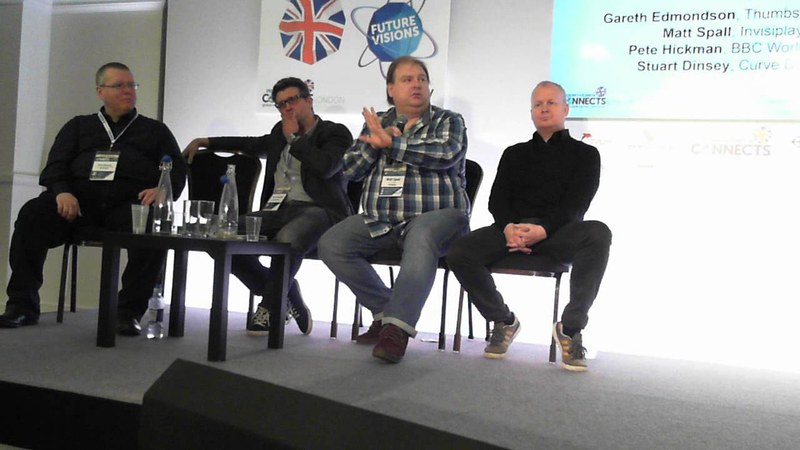
The Old Guard: British Legends panel
The panel discussion featuring industry veterans Stuart Dinsey, Gareth Edmondson, Peter Hickman, and Matt Spall explores the evolution of the British games industry from the 1980s to the mid-2010s.
- Discoverability is the primary challenge in the modern market due to an unprecedented volume of product, rendering high-quality production alone insufficient for commercial success.
- Success in the current digital-first landscape requires integrating robust marketing, active community engagement, and data analytics alongside game development.
- The most successful products prioritize accessibility by being easy to pick up and specifically designed for well-understood target audiences.

Why game hubs matter
Game development hubs serve as essential infrastructure for mitigating the inherent isolation of the industry, providing a collaborative environment where developers can share knowledge, resources, and equipment.
- Game development hubs act as essential infrastructure that mitigates industry isolation by providing shared resources, equipment, and collaborative environments for independent developers.
- These hubs serve as regional catalysts that bridge the gap between individual studios and broader creative ecosystems, facilitating professional resilience and creative growth.
- Localized support networks are critical for sustaining long-term industry health, particularly for independent creators who otherwise lack access to mentorship and peer-to-peer problem solving.

IAP Inspector: BattleHand
BattleHand, a fantasy-themed card battler developed by Another Place Productions and published by Kongregate, utilizes a monetization model that blends standard industry practices with unique narrative-driven engagement strategies.
- BattleHand prioritizes manual gameplay by requiring players to complete dungeons before unlocking auto-battle features, contrasting with the automated progression models of competitors like Star Wars: Galaxy of Heroes.
- The game utilizes a multi-currency system comprising keys for energy, gold as soft currency, and gems as hard currency.
- A daily gem subscription service is offered for approximately $13.99, a price point that may hinder its effectiveness as an entry-level conversion tool compared to lower-priced market alternatives.
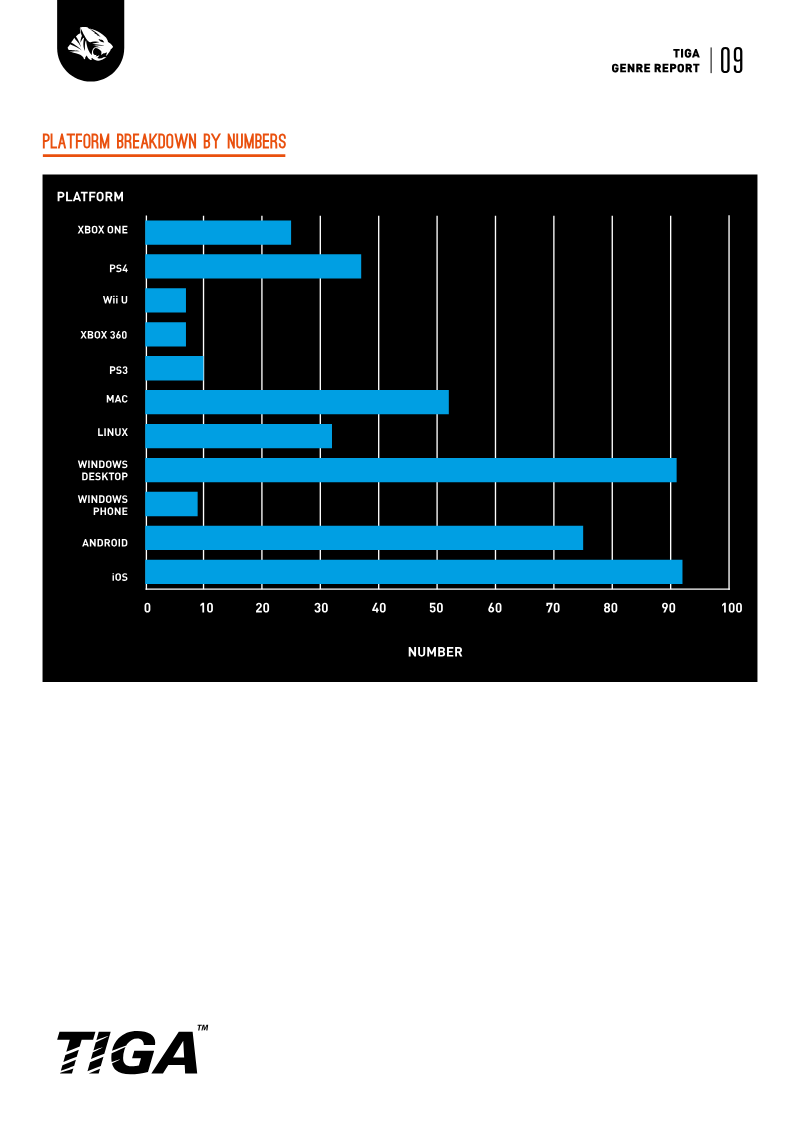

TIGA Genre Report 2016
The UK game development landscape in 2015 was defined by a strong preference for action and adventure titles, which accounted for 24.21 percent of all releases.
- Action/Adventure is the most common game genre, with over 45 releases, followed by Arcade and Puzzle/Trivia, each with over 30 releases.
- Mobile platforms (iOS, Android, Windows Phone) show a higher number of releases in Casual, Puzzle/Trivia, and Action/Adventure genres compared to other genres.
- Desktop platforms (PC, Mac, Linux) have a significantly higher number of releases in Action/Adventure and RPG genres, with over 70 and 60 releases respectively.