Streaming reports and market data
Documents

LIVE | State of the Industry with Brad Hart
The game development industry is undergoing a structural transformation characterized by the permanent adoption of hybrid work models and a strategic migration toward cloud-based infrastructure.
- The game development industry is undergoing a permanent structural shift toward hybrid work models and cloud-based infrastructure to access global talent and eliminate hardware refresh logistics.
- Virtualizing workflows through cloud workstations is being prioritized to enhance operational security and development efficiency.
- Industry innovation is focusing on practical utility, with cloud computing and immersive design tools viewed as essential, while technologies like NFTs are dismissed as lacking consumer value.
Matchmaking Retention Through Emotional Variability - The Metacast by Naavik
The modern gaming industry is currently defined by a dual focus on aggressive intellectual property expansion and systemic consolidation.
- Competitive matchmaking is shifting from strict skill-based systems toward emotional variability models designed to optimize player retention by managing win-loss ratios.
- Major publishers are aggressively expanding flagship gaming intellectual properties, such as God of War and Horizon Zero Dawn, into film and television to leverage global brand reach.
- Industry consolidation is being driven by tech conglomerates acquiring studios to secure content pipelines for subscription services, raising concerns about potential creative stagnation.
My Response
The central theme of this discussion is the pervasive burnout experienced by independent game developers who attempt to balance game creation with the demands of content creation and community management.
- Independent game developers face unsustainable burnout by attempting to simultaneously function as game creators, educators, and public influencers.
- The industry's current model forces developers to fragment their focus across multiple roles, which creates a high-pressure environment of constant public scrutiny.
- The psychological weight of maintaining a public persona can be as exhausting and detrimental to mental health as the technical challenges of game design.
Games Subscriptions: Is the "Netflix of Games" Inevitable and What Does It Mean for Developers?
The gaming industry is currently navigating a transition where subscription services function as a hybrid component of the market rather than a wholesale replacement for traditional sales models.
- The 'Netflix of games' analogy is misleading because 79% of total industry consumer spending in 2021 was driven by in-game monetization, making a wholesale shift to subscription-based revenue unlikely.
- Xbox Game Pass leads the subscription market, with its growth strongly correlated to the volume of day-one releases, including both first-party and third-party titles.
- Subscription services are not scaling their total library sizes aggressively; for example, the Xbox Game Pass Ultimate catalog remained relatively stable at approximately 500–515 titles throughout 2021.

How to Get Bang for Your Buck with Influencers featuring Chief Pat
The mobile gaming industry has undergone a significant professionalization, shifting from individual content creation to complex, multifaceted organizations that bridge the gap between developers and players.
- Mobile game developers should integrate creators into the entire development lifecycle, from early playtesting to post-launch marketing, to ensure authentic engagement.
- Influencer-generated content has become a critical asset for high-performing ad campaigns as traditional performance marketing faces challenges from data privacy regulations.
- Long-term partnerships with creators who have a genuine affinity for a game yield a higher return on investment than one-off, transactional ad spots with high-profile influencers.

Global Esports and Live Streaming Market Report
The report outlines the global esports and live-streaming landscape for 2022, emphasizing key tournaments, viewership metrics, and emerging strategic shifts by major publishers.
- Counter-Strike: Global Offensive led 2022 viewership with the PGL Major Antwerp recording 10.5 million hours watched and an average concurrent viewership of 96.7k.
- Riot Games is shifting its Valorant esports strategy from high-cost franchising to a partnership model that eliminates franchise fees in favor of financial stipends.
- Major esports titles including Dota 2 and League of Legends events generated over 20 million hours of combined viewership in 2022.
Increase Engagement, Stickiness & Revenue Opportunities with Real-Time Voice & Video
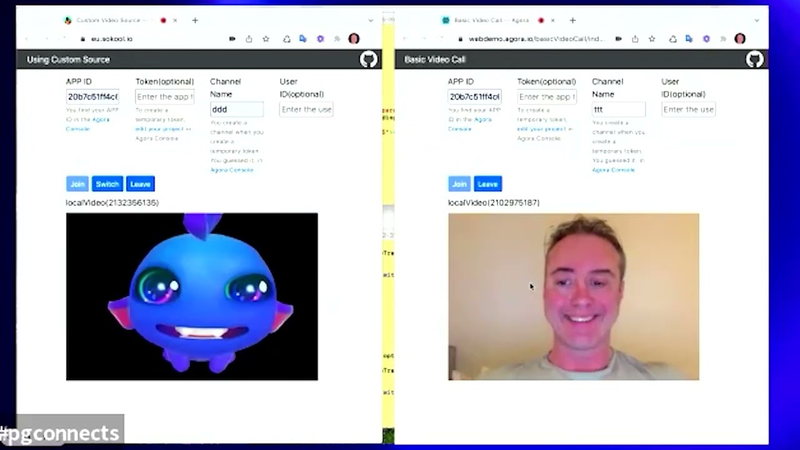
The integration of real-time voice and video into 3D gaming environments serves as a primary driver for increased user engagement, platform stickiness, and revenue growth.
- Integrating real-time voice and video into 3D environments increases user engagement and platform stickiness by enabling features like spatial audio and photorealistic human video streaming.
- The infrastructure supports over one million concurrent users per session and currently handles 50 billion minutes of traffic per month across hundreds of mobile applications.
- Latency and packet loss are minimized by using AI-driven routing through a global network of selective forwarding unit routers, bypassing the inefficiencies of public internet paths.
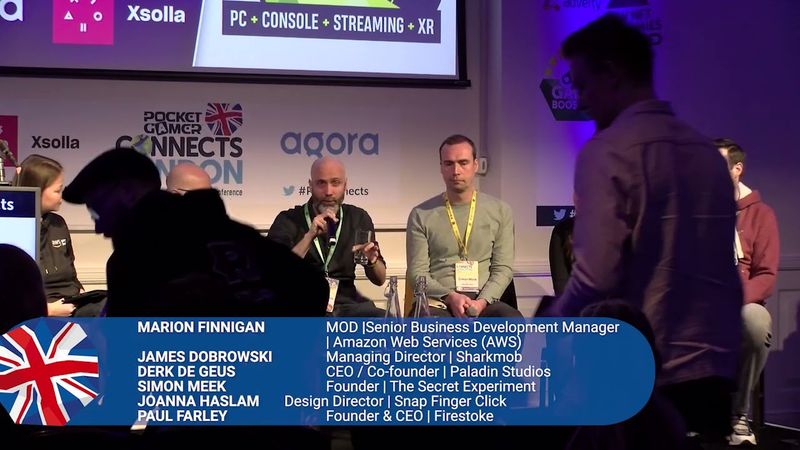
Panel: The End of Downloads: Will Cloud Gaming Conquer the World?
Cloud gaming represents a fundamental shift in the industry, transitioning from hardware-dependent local execution to a service-oriented model that prioritizes device-agnostic, on-demand access.
- Cloud gaming shifts the industry from hardware-dependent local execution to a service-oriented model, eliminating barriers like download times, high entry costs, and hardware obsolescence.
- The technology aims to expand the total addressable market by targeting non-traditional and lapsed players who are currently deterred by the friction of physical or digital installations.
- Game design is evolving away from traditional AAA-centric models toward episodic, social-first experiences optimized for immediate engagement within subscription-based ecosystems.
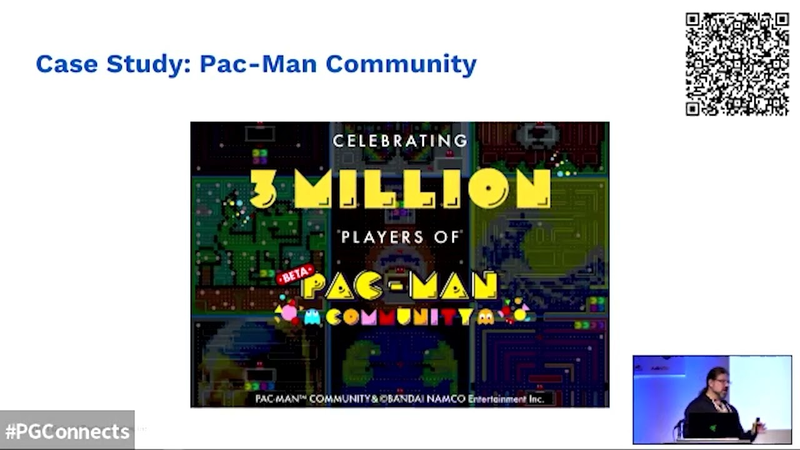
MILEs as a Bridge to the Metaverse
Massively Interactive Live Events (MILEs) represent a new category of entertainment that bridges the gap between passive television viewing and active gaming.
- Massively Interactive Live Events (MILEs) bridge the gap between passive television and active gaming by using cloud-native streaming to allow real-time audience influence over narrative outcomes.
- The technology is platform-agnostic and eliminates the need for high-end hardware, making it highly effective for market penetration in regions like Brazil, India, and Mexico.
- The 'Rival Peak' experiment demonstrated the format's engagement potential by generating over 100 million minutes of watch time across a 13-week period.
Video Game Streaming Trends Report: 2022 First Quarter
The primary aim of the analysis is to map the state of global video-game streaming in the first quarter of 2022, linking audience behavior to platform performance, game releases, and advertising potential.
- Twitch maintains a dominant market position, accounting for approximately 75% of all streamed hours and 80% of esports viewership.
- Total hours watched in Q1 2022 declined 6% from the previous quarter, yet remains 66% higher than Q1 2020 and 140% above Q1 2019 levels.
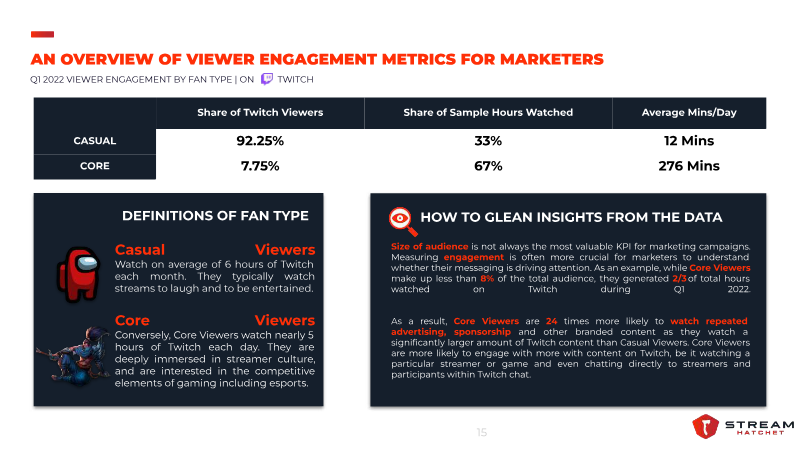
- A small segment of core viewers, representing only 7.8% of the total audience, generates two-thirds of all watch time and is 24 times more receptive to repeated advertising than casual viewers.
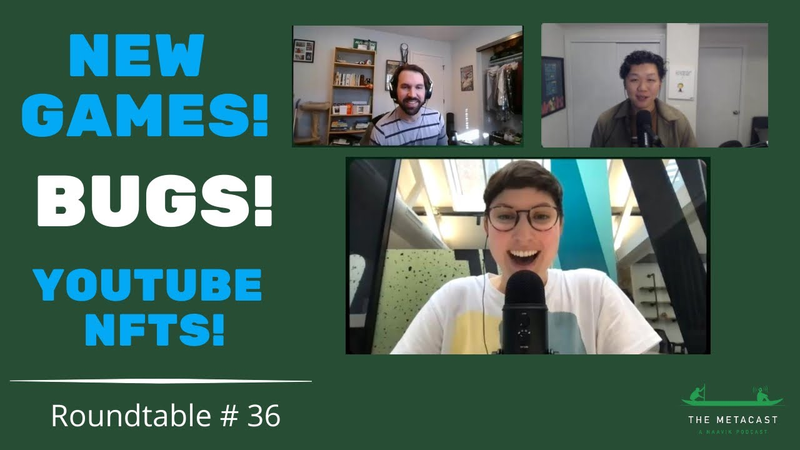
The Metacast by Naavik: Roundtable #36 - New Game Ideas, Costs of Buggy Launches, & YouTube’s NFTs
Successful game development relies on a strategic balance between a studio’s core competencies and rigorous, data-driven market analysis.
- Studios prioritizing new game ideas generally follow one of two strategies: iterating on a single core IP to achieve perfection, or taking multiple 'shots on goal' across different genres to identify market fit.
- The cost of buggy game launches is significant, as poor day-one performance can permanently alter consumer purchasing behavior, leading players to wait months or years before buying new titles.
- Early access models, such as the one used by Supergiant Games for 'Hades,' allow developers to iterate based on player feedback over time, which helps avoid the 'hype-versus-reality' trap that often plagues high-profile, day-one launches like 'Cyberpunk 2077.'
Biggest Headlines of Last Year | Best of 2021 Part 3
The gaming industry in 2021 was defined by a tension between massive financial growth and significant structural instability.
- The Epic Games v. Apple legal proceedings revealed that Epic invested over $444 million into its PC store to challenge existing market structures.
- Financial data from the Epic v. Apple trial highlighted that console platforms like PlayStation and Xbox generated the vast majority of Fortnite revenue, dwarfing the earnings share from iOS.
- Activision Blizzard exemplified the industry's 2021 dichotomy, balancing robust financial performance from legacy and mobile franchises against severe internal cultural crises and talent attrition.