eSports & Streaming·Updated Apr 8, 2026 by Newzoo
Report · January 1, 2022
Published by Newzoo
The report outlines the global esports and live‑streaming landscape for 2022, emphasizing key tournaments, viewership metrics, and emerging strategic shifts by major publishers. Counter‑Strike: Global Offensive dominated with the PGL Major Antwerp drawing 10.5 million hours watched and an average concurrent unique viewer (ACU) of 96.7 k, followed by Dota 2 and League of Legends events that collectively attracted over 20 million hours. Valorant’s regional tours and the upcoming Champions Tour in Japan added nearly 3 million hours, while Wild Rift’s global championship moved to Singapore with a $2 million prize pool and 24 teams. PUBG Mobile’s Nations Cup returned to Bangkok with a $500 k prize pool, and the IEM Rio Major was re‑announced after pandemic cancellations, selling out tickets in Brazil’s Jeunesse Arena. The analysis highlights a shift toward franchising models that reduce entry barriers, notably Riot’s new Valorant structure that foregoes franchise fees in favor of long‑term partnerships and financial stipends, contrasting with the high costs seen in League of Legends. Third‑party organizers are encouraged to host off‑season events, expanding grassroots participation and diversifying content. The report also notes the growing importance of women’s tournaments, such as Riot’s Game Changers initiative, to broaden audience engagement. Data were sourced from Newzoo’s platform aggregating Twitch, YouTube, and Facebook Gaming streams, covering global viewership across 2022. The scope spans North America, Europe, Asia-Pacific, and Latin America, focusing on major esports titles and live‑streaming platforms. The methodology involved compiling broadcast hours, ACU figures, and prize pool totals to assess market size, growth drivers, and investment trends within the esports ecosystem.
newzoo May 202 Global Esports and Live Streaming Market Report May 2022 tournament will take place in October 2022. Top Esports Events by hours watched Hours Tournament Game watched ACU* 2022 PGL Major Antwerp Counter-Strike: Global Offensive 10.5M 96.7K Icons needed teams from multiple regions—not only for representation reasons but also to build 2022 ESL One Stockholm Dota 2 5.1M 51.3K 2022 European Masters Spring League of Legends 5.0M 66.2K 2022 VALORANT Champions Tour: Japan Stage 2 Challengers Valorant 2.9M 45.4K 2022 Intel Extreme Masters Season XVII - Dallas Counter-Strike: Global Offensive 1.9M 12.9K legitimize the Wild Rift esports scene, which recently announced Coca-Cola as a global sponsor. 2021/22 DPC Eastern Europe Tour 2: Division 1 Dota 2 1.5M 31.7K 2022 Dota 2 Champions League S10 Dota 2 .6M 5.5K 2021/22 DPC China Tour 2: Division 1 Dota 2 .5M 5.0K 2022 VALORANT Regional Leagues France Revolution Stage 2 Valorant .5M 5.8K 2022 Dota 2 Champions League S11 Dota 2 .3M 3.7K investments each year. At the same time, there was uncertainty about whether the team would stay in the top division or be relegated. This was a huge blocker for investors. Note: Now, Riot has announced it will franchise Valorant esports, but the process will be different from how Riot franchised League of Legends. Rather than requiring teams to buy a franchise ACU: Average Concurrent Unique Viewers Newzoo Platform aggregates official broadcast channels from Twitch, YouTube and Facebook Gaming This comes in stark contrast to the high price of entry for League of Legends.
how Riot franchised League of Legends. Rather than requiring teams to buy a franchise ACU: Average Concurrent Unique Viewers Newzoo Platform aggregates official broadcast channels from Twitch, YouTube and Facebook Gaming This comes in stark contrast to the high price of entry for League of Legends. For the first time, Market News the most entertaining and engagement-generating esports teams to compete in Valorant—not just those with the most money. a. PUBG Nations Cup returns after a two-year break It is also giving more grassroots tournaments a chance to flourish by allowing third-party Krafton announced the return of the PUBG Nations Cup after a two-year hiatus. The global competition, which will take place in Bangkok from June 16 to 19, features a $500K prize pool. Sixteen teams from the U.S., Brazil, South Korea, and China will compete in an arena with more than 1,200 seats. According to the Newzoo Platform, PUBG Mobile amassed 48.7M hours watched (across YouTube, Twitch, and Facebook Gaming) in May; 6.01M of those were esports hours. At the events, fans can play special prediction-based games to win special prizes. AB Inbev brands like Budweiser, Corona, Becker, and Poker will also partner with LLA to organize local events in the country. b. IEM Rio Major 2022 is (re)announced and tickets sold out Two years ago, ESL planned to host ESL One at Rio; however, the pandemic forced the organizer to cancel the event. Brazil is one of the most passionate audiences for Counter-Strike: Global Offensive (CS:GO). The country is also home to one of the biggest Twitch streamers in the world, Gaules, known for co-streaming CS:GO tournaments in Portuguese.
however, the pandemic forced the organizer to cancel the event. Brazil is one of the most passionate audiences for Counter-Strike: Global Offensive (CS:GO). The country is also home to one of the biggest Twitch streamers in the world, Gaules, known for co-streaming CS:GO tournaments in Portuguese. Now, the IEM Rio Major will be held in Brazil’s Jeunesse Arena, famous for hosting tournaments for League of Legends, Rainbow Six: Siege, and Free Fire. Global Esports and Live Streaming Market Report Newsletter
c. Dota 2’s The International planned for Singapore The International is Dota 2’s important yearly esports tournament. Last year, its accumulated prize pool crossed $40 million. Most of this huge sum was crowdfunded, as Valve contributes a portion of in-game items sales to the prize pool. For the first time, the event will take place in Southeast Asia, where Dota 2 is very popular and boasts several high-profile esports teams. The tournament will take place in October 2022. d. From Europe to Singapore, Wild Rift Icons Global Championship to start on June d. From Europe to Singapore, Wild Rift Icons Global Championship to start on June The 2O22 Wild Rift Icons Global Championship moved from Europe to Singapore due to the The 2022 Wild Rift Icons Global Championship moved from Europe to Singapore due to the global pandemic, which affected visa applications. As an international championship, Wild Rift Icons needed teams from multiple regions—not only for representation reasons but also to build hype among the game’s fans across the globe. The event will feature 24 teams and a $2 million prize pool. League of Legends: Wild Rift faces The event will feature 24 teams and a $2 million prize pool. League of Legends: Wild Rift faces fierce competition from other mobile MOBA games, namely Mobile Legends: Bang Bang and Arena of Valor (Honor of Kings). The competition is also part of Riot’s global strategy to legitimize the Wild Rift esports scene, which recently announced Coca-Cola as a global sponsor. e. Riot Games announces Valorant esports plans, including franchises, third-party organizers, and a women’s tournament.
Valor (Honor of Kings). The competition is also part of Riot’s global strategy to legitimize the Wild Rift esports scene, which recently announced Coca-Cola as a global sponsor. e. Riot Games announces Valorant esports plans, including franchises, third-party organizers, and a women’s tournament. In 2017, Riot Games began converting its esports leagues into franchised leagues. At the time, one of the biggest concerns for teams and organizers was that esports requires ever-increasing investments each year. At the same time, there was uncertainty about whether the team would stay in the top division or be relegated. This was a huge blocker for investors. Now, Riot has announced it will franchise Valorant esports, but the process will be different from how Riot franchised League of Legends. Rather than requiring teams to buy a franchise slot in Valorant, Riot is seeking to feature teams that will lead to long-term partnerships. Riot will even offer financial stipends for some teams. will even offer financial stipends for some teams. This comes in stark contrast to the high price of entry for League of Legends. For the first time, Riot will also allow third-party Valorant tournaments during the off-season. Riot seems to want the most entertaining and engagement-generating esports teams to compete in Valorant—not just those with the most money. just those with the most money. It is also giving more grassroots tournaments a chance to flourish by allowing third-party tournaments. Riot is playing the long game. As Valorant remains a young esports scene, the company is looking to grow it before attracting significant investment.
e most money. just those with the most money. It is also giving more grassroots tournaments a chance to flourish by allowing third-party tournaments. Riot is playing the long game. As Valorant remains a young esports scene, the company is looking to grow it before attracting significant investment. The cost to organize esports tournaments is also getting lower for each title Riot operates, also contributing. Riot will now also host Game Changers, a women’s tournament aiming to promote diversity in the scene. now also host Game Changers, a women's tournament aiming to promote diversity in the scene. These policies signpost a less restrictive scene, providing more opportunities for brands to engage with the industry, but also giving fans more convenience and options to watch and follow their favorite teams and players at multiple tournaments throughout the year. engage with the industry, but also giving fans more convenience and options to watch and follow their favorite teams and players at multiple tournaments throughout the year. Global Esports and Live Streaming Market Report Newsletter
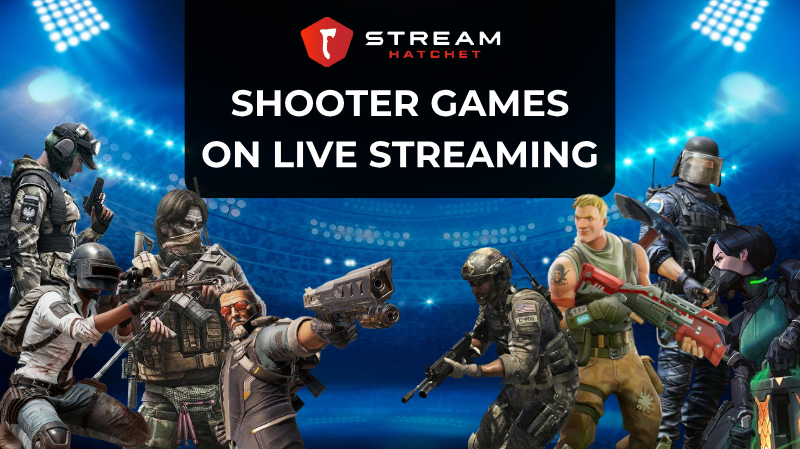
This analysis explores the landscape of shooter games on live streaming platforms from 2019 through 2025, tracking viewership trends, subgenre shifts, and the impact of esports. While shooters remain a cornerstone of the industry—consistently accounting for at least 20% of all gaming viewership—the genre has seen a 6% decline in market share since 2022. By 2024, shooters represented approximately one-in-five gaming hours watched, totaling 6.1 billion hours. The data reveals a significant transition in subgenre dominance. Tactical shooters overtook battle royale games in 2023 to become the most-watched subgenre. This shift is largely driven by the sustained popularity of Valorant and Counter-Strike, which together claim 90% of tactical shooter viewership. Conversely, the battle royale subgenre has seen its viewership halve since its 2020 peak, despite the continued popularity of Fortnite. Other segments, such as extraction and arena shooters, have maintained stable but smaller market shares, with Escape From Tarkov accounting for nearly two-thirds of all extraction shooter hours. Esports serves as a primary engine for the genre's visibility. By late 2025, nearly half of all Counter-Strike viewership was generated by esports events. Valorant maintains a balanced global presence, holding significant viewership shares across North America, Europe, Asia, and the Southern Hemisphere. In contrast, Counter-Strike remains heavily reliant on the European market, while PUBG Mobile dominates the mobile-centric Asian market. The analysis also highlights the influence of individual creators and variety streamers. In 2024, Gaules emerged as the leading shooter streamer with 79.2 million hours watched. While Twitch remains the dominant platform for top creators, accounting for 73% of the top ten's viewership, the data shows high viewer overlap between franchises. For example, over 40% of Valorant viewers also engage with other tactical shooters, suggesting strong community fluidity across the genre. Methodology for these findings includes data aggregation from all major streaming platforms, excluding TikTok Live, with specific sentiment analysis conducted on Twitch chat data.
The live streaming industry in 2024 underwent a fundamental transformation characterized by decentralization and the diversification of content beyond traditional gaming. As platforms like Kick experienced explosive growth and new services emerged to fill regional voids left by Twitch’s departure from Korea, the ecosystem shifted toward a multi-platform approach. Creators increasingly utilized simulcasting to expand their reach, while high-production marathons and global IRL content became the primary drivers of audience engagement. This evolution reflects a broader move away from platform exclusivity toward a creator-led model where individual influence dictates viewership patterns. Esports and competitive gaming remained central to the industry’s success, though the nature of consumption changed significantly. Co-streaming emerged as a dominant force, accounting for nearly 45 percent of all esports viewership, while mobile esports solidified its status as a global powerhouse, particularly during the Esports World Cup. Simultaneously, the industry benefited from a strong synergy between transmedia adaptations and gaming, as film and television projects like Fallout revitalized interest in specific titles. The rise of VTubers and the enduring popularity of RPGs and nostalgia-driven remakes further sustained high levels of viewer retention throughout the year. Beyond gaming, the landscape expanded to include political commentary, music-focused programming, and massive independent events that rivaled traditional broadcast media. Large-scale spectacles, such as La Velada del Año 4, demonstrated the potential for creators to command millions of concurrent viewers outside of established gaming frameworks. Brands successfully capitalized on these shifts by integrating directly into the viewer experience through strategic initiatives like Twitch Drops. Ultimately, the industry in 2024 proved that long-term growth is now tethered to the ability to blend interactive community engagement with diverse, multi-genre content that transcends the traditional boundaries of the gaming sector.
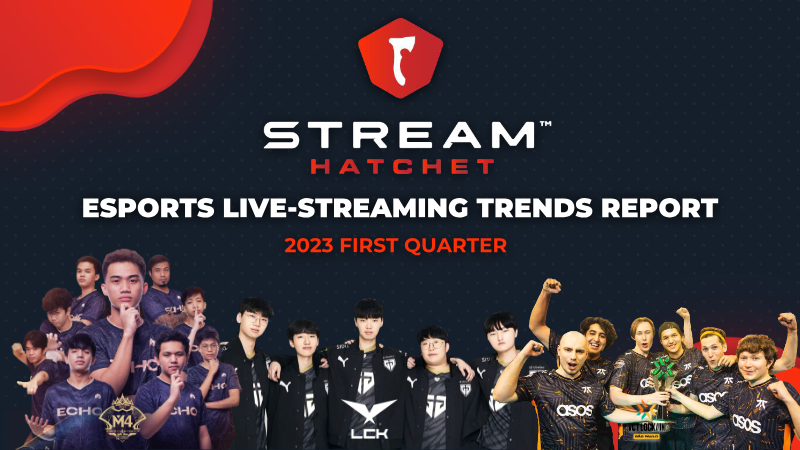
The esports live-streaming market demonstrated significant resilience in the first quarter of 2023, with viewership growing 15% year-over-year to reach 651 million hours watched. This growth occurred despite a general decline in broader live-streaming viewership during the same period. The data, aggregated from major platforms including Twitch, YouTube, Facebook Gaming, and AfreecaTV, indicates that the top 30 tournaments alone account for 68% of total esports viewership, highlighting a heavy concentration of audience interest in premier events. Twitch maintains its market leadership with a 62% share of esports hours watched, followed by YouTube at 30%. While Twitch dominates smaller events with an 81% market share, YouTube has successfully increased its presence in the large-scale event segment, capturing 34% of viewership for tournaments with an average minute audience exceeding 80,000. Multiplayer Online Battle Arena (MOBA) and First-Person Shooter (FPS) remain the most popular genres, though Action-Adventure saw the highest growth due to specialized events like Minecraft Extremo. A critical trend identified is the rise of co-streaming, where independent creators broadcast official tournament footage to their own audiences. In the case of the Call of Duty League, co-streaming helped triple the league's hours watched compared to the previous year, with nearly 60% of the peak audience watching via creator channels rather than official streams. Top creators like Tarik and Ibai have become central to this ecosystem, often generating higher chat engagement rates than official broadcasts. Mobile esports also showed strength, particularly Mobile Legends: Bang Bang, which saw a 273% increase in esports viewership despite a general downturn in the mobile gaming sector.
The third quarter of 2022 reflects a period of stabilization for the live streaming industry as it transitions away from pandemic-era highs. While total hours watched and unique channels both decreased by 13% compared to the previous year, the market remains significantly larger than in 2019, with viewership levels nearly double those of the pre-pandemic era. Data indicates that while fewer creators are active, those remaining are broadcasting for longer durations, resulting in a 7.5% increase in total hours broadcast year-over-year. Twitch maintains a dominant market share, accounting for 72% of total gaming hours watched, followed by YouTube at 15% and Facebook Gaming at 12%. Notably, YouTube was the only major platform to see growth in hours watched, rising 4% as high-profile creators migrated to the service. Conversely, Facebook Gaming experienced a sharp 70% decline in viewership, likely influenced by the discontinuation of its standalone app. In contrast to the broader market slowdown, the esports segment grew by 40% year-over-year, with Twitch capturing 66% of this specific market. Content trends highlight the rising influence of VTubers and the strategic shift of esports organizations toward variety content. VTubers now represent 50% of the top ten female creators, with the top ten VTubers seeing an average viewership growth of 30% over the previous quarter. Additionally, eight of the top ten esports organizations now generate more than half of their total watch time through content creators rather than competitive matches. While established titles like Grand Theft Auto V and League of Legends continue to lead the charts, the quarter also saw a peak in gambling viewership on Twitch just prior to the implementation of new platform restrictions on unlicensed sites.