Strategy reports and market data
Documents

two & a half gamers session #20 - The Ants creative analysis. Which visual theme has the lowest CPI?
The Ants: Underground Kingdom has fundamentally reshaped the mobile strategy landscape by leveraging an under-saturated insect theme to drive a 904% year-over-year growth in the animal-themed gaming category.
- The Ants: Underground Kingdom drove a 904% year-over-year growth in the animal-themed gaming category and currently captures nearly 90% of consumer spending within that niche.
- Animal-themed visuals consistently deliver the lowest cost-per-install (CPI) metrics, with US purchase campaigns achieving figures as low as $0.30 to $0.40.
- The game successfully converts casual players into high-monetization 4X strategy users by masking complex competitive mechanics behind an accessible base-building interface.

Mastering Crowdfunding Campaigns
Strategic crowdfunding serves as a powerful mechanism for independent game studios to secure capital, maintain creative autonomy, and validate product-market fit.
- Crowdfunding functions as a value-driven exchange rather than a charity request, as evidenced by the successful funding of the real-time strategy title Stormgate.
- A dual-track funding strategy—combining product-focused rewards on Kickstarter with equity-based Regulation Crowdfunding on platforms like StartEngine—allows studios to balance immediate production needs with long-term capital requirements.
- Campaigns typically follow a distinct funding pattern characterized by a significant surge in the first 36 hours, followed by a steady accumulation of pledges.
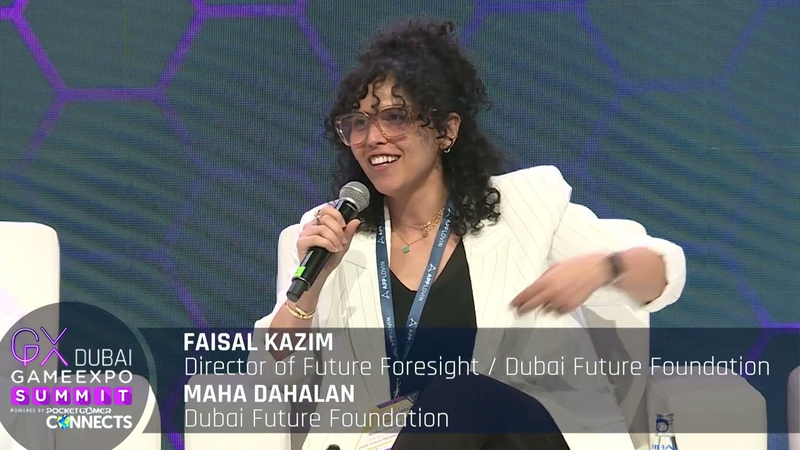
Session: How Dubai Plans to be a top 10 Gaming City by 2033 - Faisal Kazim, Dubai Future Foundation.
The Dubai Future Foundation is spearheading a strategic initiative to establish Dubai as a top-ten global gaming hub by 2033.
- Dubai aims to become a top-ten global gaming hub by 2033 as part of the Dubai Economic Agenda (D33).
- The strategy shifts the region's focus from esports and event hosting to a sustainable ecosystem for game development and publishing.
- To attract international talent, the government has introduced a 10-year gaming visa for developers, designers, and animators.
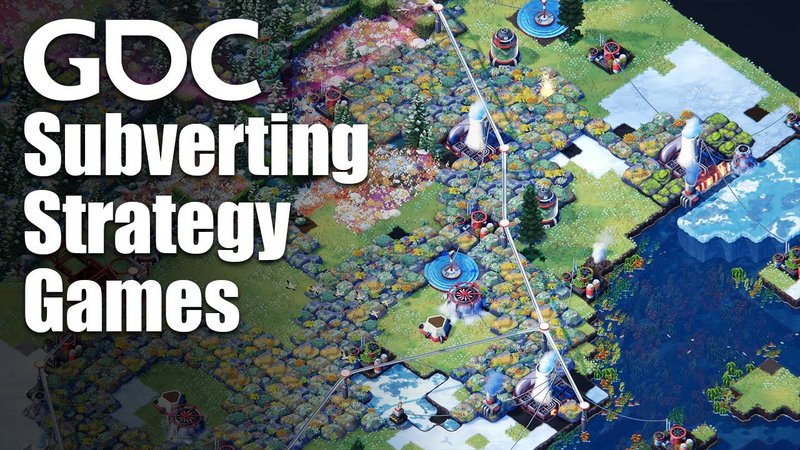
Developing 'Terra Nil': A Strategy Game About Nature, Not Expansion
Terra Nil represents a fundamental shift in strategy game design by replacing traditional mechanics of resource exploitation, colonization, and infinite expansion with a core loop centered on environmental restoration.
- Designers can dictate player priorities by linking core game mechanics to specific goals; in Terra Nil, replacing traditional metrics like gold or population with environmental restoration successfully shifted player focus to ecological balance.
- The game’s core loop is built on the principle of finite resources and equilibrium, where players must manage specific ecosystems—such as wetlands and forests—without the option to infinitely expand territory, reinforcing the theme of nature over industrial growth.
- Terra Nil originated from a 48-hour Ludum Dare game jam prototype, which gained traction despite using placeholder program art because players were emotionally engaged by the act of restoring a wasteland.
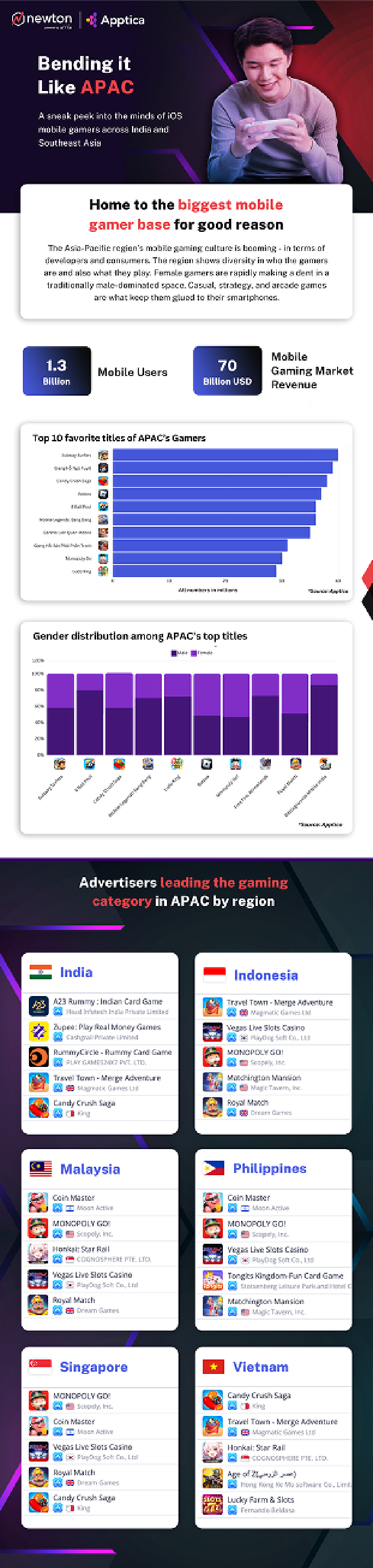
State of Mobile Gaming in Southeast Asia and India: 2023
The mobile gaming landscape across Southeast Asia and India represents a massive, high-growth ecosystem, currently serving 1.3 billion mobile users and generating 70 billion USD in annual revenue.
- The Southeast Asian and Indian mobile gaming market comprises 1.3 billion users and generates 70 billion USD in annual revenue.
- Mobile gaming titles in the region demonstrate high long-term engagement, with day-30 retention rates reaching 64% on iOS.
- The region is experiencing a significant demographic shift characterized by a rapid increase in female player participation.

Innogames’ Strategy To Extending The Lifespan Of Legacy Games
InnoGames sustains the long-term viability of legacy titles like Tribal Wars and Forge of Empires by shifting from traditional channel-based marketing toward a model of deep, game-specific alignment.
- InnoGames structures its User Acquisition (UA) teams by specific game titles rather than by marketing channels, ensuring closer alignment between product development and marketing strategy.
- The studio utilizes a predictive modeling system that forecasts revenue and user metrics with approximately 95% accuracy for a three-month horizon, allowing for agile adjustments to game features and marketing spend.
- Rather than attempting to combat power creep, InnoGames embraces it as a core design strategy to create a 'content race' that provides more opportunities for live-ops events and player rewards.

Product Deep Dive: Whiteout Survival's $400M Loot (Century Games)
Whiteout Survival has emerged as a dominant force in the global mobile strategy market, generating approximately $235 million in in-app purchase revenue over a recent six-month period.
- Whiteout Survival generated approximately $235 million in in-app purchase revenue over a recent six-month period, establishing it as a dominant force in the global mobile strategy market.
- The game achieves broad market appeal by blending 4X strategy mechanics with RPG elements and idle resource management, lowering entry barriers through intuitive UI and visual signposting.
- Monetization is driven by a multi-layered economy that anchors value at a $5 price point while utilizing gacha hero collection, VIP systems, subscriptions, and time-skip mechanics.

Elena Grigorian, CEO of MyGames - My First 100 Days as a CEO
The transition to leadership at My.Games centers on a strategic shift toward organizational agility and global expansion.
- My.Games is shifting its growth strategy away from traditional targeted user acquisition toward mastering the retention and monetization of broader, non-targeted audiences to combat fragmented digital attention.
- The company is prioritizing expansion into Asian markets—specifically China, Japan, and South Korea—through localized partnerships to drive a return to double-digit growth in 2024.
- Operational infrastructure has been decentralized through a network of international hubs in Armenia, Georgia, and Abu Dhabi to support a permanent remote-work model for a portfolio of over 50 titles.
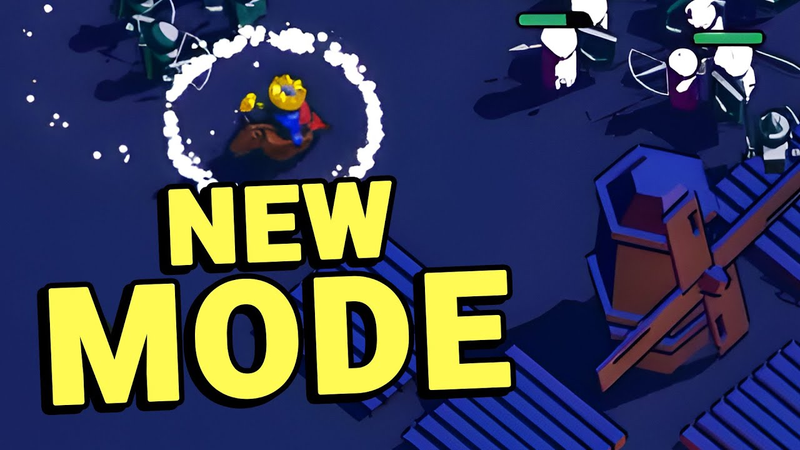
200 Days of Game Development
This development retrospective details the creation of new content for the indie strategy game Thronefall, specifically focusing on the addition of a new map, Uferwind, and a roguelike-inspired game mode titled Eternal Trials.
- The development of the Eternal Trials mode and the Uferwind map spanned 200 days, culminating in a final release on day 222.
- To address performance issues caused by high enemy counts, developers replaced mass entity spawning with an elite enemy system that maintains difficulty while reducing on-screen unit density.
- The team integrated an economy simulator and meta-randomization into the procedural generation system to ensure that randomized enemy waves remain balanced and viable against player build orders.

Warcraft Rumble: Deep dive into game's complexity, spend depth, systems, vectors, UA, creatives(#84)
Warcraft Rumble represents a strategic evolution of the mobile lane-battler genre, successfully adapting the Clash Royale formula by integrating expansive, scrolling maps and intricate gold-mining mechanics.
- Warcraft Rumble features an aggressive monetization model where fully maxing a single deck costs approximately €4,700, with a full collection completion estimated at €40,000.
- The game generates daily revenues between $250,000 and $600,000, positioning it as a high-engagement niche product for existing Blizzard fans rather than a mass-market mobile title.
- User acquisition is currently limited and conservative, relying on organic reach and repurposed trailer footage rather than performance-driven creatives or aggressive mobile-first strategies.
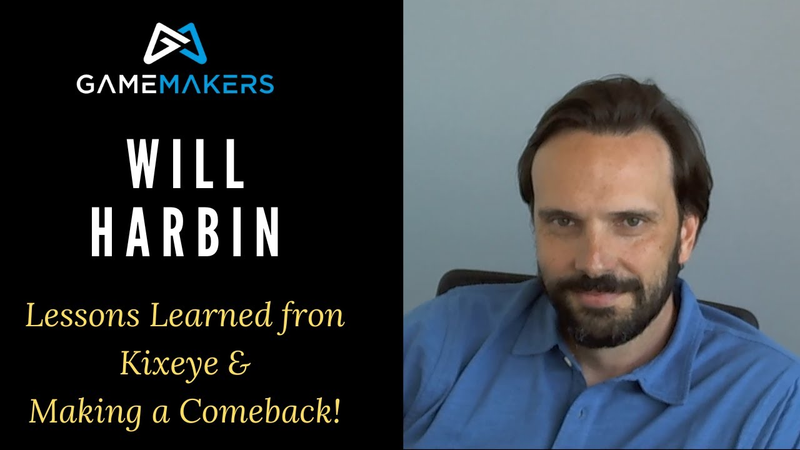
Will Harbin on Lessons from Kixeye and Making a Comeback
The evolution of the mobile gaming industry demonstrates that early market dominance is often determined by the speed of platform adaptation rather than proprietary distribution advantages.
- Success in mobile gaming is driven by rapid platform adaptation rather than proprietary distribution, as evidenced by Kixeye’s failure to transition from social web to mobile while competitors like Supercell captured the market.
- Sustainable growth requires a 50/50 development model that balances a strong creative vision with rigorous, data-driven iterative testing.
- To mitigate the risks of high-cost user acquisition, developers should prioritize strategic partnerships with established publishers over repeated, dilutive venture capital funding.
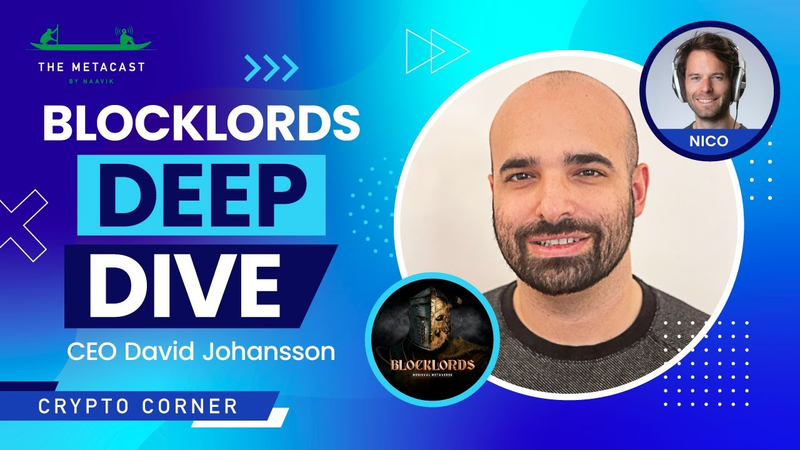
Blocklords Deep Dive with CEO David Johansson - The Metacast by Naavik
Blocklords functions as a medieval strategy MMO that integrates a sophisticated play-and-earn economy through a generational NFT system.
- Blocklords utilizes a generational NFT system featuring a permadeath mechanic, where heroes age and die to prevent asset stagnation and force continuous strategic legacy planning.
- The game economy is built on four interdependent player archetypes—farmers, warriors, lords, and kings—designed to incentivize long-term investment in regional infrastructure.
- To ensure performance and security, the game employs a hybrid architecture that keeps complex gameplay off-chain while maintaining on-chain assets, rejecting an everything-on-chain model.