VideoDeconstructor of Fun
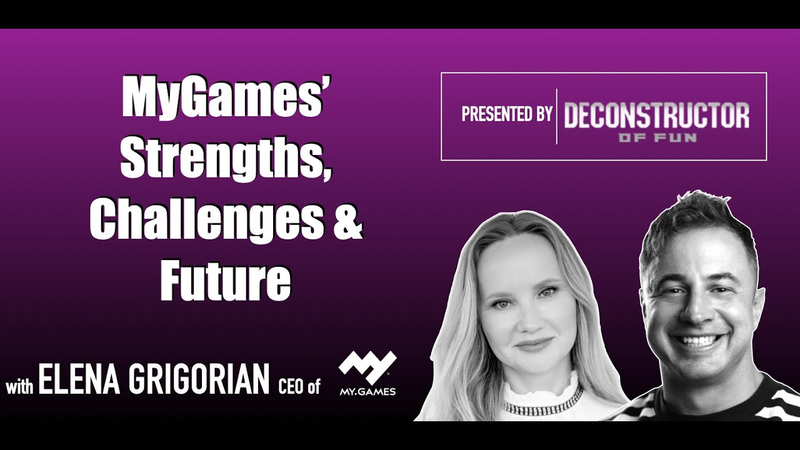
Elena Grigorian, CEO of MyGames - My First 100 Days as a CEO
15 Jan 202455 min video
Transcript
hey folks and welcome to the deconstructor of fun podcast I'm your host Mish katkov and today's guest is Elena grigorian a newly appointed CEO of my games I mean newly we've recorded this podcast when she was 60 days in and now she's been at the job for a little over 3 months so it's a very very interesting conversation I think it's interesting because we cover both the personal and the business side of gaming when it comes to business we discuss my games is tenfold growth over as a as a company as a business over the last seven years and we also discuss and provide a lot of views on the future where the industry is heading during the next two years and on the personal side uh we discuss topics like what a person should accomplish during their first 100 days as a CEO as well as things like work life balance something that rarely exists with uh with Chief Executive officers I really hope you enjoy this podcast so please check out the below if
you're on Spotify leave some comments uh send your thoughts and I do urge you to check the uh the upcoming annual event uh the istanb gaming Summit that we're holding on 7th of March as well as the invite only Istanbul investor Summit for Founders and investors on 8th of March so the following day if you haven't been to istan gaming Summit it's one of the largest gaming events in emia uh as always we have top speakers from top companies and we are improving every year we're growing every year we're improving every year this time around we're going with uh almost thousand people uh attending and the new thing the the one thing that I'm particularly excited about is we're adding more interaction that is something that that people have been asking so less panels more interactions we're going to introduce breakout sessions where you'll be able to have a proper conversation with uh key professionals and Executives and um pre-registration is open the link
is in the description below so hope to see you at the istanb gaming Summit on 7th of March and for the founders investors and Executives hope to see you on 8th of March at the Istanbul investor Summit without further Ado ladies and gentlemen Elena [Music] Gregorian welcome welcome welcome everybody to the deconstructor of fun podcast I'm joined today by a unique guest yena Gregorian CEO of my games Elena welcome to the podcast thank you very much thank you for having me it's a great pleasure for me to talk with you today guys we've been trying to get you on on this podcast for quite a while you are a very busy CEO newly appointed CEO um it's been two months since you've been appointed as a CEO of my games right yes it's approximately two month in reality
yeah it's not too long but nevertheless you know um taking into account it's only two months but I have been a part of my games for approximately nine years already and during which I you know I uh was engaged in the different operational responsibilities across different levels with the company and uh before that I headed the marketing structure constructing the largest centralized Department in the company and it l to one uh I coordinated the efforts of our investment Army so we have a lot of operational responsibilities at that moment uh as well and even if my role was called Like Chief strategy officer but nevertheless I did a lot of operational work that's why it's not something new for me now in the new role of SE and definitely our preparation here in my games for this transition has been ongoing for nearly a year so it's pretty
okay so I can confirm that the transition has been you know relatively seamless and well prepared while it wasn't without challenges of course but the process was control which is certainly positive positive aspect yeah you have uh you have quite the career um in games I mean 20 years industry experience you were as you said nine years as uh with my games nine years working first as a chief marketing officer and then as a chief strategy officer and before that before my games you actually spent eight years at Disney when where you ran their interactive business in cia's countries and uh and your background is quite interesting so despite despite no while having these marketing leadership positions you actually hold a degree in engineering and um and kind of like looking I've looked at your resume it's quite exhaustive and and looking at it you could sum up that um you're a proven strategic leader in the game industry with expertise in marketing Partnerships
and operations and as the uh the former CEO of my games put it Elena is exceptional management has exceptional management skills deep experience in international business strong strong strategic Vision creativity and inspirational leadership so uh so that's a yeah a very nice very nice form of boss you have so I wanted to ask you is like how how did the transition from Chief strategy officer officer to a current CEO role came about yeah yeah it seems so that um strategic role slightly different compared with the rather operational seal role but taking into account that I'm a part of the company for so many years already definitely I know a lot about the uh strategy our business our operational things so I believe that the transition was seamless and um smooth enough
and definitely I extend my gratitude to all my games team for their you know I waving support for for this month so I believe that our management team is now stronger than ever and we are progressing together and over the last two month we have successfully upgraded our strategy established goals and concentrated on the crucial issues and The crucial task and we have initiated standard yearend procedures such as budget planning performance team reviews and so on so I can say that everything is progressing pretty well and transition was pretty successful I believe when you when you take a role as a CEO uh is there um like maybe this is with presidents especially presidents of United States they have like their first 100 days so is it when when you're taking over as a CEO in a you know you know pretty large company like I think
my game's like 1500 or something employees many studios and so forth many projects ongoing um when you take this type of a role like is there that sort of a you know first 100 days here's what I want to achieve or how did you approach um approach taking the role of a CEO well um yeah in reality it's very interesting because definitely definitely I thought about my first 100 days and what exactly is the most important things I need to do and what exactly my focus should be and so on definitely depends on the different situations and different structures but for me personally my primary goal for this two month was definitely my team so ensuring that our team has all the necessary resources to you know effectively do what they definitely best at transform their passion creativity and professionalism into great immersive game games so it was crucial for me and
definitely it involves the establishment of the procedures usually it involves in processes internal cultures which are able to help them unleash their full potential and from my perspective over the you know past two month we have significant progress on that front and aligning our strategies with the plans of 2024 identifying our key areas of improvement in operations expanding our Hub Network that we create the work environment which help us to um help all our teams to work with comfort and joy and maybe heard about that that this year we successfully opened new hubs in Armenia in Georgia in Abu Dhabi and in Serbia in addition to the existing headquarter in Amsterdam and office here in Cyprus so um it's fun because to month sounds like a lot of days but in
reality this almost 60 days flew by like a moment and to keep the paace of our business and our industry it's so important to be focused and for me it was important to remember that I can do everything at once and do it well so I decided to take a breath and walk Focus my efforts only what important and Urgent and conly postpone non on things because definitely there are a lot of things to do and you should concentrate your first efforts on the most urgent things and again it's my point it was so important for me before any big phase in my life like to be appointed at se position do not forget to discuss with your family beforehand that they might not see you much at least for for the next three months so so we agreed with
them uh this situation and it was agreed beforehand it's much easier for me now yeah there's the definitely a lot of things that you have to take into account before I jump in into you mentioned a lot of interesting things the opening up of hubs and before we start talking a little bit more about um my games I wanted to kind of ask you a couple more questions about your role like when how does the um how does the day-to-day changes from you moving from Chief strategy officer or even before that Chief marketing officer to a to a CEO position like are you now more in discussion with Bo board more external focused yeah and um and like are the days longer as you said with this position moving from CSO to CEO you had to you know prepare your family of like this is going to be uh there's going to be a lot of work and you're not going to see me a while but uh but I need to you know we we all need to work as a team so I can focus on get things done in the first you know 60 70 100 days
yes it was a situation that should definitely be discussed beforehand and you know in my daily routine I'm someone put a lot of efforts and find satisfaction in hard work and it has been always that way so it's significant part of my life so my work and my professional definitely it's important very important part of my life both professionally and personally because many of my former colleagues have became my friends and I like to spend time with them after the main work calls are done so I wouldn't say my daily routine has changed drastically but spending time with my family definitely has to take their back seat for the next couple of month but in usual daily daily routine there is no huge change at the moment got it and um and you talked a little bit about you know
um not a little bit you talked a lot about like working hard and as I said it's we've tried to schedule this many times and I understand like there's ton of priorities like podcasting shouldn't be the priority of a CEO definitely a new CEO but um but like how does the work life balance happens with a CEO of a of a large company or is it something that there's just no work life balance it's mainly work and then there's going to be balance after the role of a CEO when when you're board member and so forth or an investor Etc it's like how does U you know work life balance is a question that a lot of people usually ask but not CEOs yeah yes of course the issue of world life balance is the difficult one of course especially when it comes to the C position but in especially then you're doing something you love and I really love what I do and I really give myself to the process so this balance is not always possible and I'm CEO of the growing gaming company but at the same
time I'm mother of two and I'm wife I'm daughter I'm sister and I'm person with my hobbies and interests and so on so definitely it's challenging but um and I can give you the magic recipe how to do that but for my personally uh for my you know for me for myself I do my best to find this balance every day and for example I can say that I had never suffered from it and I have enjoyed my work my communication with colleagues with partners and for 20 years of course I have invented habits that allow me to combine Pleasant for me and useful for my work at the same time for example I try to learn something new every day it's a kind of you know new habit in my life but more about what could be used for me for my work and because it's always the maximum interest that's why
it's a kind of combination of something interesting for me personally but at the same time it's very useful for for my work the same story for example with the sports I do Sports I work in the morning but at the same time I think about the upcoming meeting of the same at the same time and I write down the import things and fors and task on the dictaphone at the same time so it's a kind of combin of pleasant thing for my health but at the same time very useful part of my day to spend some you know minutes some hours just alone with myself to think about the the new day and of course I try to make sure that the time I spent with my family is a maximum has a maximum quality and useful for for each course and I believe and I know that we all appreciate it very much yeah those are those are great points um yeah it's just something that
is not that often discussed with uh with CEOs or anybody in leadership position that it it it takes a lot of um a lot of organization of your of your yeah of your life to uh to be in a leadership position and um and it's uh it's good that you're you're explaining how you structure your days so that you can get you know the the things done and spend the time with the family and everything but as it always happens with the uh with these type of roles is like if somebody needs you in the evening because there's something happening you have to be on call and you have to say hey let's continue tomorrow and and I need to go I need to figure things out so it's part of the uh part of the role so I guess uh yeah I guess that's the uh the work life balance um but let's let's switch gear and talk a little bit about my games because I think it's important to understand uh the size of the company so uh I was looking at some some some data it's headquartered in Amsterdam as you said around 1500 employees with more than 50 titles in the portfolio and around 15 games in
development uh the company is mainly known for mobile first games like War robots hustle Castle Rush Royale left to survive tactic hole and you've lately been expanding outside mobile with games like War robots Frontiers that's launching on consoles and hawed uh that that is um first person third person shooter game that is launching on PCS kind of like a fortnite looking a little bit and also you have as you mentioned in the in the beginning you have an investment arm uh mgbc which is a top strategic investor globally so a lot of actions a lot of different Studios with with you know 50 titles that's that's a lot like I can't even imagine playing 50 games during a week or even a month to to just to just you know keep myself up so um so I wanted to kind of zoom out and ask you as a former Chief strategy officer like what would be the SWAT and analysis and for for those uh you who
don't know what that means is strength weaknesses opportunities and threats like what would be the uh the SWAT analysis of my games uh yes thank you very much for for this questions very you know interesting to talk about this you know very Con in a very concentrated way about the Mind Games talking about the strength ye have already indicated that um our key strength definitely it's our great High professional team different expertises because we have Diversified gaming portfolio which is number two strength the second one but nevertheless this Diversified portfolio help us to collect very different experties inside of our team we do games on different platforms on PC console and mobile at the same time we have Diversified business models inside of our business we have our own games that are developed inside of the
company at the same time have licensing business then we license third party games to be published All Around the World in different countries and number three source of products for us it's number three business for us it's investment arm it's much one more way to to to to have the product in our in our lineup and I believe it's our strength this huge diversification of our business in very different aspects some you know different development teams that have their own unique way to to go to the success unique experience to go to the success wide range of products on different platforms different business models inside of one company so it's definitely our strength talking about the weaknesses I can you know indicate pretty the same things like wide R range of teams and products at the same time it can be weaknesses
then we talk about the United strategy United objectives so important for us to work together to go the same direction because the team is huge enough a lot of different teams in terms of the production cycles and we need to work hard to unite everyone in one strategy and to to go in the same direction alt together it's sometimes it's not so easy talking about the opportunity ities and mainly talking about the market and opportunities that we have there and um I could say that um at the moment many gaming companies should think not only about their own category in terms of the platform but should think wider for example mobile game developers definitely should think about experience that um PC game developers has and our and definitely opportunity for us that our experience is so wide in different
platforms development and marketing so at the moment for example when we talk about the mobile marketing for us it's much easier to understand how PC marketers involve The Gamers into their product and this experience is very important at the moment for the mobile marketing as well and it's much more difficult for other gaming companies to acquire this expertise but we inside of my games has already this type of expertise at the same time for all these years we have wide partnership Network and it's important for us at its opportunity for us to involve their uh expertise and their background to help us grow um talking about threats and definitely I believe it's pretty the same threats as for many other gaming companies in the world at the moving U players time spent into non gaming apps from gaming one it's definitely a
threats in terms of the further movement and further privacy restrictions definitely the threats for us as the developer and publisher of the mobile games mainly and of course growing competition on the gaming Market in general of course one more threat for for all of us so it's a kind of you know concentrated uh skip what's going on with the Mame in terms of the sport analysis yeah thank you this is this is really great I mean uh just when we were talking about the Diversified portfolio business models and you know Investments I was thinking wow how do you how do you lead such a such a diverse group of of of um businesses and products and then as you said the weakness is definitely the challenge of leading such a such a diverse team because everybody's Target is different and you know as you said State and the uh in the development and so forth how do you um you must have a
pre like what is your leadership team like because like I was just wondering it's uh it's such a diverse set of businesses and so many products in development at the same time how have you organized the uh the company to you know to stay on on top of everything that is going on yeah uh I believe that at my games our organization is structured in a different way compare with many different um G companies because we have 10 and House Development teams and each team has unique expertise and specialization in the development of diverse games genres and platforms and this setup forms a kind of micro industry within the company enabling constant Consulting and collaboration among different teams and definitely the key of our uniqueness lies in this diversification not only in the variety of Gam games we create but also in the
skills and focus areas of our employees and teams and this diversification strategy positions us ahead of the industry curve in many cases allowing us to test different hypothesis at the same time and result of these experiments are constantly shared across all the teams fostering the collaborative environment so this Collective knowledge sharing process enriching the entire m games structure and enti my games team ensuring that insights from one genre platform can be contributed to the success of others with the company so of course it's a huge it's very important um strange uh strength us our diversification but of course we have a kind of umbrella centralized structure that coordinate the efforts of our 10 development teams to guarantee that all of them going to the so the same
direction this is this is important are there any best practices you can share about knowledge sharing I've been at at many companies that have amazing products and and I've always noticed how how almost people outside the company have better understanding of the portfolio that the company has than the people who are actually inside the company and that and kind of like that sharing of of learnings is uh is not not it's not as common as as you would um yes definitely I believe that sharing the experience and collaboration all together is inside of the DNA of the company because we are firmed is the communication as the comination of different teams of different development teams so for us it's so important to share this experiment uh and share the result of any experiments we have inside of each team taking into account the size of the company and diversification
of the students when we have a kind of internal event it looks like industrial event for 1,000 people because for example we have the working groups between all the marketers um from all the studios the same story we have the working group between all the game designers in different in different development team that collaborate all together and discuss different topics together and share not only their knowledge but their metrics at the same time because for us it's much more important to have the United Tron Tren tool that everyone knows the figures of any experiment know the figures of any products so it's a kind of community of developers that can share not only their knowledge but their figures at the same time and you could look at any marketing campaign at any student any product for
example and look at result of any uh event that we have inside of our games and to ask the question what was happened what was the result and so on so this um collaboration between the studies it's definitely a key and we are very very good at it very good at it because huge amount of internal events for different topics just to share the the experience that's that's great and do you have uh some kind of like documentation of the past event like past things that have been completed in games like is there sort of a um I don't know a my games Playbook that that people inside my games can get their hands on or is it more um sharing of of day-to-day not day-to-day but but like monthly work for example like these is these are the events these are things that we tried in our game and this is how it worked or is it more like U historical um of course we are trying to have the
documents like best practice for different experiments but nevertheless it's much more important to have the someone inside the team uh Who had who can answer your questions that's why it's not only the documents it's mainly face tof face Communications then you could ask the questions and to understand what's going on in real life of course we're trying to to find something in a Confluence at the beginning but you know we have a kind of cult culture the experimental culture inside of the company even if you have the document that for example this um hypothesis was already checked one year ago it doesn't mean that you shouldn't try to do the same today because everything can be changed the market changed greatly every year the competition environment changed great greatly and the uh marketing chains and
partners changed greatly so try again and again maybe one day your experiment could be much more successful than the previous one so documentation is not the best way to keep this you know this drive this path of experiments again and again I think that's a very smart way to put it I I was I mean I was just talking to a Founder maybe a a week ago and we were discussing a certain thing and they had a proposal of go toward a certain direction and that founder said well this looks like exactly that we had in this app three years ago so let's not go it it feels like going backward versus like you know it's like what what was then doesn't mean that it's right or wrong it's like give room for people to to try to experiment to run their tests and and um and move forward from there so uh yeah appreciate that I think it's a it's a smart way to to go about um going back to like your portfolio how many new games do you have in
development and and how is it divided between mobile console and PC first um I can share that our development strategy emphasizes the balanc between mobile and PC console projects and we try to keep this balance uh to have some PC console project in our lineup every year at the same time to grow our portfolio in mobiles for example now we have two PC console product in Early Access set to launch at the very end of November it hooked it was announced already this this is going to be released rather soon one more title that we have in our Pipeline and we prepar it for the launch uh next year it's V robot Frontiers we have already mentioned this game so we have two PC console product to be released at the end of this year and next year and annually our diverse development team contribute to the creation of
approximately 10 mobile games annually 10 mobile games definitely not all of them will be you know globally released or even will be successful definitely some them will be closed over the testing process but nevertheless we are trying to keep this um the skill to have at least 10 games per year at the latest stage of of the development and then the games that you're making they are not small like they are yeah I mean even looking at uh robot's Frontline you know console game or Haw they're they're pretty big games so I'm curious in in how do you how do you Greenlight these games because you have to be quite forward-looking I think the development cycles for these type of games is two maybe even three years so uh so how do you yeah how do you Greenlight them yes at my games the green light process for new games before it was
started is a multiphased evaluation by our analytical team so they analyzing categories genes and overall potential of each product and this evaluation is combination of Creative Financial and Market consideration but after that as soon as everything is quite good during the during during the light process we start prepation of MVP and definitely the most important step for us to have the real metrix on the real audience of our products so we believe that it's so important to show your product to the audience as early as possible to get the real feedback from the audience to see the real metrix of course we have some stages of friends and families stud review and so on but nevertheless which is significantly important for us to have the real Matrix from the audience of course it's SL the
different between mobile and PC console but nevertheless in case you have the product that can be reviewed uh by by the audience you definitely should do that as soon as possible so we trying to get this feedback and to adopt our further development process based on the result of this feedback and on the result of Matrix we can get after that and and so yeah so I think you're describing um you're describing a strategy that is quite deliberate so rather than what I mean by that is you do a lot of analysis beforehand and then move as fast as possible to start getting feedback on what you have built against a research that you have done rather than doing something and then seeing and then just getting that something out in the market as soon as possible to see you know the the basic metrics of marketability the basic metrics of retention then pivoting left to right uh you're kind of uh deliberate
rather than um how would I say fast to fail type of approach yes we we are trying to combine the best features from one approach and from another so and we find kind of our balanced approach that we use yeah sounds sounds smart and U how about the uh the organization so a few years ago uh naturally you've divested from Russia has the organization changed significantly since you left the country um yeah in it's much important to see that the main part of our business and our Revenue was a concentrate outside of uh of Russia for many many years already so the main part of our Revenue comes from us UK France and Germany is our main Revenue countries and it was know during decades already with us and we can continued our International expansion continued growth of our key marketers us and Europe but
at the same time we think about the Asian market as well so our International expansion due to our products and due to our Ambitions in terms of the audience growth it's much more important for us because for example um again maybe heard about that that um during this year it was important here for us in terms of the V robots that finally uh we obtained the iban for V robots uh to be published in China so we have always been greatly interested in China Market but there are a number of conditions we need to meet uh before launching the product there I believe that you definitely know about them and currently the door has opened for our key product so why robots we have opportunity to launch and have the local campaigns in China and we are the of preparation of this launch to be to be released at the very the very
beginning of next year it's a great step for us it's a huge change and we'll see and definitely we truly believe into the success of the game there talking about the structure and the team I have already mentioned that we opened new hubs across the globe Abu Dhabi Serbia Armenia Georgia and all um contributing to our missions of fostering a truly worldwide presence for for our team it's really it's really important for us you know even before the pandemic we had the international team and we were quite flexible and the pandemic accelerated this transition to remote and this remote mode help us greatly at at this moment uh there's two things I actually three no two things that I want to dig into it so I'm not going to dig into the
the China I've seen I've seen companies enter it's uh one is getting the license that that's a huge battle and then the second one is is the the fun of working with a co-publisher on the Chinese market so but that's a different podcast uh but let's let's talk about uh let's talk about two things that you mentioned so one is uh hubs what is a hub so opening up new like what what does it mean uh yeah have a kind of combination of uh help that we can organize for our team that live at the territory it's not only the working spaces definitely not it's not only about the office spaces and co-working spaces it's mainly about our support of the territory support of our team in terms of the different procedures in terms of the legalization in terms of the bank account opening in terms of the technical support on the territory and any other support support that definitely we help we try to to
organize for our teams that's why it's pretty you know a lot of work to open a new Hub because it's not just the legal entity at the territory and legalization but it's more about the opportunity to support our employees there in many different aspects of of their life and professional work and and with this type of a hub structure do I correctly that um though the company is very remote friendly um people can work let's say I'm I'm living in Serbia um and I would be going to the hub but I would be working on a different project than other people so I'm kind of like remote but I'd be going to an office if need be does that what the Hub means or yes yes definitely definitely it's not necessary to concentrate your efforts on the exact project to be located into serar you definitely will continue to work for the
project you started for but in case you need any help in terms of the technical support in terms of the you know health care or in terms of the legalization of the territory or to spend some time together with your colleagues you can be inside of office spaces and play um spend some times in the in the C workking spaces in in case it's it's useful for you definitely the the structure is pretty the same but if you live at the territory of our Hub it's much more convenient for you to be a part that's a that's a very interesting uh setup I I don't think I've heard quite this type of approach but it definitely makes your Workforce quite flexible because it's yes it's not like TI 2 a studio that has one or two physical locations but it's it's more like we we provide all the all all the how would I say like um um onside
services that that comes with you know everything from from day-to-day life to to hanging out with with people that you work with in these different locations but nevertheless you don't have to be in Armenia to work on a project that is being done in Armenia you're working on a project that is done out of multiple different hubs as well as remote employees definitely yeah this is a case this is a case you're right interesting and and have you is this Hub a new type of approach has this been before because if I understand correctly like majority of your employees are remote so they're working on Project not in the same location yes yes yes in reality and definitely we started to do it even before the pandemic but during the pandemic it's definitely this process was accelerated uh this transition to the remote work and we built the solid infrastructure that allows the team to work remotely so we moved to remote work during the pandemic and established the principles of remote work in 2020 and we
realized the efficiency of this work for us and we successfully launched our Heat game rash Royale because remarkably that entire development team worked remotely on this project and the game is one of our biggest success success now is collecting 63 million installs but the game was done on the remote uh regime already and after the pandemic the decision was made to stay in the remote mode of world permanently uh as we saw good results produced by new project teams and gaing feedback from the employees uh on what best for them and this year we decided to build this network of hubs to enable our colleagues to meet and work together some projects they they they need and of course speaking about the operational team it's very important to to organize a team that help to support this transition this is the join efforts of several
teams HR it legal Finance Communications and and many others and uh of course to be successful during the remote work and remote um mode it's constant communication is a key and we understand that so to ensure that everyone is informed about the progress any project the challenges we Face the benefits we receive so everything is communicate uh constantly on different levels we have a lot of internal events to support this communication flexibility and transparency so it's important to guarantee this efficient effect effect at the end of the day having the Almost 100% remote uh employees that's that's that's super interesting and so you talked about expansions
towards China and getting the license and you know being excited about what the future brings there huge Market I mean just gigantic Market but what are some of the other Geographic areas that you see as potential for new games and overall like how do you find those those new areas like what what makes you uh focus on certain geographic area well you know at the moment of course as I already mentioned the main part of our Revenue comes from the very traditional territories like us and Europe and of course this is one of the biggest um point for us in terms of the stability of our business and of course we concentrate our efforts at these territories than the think about new product about new marketing campaigns about partnership and so on but definitely when you think about the growth points for us in terms of the territory expansion we think not only
about us at the moment we think mainly about the Asian territories Asian countries like China I already indicated that like South Korea like Japan and um we know that at the moment our share at these territories is not so huge if you look at the total gaming industry in the world of course it's territory capture half of the of the G craving in the world but for us significantly the sh is significantly smaller but at the same time we have products which is pretty successful there for example ra robots Japan is number two territory in terms of the revenue stream for for V robots and if you look at the um competitive um landscape there in China I'm sorry in Japan we understand the potential for VAR it's still pretty huge and we believe that for for V robots it can be
the potential territory to further for further growth for example the same story with rash raal South Korea it's number four ter in terms of the revenue for rashal but in any case the share is pretty small and we believe that South Korea can be the product can be the territory for us roal to for further growth and tomorrow we are planning the special local marketing campaigns and of Korea for rashal at the beginning of next year and we'll see how it will be succeeded and we will hope for a great result and in case it is we will try to increase our local efforts on this territory to grow rashal in South Korea for example Japan in South Korea it's PR significant markets for tutic cool and again even if it's number two not in number three territory in terms of the revenue still believe the potential is pretty pretty high that's why for us Japan China and South Korea it's number
one territories in terms of the growth point and we do a lot of local initiatives on the territories trying to understand our you know full potential and we'll do definitely some experiments in terms of the local operations in terms of the partnership on the territories in terms of the local marketing campaigns so 2024 will be the year for us to test these new territories in terms of the Ambitions and we'll see I really hope that next time that we meet you know maybe some quarters later I will give you more details about the exact results we can get at this at these territories that's super exciting I've uh I have actually some experience of launching in some key Asian markets and I I don't know if you're approaching it this way but there's a there's a lot of work that goes into it not just localization but the uh and not just culturalization that that I don't think
you need that much with robots but uh but with the customer support and and really focusing on the uh the the uh the language that is used in the games to make it feel native I they're much more lenient to or not lenient they're much less lenient to mistakes that they see in games compared to uh to Western audiences that are used to bad bad translations so uh so that's that's interesting but those are those are tough markets they're very concentrated uh but uh looking forward to seeing War robots which is what 10 years old game uh to succeed flatly less flatly less but now the less it's it's pretty close to 10 yeah super impressive how you are running games that are you know closing in on a decade of being live on mobile and still finding new markets and new ways to grow them that is like uh that's that's truly you know marvelous and I think that's sort of a a different mind said that many companies have because they always focus on the next one and the next one but you are both growing
the old franchise uh not the old old game and building around that franchise with two I think no little big robots launched that was a mobile game and then you're launching uh another console game around it so uh quite impressive and I can I can see Rush roel working in Korea because uh I've seen similar games before rush Royale launched coming from Korea so the feels uh quite uh quite quite adapt for that one um all right last questions before I let you go and um I know you have a very busy schedule you know having worked in games for 20 years having worked internationally and and heading one of the you know large Publishers in in gaming how do you see the industry evolve during the next two years I'm not going to go further than that but 2425 like what what are you seeing uh in the next two years uh you know it's very difficult and very interesting question to talk about
because of course it is much more important to think about our future and what we should do to guarantee our success because for the whole ging industry it's not the easiest time that's why it's so important to to understand what can be adopted and upgrade it in our strategy um to to guarantee our further further growth and definitely the economic recession in development markets have a significant effect on the gaming industry now and if he had been working in games for a long time as for example I do uh you know that the gaming industry has always overcome all economic crisises smoothly and uh it's the first time that during the any economic crisis games it's not so not so not in the good shape and my belief is the games has always been the cheapest
entertainment which has always rather won in times of Crisis but everything has changed now and the answer is simple for me uh I believe because no less attractive but cheaper entertainment appeared on the market and I'm talking about the short video and Video in general so we all knows the downloads on on of non- Gaming applications show impressive growth and the most part of this growth happens with the music categories for and video categories and same categories are the record holder for the growth rate of user time span so both downloads and time span goes from gaming to the non-gaming apps definitely it's not the just the the highest growth rate but nevertheless nevertheless growth rate for time spent in games is not the highest at the moment and yes we
are losing downloads due to competition for the users attention and time spent at the same time we losing our Ina monetization due to lack of value targeting opportunities we used to have for almost decade and so I believe that uh for next two years we should stop praying for the surge payers it's time to learn how to work with mass non-targeted audience we should think how to attct it but what is much more crucial uh is how to keep it in our games and how to monetize it because it's much more difficult than to make the game and monetize the the players and maybe enriching the gaming experience mixing it with the other forms of entertainment products could help but um I believe that if we as an industry have the Ambitions to return to
the two-digit growth rate path we need to upgrade our approaches both in product development and in marketing so it's um you know all this sounds pretty bleak but I wouldn't like our listeners to get the Impressions uh of one you know hopelessness and what is happening in the gim industry at the moment yes today it's not the easiest time for for us for gaming companies but I'm sure that gaming entertainment will be able to rebuild and find its new way and we are in the epicenter of these changes in the moment which is taxing no doubt but also extremely expiring I believe for me personally and for my games it's that way yeah that's that was an in point of of learning how to how to navigate with mass adoption it's something that
actually apps that you said are you know stealing the not stealing but winning the time of users are really good at is is the mass ad option they they work for everybody and uh and that's something that we haven't had the um yes the need to to figure out but I bet a lot of people should be looking at onboarding of various apps and how they segment you very early on and the different type of users it's uh it's a lot of interesting things that I'm personally been looking at and and yes it's uh while this is difficult I after this podcast maybe a few episodes afterwards we will have Josh Wilson who was a CEO of s playay talking about how they went through this route of figuring out the uh the new environment and getting to growth um after you know pushing the braks you know Social Casino company so so it's a lot of figuring out and I bet there's even more figuring out when you have a very diverse portfolio but once you once you get there it's uh I think it's uh it's back on the growth tracks yes yeah
definitely thank you well Ela thank you so much for for jumping in on the podcast uh truly appreciate it uh truly appreciate you being open and you know doing the SWAT analysis of my games and and um and everything you're doing the weaknesses the strengths the opportunities the threats and your views on the on the future as well as how you work uh remotely um is there anything want people to uh to follow go to my games page or download your latest games like what would you uh like our listeners to do no thank you very much for for listening to ours thank you very much for for your questions and I really believe that everything will be great with games and I really hope that my games and believeing to itend will be successful and I hope that everyone will be you know um will be with us during our new releases so in case you play PC Soul games uh HED is a fantastic product so you are welcome to test and to play
so hawked free to play steam get that game and um thank you again for coming and thank you everybody for for listening so on this point out catch us on the next episode thank you bye-bye
Auto-generated captions from YouTube — names and numbers may be misheard.

















Comments