Strategy reports and market data
Documents

Make a Competitive Strategy Game Survive
Competitive strategy games face a persistent threat known as the death spiral, where declining player counts degrade matchmaking quality and jeopardize long-term viability.
- Balancing in strategy games should be treated as an iterative process of educated guesses rather than a search for perfection, acknowledging that some adjustments will inevitably underperform.
- Complexity should be viewed as a design cost rather than an inherent virtue; developers must ensure the fun provided by a mechanic outweighs the cognitive load it imposes on the player.
- When designing units, developers should prioritize filling functional gaps in a spreadsheet—such as specific ranges, attack speeds, or movement profiles—rather than simply creating direct counters to existing units.
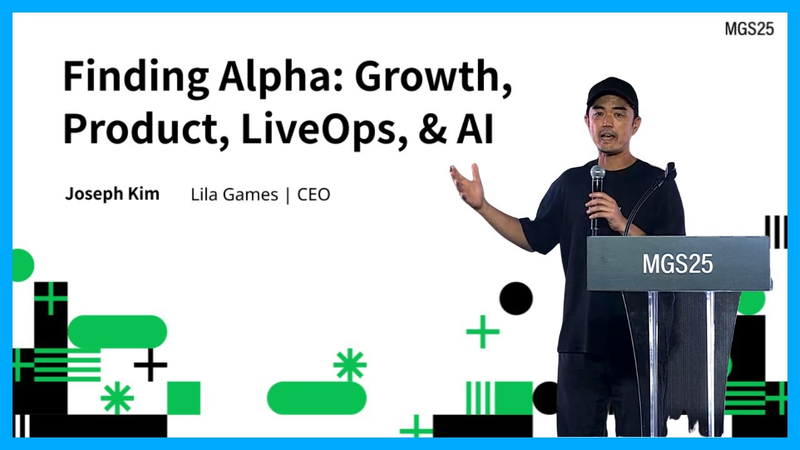
Finding Alpha: How to Find Your Company's Secret Advantage!
In an era of increasing market uncertainty and intense competition, companies must move beyond mere tactical execution to identify and leverage "alpha"—the specific, company-level excess returns that differentiate a business from its industry peers.
- Companies must transition from micro-level operational tasks to macro-level strategic adaptation to generate 'alpha,' defined as company-level excess returns that differentiate a business from its peers.
- Success in the current mobile gaming market requires aligning internal structures and product philosophies with macro shifts, including the end of zero-interest-rate-fueled excess and the rise of the attention economy.
- Generating competitive advantage requires identifying and fully committing to high-leverage opportunities rather than hedging or pursuing half-measures.

📊 Is 24-Month Payback the New Normal? Real ROAS Benchmarks Revealed!
The mobile gaming industry is currently navigating a period of significant financial strain characterized by a widening gap between user acquisition costs and monetization growth.
- Payback windows for mobile games are extending significantly, with many titles now requiring 12 to 24 months to achieve full return on ad spend (ROAS).
- M1 ROAS serves as the primary predictor for long-term success, where a 40% M1 ROAS typically correlates to a 6-month payback, while under 25% indicates a payback period exceeding 12 months.
- Hybrid monetization is becoming the industry standard, with traditionally IAP-heavy genres like 4X and strategy games increasingly incorporating rewarded ads, and ad-heavy games adopting IAP-focused VIP tiers.
How Chess.com became a $500M Business?
Chess.com has successfully transformed from a niche web portal into a dominant global platform, currently generating over $100 million in annual revenue with a valuation reaching $500 million.
- Chess.com has achieved a $500 million valuation and over $100 million in annual revenue by prioritizing a subscription-based model over aggressive advertising.
- The platform maintains a dominant market position with 200 million monthly web visits and a workforce of over 650 employees.
- Growth is driven by organic community engagement and strategic content rather than traditional paid user acquisition, bolstered by external catalysts like the COVID-19 pandemic and 'The Queen’s Gambit'.

Supercell's New Boat Game - The Experts Weigh In
Supercell’s latest project, currently referred to as Boat Game, represents a significant strategic shift toward ambitious, real-time, and hardcore mobile experiences.
- Supercell is shifting its strategic focus from casual, short-session mobile games to complex, hardcore experiences featuring naval combat, third-person shooting, and deep RPG progression.
- The 'Boat Game' utilizes a hub-and-shard structure with 3D environments, marking a transition away from traditional menu-based mobile interfaces toward persistent, immersive worlds.
- The studio is attempting to accelerate development by reusing assets from previous internal projects like Moco and employing a 'ship early' philosophy to iterate on a high-fidelity engine.
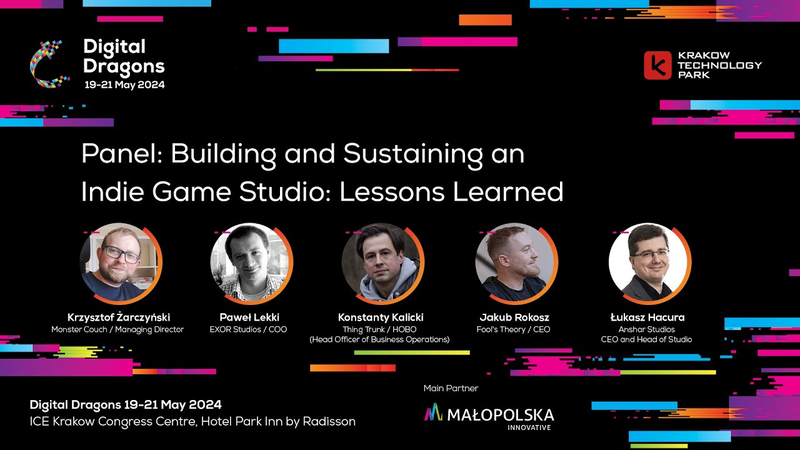
Panel: Building and Sustaining an Indie Game Studio: Lessons Learned
Achieving long-term viability in the independent game industry requires a strategic blend of financial discipline and operational agility.
- Studio sustainability is best achieved through a 'brick-by-brick' approach, where profitable external engineering projects or contract work fund the development of original IP to avoid reliance on publishers.
- Scaling a studio beyond 8 to 15 employees creates significant communication friction, requiring a shift from informal, open-space collaboration to structured, remote-first communication protocols even for on-site teams.
- To maintain lean operations, studios should prioritize automation and internal technology development, such as building proprietary engines and scripting tools to reduce repetitive manual tasks during production.
Is Chess the Next Big eSport?♟️| Extra Credits Gaming
Chess has successfully transitioned from an ancient tabletop strategy game into a prominent, modern eSport.
- Online chess has successfully transitioned into a viable eSport by shifting from traditional, slow-paced play to high-frequency formats like blitz and bullet tournaments.
- The game meets core eSport criteria by offering a high skill ceiling with zero randomness, as players start with identical pieces and no luck-based mechanics like dice rolls.
- Modern digital platforms like Chess.com have popularized the game by integrating real-time 'evaluation bars' powered by the Stockfish engine, which provide viewers with immediate, data-driven insights into match momentum.
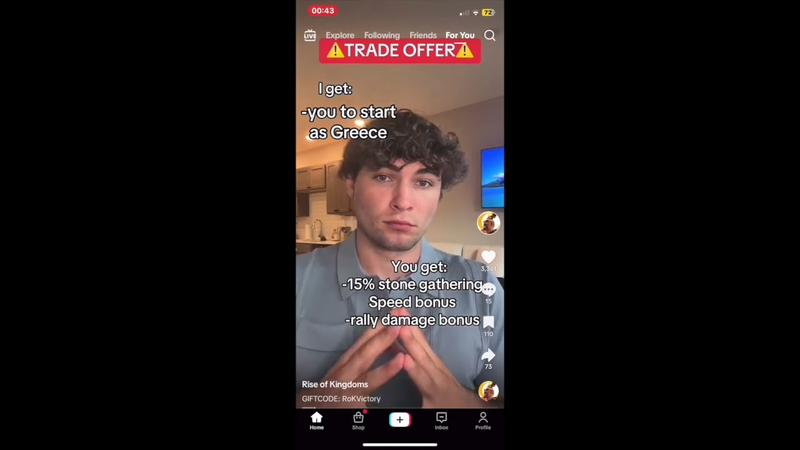
Rise of Kingdoms' 'player tips' ads from TikTok.
Rise of Kingdoms utilizes a strategic influencer-led marketing campaign on TikTok to drive user acquisition by framing gameplay decisions as high-stakes debates.
- Rise of Kingdoms uses influencer-led TikTok campaigns to frame gameplay decisions as high-stakes debates, leveraging conflicting expert advice to drive user acquisition.
- The marketing strategy utilizes a specific psychological hook by citing that only 5% of the player base achieves 10 million power, framing the game as a high-skill challenge.
- The game features 14 distinct civilizations, each offering unique bonuses like infantry health buffs or gathering speed increases to emphasize strategic depth.

Rise of Kingdoms' 'jocks and geeks' ads from TikTok
Rise of Kingdoms utilizes a specific narrative framework in its TikTok advertising strategy, centering on high-school-style social dynamics to drive user acquisition.
- Rise of Kingdoms uses a 'jocks-versus-geeks' narrative framework in TikTok ads to frame the game as a meritocratic environment where strategic planning overcomes social bullying.
- The ads illustrate the core gameplay loop by showing characters scaling their power from 10 million to 80 million through economic development.
- The advertising strategy prioritizes specific mechanics like logging, trade, and the control of traffic strongholds to demonstrate how players generate the capital required for military expansion.

Rise of Kingdoms ads from TikTok with weird hooks.
Mobile strategy games frequently employ unconventional and high-drama advertising hooks on platforms like TikTok to drive user acquisition.
- Rise of Kingdoms utilizes high-drama, non-sequitur TikTok hooks—such as real-world confrontations involving '10 million' or '80 million' power levels—to drive user acquisition through viral-style storytelling.
- Marketing content bridges absurd social skits with technical gameplay mechanics to appeal to both casual viewers and competitive players interested in min-maxing.
- Ads emphasize early-game optimization by highlighting specific civilization bonuses, such as the 10% stone gathering speed boost provided by choosing Greece.

Rise of Kingdoms' 'plane' creatives from TikTok
Mobile strategy games utilize aggressive, narrative-driven advertising campaigns on platforms like TikTok to drive user acquisition by gamifying social status.
- Rise of Kingdoms uses hyperbolic, narrative-driven TikTok advertisements to frame in-game power levels—ranging from two million to 80 million—as a form of real-world social currency.
- The marketing strategy centers on gamifying social status by depicting characters in public settings, such as airplanes, using high power rankings to assert dominance over others.
- Creative assets bridge the gap between casual entertainment and technical instruction by detailing specific civilization bonuses, such as Rome’s infantry defense or Greece’s resource gathering speeds.
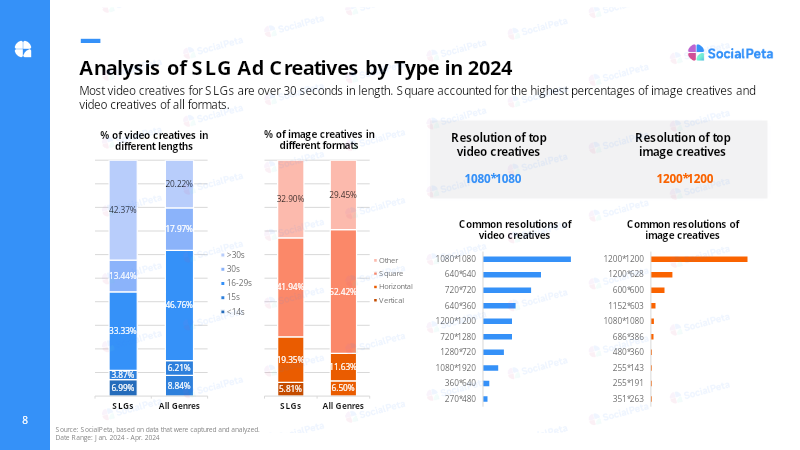
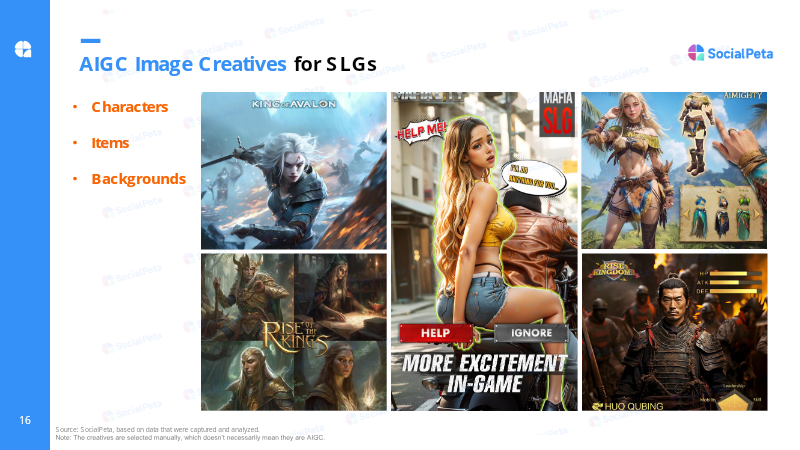

Marketing Insights into Global SLGs in 2024
The 2024 global marketing landscape for Strategy Games (SLGs) is characterized by a significant increase in advertising activity, with monthly advertiser counts rising 6.5% year-over-year to over 3,000.
- Video content dominates the SLG advertising landscape, accounting for over 72% of all creative output as of early 2024.
- The number of monthly SLG advertisers grew 6.5% year-over-year, surpassing 3,000 active advertisers.
- Android platforms host 77.6% of global SLG advertisers, though iOS campaigns maintain a higher average number of impressions per creative.