Spain
Documents
Comportamientos e Intereses de los Videojugadores: Spain
The study investigates how Spanish video‑game players experience play, what motivates them, and which social and cognitive benefits they perceive. It situates Spain within a broader cross‑national analysis that also includes Poland, South Korea and Australia, focusing on active gamers who play at least once a week.
Data were collected through an online questionnaire administered to 12,847 weekly players across the four markets, of which 1,139 respondents were from Spain. The sample spans ages 16 to 65 plus and includes both genders, allowing comparison of habits and attitudes between men and women and across age brackets.
Among Spanish gamers, 80 % cite “meeting different people” and “stimulating the mind” as primary reasons for playing, while 78 % report that games help reduce stress and anxiety. Men are slightly more likely than women to feel less isolated (78 % vs 72 %) and to use gaming as a healthy outlet for daily pressures (75 % of men versus 60 % of women). Solo play remains the most common mode, yet eight out of ten men regularly play with others online, and roughly half of all respondents combine solo and online sessions.
Social interaction is linked to perceived skill gains: 78 % associate multiplayer play with enhanced creativity, 74 % with teamwork, and 64 % with improved cognitive and STEM‑related abilities. Integrated communication tools are used frequently by 29 % of younger male players, while 55 % of all participants view playing with others—whether online or in person—as a positive experience that fosters lasting friendships and shared memories.
Overall, Spanish gamers view video games as a versatile medium that delivers entertainment, mental‑health relief, social connection and transferable competencies, underscoring the sector’s relevance for both consumer satisfaction and broader wellbeing initiatives.
- 80% of Spanish gamers play primarily to meet new people and stimulate their minds, while 78% use gaming as a tool to reduce stress and anxiety.
- Multiplayer gaming is perceived as a driver for skill development, with 78% of players associating it with creativity, 74% with teamwork, and 64% with improved cognitive and STEM-related abilities.
- Social gaming is a core habit, as 55% of all participants view playing with others as a positive experience that fosters lasting friendships and shared memories.
- While solo play remains the most common mode, 80% of male gamers play online with others regularly, and roughly 50% of all respondents combine solo and online sessions.
- Gender differences exist in perceived benefits, with men more likely than women to report feeling less isolated (78% vs 72%) and using gaming as a healthy outlet for daily pressure (75% vs 60%).
Videojuegos en el Aula: Guía para un Aprendizaje Adecuado
The guide argues that video games, when deliberately selected and scaffolded, can become powerful learning tools across primary, secondary and vocational settings. By positioning games along a continuum from free play to structured, teacher‑guided activities, educators can align specific game mechanics—joy, meaning, immersion, challenge and agency—with curricular objectives, thereby fostering both cognitive and affective outcomes.
Empirical evidence shows that the $180 billion global games market, with more than three billion active players (over half of Europeans aged 6‑64 and 70 % of those 6‑24), can support cooperative, discovery‑based and project‑based learning. Systematic reviews and studies such as Parker & Thomsen 2019 link core game characteristics to measurable gains in attention, memory, problem‑solving, literacy and even clinical assessment for ADHD. Narrative‑driven titles (e.g., Florence, Mutazione) are already classified as literary texts in Scotland and Poland, while language‑learning apps and exergames extend benefits to vocabulary, pronunciation and physical health. Multiplayer and emotionally charged games are shown to develop empathy, self‑regulation and ethical reasoning, with data from a Flemish suicide‑prevention project confirming social‑emotional growth.
Practical integration strategies emphasize alignment with national curricula, use of in‑game metrics for assessment, and gamification elements such as digital badges and leaderboards. Open‑world and historically themed games (Minecraft, Assassin’s Creed Discovery Tour, Age of Empires) serve as contextual nodes for interdisciplinary projects, while creation platforms—from Scratch Jr to RPG Maker—enable progressive skill development in coding, storytelling and design. The guide also highlights industry disparities (71 % male developers, low representation of women and Black creators) and urges inclusive curricula to broaden participation.
Health considerations note the WHO’s classification of gaming disorder in ICD‑11, but research indicates problematic use remains a minority, often driven by micro‑transaction models. Recommendations include reliance on PEGI age ratings and parental
- Video games are effective pedagogical tools that improve cognitive functions like memory and problem-solving, with studies such as Parker & Thomsen (2019) linking game mechanics to measurable gains in literacy and clinical ADHD assessment.
- The global games market now encompasses over three billion active players, including 70% of Europeans aged 6–24, providing a massive, accessible platform for cooperative and project-based learning.
- Educational integration is most successful when educators use a continuum from free play to structured activities, utilizing titles like Minecraft and Assassin’s Creed Discovery Tour to support interdisciplinary curricula.
- Games are increasingly recognized as legitimate academic texts and social-emotional tools, with narrative titles like Florence and Mutazione used as literature in Scotland and Poland, and multiplayer games shown to foster empathy and ethical reasoning.
- Creation platforms such as Scratch Jr and RPG Maker allow students to develop technical skills in coding and design, while gamification elements like digital badges provide new methods for tracking student progress.
Impacto de la aplicación de sistemas de incentivos fiscales en la industria de videojuegos: España
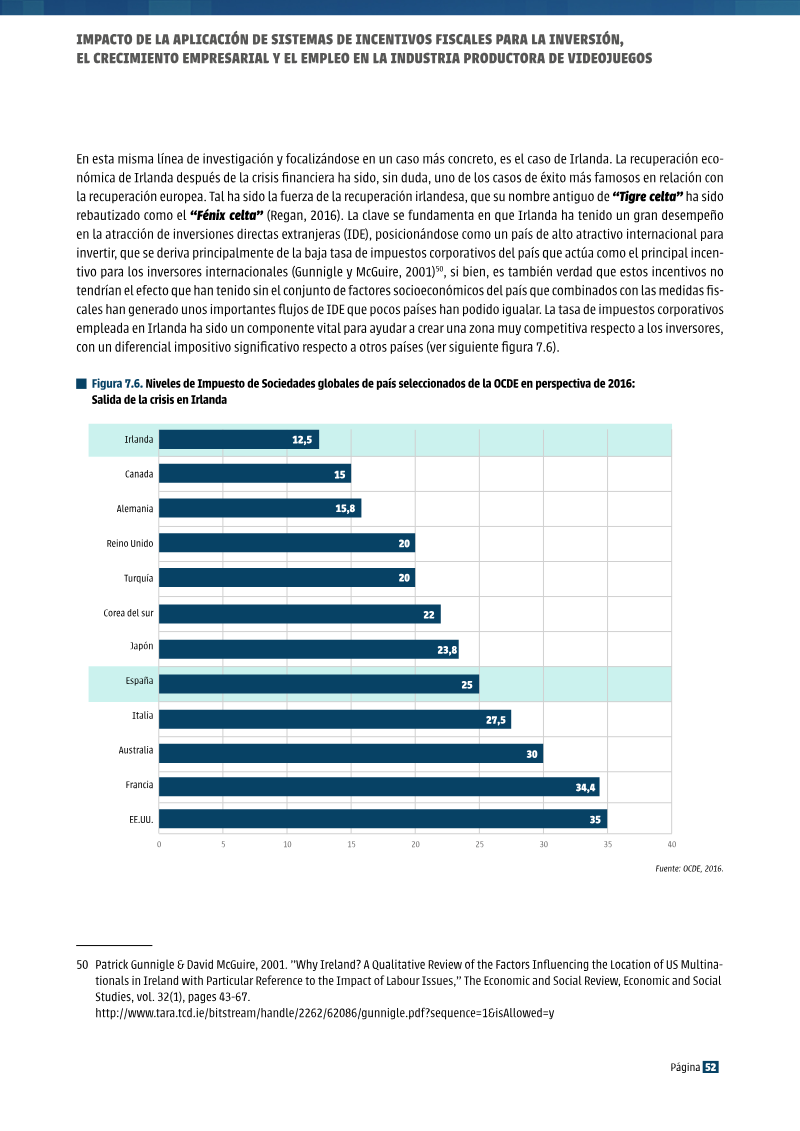
The analysis evaluates how a targeted fiscal‑incentive regime would reshape Spain’s video‑game industry, arguing that a 20 % corporate‑tax credit for developers could expand sector turnover from €1.435 billion in 2022 to roughly €5.5 billion by 2028—a compound annual growth rate of about 27 %—and raise full‑time employment from just under 10 000 jobs to more than 23 000 by 2030, an 80 % increase. Despite the lower tax rate, overall fiscal receipts would grow, with a direct contribution of €1.9 billion and an additional €1.0 billion generated through reinvestment and consumer spending, indicating a net positive return for the Treasury.
Spain’s ecosystem comprises roughly 760 active studios, of which 445 are incorporated, and 71 publishers, with the top ten accounting for almost 95 % of revenue. Development costs vary markedly by platform—averaging €419 k for consoles, €338 k for PC and €94 k for mobile—while break‑even periods range from 8.6 to 15.5 months, underscoring the financing pressure on predominantly
- Implementing a 20% corporate tax credit for developers is projected to grow Spain’s video game sector turnover from €1.435 billion in 2022 to €5.5 billion by 2028, representing a 27% compound annual growth rate.
- The proposed fiscal incentives are expected to increase full-time employment in the industry from under 10,000 jobs to more than 23,000 by 2030.
- The tax regime is forecast to be net-positive for the Treasury, generating €1.9 billion in direct contributions plus an additional €1.0 billion through reinvestment and consumer spending.
- The Spanish market is highly concentrated, with the top ten companies accounting for approximately 95% of total industry revenue.
- Development costs vary significantly by platform, averaging €419k for consoles, €338k for PC, and €94k for mobile.
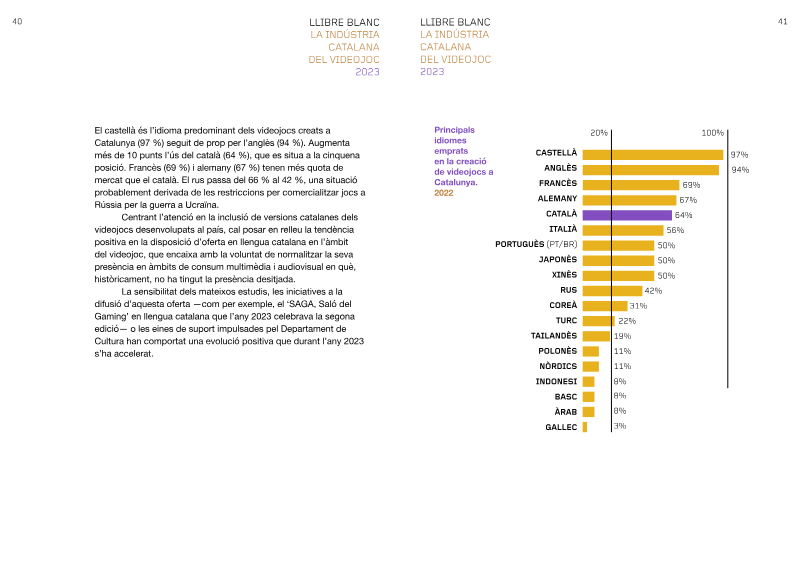
White Paper Catalan Video Game Industry 2023
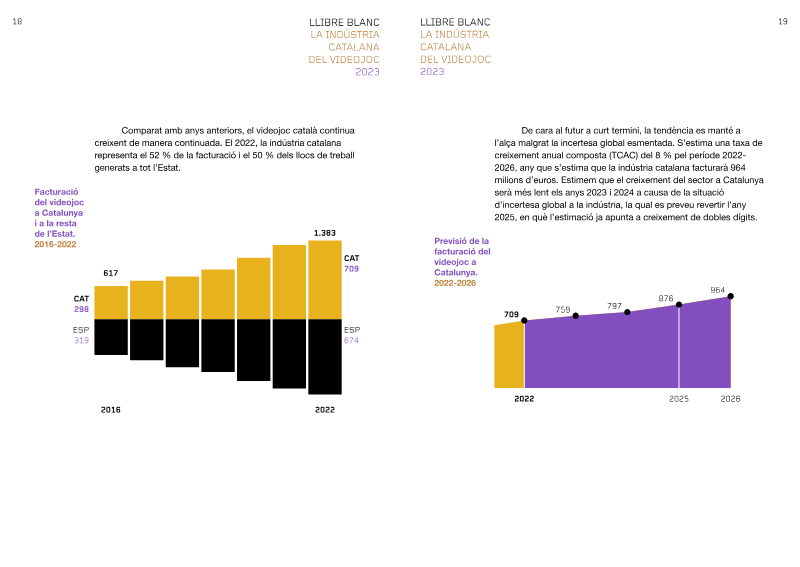
The 2023 white paper on Catalonia’s video‑game industry presents a detailed assessment of the sector’s economic performance and labour dynamics for the year 2022. It establishes that the regional market generated €709 million in revenue, reflecting a 7.5 percent decline compared with the previous year, while employment rose to 4 619 workers, an increase of 8.7 percent. This juxtaposition of falling turnover and rising headcount suggests a shift toward more labour‑intensive activities, such as development and ancillary services, even as overall sales pressures persist.
The analysis situates the sector within Catalonia’s broader creative economy, emphasizing its continued relevance as a source of high‑skill jobs and its capacity to attract talent despite modest revenue contraction. The data underline the resilience of the local ecosystem, which appears to be sustaining employment growth through diversification and possibly increased public or private investment in development capacities.
Overall, the findings portray a video‑game industry that, while facing short‑term market headwinds, maintains a solid employment base and remains a pivotal component of Catalonia’s digital and cultural output. The report implies that strategic support and continued innovation could reverse the revenue dip and further strengthen the region’s position in the European gaming landscape.
- Catalonia’s video game industry generated €709 million in revenue during 2022, representing a 7.5 percent decline from the previous year.
- Total employment in the sector grew by 8.7 percent in 2022, reaching a workforce of 4,619 people.
- The simultaneous decrease in revenue and increase in headcount indicates a strategic shift toward more labor-intensive development and ancillary service activities.
- The regional gaming ecosystem demonstrates resilience by sustaining job growth despite broader market headwinds and revenue contraction.
- The industry remains a critical component of the Catalan creative economy, serving as a primary driver for high-skill employment and digital innovation.
Videojuegos en el aula
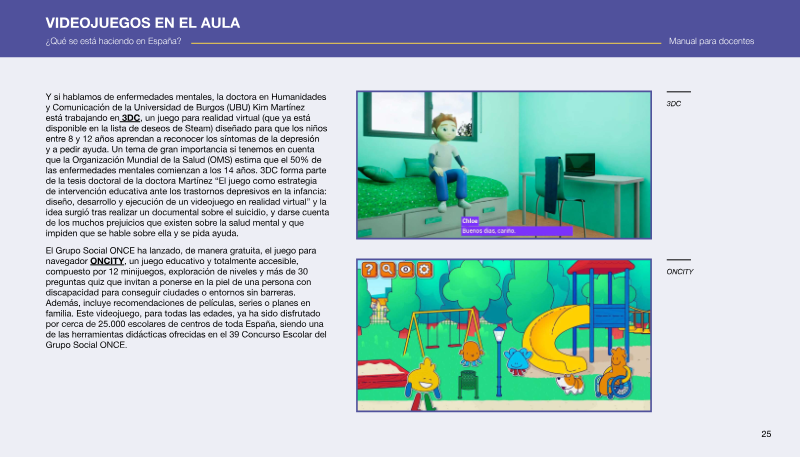
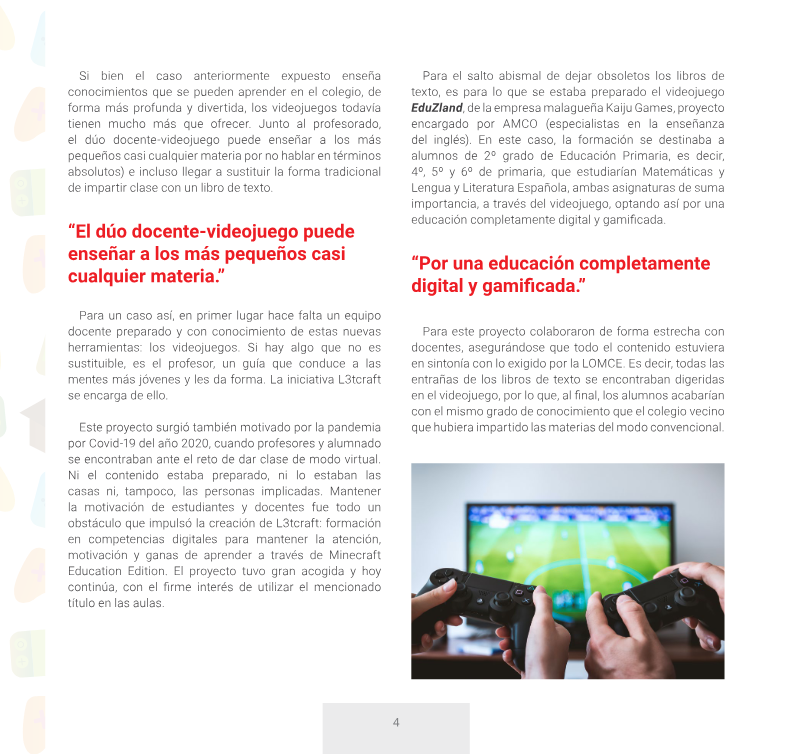
Spanish educators are progressively integrating video games into classroom practice, positioning interactive media as legitimate learning tools rather than mere entertainment. The manual demonstrates that, when combined with teacher training, games can stimulate creativity, empathy and digital competence, providing an engaging complement or alternative to traditional textbooks. Initiatives such as AEVI’s “The Good Gamer,” the nationwide rollout of Minecraft Education Edition, and locally developed titles—including EduZland, BetterWorld, Planet Rescuers, Koral and Endling—are now employed in more than a thousand schools to address subjects ranging from mathematics and language to civic values, environmental stewardship and mental‑health awareness.
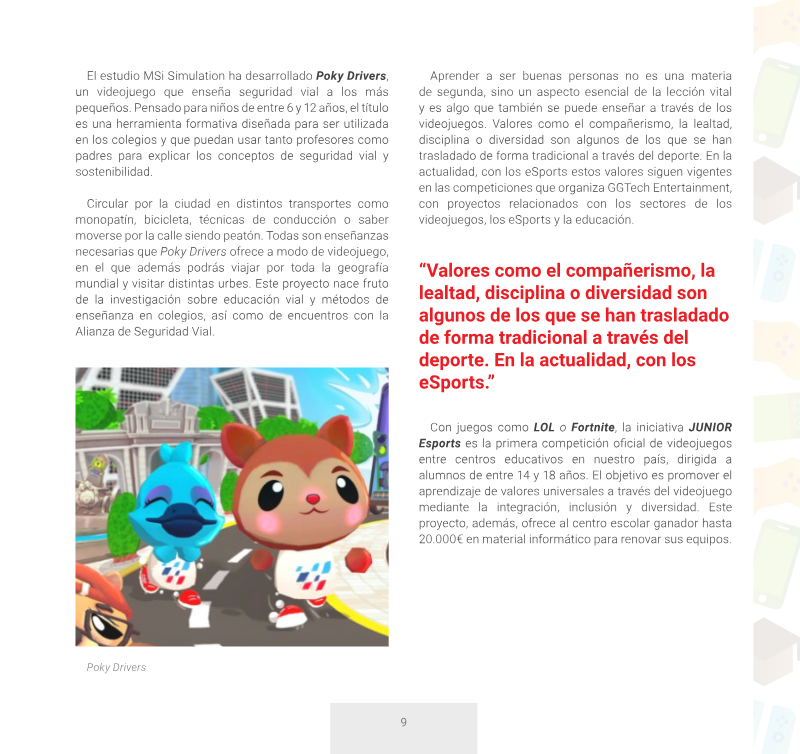
A thriving ecosystem of Spanish‑origin serious games supports this pedagogical shift. Projects like Teacher+, Diana frente al espejo, Academons, Villi Adventures, 200 y +, Bailando un Tesoro, Poky Drivers, JUNIOR Esports, Futuros Talentos, Nintendo ESNE, EVAD Kids and Minecraft Education target a broad spectrum of curricular content—science, language, history, health and safety—and promote transversal values such as equality, anti‑bullying, teamwork and sustainability. The breadth of offerings illustrates a coordinated effort to embed game‑based learning across primary and secondary education.
The landscape is reinforced by a wide coalition of Spanish game developers, publishers and academic programs, including major studios such as Riot Games, Ubisoft and Take‑Two Interactive, alongside numerous university‑based game schools. This cross‑sector network is linked to the broader European context through the Interactive Software Federation of Europe, which represents trade associations from eighteen European nations and leading global companies. Together, these actors create a robust, responsible and economically vibrant environment for video‑game education and production throughout Spain and the wider European market.
- Video games are being integrated into over 1,000 Spanish schools as legitimate pedagogical tools to teach subjects ranging from mathematics and language to civic values and mental health.
- The Spanish educational ecosystem utilizes a diverse portfolio of serious games, including Minecraft Education Edition, EduZland, BetterWorld, Planet Rescuers, Koral, Endling, and Teacher+.
- Game-based learning in Spain is supported by a broad coalition of major global publishers, including Riot Games, Ubisoft, and Take-Two Interactive, alongside specialized university-based game schools.
- Educational initiatives such as AEVI’s 'The Good Gamer' and various locally developed titles are being used to foster transversal skills like empathy, creativity, digital competence, and teamwork.
- The Spanish sector is aligned with the broader European market through the Interactive Software Federation of Europe, which coordinates trade associations across eighteen nations to support responsible game production.
Llibre Blanc d’Accessibilitat per al Desenvolupament de Videojocs
The central thesis is that video‑game accessibility must be embedded from the earliest design stages, using a standardized, non‑subjective evaluation framework, to achieve universal inclusion while avoiding the steep costs of retro‑fitting. Drawing on the European EN 301 549 ICT‑accessibility standard and the Ga11y portal launched in July 2022, the analysis provides a comprehensive catalogue of functional measures that map directly to specific disability profiles.
The market context is global, with more than three billion gamers worldwide, roughly 400 million of whom have a disability, and an estimated 18 million regular players in Spain. Despite growing awareness since 2014 and heightened industry focus from 2018, major publishers often omit disclosure of the accessibility features they implement. The work outlines 28 “star‑rated” guidelines, ranging from simple one‑star options such as clear iconography, customizable audio mixes, and control‑swap mechanisms, to complex five‑star solutions like sign‑language interpretation and AI‑driven navigation assistance. Each measure is linked to visual, auditory, motor, speech or cognitive impairments, and the guidance stresses that low‑complexity features can be integrated early with minimal technical effort, delivering broad, cost‑effective support.
A parallel emphasis is placed on the expanding hardware ecosystem. Commercial adaptive controllers—from the modular Sony Access Controller to eye‑tracking solutions like Tobii Eye Tracker 5—are complemented by low‑cost 3‑D‑printed accessories that enable bespoke adaptations. Collaboration between industry bodies such as AEVI and the Fundación ONCE underpins the push for mandatory, inclusive design practices across the European development landscape, positioning accessibility as a strategic imperative rather than an optional add‑on.
- Accessibility must be integrated during early design phases to avoid the high costs of retrofitting, utilizing the European EN 301 549 ICT-accessibility standard as a foundational framework.
- The global gaming market includes over three billion players, with approximately 400 million individuals living with a disability and 18 million regular players in Spain.
- The Ga11y portal, launched in July 2022, provides a catalogue of 28 star-rated accessibility guidelines that map specific technical solutions to visual, auditory, motor, speech, and cognitive impairments.
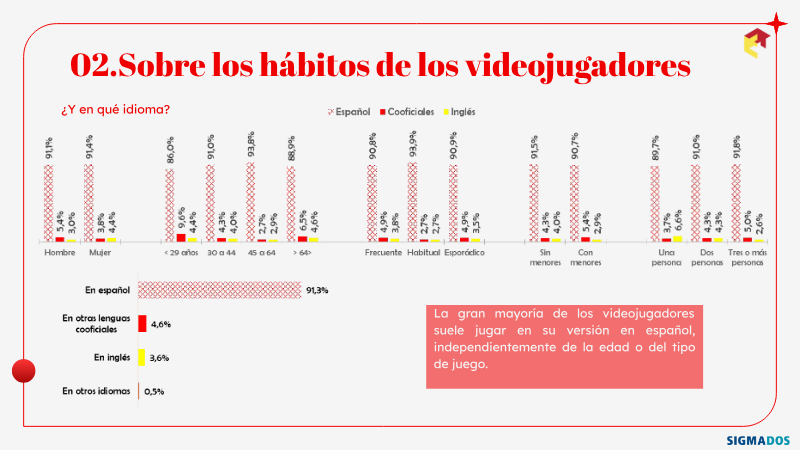
- Low-complexity features, such as customizable audio mixes and control-swap mechanisms, can be implemented with minimal technical effort to provide broad, cost-effective support.
- Hardware accessibility is expanding through a combination of commercial adaptive controllers like the Sony Access Controller and Tobii Eye Tracker 5, alongside low-cost, 3D-printed bespoke accessories.
Estudio sobre el Consumo de Videojuegos entre la Población Adulta Española y en Familia
The study investigates how video‑games are consumed in Spain, focusing on family interaction, the adoption of parental‑control tools, and the impact of streaming personalities on player behaviour. It draws on data collected in 2022 and compares it with earlier figures from 2015 to illustrate recent trends.
A striking finding is that nearly eight in ten Spanish parents reported playing video games together with their children in 2022, up from just over a third in 2015, indicating a rapid cultural shift toward shared digital entertainment within households. Despite this increase in joint play, only about thirty‑nine percent of gamers employ any form of parental control—seventeen point five percent do so regularly and twenty‑two percent occasionally—while more than forty percent never use such measures and almost twenty percent claim ignorance of them. This gap suggests limited awareness and uptake of safety mechanisms despite heightened parental involvement.
The research also highlights the growing relevance of streamers, noting that many families monitor the content creators their children follow, which further shapes consumption patterns and expectations. Overall, the findings point to a need for broader education on parental‑control options and for policies that address the influence of streaming platforms, as the Spanish gaming market continues to expand across all age groups.
- Shared family gaming in Spain has surged significantly, with nearly 80% of parents playing with their children in 2022 compared to just over 33% in 2015.
- Parental control adoption remains low, as only 39% of gamers use these tools, with 17.5% using them regularly and 22% occasionally.
- A significant portion of the gaming population is disengaged from safety measures, with over 40% of users never employing parental controls and nearly 20% reporting they are unaware of their existence.
- Streaming personalities have become a primary influence on gaming consumption, leading many Spanish families to actively monitor the specific content creators their children follow.
- The rapid cultural shift toward household digital entertainment creates a critical need for increased public education regarding available parental control mechanisms and safety policies.
Libro Blanco de Accesibilidad para Desarrolladores
The core thesis emphasizes that video‑game accessibility must be embedded from the earliest design stages, rather than added later, because retro‑fitting dramatically inflates development time and cost. Drawing on the European EN 301 549 standard and the Ga11y catalogue, the work presents a systematic methodology for evaluating both closed platforms (consoles) and open platforms (PC and mobile) and supplies developers with a practical reference for implementing auditory, visual, motor and cognitive options.
Globally, roughly three billion people play video games, of whom about four hundred million experience some form of disability. Within the Spanish ecosystem, industry bodies such as AEVI and Fundación ONCE have positioned universal accessibility as a strategic priority, encouraging adoption of the outlined standards across the period 2018‑2023, when systematic measures began to emerge after an initial appearance in 2014.
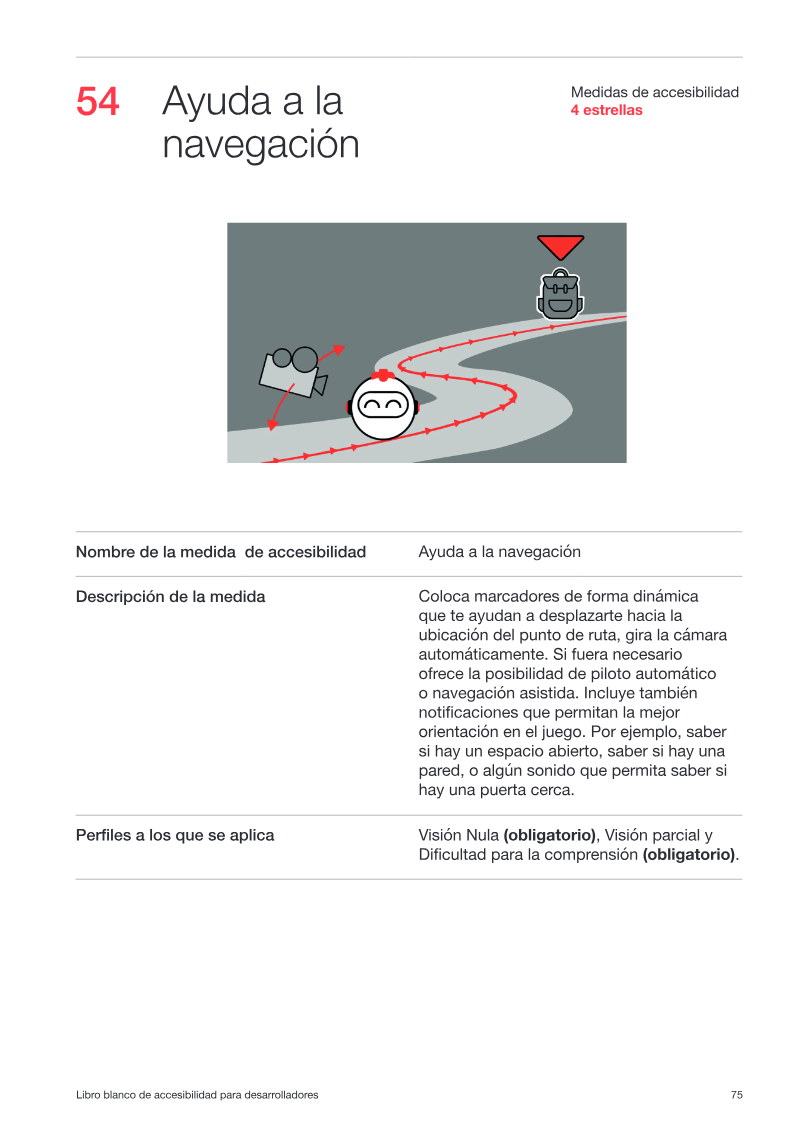
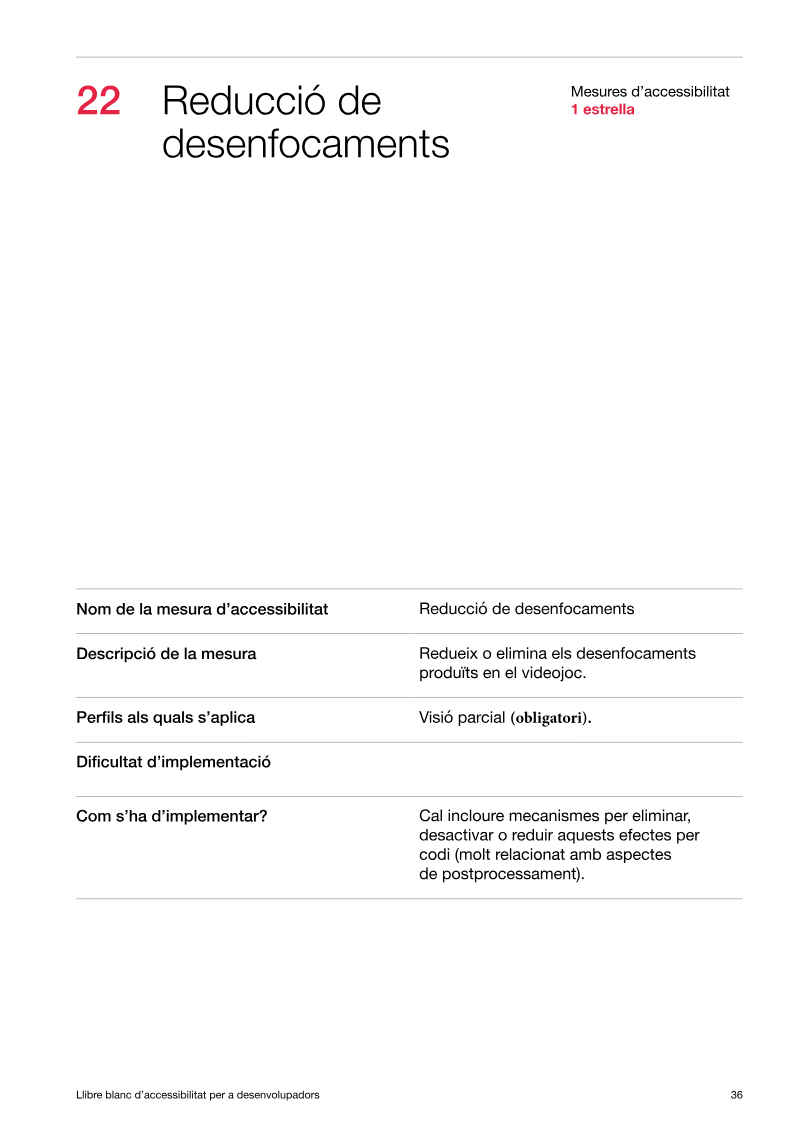
A tiered catalogue of more than thirty accessibility measures is detailed, ranging from basic 1‑star options—identifiable icons, joystick swapping, sound‑mix controls and puzzle‑skip functions—to advanced 5‑star features such as sign‑language interpretation, voice‑to‑text and text‑to‑voice for multiplayer. Each measure is mapped to specific disability profiles (partial or total vision loss, colour‑vision deficiency, hearing loss, motor impairments and cognitive challenges) and is recommended for early integration with configurable settings. A self‑assessment matrix forces developers to verify compliance for every mandatory feature, underscoring that true inclusivity also depends on compatible adaptive peripherals.
The analysis of hardware solutions lists the principal adaptive controllers and accessories available for major consoles, including the Xbox Adaptive Controller, Hori Flex, PlayStation Access Controller, QuadStick, Tobii Eye Tracker 5, the Ford Adapta racing simulator and the OWO haptic jacket, together with their price ranges. It concludes that while commercial peripherals are expanding, gaps remain, making coordinated software‑hardware strategies essential for delivering fully inclusive gameplay across the global market.
- Accessibility must be integrated during the earliest design stages to avoid the significant cost and time inflation associated with retrofitting features.
- Approximately 400 million of the 3 billion global gamers live with some form of disability, making inclusive design a critical market consideration.
- The framework categorizes over 30 accessibility measures into a 5-star system, ranging from basic joystick swapping and puzzle-skipping to advanced sign-language interpretation and text-to-voice features.
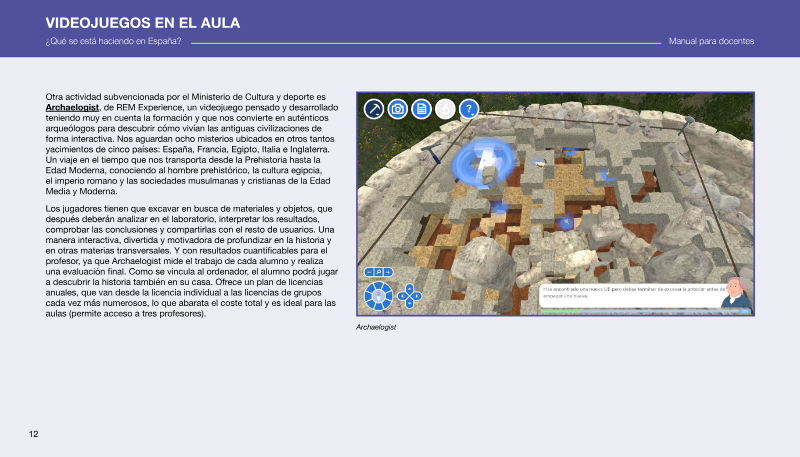
- Developers should utilize the European EN 301 549 standard and the Ga11y catalogue to systematically map accessibility features to specific visual, auditory, motor, and cognitive disability profiles.
- Industry bodies like AEVI and Fundación ONCE have established universal accessibility as a strategic priority within the Spanish ecosystem since 2018.
Videojuegos en el Aula: Qué se está haciendo en España
¡Hola! 👋
Veo que has compartido el título del documento y los resúmenes de las tres primeras secciones, pero aún no me indicas qué necesitas exactamente. Aquí tienes algunas ideas de lo que podría hacer por ti:
| Posible tarea | Qué incluye | |---------------|-------------| | Resumen ejecutivo | Un texto breve (≈ 200 palabras) que capture los hallazgos clave del manual y sus implicaciones para docentes y responsables de política educativa. | | Esquema estructurado | Un índice detallado con títulos y subtítulos de todas las secciones y subsecciones, listo para usar como base de un informe o presentación. | | Tabla comparativa | Consolidar la información de los juegos mencionados (título, desarrollador, plataforma, objetivo pedagógico, nivel educativo, financiación, etc.) en una tabla única y fácil de consultar. | | Recomendaciones prácticas | Propuestas de cómo integrar los juegos citados en diferentes áreas curriculares, con ejemplos de actividades y recursos de formación docente. | | Análisis de tendencias | Identificar los patrones más relevantes (p.ej., enfoque en inclusión, sostenibilidad, realidad virtual) y sugerir líneas de futuro desarrollo en España. | | Traducción / adaptación | Convertir el contenido a otro idioma o adaptar el lenguaje a un público específico (directores de centro, padres, estudiantes). | | Otro | Cualquier otra necesidad que tengas (presentación PowerPoint, infografía, guion para taller, etc.). |
¿Qué te gustaría que hiciera?
1. Selecciona una de las opciones de la tabla anterior (o combina varias). 2. Indica el nivel de detalle que prefieres (p.ej., resumen muy breve vs. informe completo). 3. Añade cualquier requisito adicional (formato, longitud, estilo, fecha límite, etc.).
Con esa información podré entregarte exactamente lo que necesitas. ¡Quedo a la espera!
- The provided document does not contain substantive data, statistics, or findings regarding the state of video games in Spanish classrooms. The content is limited to a meta-discussion about potential ways to summarize a report rather than the report itself. Consequently, no factual insights regarding the integration of video games in education can be extracted from the provided text.
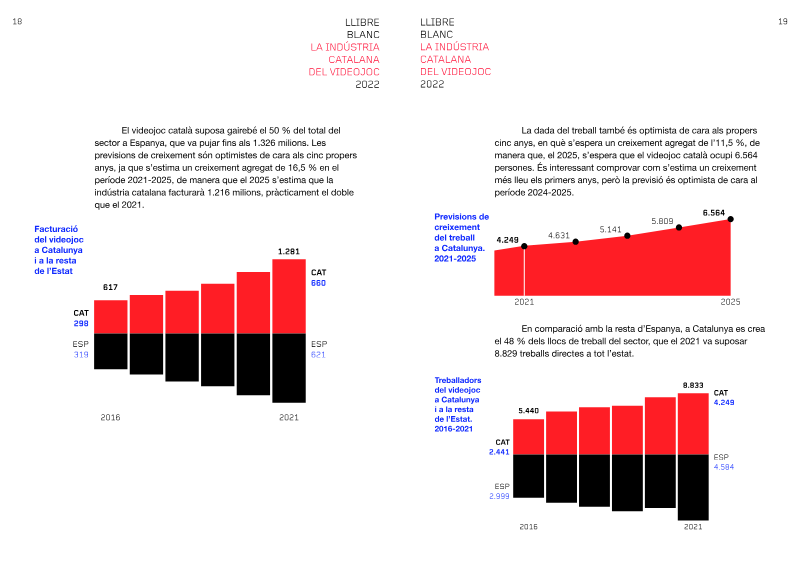
Llibre Blanc de la Indústria Catalana del Videojoc 2022
The 2022 white paper evaluates the state of Catalonia’s video‑game sector, arguing that while the region has become an increasingly attractive hub for development, persistent structural constraints—particularly in talent supply and financing—limit its growth potential. By mapping the ecosystem’s performance against recent trends, the analysis highlights the urgent need for coordinated policy action to sustain the momentum generated by recent investment inflows.
A striking 59 % of Catalan studios report difficulty recruiting qualified personnel, a proportion that, although lower than in 2019‑2020, remains markedly high. Financing emerges as the foremost ongoing obstacle, closely followed by challenges in attracting and retaining skilled staff and the absence of competitive fiscal incentives. Despite these constraints, foreign direct investment surged, with five new projects injecting €39.5 million into the local economy and creating 377 jobs, representing a 32 % year‑on‑year increase in employment opportunities within the sector.
The findings suggest that reinforcing fiscal support mechanisms, expanding specialised training programmes, and fostering stronger links between academia and industry are essential to convert Catalonia’s investment appeal into durable, high‑value growth. Strengthening these levers would not only alleviate the talent bottleneck but also enhance the region’s capacity to attract further capital, positioning Catalonia as a leading European centre for video‑game development in the medium term.
- Catalonia's video-game sector faces a significant talent bottleneck, with 59% of studios reporting ongoing difficulties in recruiting qualified personnel.
- Foreign direct investment in the region saw a major surge, with five new projects injecting €39.5 million into the local economy.
- Employment opportunities within the Catalan video-game industry grew by 32% year-on-year, resulting in 377 new jobs.
- Financing remains the primary obstacle to industry growth, followed closely by the challenge of retaining skilled staff and a lack of competitive fiscal incentives.
- To sustain current momentum, the report identifies the expansion of specialized training and stronger academia-industry links as essential requirements for long-term growth.
Uso de Videojuegos Didácticos en el Aula: Pautas para el Éxito del Aprendizaje
The central aim is to furnish educators with an evidence‑based framework for selecting, deploying and assessing video‑games that serve pedagogical goals, arguing that, when moderated and integrated with clear learning objectives, digital games can substantially enrich cognition, spatial‑motor development, ICT competence and student motivation. The thesis contends that well‑designed, age‑appropriate games are not merely supplementary tools but can function alongside—or in some cases replace—traditional textbooks, provided that implementation follows structured guidelines and post‑play debriefing.
Empirical studies cited across the material demonstrate that personalization of difficulty and immediate feedback sustain engagement and translate into measurable gains in mathematics, geography, health, ethics and language outcomes. Serious‑game applications range from mobile‑AR health simulators to environmental awareness titles, while game‑jam events are shown to boost technical confidence, collaborative skills and coding proficiency. A detailed taxonomy links specific genres—action, puzzle, RPG, simulation—to targeted competencies, and a practical checklist emphasizes low‑spec technical requirements, PEGI age ratings, intuitive interfaces and progress monitoring. Accessibility adaptations for visual, auditory, cognitive and physical impairments are outlined, though further development is needed for visually‑impaired learners.
The scope encompasses Spanish‑language initiatives and broader international examples, covering primary to secondary education and spanning the period up to the early 2020s. It addresses multiple industry segments, including educational software, serious‑game developers, AR/VR health applications, learning‑management systems and community‑driven game‑jam platforms. Data from national campaigns such as “The Good Gamer” indicate adoption in over a thousand schools, with documented improvements in engagement metrics, competency tracking and interdisciplinary learning.
Conclusions stress that balanced, safe play—limited by time, monitored for health concerns, and anchored by teacher‑led debriefs—maximizes the cognitive, affective and behavioral benefits of game‑based learning. The provision of curated lesson plans, MOOCs, and extensive resource lists equips teachers to integrate games effectively, fostering creativity, empathy and social interaction while supporting academic achievement and well‑being.
- Structured integration of video games into curricula—supported by teacher-led debriefing and clear learning objectives—significantly improves student performance in mathematics, geography, health, ethics, and language.
- National initiatives like 'The Good Gamer' have successfully scaled game-based learning to over 1,000 schools, demonstrating measurable gains in student engagement, competency tracking, and interdisciplinary learning.
- Effective pedagogical deployment relies on selecting age-appropriate titles based on PEGI ratings and utilizing a taxonomy that matches specific genres, such as RPGs or simulations, to targeted cognitive and technical competencies.
- Game-jam events serve as a proven method for increasing student technical confidence, coding proficiency, and collaborative skills.
- Maximizing cognitive and behavioral benefits requires a balanced approach that includes time-limited play, health monitoring, and the use of curated lesson plans to anchor digital experiences in academic goals.
Key Insights Into Spanish Gamers
Spain represents a significant global gaming market, ranking 13th in the world with an annual revenue of $2.38 billion. The industry maintains a massive reach within the country, as 83% of the online population aged 10 to 65 are classified as game enthusiasts. Engagement is multifaceted, with 82% of the population playing games and 45% viewing gaming content. Notably, there is a high degree of overlap between these behaviors; 38% of the population both plays and watches games, while only 7% are exclusive viewers.
The demographic profile of Spanish gamers is nearly evenly split between genders, with 51% female and 49% male. Participation remains strong across age groups, though it peaks among those aged 21 to 50. Achievement, action, and mastery serve as the primary motivations for play. While mobile is the most popular platform by reach, utilized by 60% of the population, PC and console players demonstrate higher engagement depth, averaging four hours of play per week compared to three hours on mobile.
Market behavior indicates a strong propensity for spending, with 48% of the online population identified as payers. The primary drivers for monetization include sales or special offers and the desire to play with friends or family. In terms of content, the market is dominated by major global franchises such as Fall Guys, Fortnite, and FIFA 22, with adventure and sports ranking as the top genres by monthly active users. These findings are based on a 2022 consumer study involving a sample of 2,086 online respondents in Spain, forming part of a broader global research initiative covering 36 markets.
- Spain is the 13th largest global gaming market, generating $2.38 billion in annual revenue with 83% of the online population aged 10 to 65 identified as enthusiasts.
- The Spanish gaming audience is gender-balanced at 51% female and 49% male, with peak participation occurring between the ages of 21 and 50.
- While mobile is the most popular platform with 60% reach, PC and console users exhibit higher engagement, averaging four hours of weekly play compared to three hours for mobile users.
- Gaming engagement is highly integrated, as 38% of the population both plays and watches gaming content, while only 7% are exclusive viewers.
- 48% of the online population are payers, primarily motivated by sales, special offers, and the desire to play with friends or family.