Spain reports and market data
51 documents·10 writers·345 charts and tables
Documents
Report17 pages
¿Cómo Se Proyecta el Videojuego del Futuro?: España
The study commissioned by ADESE explores how video games are expected to evolve, focusing on technological, social and market dynamics and projecting scenarios up to 2025.
- Industry experts project that 100% of games will transition to online-only ecosystems by 2025, driven by the need for anti-piracy measures, improved matchmaking, and ubiquitous broadband.
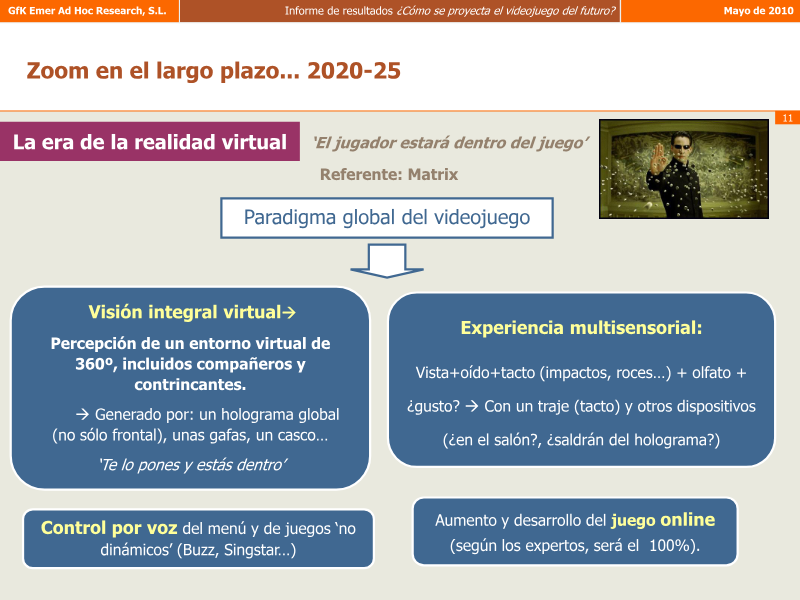
- Technological evolution through 2025 will shift from cloud-based distribution and motion-sensing controls toward immersive virtual reality, multisensory holographic interfaces, and voice-controlled navigation.
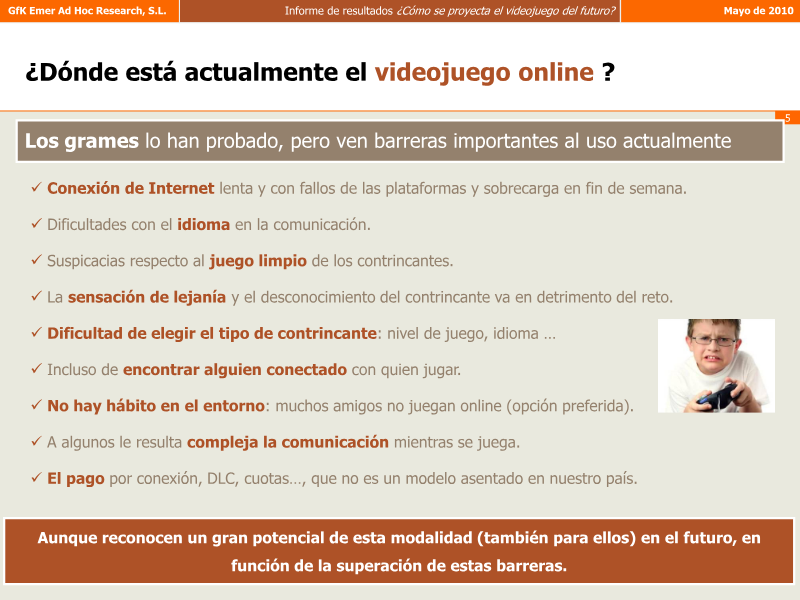
- Casual players currently resist online gaming due to specific barriers, including slow internet connections, language obstacles, distrust of payment models, and a lack of interest in complex online modes.
AEVIJan 2010
Report35 pages
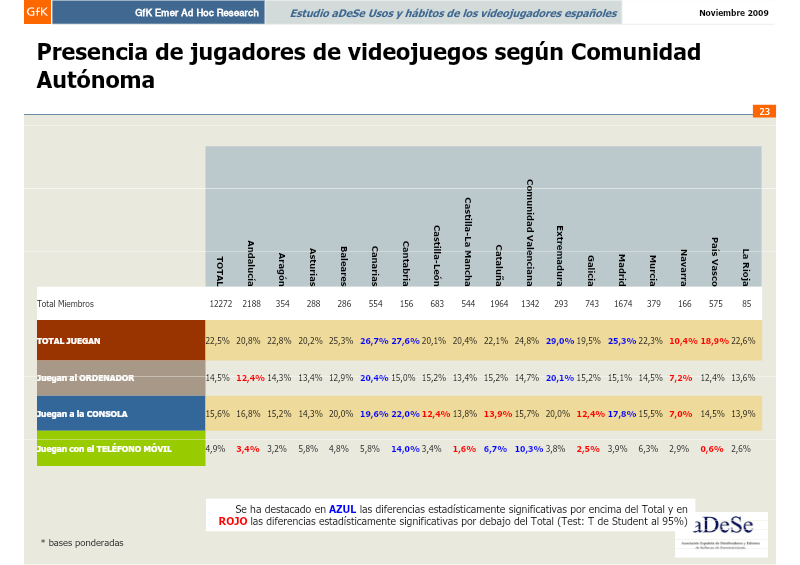
Estudio aDeSe 2009: Usos y Hábitos de los Videojugadores Españoles
The November 2009 aDeSe study set out to map the usage patterns and habits of video-game players across Spain, providing a statistically robust portrait of the market for stakeholders seeking to understand consumer behavior.
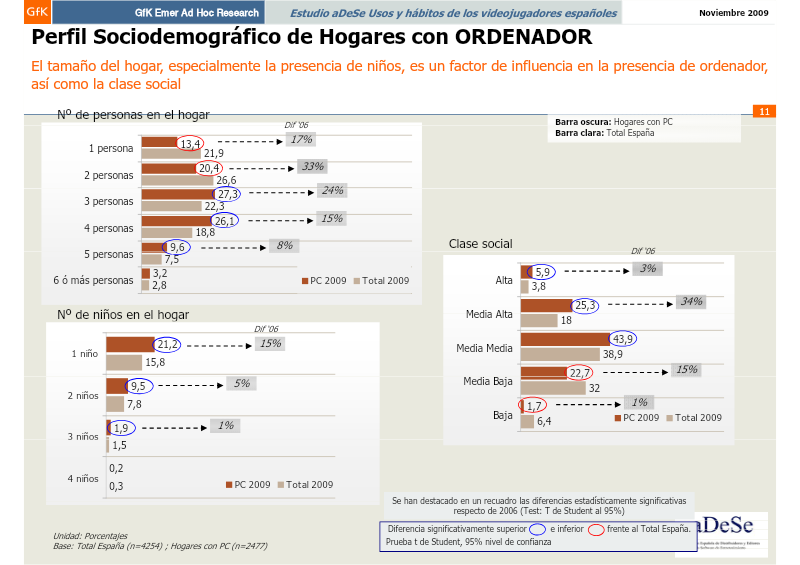
- Personal computers are the primary gaming platform in Spain, with 58% of households reporting ownership compared to 35% for dedicated consoles.
- The 2009 study surveyed a nationally representative sample of 4,254 residents aged fifteen and older, achieving a ±1.5% margin of error at a 95% confidence level.
- Medium-sized municipalities with populations between 10,000 and 50,000 inhabitants represent the largest segment of the gaming population, accounting for 26% of total players.
AEVINov 2009
Report31 pages
Hábitos e Iniciación a los Videojuegos en Mayores de 35 Años: Diciembre de 2008
I’m ready to synthesize the material, but I need the remaining section summaries to produce a complete, accurate overview. Could you please provide the rest of the section-by-section information?
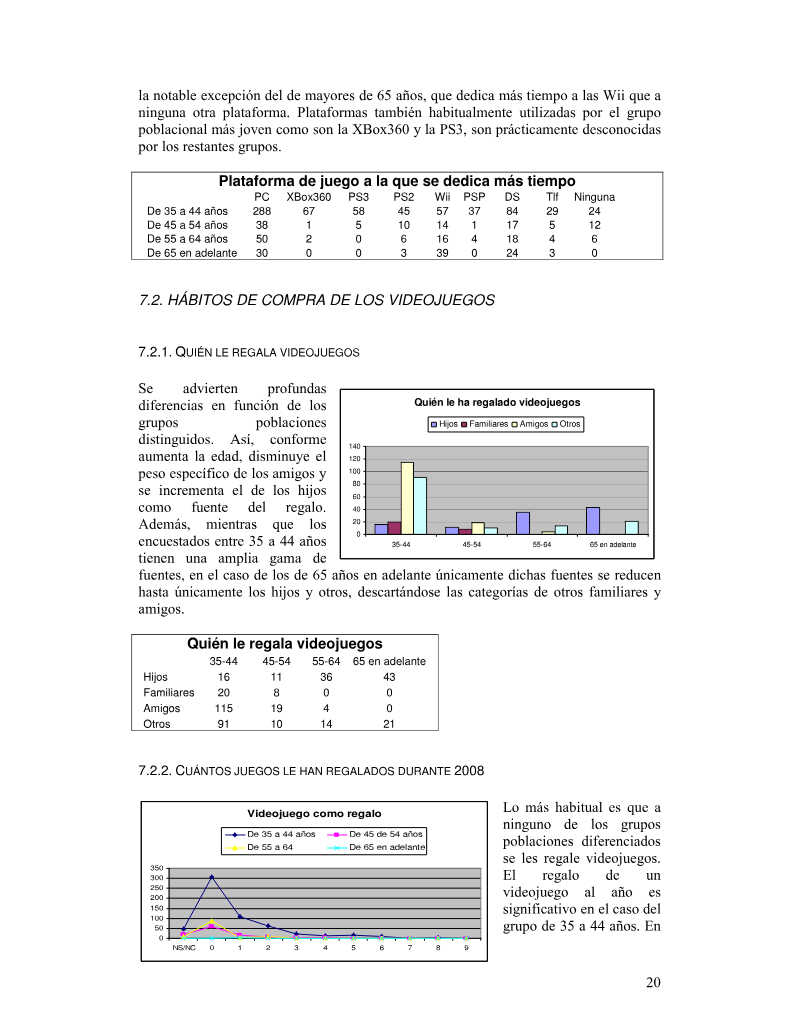
- The report, published in December 2008, focuses on video game habits and initiation among individuals over 35 years old.
- Among those aged 35-44, 43.4% play video games on weekends, 27.8% daily, and 28.8% did not specify.
- For individuals aged 65 and older, 68.4% play video games on weekends, 7.9% daily, and 23.7% did not specify.
AEVIDec 2008