Spain
Documents
Libro Blanco del Desarrollo Español de los Videojuegos
LIBRO CENTRO UNIVERSITARIO Fando Eurapeo de DE TECNOLOGIA Y ARTE DIGITAL Ung manere de hacer Eurapa Asociación Española de Empresas Productoras y Desarrolladoras de Videojuegos y Software de Entretenimiento 1 . INTRODUCCIÓN 05 2. CADENA DE VALOR DE LA INDUSTRIA DEL VIDEOJUEGO 07 2.1. Cadena de valor tradicional de la industria de videojuegos 08 2.2.
- The global gaming market had 1.231 billion active players by the end of 2013, representing over half of the world's internet-connected population and 17.5% of the total global population.
- The gamification business is projected for exponential growth, with Markets And Markets estimating a potential business of $5.5 trillion USD by 2018, growing at a 67.1% annual rate between 2013 and 2018.
- The Spanish video game sector increased employment by 29% in 2013, with 65% of contracts being permanent, making it a significant job creator for highly qualified young professionals.
- In 2012, the Russian video game industry generated $1.3 billion, a 30% increase from 2011, and its market is expected to double in the next three years to reach $1.5 billion.
- The UK offers R&D tax deductions for video game companies, with SMEs receiving a 225% enhanced deduction on their R&D investment.
Libro Blanco de los Esports en España
Spain’s esports ecosystem is emerging as a distinct economic sector, yet it remains in an early‑stage development phase. The analysis underscores a rapid professionalisation of competitive gaming, with Spanish teams now incorporated as limited companies, employing full technical staff and often operating shared “gaming houses” that mirror structures seen in more mature markets. This organisational shift signals a move toward sustainable business models and deeper investment potential.
Audience metrics illustrate the sector’s expanding reach. In the first half of 2017, the Liga de Videojuegos Profesional (LVP) generated 9.7 million unique viewers on Twitch, representing a 57 percent year‑on‑year increase, while its YouTube video‑on‑demand content grew 16 percent in 2016. These figures sit within a broader Spanish‑speaking gaming community of approximately 37.5 million individuals, indicating a substantial base for future growth. The overall video‑game market in Spain produced €1.163 billion in 2016, confirming the financial relevance of gaming as a whole and providing a foundation for esports expansion.
Collectively, the data portray a vibrant yet nascent market where professional structures are taking shape, audience engagement is accelerating, and the surrounding gaming economy offers a solid fiscal backdrop. Continued investment in team infrastructure, content distribution, and talent development is likely to convert this early momentum into a more mature and economically significant esports industry in Spain.
- The Liga de Videojuegos Profesional (LVP) reached 9.7 million unique Twitch viewers in the first half of 2017, marking a 57 percent year-on-year increase.
- Spain's broader video game market generated €1.163 billion in 2016, providing a stable financial foundation for the emerging esports sector.
- Spanish esports teams are transitioning into professional limited companies that employ full technical staff and utilize structured gaming houses.
- The Spanish-speaking gaming community comprises approximately 37.5 million individuals, representing a significant addressable market for future expansion.
- YouTube video-on-demand content for the LVP grew by 16 percent during 2016.
Videojuegos en España: Impacto Económico y Escenarios Fiscales
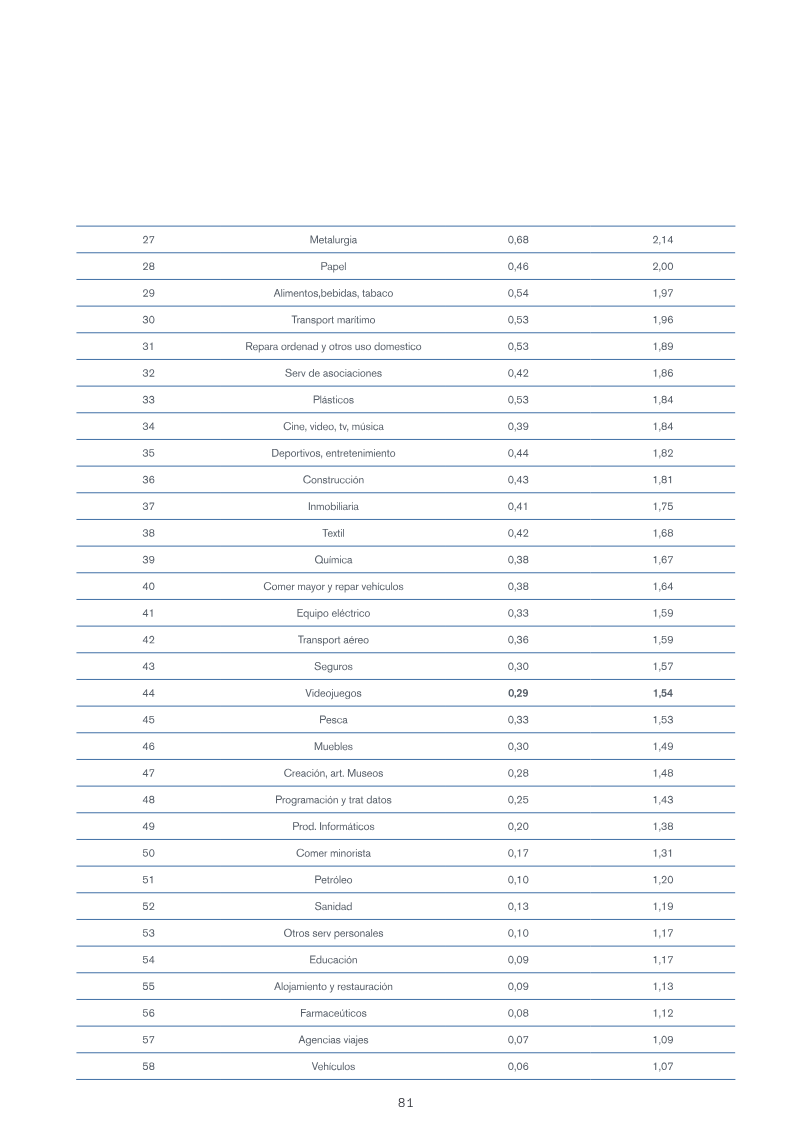
Spain’s video‑game industry is presented as a dynamic component of the national ICT services sector, whose economic relevance extends far beyond direct production. Using 2016 input‑output tables updated with INE data, the analysis quantifies the sector’s contribution to GDP, employment and value‑added, and evaluates how fiscal incentives and inter‑industry linkages shape its growth trajectory.
In 2016 the industry generated €1.177 billion in direct output, representing roughly 0.11 % of national GDP, and created 8 790 high‑skill jobs. When indirect and induced effects are incorporated, total activity rises to €3.577 billion, value‑added reaches €1.452 billion and employment expands to 22 828 positions, implying that each euro invested yields three euros of economic activity and that a game‑industry job supports 2.6 additional jobs elsewhere. The sector supplies 14.3 % of publishing output, 9.6 % of audiovisual production and 3.8 % of related services, yet its forward absorption and diffusion coefficients are low, indicating limited downstream impact compared with professional services.
Productivity analysis shows a 6.4 % annual decline in value‑added per employee within the broader editing segment, while revenue per worker remains modest at €144 k. Between 2014 and 2024, software publishing and cable‑free telecommunications emerge as the fastest‑growing Spanish activities, with annual expansions of 4.7 % and 4.2 % respectively, underscoring the sector’s alignment with broader digital trends.
Four fiscal‑policy scenarios are compared, and the tax‑credit option (E2) delivers the strongest stimulus, adding €627 million of production, €254 million of value‑added and 4 000 full‑time jobs, albeit at the cost of a modest deterioration in public‑finance balance. Methodologically, the study follows Frascati and Oslo standards, aggregates data at the two‑digit CNAE level, and employs a Leontief inverse to trace demand‑driven effects, ensuring international comparability of R&D, innovation and ICT metrics.
- The Spanish video game industry generates a total economic impact of €3.577 billion, with every €1 invested yielding €3 in total economic activity.
- The sector supports 22,828 total jobs when accounting for indirect and induced effects, with each direct industry position sustaining 2.6 additional jobs elsewhere.
- Implementing a tax-credit fiscal policy (Scenario E2) is projected to provide the strongest stimulus, adding €627 million in production and 4,000 full-time jobs to the economy.
- In 2016, the industry directly contributed €1.177 billion to GDP (0.11% of the national total) and employed 8,790 high-skill workers.
- Software publishing has emerged as a high-growth activity in Spain, expanding at an annual rate of 4.7% between 2014 and 2024.
Dossier de Prensa AEVI 2016
AEVI was founded in 2014 to unify Spain’s video‑game ecosystem and to position the sector as a leading technological and cultural industry. Its institutional goals focus on fostering local development, attracting investment, collaborating with public authorities, defending intellectual‑property rights, and promoting responsible consumption through the PEGI rating system.
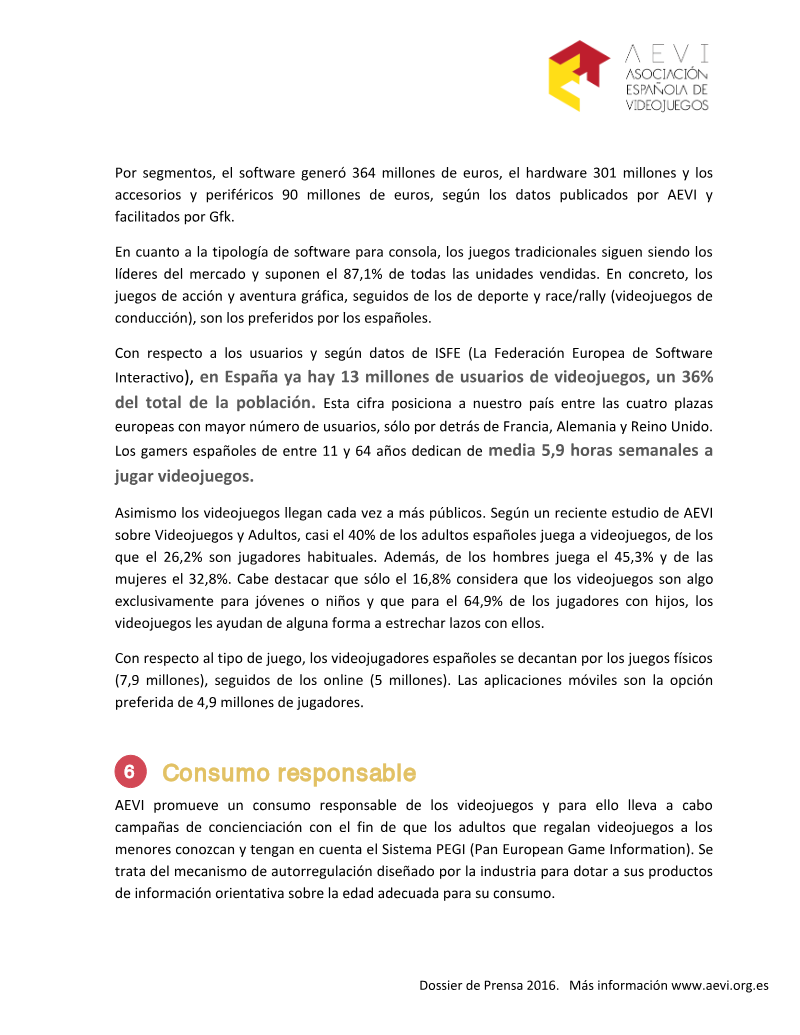
In 2014 the Spanish video‑game market generated €996 million, a 6.8 % increase over the previous year, with physical sales accounting for €755 million and online sales €241 million. Software contributed €364 million, hardware €301 million and accessories €90 million. The sector served 13 million users—36 % of the population—making Spain one of the four largest European markets after France, Germany and the United Kingdom. Players aged 11‑64 spent an average of 5.9 hours per week gaming; 40 % of adults played, 26.2 % regularly, and gender participation reached 45.3 % for men and 32.8 % for women. Physical copies remained the preferred format (7.9 million users), followed by online (5 million) and mobile applications (4.9 million).
AEVI highlighted the persistent challenge of piracy, reporting 240 million illegal downloads and 2 million physical infringements in 2014, which translated into a €226 million loss of revenue. Legislative reforms in intellectual‑property law and the criminal code were cited as recent advances in combating these practices. The association also noted a 21 % rise in development studios, reaching nearly 400 companies, and projected that employment in the sector could double to over 7 000 highly qualified jobs by 2019.
Through advocacy, data collection from sources such as GfK, ISFE, Gametrack and its own surveys, and partnerships with institutions like the Federation for the Protection of Intellectual Property, AEVI seeks to sustain growth, enhance the cultural perception of video games, and ensure a responsible, innovative market environment in Spain.
- The Spanish video-game market generated €996 million in 2014, marking a 6.8% year-over-year growth and establishing Spain as one of the four largest markets in Europe.
- Piracy remains a significant economic challenge, with 240 million illegal downloads and 2 million physical infringements causing an estimated €226 million in lost revenue in 2014.
- The sector served 13 million users in 2014, representing 36% of the population, with players aged 11–64 averaging 5.9 hours of gaming per week.
- The number of development studios in Spain grew by 21% to nearly 400 companies, with projections suggesting sector employment could double to over 7,000 jobs by 2019.
- Market revenue in 2014 was split between €755 million in physical sales and €241 million in online sales, with software contributing €364 million, hardware €301 million, and accessories €90 million.
Estudio Videojuegos y Adultos 2015: España
The study aimed to gauge the penetration of video games among Spanish adults, map the demographic profile of adult gamers, explore attitudes and usage habits, compare adults with and without children, and assess purchase intentions for the 2015 holiday season. Conducted nationwide in November 2015, it surveyed 1,000 individuals aged 18 and over via telephone CATI interviews, yielding a margin of error of ±3.09 percent.
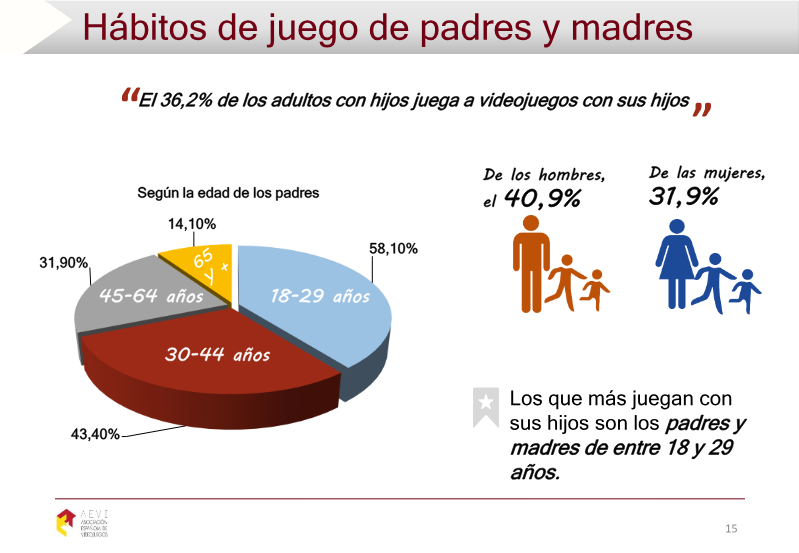
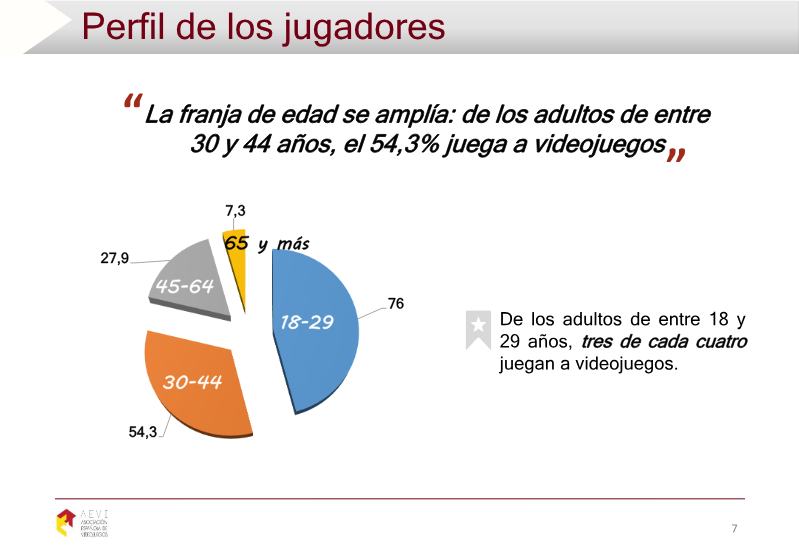
Overall, 38.9 percent of Spanish adults reported playing video games, while 61.1 percent did not. Play rates were highest among 18‑ to 29‑year‑olds, with three‑quarters engaging in gaming, and remained substantial for the 30‑44 age group at 54.3 percent. Men were more active than women (45.3 percent versus 32.8 percent), though women with children showed a higher participation rate (36.9 percent) than those without (30.1 percent), whereas the opposite pattern held for men. About 46.9 percent of gamers were occasional (at least monthly) and 41.5 percent habitual (weekly or daily), with habitual players being 60 percent male. Among habitual parents, 83.1 percent had children under nine, and 64.9 percent believed gaming strengthened parent‑child bonds, especially younger parents.
Education correlated with gaming intensity: 63.7 percent of habitual players held secondary or university qualifications. Consoles remained the dominant platform (61.1 percent), favored by men (66.2 percent), while women preferred smartphones (57.6 percent). Approximately 36.2
- In 2015, 38.9 percent of Spanish adults played video games, with the highest engagement found in the 18-29 age demographic at 75 percent.
- Gaming habits are gender-split by platform preference: men favor consoles (66.2 percent), while women primarily use smartphones (57.6 percent).
- Habitual gamers, defined as those playing weekly or daily, account for 41.5 percent of the gaming population and are 60 percent male.
- Parental status influences gaming behavior differently by gender, as women with children are more likely to play (36.9 percent) than those without (30.1 percent), while the inverse is true for men.
- Education level correlates with engagement intensity, with 63.7 percent of habitual players holding secondary or university qualifications.
Padres y Videojuegos Hoy: España 2014
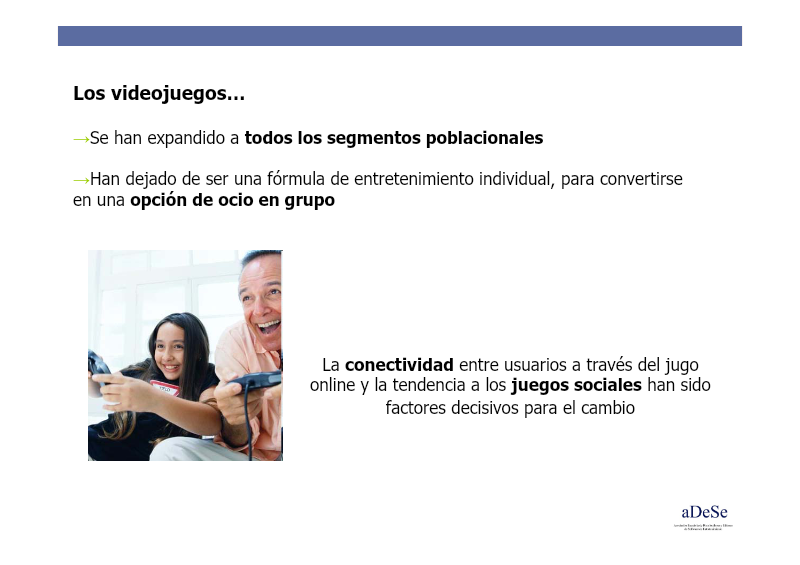
The research investigates contemporary Spanish parental attitudes toward video gaming, focusing on usage patterns, perceived competence, and consumer behavior during the 2014 holiday season. It reveals that a substantial majority—84 %—of parents actively play video games and consider themselves technologically equal to or more knowledgeable than their children. This confidence translates into a notable educational dimension, with 40 % of parents employing games as learning tools for their offspring.
Family interaction emerges as a key driver, as more than half of the surveyed parents have maintained or increased their gaming time after becoming parents, citing shared play as a primary motivator. Economic analysis shows a modest decline in overall holiday spending on games compared with the previous year; however, parents who identify as gamers intend to allocate higher expenditures than non‑gamer parents. Video games rank as the most coveted Christmas gift for half of the children surveyed, with a particular preference for physical console titles.
Overall, the findings underscore a robust integration of gaming within Spanish households, highlighting parental confidence, educational utilization, and sustained consumer demand despite slight seasonal spending fluctuations. The study’s scope encompasses Spanish families during the December 2014 period, offering insight into parental influence on market dynamics across both digital and physical gaming segments.
- In 2014, 84% of Spanish parents actively played video games and reported feeling equally or more technologically competent than their children.
- 40% of Spanish parents utilized video games as formal educational tools for their children.
- More than 50% of surveyed parents maintained or increased their personal gaming time after becoming parents, primarily driven by the desire for shared family play.
- Video games were the most requested Christmas gift for 50% of children in Spain during the 2014 holiday season, with a strong preference for physical console titles.
- While overall holiday spending on games saw a slight decline in 2014, parents who identified as gamers planned to spend more on gaming products than non-gamer parents.
Dossier de Prensa: España 2014
AEVI was created in 2014 to replace aDeSe and to serve as the unified voice of Spain’s video‑game ecosystem, encompassing publishers, developers, distributors and related agents. Its core mission is to promote domestic industry growth, attract investment, defend intellectual‑property rights and foster a sustainable, responsible market that highlights the sector’s cultural and innovative value.
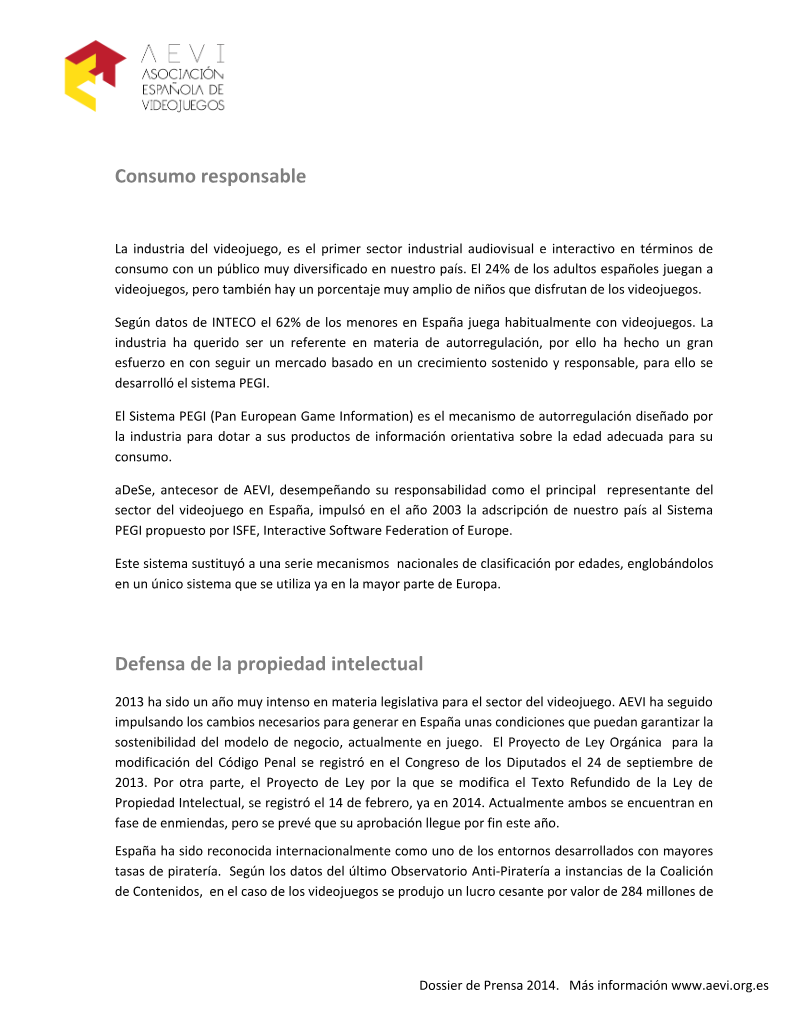
The association now gathers companies that control more than 90 % of the national distribution market, including major global publishers such as Activision‑Blizzard, Nintendo, Sony, Electronic Arts, Ubisoft and Microsoft Iberia, as well as the first development member, Novarama. Industry data indicate that Spain ranks among the top five European and top ten global gaming markets, with 19 million players across all platforms. In 2013 total consumer spending reached €762 million—software €401 million, hardware €275 million and accessories €86 million—despite a 7 % decline in physical sales that nevertheless halved the previous years’ downturn. Adult participation stands at 24 % while 62 % of minors play regularly.
Regulatory focus centers on the PEGI self‑rating system, introduced in 2003, and on pending legislative reforms to the Penal Code and Intellectual‑Property Law aimed at curbing piracy, which cost the sector €284 million in 2013 and, if eliminated, could generate roughly 26 600 new jobs. AEVI also promotes major events, notably the second edition of Madrid Games Week in October 2014, positioning the capital as a key venue on the international exhibition circuit and providing a forum for industry debate.
- AEVI was established in 2014 as the unified industry body representing companies controlling over 90% of Spain’s video game distribution market, including major publishers like Sony, Nintendo, Microsoft, and Ubisoft.
- Spain is a top-five European and top-ten global gaming market with 19 million players, generating €762 million in total consumer spending during 2013.
- The 2013 market revenue comprised €401 million in software, €275 million in hardware, and €86 million in accessories, with physical sales declines slowing to 7%.
- Piracy remains a critical economic challenge, costing the sector €284 million in 2013 with estimates suggesting that its elimination could create approximately 26,600 new jobs.
- Industry regulatory efforts are currently focused on the PEGI self-rating system and pending legislative reforms to the Penal Code and Intellectual Property Law.
Observatorio de Piratería y Hábitos de Consumo de Contenidos Digitales: Primer Semestre de 2011
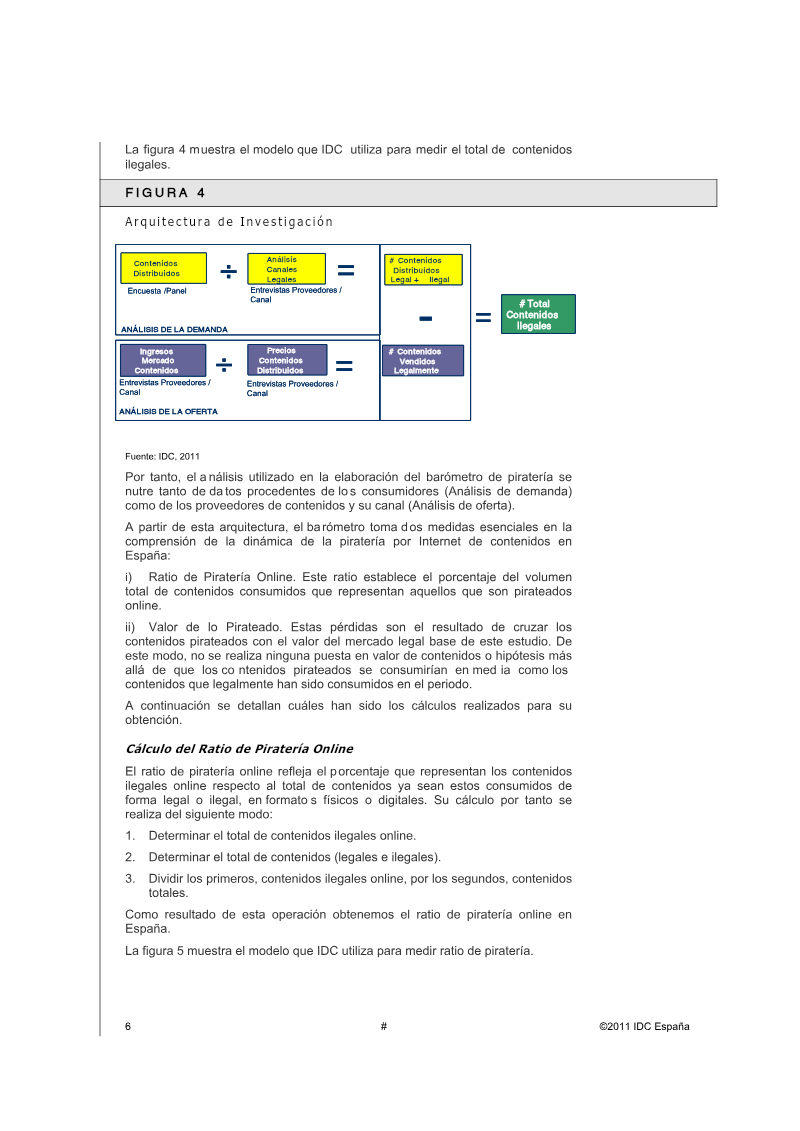
The study evaluates the evolution of online piracy of paid cultural digital content in Spain, focusing on music, video games, films and books during the first half of 2011 and comparing the results with the same period in 2010. By measuring the gap between legal consumption and unauthorized copying, it aims to quantify the scale of the illicit market and track changes in user behavior.
Legal sales of digital content generated €1.538 billion, a modest 0.5 % decline from the previous year. The weighted average piracy rate rose to 77.3 %, up 0.4 % year‑on‑year, implying that pirated consumption was valued at €5.229 billion—almost four times the legal market size. Segment‑specific losses were most pronounced in music (€2.746 billion), followed by films (€1.402 billion), books (€0.793 billion) and video games (€0.288 billion). Overall, the legal market base for the analysis stood at €1.561 billion, reflecting a 1.4 % contraction.
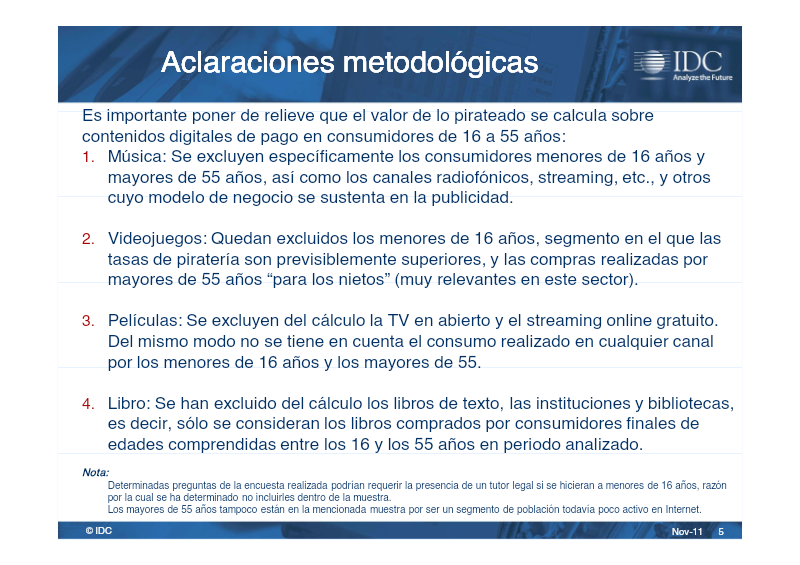
The research covers the domestic Spanish consumer market, limited to online users aged 16 to 55, and excludes content that is freely available (e.g., broadcast TV, radio, free‑to‑play games, streaming services). Data were collected through a semi‑annual online survey of 3,000 respondents drawn from a panel of 72,000, with quotas ensuring representation by gender and autonomous community. The sample provides a 95 % confidence level with a 1.8 % margin of error, and the online user universe is defined by Nielsen Online measurements.
Findings highlight a persistent and growing piracy problem despite a slight dip in legal sales, suggesting significant untapped potential for a legitimate market if effective anti‑piracy measures and alternative business models are introduced.
- In the first half of 2011, the value of pirated digital content in Spain reached €5.229 billion, which is nearly four times the size of the €1.538 billion legal market.
- The weighted average piracy rate for digital content in Spain rose to 77.3% during the first half of 2011, representing a 0.4% year-on-year increase.
- Music piracy accounted for the largest share of losses at €2.746 billion, followed by films at €1.402 billion, books at €0.793 billion, and video games at €0.288 billion.
- Legal sales of digital content experienced a modest decline of 0.5% compared to the same period in 2010, while the overall legal market base contracted by 1.4%.
- The study, which surveyed 3,000 online users aged 16 to 55, indicates that the persistent piracy gap represents significant untapped potential for legitimate business models.
El Videojugador Español: Perfil, Hábitos e Inquietudes de Nuestros Gamers
The study commissioned by the Spanish Association of Distributors and Publishers of Entertainment Software aims to map the profile, habits and concerns of Spanish video‑game players as of 2011, positioning Spain within the broader European market. Spain ranks as the fourth largest European video‑game market, with sales exceeding €1.245 billion in 2010, while the continent records a 25.4 % adult gaming penetration (79.2 million regular players). In Spain, 24 % of adults play regularly, and the most active segment is aged 7‑34, representing 45.3 % of the population.
The typical gamer is 32 years old, with women accounting for 40 % of players over 15 years. Over half are married or cohabiting, and 43 % devote between one and five hours per week to gaming. Lifestyle data show that 70 % of gamers frequently engage in outdoor activities such as walking, café visits or restaurant meals, while 61 % exercise regularly. Health awareness is high: 57 % prioritize nutritious food, and 75 % actively practice environmental stewardship through recycling and energy‑saving habits.
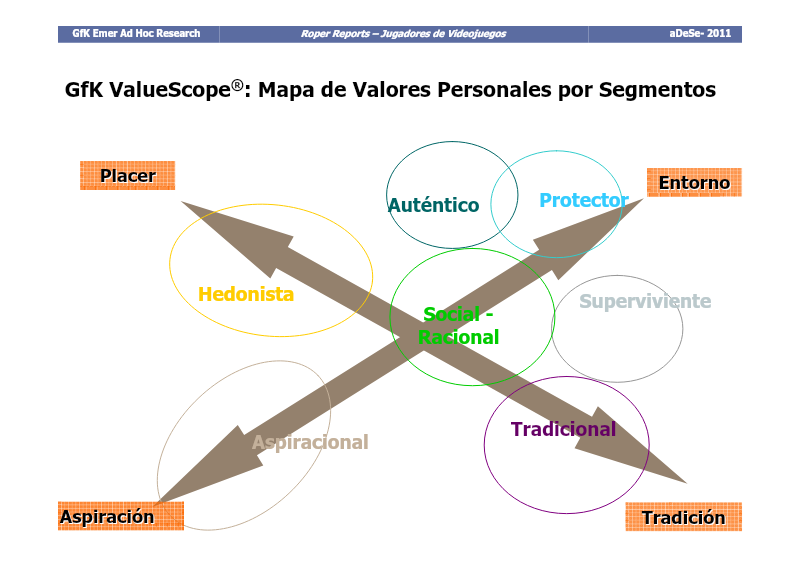
Values analysis reveals a predominance of hedonistic (≈25 %) and authentic (≈19 %) orientations, followed by social‑rational and aspirational profiles (each around 15 %). Expectations for the next decade are strong: 90 % foresee gaming becoming a universal pastime, with 55‑88 % anticipating virtual‑reality immersion, multisensory experiences and a shift toward educational, medical and professional applications. The research draws on GfK Emer Ad Hoc surveys conducted across Europe in 2009‑2010, combining sales figures, penetration rates and attitudinal questionnaires to deliver a comprehensive portrait of Spanish gamers.
- Spain is the fourth-largest video game market in Europe, generating over €1.245 billion in sales during 2010.
- Gaming penetration among Spanish adults stands at 24%, with the 7–34 age demographic representing 45.3% of the population.
- The typical Spanish gamer is 32 years old, with women comprising 40% of the player base aged 15 and older.
- Gaming habits are moderate, as 43% of players dedicate between one and five hours per week to the activity.
- Spanish gamers lead active, health-conscious lifestyles, with 61% exercising regularly and 70% frequently engaging in outdoor activities.
Observatorio de Piratería y Hábitos de Consumo de Contenidos Digitales: España
The study quantifies the scale of digital‑content piracy in Spain during the first half of 2011 and demonstrates that illicit consumption far exceeds legitimate market activity. Pirated material was valued at €5.23 billion, representing roughly 77 % of the legal turnover of €1.54 billion and approaching four times the revenue generated by lawful sales. The incidence of piracy varies markedly across sectors: music reaches a 98.2 % piracy rate amounting to €2.75 billion, films register 73.9 % (€1.40 billion), and video games show 61.7 % of their market value being pirated, with books trailing behind the other categories.
The analysis draws on a statistically representative online panel of 3,000 Spanish adults aged 16‑55, balanced by gender (49 % men, 51 % women) and regional distribution. The sample achieves a ±1.8 % margin of error at the 95 % confidence level, with weighting and bias‑correction procedures applied through iterative proportional fitting and adjustments for demographic, capture‑probability, and source‑selection effects. Recruitment employed a multi‑partner random‑digit‑dialing telephone approach, and participants were incentivised to ensure high engagement, providing a robust foundation for assessing consumption and piracy behaviours.
Survey instruments captured device penetration, the split between peer‑to‑peer and direct‑download mechanisms, and detailed recall of download and streaming volumes for music, film, video‑games and books on a quarterly or bi‑weekly basis. Findings reveal pervasive use of both P2P networks and direct‑download sites, underscoring the breadth of illegal access across multiple device types. The high piracy ratios, especially in music and film, suggest that traditional revenue models are being undermined, prompting a need for revised industry strategies, stronger enforcement, and alternative distribution frameworks to align consumer habits with sustainable market growth.
- In the first half of 2011, digital piracy in Spain reached a total value of €5.23 billion, which is nearly four times the €1.54 billion generated by legitimate market sales.
- Music piracy is the most severe sector, with a 98.2% piracy rate accounting for €2.75 billion in lost potential revenue.
- Film piracy accounts for 73.9% of the market, representing a value of €1.40 billion in illicit consumption.
- Video games show a 61.7% piracy rate, indicating that more than half of the sector's potential market value is lost to illegal activity.
- Illicit consumption across all digital sectors is driven by the pervasive use of both peer-to-peer networks and direct-download websites.
El Futuro del Videojuego: Informe de Resultados (España)
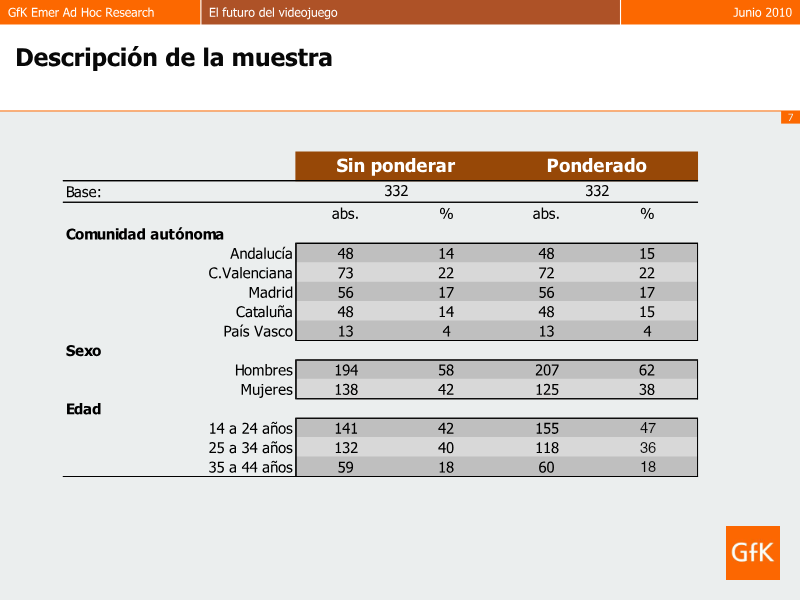
The study set out to explore how Spanish video‑game players envision the medium’s evolution, focusing on genre development, social dimensions, technological advances, and the role of online and mobile gaming. It surveyed internet users aged 14‑44 who play at least once a month, using a quota‑based online questionnaire administered to a nationally representative sample of 332 respondents, with a 95 % confidence level and a 5.2 % margin of error. The sample reflects the regional distribution of Spain and is balanced by gender and three age brackets.
Findings show that gaming is as routine as sport or social outings, with 56 % of participants engaging in video games several times a week. Men play more frequently than women (65 % versus 42 % regular play). A striking 90 % anticipate that by 2020 gaming will be ubiquitous across all ages, including grandparents, and 78 % expect it to become highly social, with solitary play becoming rare. Nearly nine out of ten respondents believe most games will be rendered in 3D and that conventional controllers will be replaced by motion‑detecting devices, while older players (35‑44) express the strongest confidence in full‑immersion virtual reality.
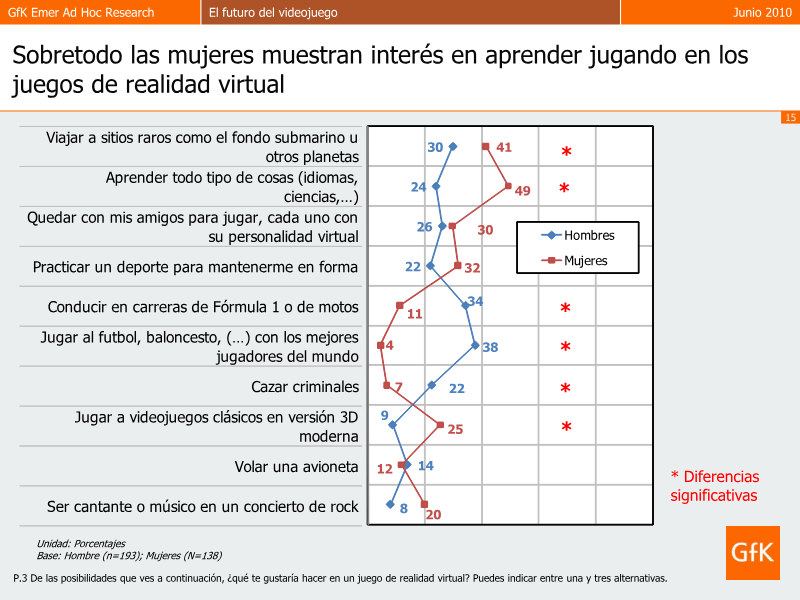
The most appealing VR scenarios involve traveling to fantastical locations and learning new skills, interests that are especially pronounced among women, whereas men favor sports‑oriented experiences. Respondents also foresee extensive non‑gaming uses for VR, such as surgical simulation, virtual real‑estate tours, e‑commerce, and education from primary to university levels. Regarding online play, 72 % predict increased activity, with men leaning toward competitive environments and women toward social interaction. Parallel trends include a rise in home‑based cinema, social‑media use, and overall digital entertainment.
- Gaming is a routine activity for 56% of Spanish players, with a notable gender gap where 65% of men play regularly compared to 42% of women.
- 90% of respondents expect gaming to reach ubiquity across all age groups, including older generations, by 2020.
- 78% of players anticipate a shift toward highly social gaming experiences, predicting that solitary play will become a rarity.
- Nearly 90% of participants expect 3D rendering to become the industry standard and predict that motion-detecting devices will replace conventional controllers.
- 72% of respondents foresee an increase in online play, with men primarily favoring competitive environments while women prioritize social interaction.
Informe de Resultados: Cómo se proyecta el videojuego del futuro
The study, conducted in May 2010, projects the evolution of video‑games through the 2020‑25 horizon, arguing that immersive virtual‑reality experiences will become the dominant technological driver of the sector. By analysing current player demographics, consumption habits and emerging distribution channels, the research maps how the industry will restructure its business models while preserving the fundamental motivations and genre preferences that have long defined gaming.
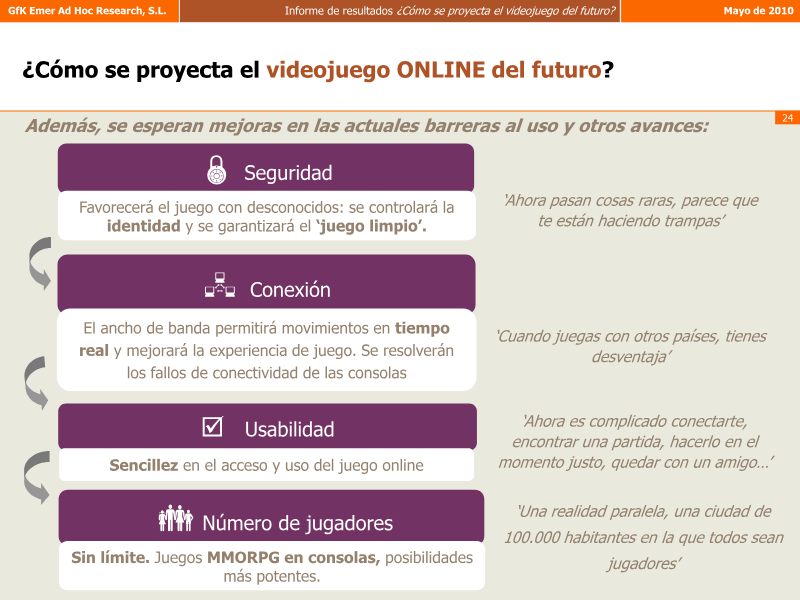
Present‑day online play is still largely the domain of “hardcore” gamers, yet a significant share of moderately hardcore users—53 %—report connection latency as a primary pain point. This dissatisfaction is expected to accelerate the shift toward higher‑bandwidth, low‑latency networks that can support the projected surge in immersive content. The forecast anticipates that roughly 68 % of all game sales will be conducted through virtual stores or server‑based platforms, eliminating the need for physical distribution.
Future revenue streams are projected to diversify across several complementary models: periodic free expansions, low‑cost add‑ons priced around three euros, flat‑rate monthly subscriptions that may be tied to specific devices, micro‑transactions, and ad‑supported versions. Despite these commercial innovations, core genres, narrative settings and player motivations are predicted to remain largely stable, with the home environment continuing to serve as the principal venue for play, albeit increasingly complemented by mobile and cloud‑based access points.
Overall, the analysis underscores a transition toward fully digital acquisition and consumption, driven by advances in immersive technology and network infrastructure, while the cultural and experiential foundations of gaming persist across the coming decade.
- Approximately 68% of all game sales are projected to transition to virtual stores or server-based platforms, effectively phasing out physical distribution.
- Immersive virtual reality is identified as the primary technological driver for the industry through the 2020-25 period.
- Network latency is a critical barrier for 53% of moderately hardcore gamers, necessitating a shift toward high-bandwidth, low-latency infrastructure to support immersive content.
- Future revenue models will diversify into a mix of periodic free expansions, low-cost add-ons, monthly subscriptions, micro-transactions, and ad-supported versions.
- Despite technological shifts, core gaming genres, narrative settings, and player motivations are expected to remain stable over the coming decade.