Key insights
7 slides
The starting point
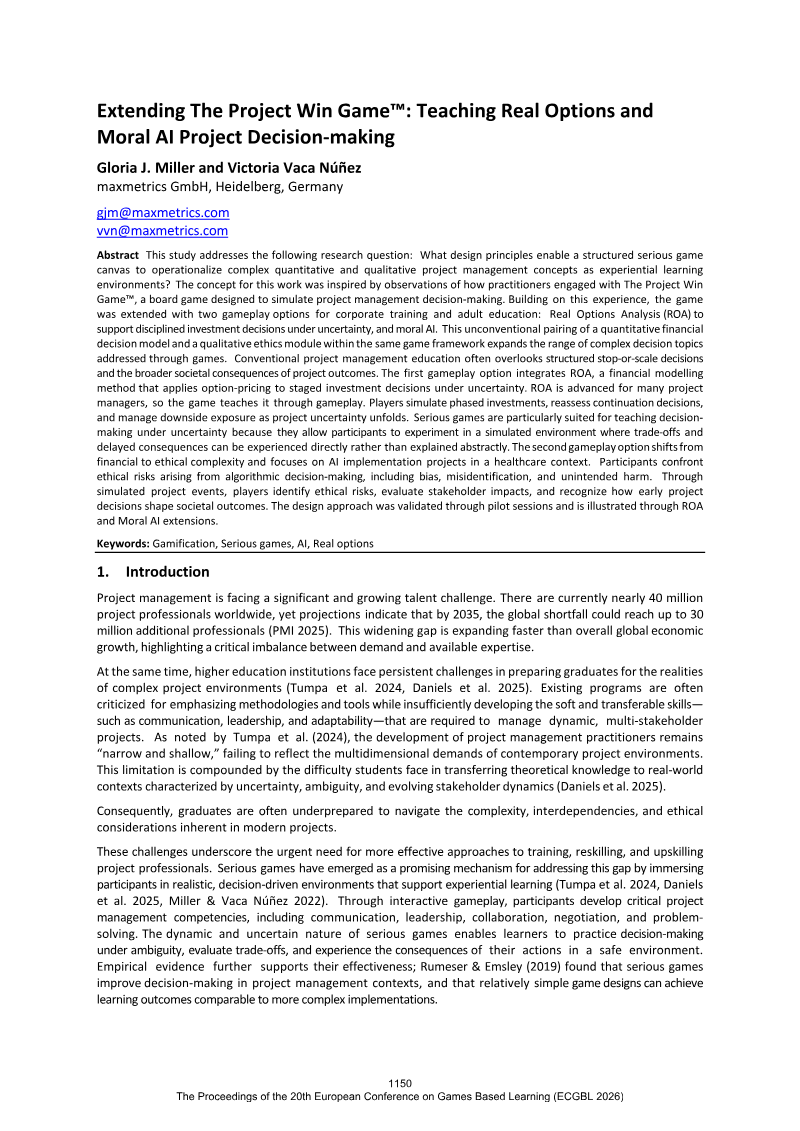
Roughly 40 million project practitioners work worldwide today.
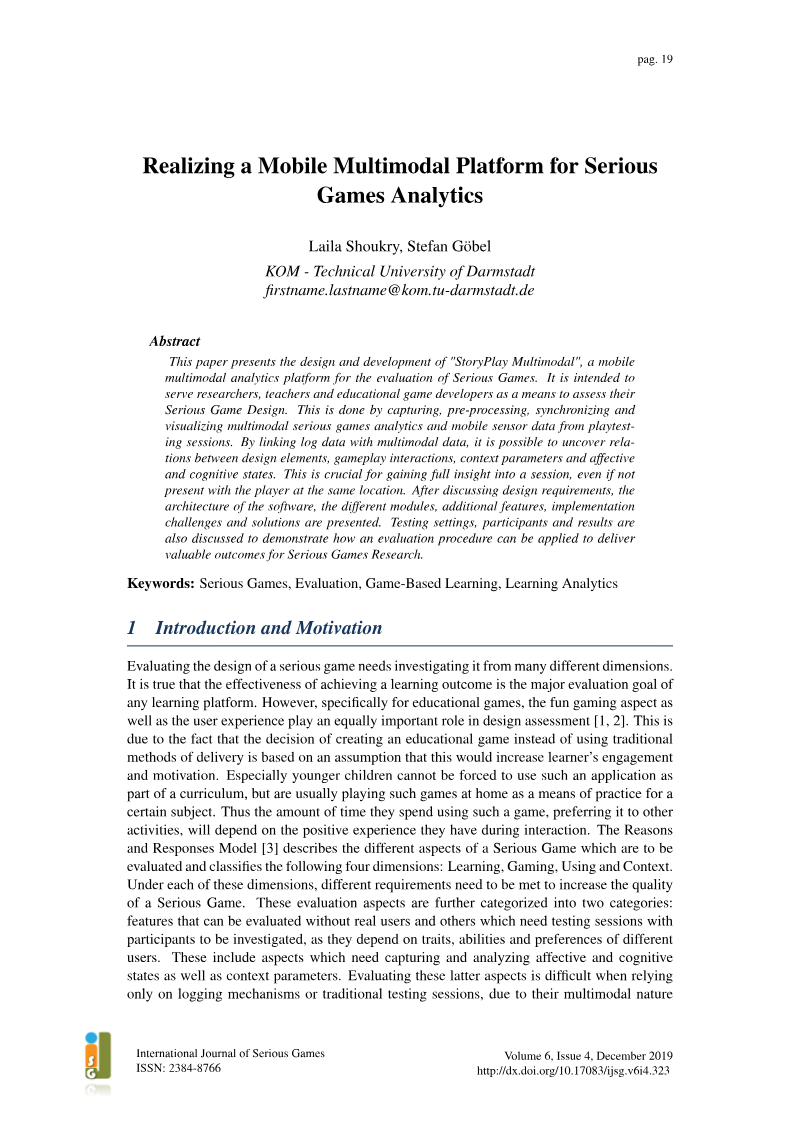
The project management field has a documented talent gap. The report cites roughly 40 million practitioners worldwide.
1 / 7
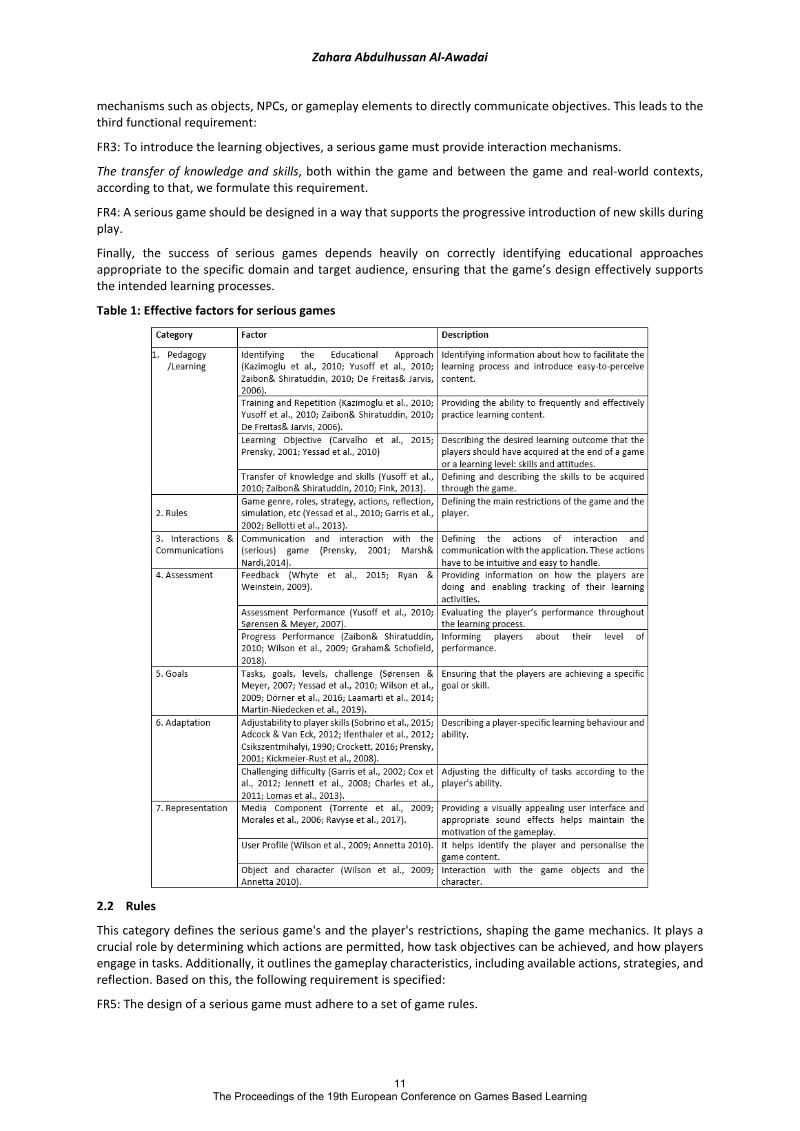
- 01The paper proposes extending The Project Win Game™ with a Real Options Analysis module for staged investment decisions under uncertainty and a Moral AI module addressing ethical risks in healthcare AI projects, supported by an eight-stage Project Management Serious Game Canvas and an iterative design methodology.
- 02The motivation is a documented project management talent gap of roughly 40 million practitioners worldwide, with a projected shortfall of up to 30 million by 2035, alongside concern that conventional programs underdevelop soft skills and decision-making under uncertainty.
- 03Iterative playtesting refined economic balance, component interactions, and complexity, including a colored-die mechanic and a simplified mode, and players reportedly could distinguish option types and understand trade-offs through play.
- 04The authors explicitly frame these results as preliminary design-validation evidence from voluntary and potentially biased samples, not confirmed learning outcomes, and note limitations such as increased cognitive load and dependence on facilitator guidance.
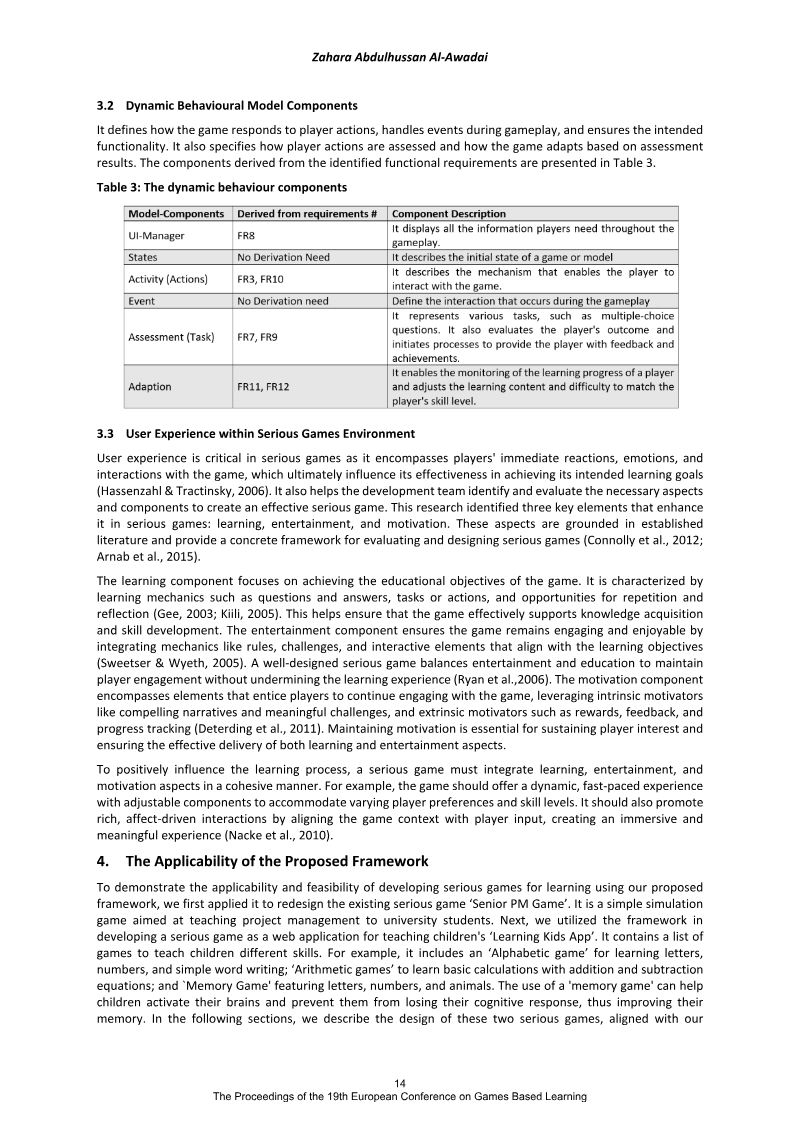
- 05The proposed next step is an AI-enabled facilitation layer that would generate scenarios in real time, deliver personalized feedback, adapt difficulty, and automate facilitation to reduce cognitive load and support ethical and leadership development.
- 06The authors call for future studies with more diverse participants and direct comparison of facilitator-led versus AI-assisted implementations, assessing learning effectiveness, accessibility, and scalability.
- 07The study reports that no formal human-subjects approval was required, relying instead on voluntary informed consent and anonymized data.
Ask AI about this report
Summary
This document presents an extension of The Project Win Game™, a project management serious game, with two new modules: Real Options Analysis (ROA), which teaches staged investment decisions under uncertainty, and a Moral AI module addressing ethical risks in healthcare AI projects. Its central claim is that a proposed eight-stage Project Management Serious Game Canvas, together with an iterative design methodology, can translate complex quantitative and ethical project concepts into experiential learning. The motivation is a documented talent gap in project management, with roughly 40 million practitioners worldwide and a projected shortfall of up to 30 million by 2035, alongside concern that conventional programs underdevelop soft skills and decision-making under uncertainty.
The design approach maps learning objectives to player actions and gameplay consequences, and was refined through iterative playtesting that adjusted economic balance, component interactions, and complexity, including a colored-die mechanic and a simplified mode. Players reportedly could distinguish option types and understand trade-offs through play. The authors are explicit that these findings constitute preliminary design-validation evidence drawn from voluntary and potentially biased samples, not confirmed learning outcomes. Noted limitations include increased cognitive load and dependence on facilitator guidance.
Looking forward, the work proposes an AI-enabled facilitation layer capable of generating scenarios in real time, delivering personalized feedback, adapting difficulty, and automating facilitation to reduce cognitive load and support ethical and leadership development. The authors call for studies with more diverse participants and direct comparison of facilitator-led and AI-assisted implementations, assessing learning effectiveness, accessibility, and scalability. The study reports no formal human-subjects approval was required, relying on voluntary informed consent and anonymized data.