1 free read left. Create a free account for unlimited reading + AI research.
Create free accountWhitepaper European Conference on Games Based Learning (ECGBL)
1 free read left. Create a free account for unlimited reading + AI research.
Create free accountWhitepaperEuropean Conference on Games Based Learning (ECGBL)
The study examined whether an immersive serious game could support adult English spelling and semantic skills.
This early-stage feasibility pilot examined whether an AI-assisted virtual reality serious game could support adult English spelling and semantic skills, with the broader aim of addressing persistent literacy challenges. The study enrolled a small sample of adults, with 14 participants retained in the initial analysis after two exclusions and 16 in a subsequent section, and assessed both learning outcomes and usability. Its grounding lies in research on immersive learning, AI-driven feedback, and the difficulty of English spelling, drawing on literacy statistics to motivate the intervention.
On learning outcomes, spelling errors declined from a pre-test mean of 3.86 to a post-test mean of 3.07. This change showed a medium effect size (Cohen's d = 0.514) but did not reach statistical significance (p = 0.077). Completion time also decreased with a medium effect (Cohen's d = 0.447, p = 0.118), again without statistical significance. Self-reported gains were substantial, with 75% of participants reporting improved spelling and 87.5% reporting semantic benefits, though these subjective measures carry limitations of their own.
Usability findings were mixed. Participants widely praised the immersive VR environment for its engagement, while the AI assistant received low ratings (M = 3.20), attributed to response latency and verbosity. These results point to clear areas for refinement in future iterations.
The authors are explicit about the study's constraints: it was underpowered, lacked a control group, relied on word length as the sole measure of difficulty, and did not confirm equivalence between pre- and post-test word lists. Accordingly, the findings are best regarded as preliminary, establishing feasibility and directional promise rather than demonstrating efficacy.



European Conference on Games Based Learning (ECGBL) · 2026



European Conference on Games Based Learning (ECGBL) · 2026



European Conference on Games Based Learning (ECGBL) · 2026



European Conference on Games Based Learning (ECGBL) · 2026



European Conference on Games Based Learning (ECGBL) · 2026



European Conference on Games Based Learning (ECGBL) · 2026



European Conference on Games Based Learning (ECGBL) · 2026
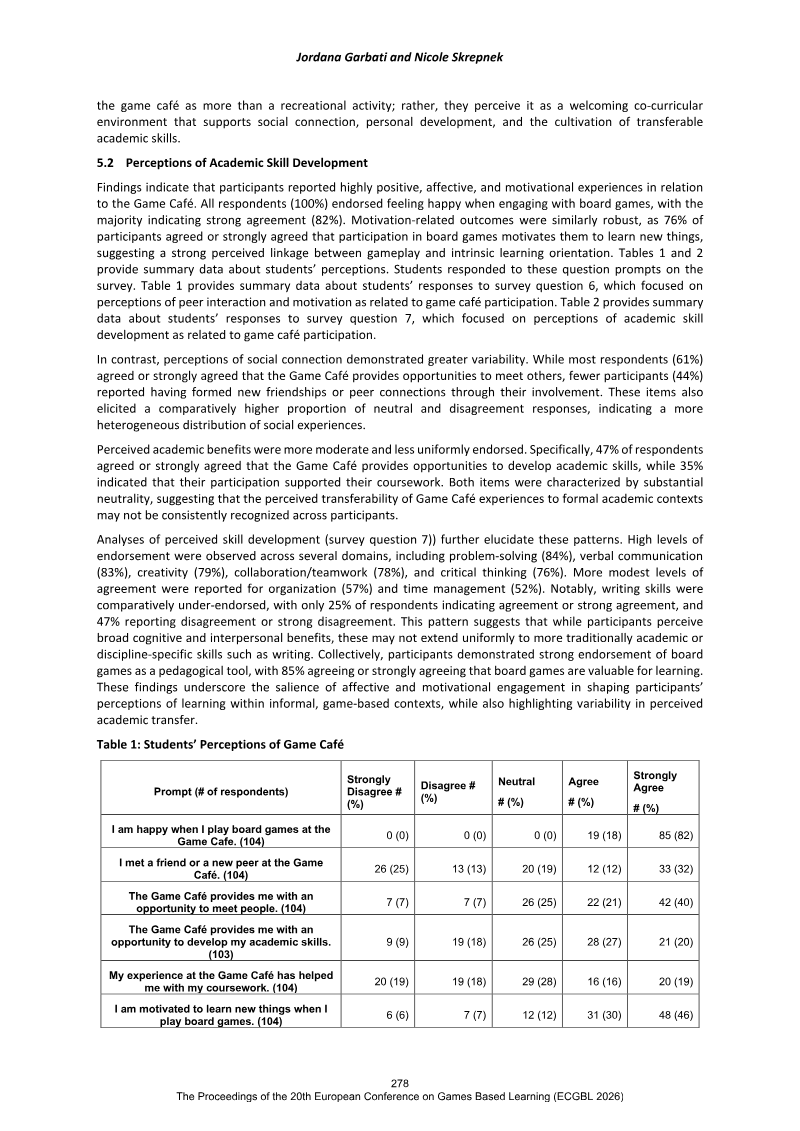
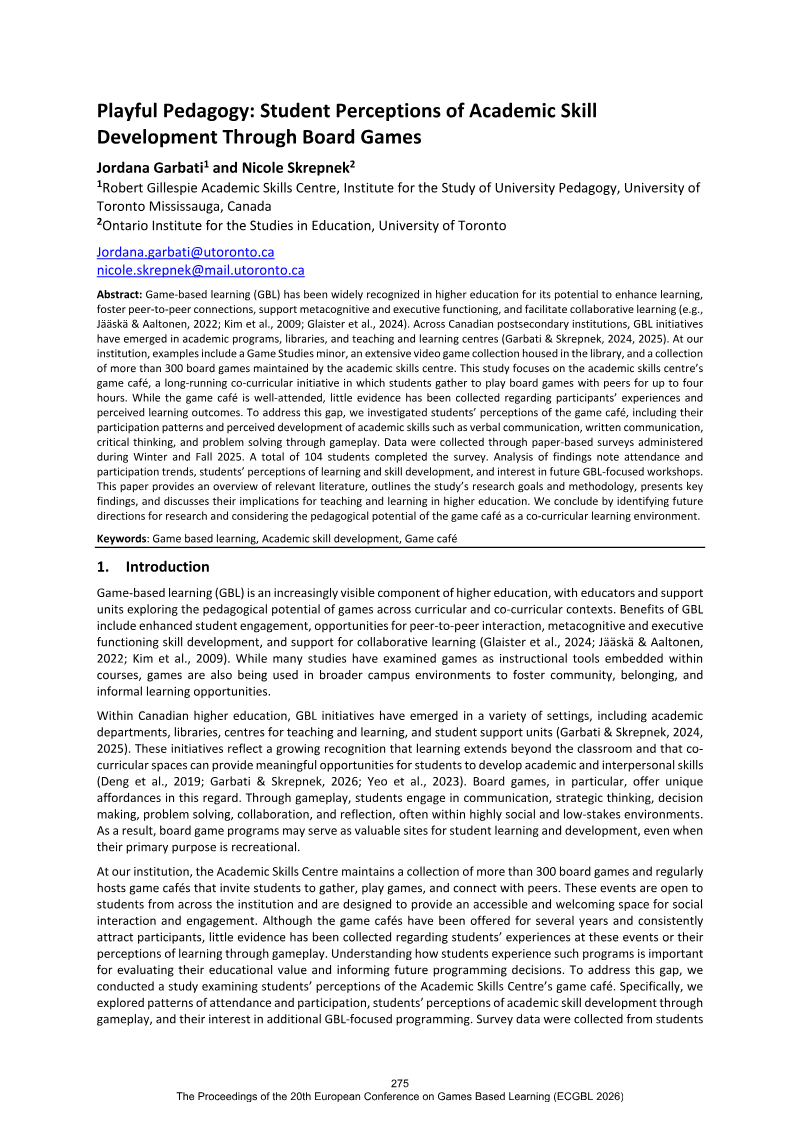
University of Toronto · 2026



European Conference on Games Based Learning (ECGBL) · 2026



European Conference on Games Based Learning (ECGBL) · 2026



European Conference on Games Based Learning (ECGBL) · 2026



European Conference on Games Based Learning (ECGBL) · 2026



European Conference on Games Based Learning (ECGBL) · 2026
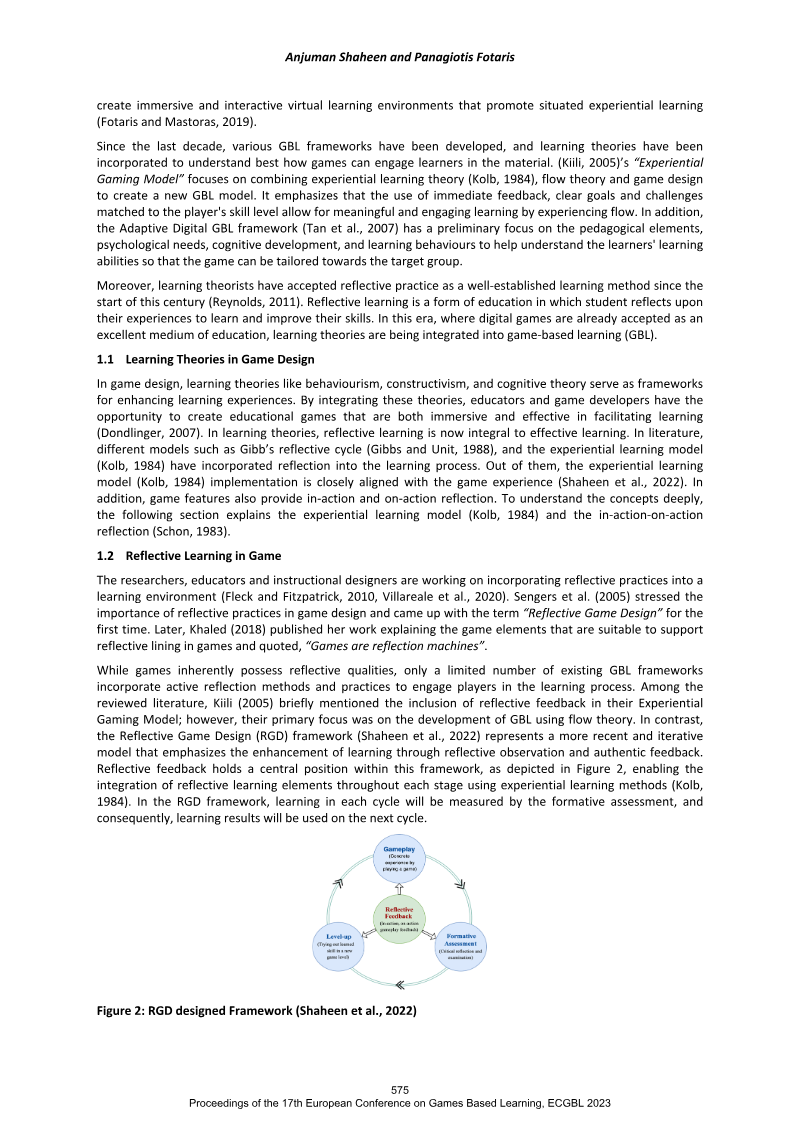
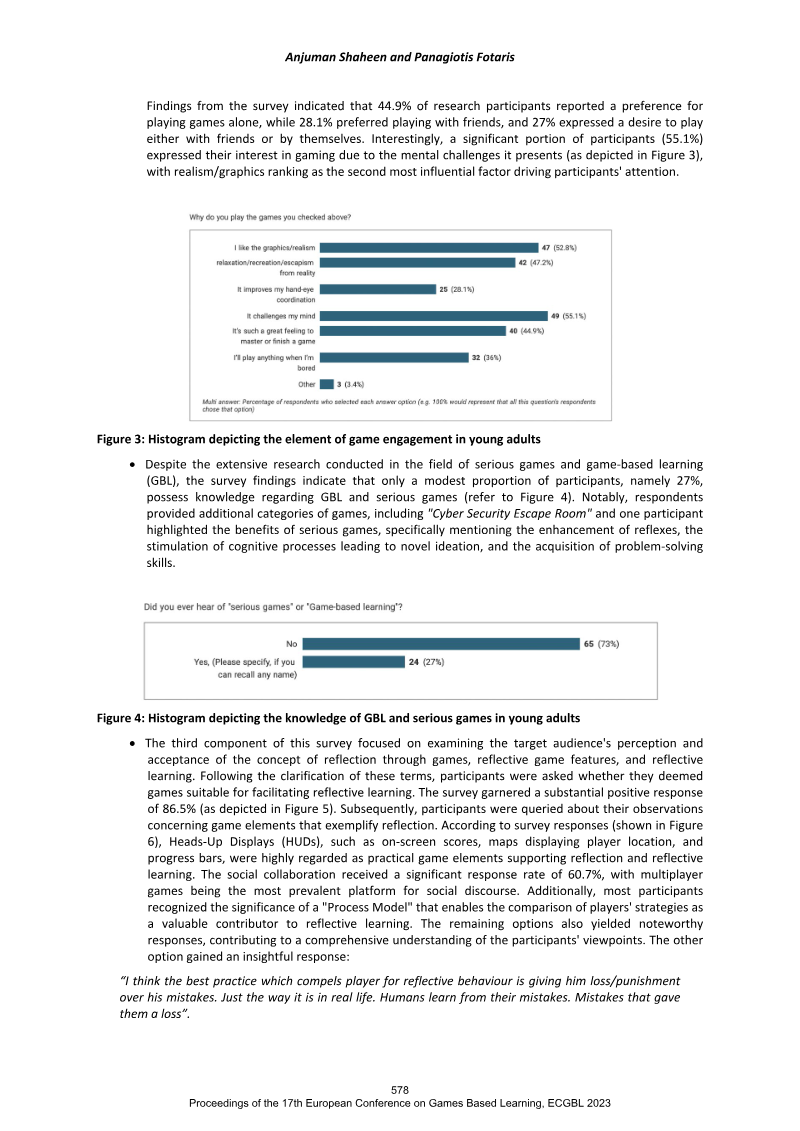
European Conference on Games Based Learning (ECGBL) · 2023
International Journal of Serious Games · 2020